How to Choose Ground Cover for Your Backyard
Ground cover plants do quiet work in a backyard — they fill bare soil, suppress weeds, slow erosion, and tie scattered beds together so the whole yard reads as one design. Choosing ground cover for your backyard comes down to three things: how much sun the spot gets, what your climate does to it, and whether anyone’s going to walk on it. Get those right and the plant mostly takes care of itself. Get them wrong and you’ll do what I did my first year in this house — plant a flat of Irish moss in a full-sun strip by the driveway and watch it crisp up like breakfast hash by July.
As an Amazon Associate, Backyard Superstar earns from qualifying purchases at no extra cost to you.
How to Pick Ground Cover for Your Backyard
Five factors decide whether a ground cover thrives or sulks. Run through them before you buy a single plant:
- Climate / USDA zone. Most ground covers are perennials, but they’re zone-specific. Check the plant’s rating against your zone before buying.
- Sun exposure. “Full sun” means 6+ hours of direct light; “part shade” means 3–6; “shade” means under 3. Match the plant to the conditions you actually have.
- Soil type. Sandy soil drains fast and favors drought-tolerant species; clay holds water and suits moisture-lovers. Most ground covers want well-draining soil amended with compost.
- Water availability. No irrigation? Go drought-tolerant. Automatic sprinklers open up the moisture-loving options.
- Foot traffic. Most ground covers hate being walked on. A few genuinely tolerate it — Irish moss, creeping thyme, Dutch clover.
The soil question is the one people skip, and it’s the cheapest to answer. A basic Luster Leaf 1601 Rapitest soil test kit ($) runs pH plus N-P-K with color capsules, no lab involved. When I finally tested that driveway strip where my Irish moss died, it came back alkaline and bone-lean — sedum country, not moss country. Ten minutes of testing would have saved me a flat of plants.
One more thing to check before buying: aggressiveness. Some ground covers — English ivy, Vinca minor, Bishop’s weed — spread so fast they stop being a planting and start being a problem. “Spreads rapidly” on the tag is sometimes a feature (bare slope to cover) and sometimes a warning (it’ll be in your lawn within two seasons). And because most yards hold several microclimates, plan in zones: the shady spot under the oak wants a different plant than the baking strip along the driveway.
| Your situation | Best picks | Why |
|---|---|---|
| Hot, dry, poor soil | Creeping thyme, sedum, hens and chicks | Thrive on neglect once established |
| Deep shade under trees | Pachysandra, sweet woodruff, wild ginger | Handle root competition and low light |
| Bare slope, erosion worry | Creeping juniper + jute netting | Deep roots bind soil; netting holds it meanwhile |
| Kids and dogs on it daily | Dutch clover, Irish moss, creeping mazus | Non-toxic and take real foot traffic |
| Want it filled in fast | Blue star creeper, creeping Jenny | Cover in one season — contain them |
Low-Maintenance and Drought-Tolerant Ground Covers
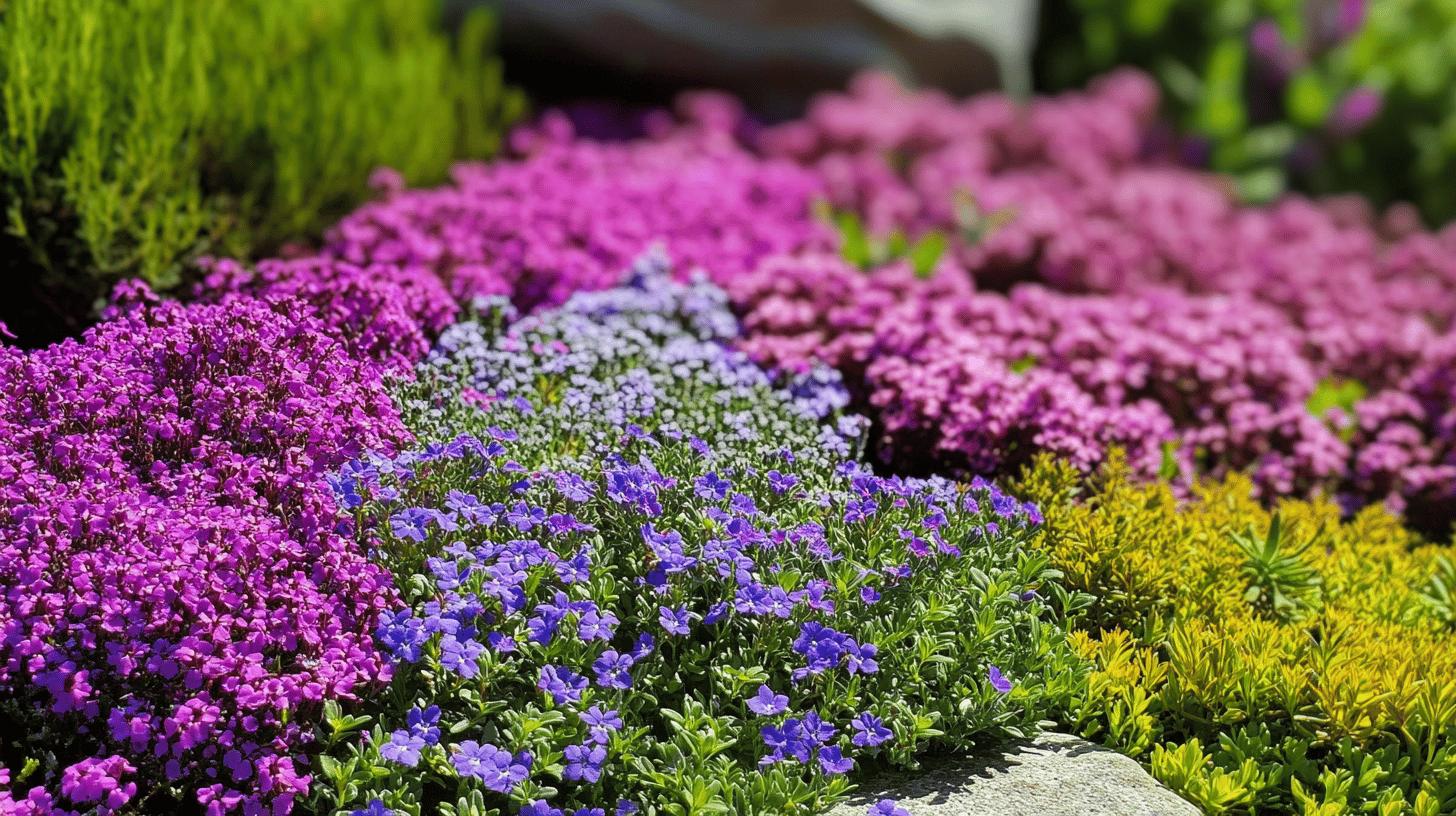
If your goal is “fill this in without me watering it constantly,” start here. Creeping thyme (Thymus serpyllum, zones 4–9) is the one I recommend first and the one I’ve planted most — it forms a dense, fragrant mat in full sun, blooms purple in early summer, and shrugs off light foot traffic. It’s also cheap to do at scale: a bag of Outsidepride creeping thyme seed ($) covers the kind of square footage that would cost real money in nursery flats. I seeded the strip between my walkway pavers three springs ago and it’s been mowing-free, watering-free color ever since.
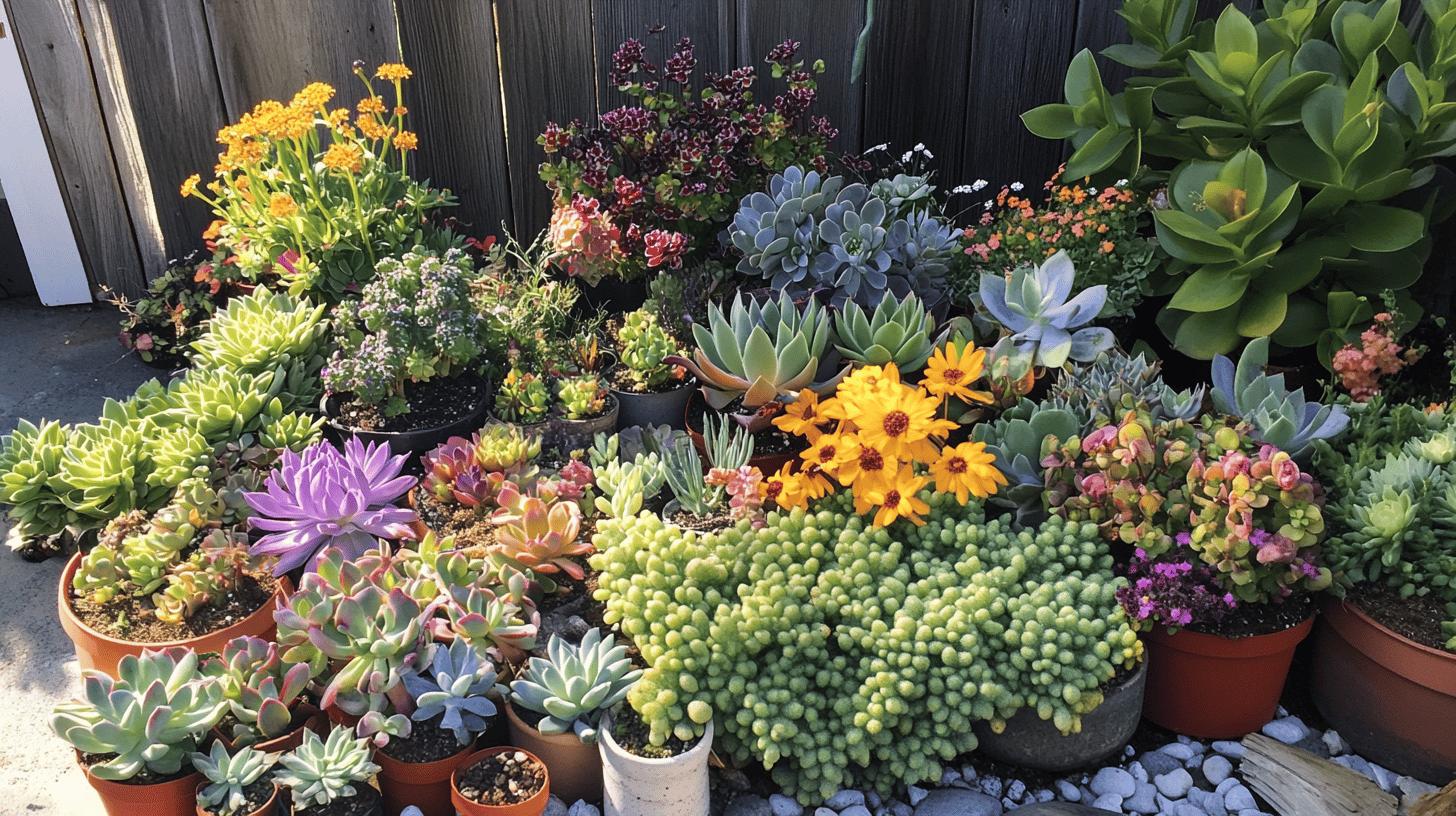
The succulents are just as forgiving. Stonecrop sedum (zones 3–9) gives you foliage in green, blue-gray, or burgundy and tolerates heat that kills fussier plants, while hens and chicks (Sempervivum, zones 3–8) will grow in a gravel path if you let them. For a grass-like look, dwarf mondo grass (zones 6–11) makes a tidy evergreen carpet — slow to establish, very long-lived. And bugleweed (Ajuga, zones 3–10) covers ground quickly in sun or shade, though it spreads aggressively in moist soil, so keep it away from lawn edges. Periwinkle (Vinca minor, zones 4–8) belongs in this group too, with the same caveat doubled — it’s genuinely invasive in good conditions.
Two establishment rules make or break this category. First, water even “drought-tolerant” plants regularly through their first growing season — established roots are what make a plant drought-tolerant, not the label. Second, pair low ground covers with taller drought-hardy companions so the bed has structure; our roundup of 13 easy perennials that thrive in scorching heat covers plants that layer well above these mats.
Shade-Tolerant and Sun-Loving Ground Covers
Light splits most ground cover decisions in half, and it’s the factor people lie to themselves about. Watch the spot for a day before you call it “part sun.”
Shade-Loving Options
Under tree canopies and in deep-shade corners, pachysandra (zones 4–8) is the reliable workhorse — glossy evergreen foliage that thrives where lawn gives up. Sweet woodruff (zones 4–8) spreads softly with white spring flowers and smells like fresh hay when you brush it. For color in the dark spots, Japanese painted fern (zones 3–8) throws silver-and-maroon fronds, lady’s mantle (zones 3–7) catches morning dew in scalloped leaves, and lamium (zones 3–8) carries silver foliage with pink or white blooms through moist shade. If you want those shaded beds pulling butterflies too, our guide to butterfly garden plants for shade covers species that double as ground cover or pair with these.
Sun-Loving Options
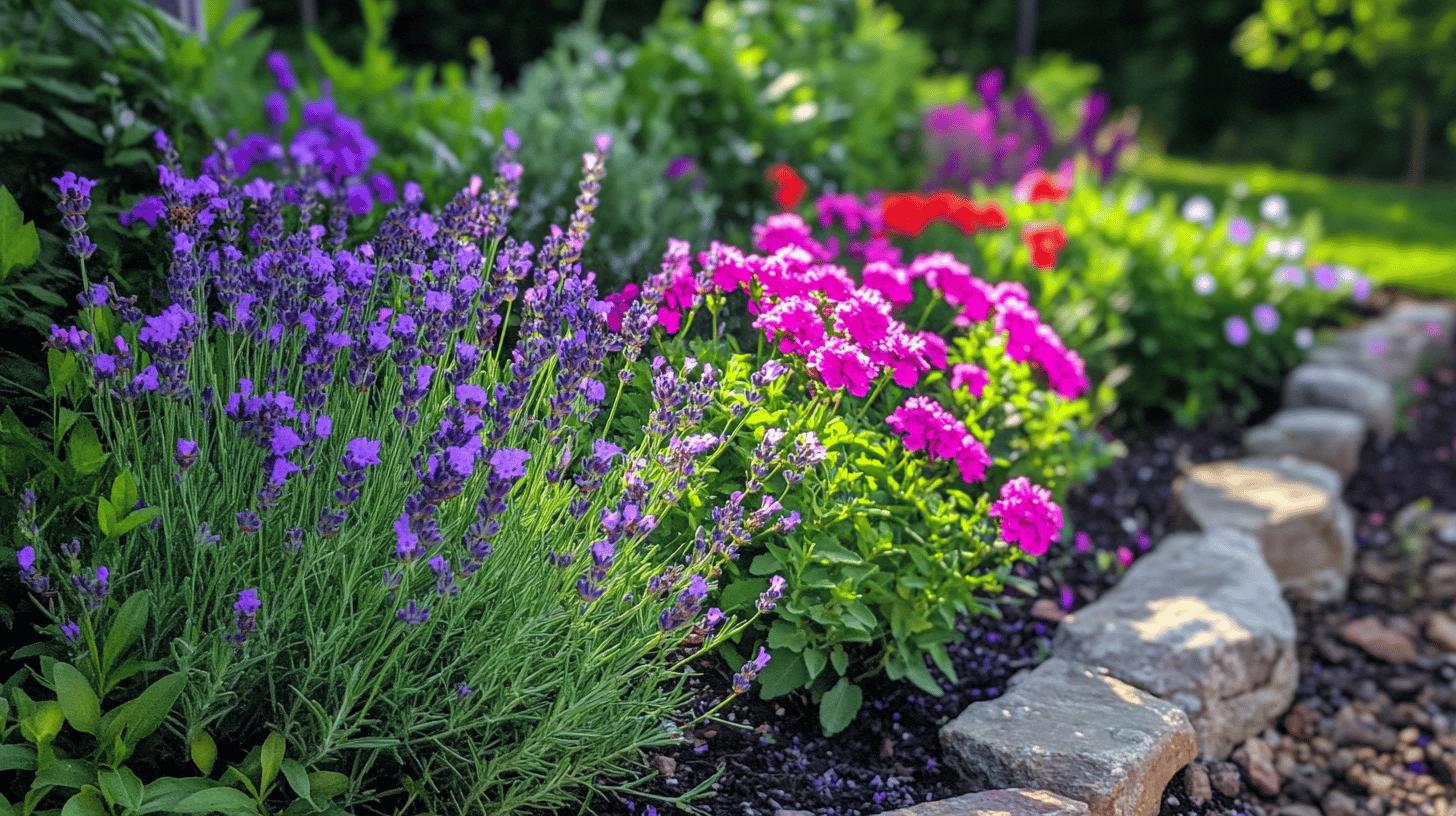
For sunny beds and hot south-facing slopes, creeping phlox (zones 3–9) buries itself in pink, purple, or white bloom every spring and doesn’t mind rocky soil. Dianthus (zones 3–9) makes tidy cushion mats with clove-scented flowers, ice plant (Delosperma, zones 5–9) brings neon color to dry sandy spots, and lavender (zones 5–9) — taller than a classic ground cover at 12–18 inches — fills sunny gaps with fragrance and pollinators. Creeping thyme from the section above is equally at home here. Whatever you pick, plant in drifts of 3–5 of each species instead of spotting singles around; drifts read as intentional design and give pollinators a target they can find again.
Fast-Growing Ground Covers for Quick Coverage
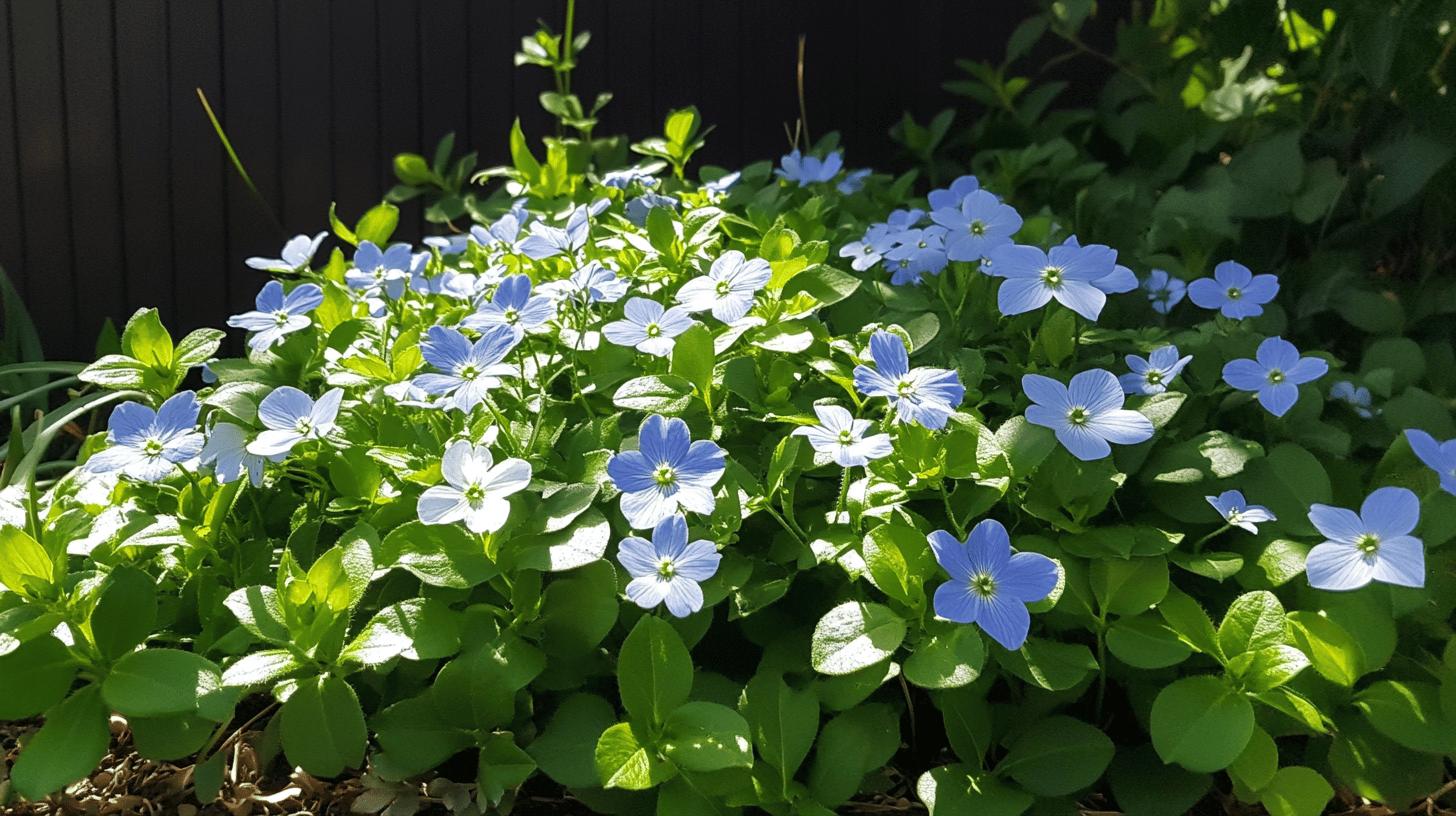
Big bare area, small budget? Fast spreaders fill in within one growing season. Blue star creeper (zones 5–9) carpets part-shade to full sun with tiny blue stars and takes light foot traffic. Creeping Jenny (zones 4–9) runs bright yellow-green through moist sunny spots — the ‘Aurea’ cultivar is the better-behaved version. Sweet woodruff moves fast in moist shade, and ajuga and periwinkle from the low-maintenance section will cover ground in a hurry anywhere they’re happy.
The catch is that speed and manners rarely come together — most fast spreaders need containment or they’ll move into the lawn and smother slower neighbors. One trick that’s worked for me: use an aggressive spreader as a temporary “nurse crop” on a bare slope, let it hold the soil for two or three seasons while slower permanent plants establish, then pull it as the long-term planting takes over.
Ground Cover for Slopes and Erosion Control
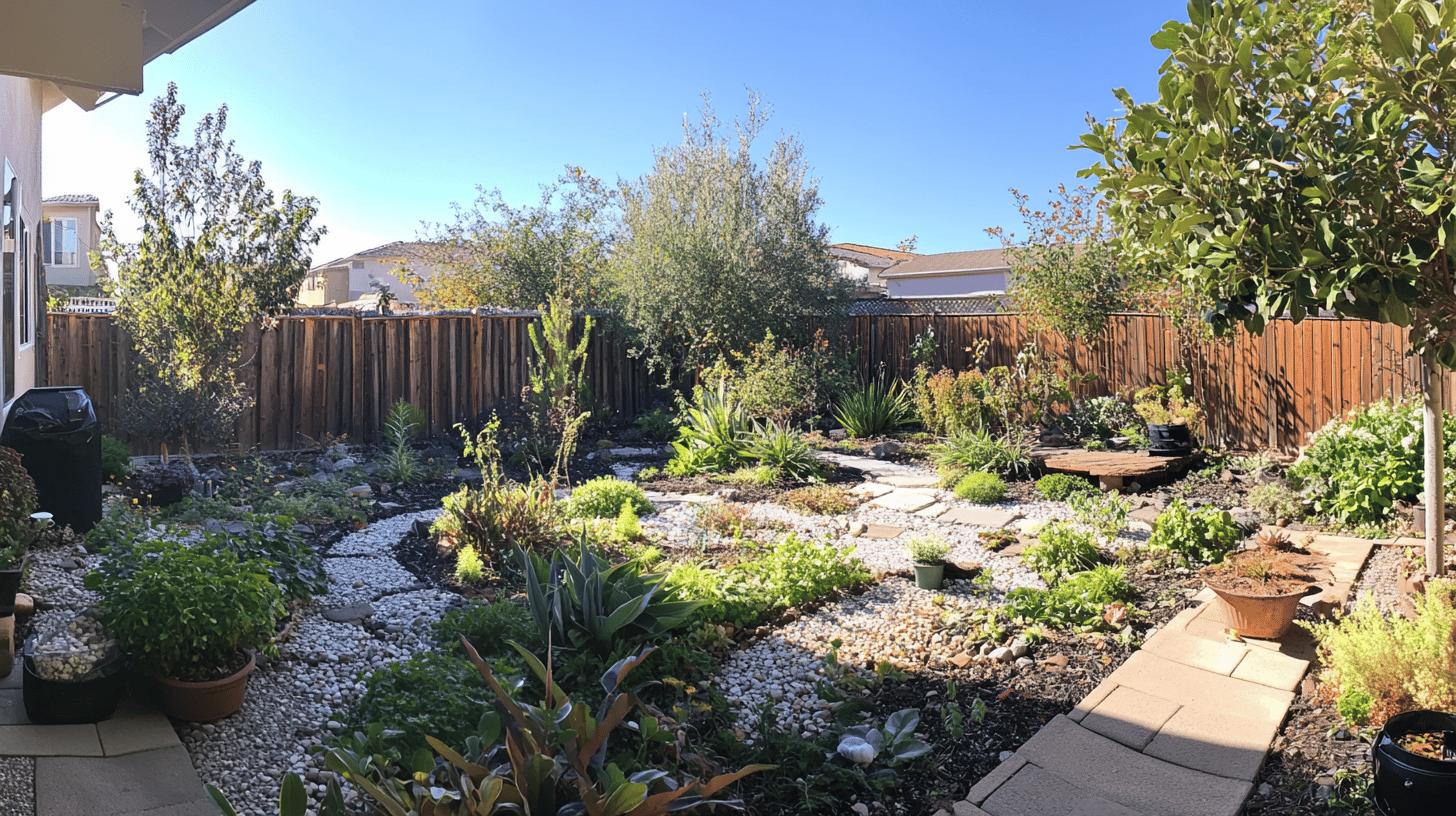
Ground cover on a slope does double duty: it looks better than a scarred bank, and its roots hold the soil. Creeping juniper (zones 3–9) is my first call for steep sunny banks — a low evergreen that spreads horizontally with roots that mean business, giving you year-round structure. In shade, periwinkle and pachysandra both build dense root mats that hold moderate slopes. Ornamental grasses earn a spot here too — switchgrass, little bluestem, and prairie dropseed all drive deep fibrous roots that stabilize soil while adding height and movement. Crown vetch works on rough utility slopes but is banned as invasive in some states; check your local list before planting.
Here’s the part nobody tells you: the plants can’t hold a slope they haven’t rooted into yet, and one hard storm can wash out a fresh planting. On the bank behind my garage I stapled down biodegradable Sandbaggy jute netting ($$$) and planted juniper plugs straight through the mesh. The netting held the soil through two spring storm seasons, then rotted away right on schedule as the junipers knitted in. For slopes steeper than 3:1, layer the planting — canopy, mid-height shrubs, then ground cover — and see our full guide to landscaping a sloped backyard for the structural side.
Pet-Safe and Family-Friendly Picks
If kids and dogs use the yard hard, two filters matter: non-toxic, and tolerant of actual traffic. The standard low-maintenance list doesn’t all pass — vinca, ajuga, and English ivy are mildly to moderately toxic to dogs and cats.
The picks that pass both filters: Dutch clover (zones 3–10) is the workhorse — tough enough for real play, safe if the dog grazes it, and it fixes its own nitrogen while feeding pollinators. I converted a dead patch where my dog wore out the grass into a clover mini-lawn from a bag of Outsidepride White Dutch clover seed ($), and it’s the only part of the yard that looks better for being run on. Creeping mazus (zones 5–8) takes light traffic and blooms purple-blue in late spring; Irish moss (zones 4–8) makes the soft green carpet everyone wants, in cool moist spots; Roman chamomile (zones 4–11) releases an apple scent when stepped on; and Corsican mint (zones 6–9) is harmless if pets nibble. Since plant safety extends past the ground cover itself, our roundup of pet-safe plants covers what else to grow — and skip — in a yard dogs patrol.
Native and Sustainable Ground Covers
Native ground covers — species that evolved in your region — typically need less water, less fertilizer, and less pest management than imported ornamentals, and the local wildlife actually recognizes them. Wild strawberry (zones 3–10) runs happily through sun and part shade, feeding birds with its berries — and you, if you beat the birds to them. Bearberry (zones 2–6) is the evergreen choice for cold climates and sandy acidic soil. Prairie dropseed (zones 3–9) covers dry sunny ground with fine-textured native grass, pussytoes (zones 3–9) hosts American Lady butterflies on silvery mats, and wild ginger (zones 3–7) solves deep shade with heart-shaped leaves. Creeping phlox from the sun section is native across much of eastern North America.
Two caveats. “Native” is regional — wild strawberry native to the Midwest isn’t native in Arizona, so check the species against your actual region, not the continent. And natives work best in company: pair these low growers with taller regional species from our roundup of the best native plants for pollinator gardens to build a layered planting that supports pollinators from ground level up.
Putting Together Your Ground Cover Plan
Beyond the open beds, ground covers solve specific problems: slow growers like creeping thyme and Irish moss soften paver joints without overrunning them, a six-inch band of thyme or mondo grass makes a living edge that holds mulch better than plastic edging, and the shade specialists — pachysandra, sweet woodruff, wild ginger — fix that bare ring under mature trees where lawn refuses to grow. Slopes too steep to mow, narrow side yards, the strip along the driveway: all better as ground cover than struggling grass.
When planting day comes, two pieces of gear earn their keep. A Nisaku hori hori knife ($$) opens exactly the right slot for a plug in one motion — I set out three flats of thyme plugs with mine in an afternoon, using the depth markings on the blade to keep every plant at grade. And because ground covers spend their first season building roots you’ll never see, work a starter fertilizer with mycorrhizae like Espoma Bio-tone Starter Plus ($) into each planting hole. It’s the difference between plugs that sit there and plugs that knit together by fall.
Then think in seasons. Most ground covers bloom for two to four weeks and spend the rest of the year as foliage, so mix one evergreen workhorse, one spring bloomer, and one summer bloomer per zone of the yard. And give the whole thing time — year one looks sparse, year two starts reading as a planting, year three looks like you knew what you were doing all along. Resist the urge to overplant in year one; crowded beds just mean thinning work in year three.
Common Questions About Ground Cover Plants
How do I choose a ground cover plant?
Match the plant to five conditions: your USDA zone, sun exposure (full sun, part shade, or shade), soil type, available water, and foot traffic. Most yards have multiple microclimates, so plan in zones rather than picking one species for everywhere.
What is the most low-maintenance ground cover?
Creeping thyme, sedum (stonecrop), hens and chicks, and dwarf mondo grass are the most forgiving once established. All tolerate poor soil, infrequent water, and full sun with minimal care. Periwinkle and bugleweed are also low-maintenance but spread aggressively, which can be an asset or a problem depending on the situation.
When is the best time to plant ground cover?
Early fall (September–October) is ideal for cool-season ground covers — the soil is still warm enough for root growth but the air is cool, reducing transplant stress. Early spring (March–April) is the second-best window. Avoid planting during summer heat or winter dormancy.
What ground cover prevents weeds best?
Dense-growing species smother weeds most effectively. Top picks: pachysandra (in shade), creeping juniper (in sun), periwinkle, ajuga, and dwarf mondo grass. Spread mulch between plants during establishment to suppress weeds until the ground cover fills in — usually 1–2 growing seasons.
Which ground covers are safe for pets and kids?
Creeping mazus, Irish moss, Dutch clover, Roman chamomile, and Corsican mint are all non-toxic and tolerate light to moderate foot traffic. Avoid English ivy, periwinkle (vinca), and ajuga in heavy pet-and-kid use areas — all are mildly to moderately toxic if ingested.
Can I walk on ground cover plants?
A few specifically tolerate foot traffic: Irish moss, creeping thyme, Roman chamomile, Dutch clover, and creeping mazus. Most other ground covers tolerate occasional stepping but not regular walking — plan stepping stones or pavers through high-traffic areas instead of expecting any ground cover to handle daily foot traffic.
How long does it take ground cover to fill in?
Most ground covers take 2–3 growing seasons to fully establish. Year one looks sparse; year two starts to read as a planting; year three is mature. Fast-spreaders like creeping Jenny and ajuga can cover ground in a single year but need contained spaces. Slow growers like dwarf mondo grass take 3–5 years to mature fully.
Recommended gear for planting ground cover
As an Amazon Associate, Backyard Superstar earns from qualifying purchases at no extra cost to you.
- Top pick — Outsidepride Creeping Thyme Seed ($). Covers serious square footage for the price of a couple of nursery flats — sun, fragrance, purple bloom, light foot traffic.
- Budget pick — Luster Leaf 1601 Rapitest Soil Test Kit ($). pH and N-P-K in ten minutes — answers the question every failed planting should have asked first.
- Premium pick — Sandbaggy Jute Netting Roll (4 ft × 225 ft) ($$$). Holds a bare slope through the storms while your planting roots in, then biodegrades on schedule.
- Family-yard pick — Outsidepride White Dutch Clover Seed ($). Pet-safe, playable, self-fertilizing — the lawn alternative that improves with traffic.
- Planting tool — Nisaku NJP650 Hori Hori Knife ($$). One-motion plug planting with depth markings on the blade; the tool that makes three flats an afternoon’s work.
- Establishment helper — Espoma Bio-tone Starter Plus ($). Mycorrhizae-boosted starter food that gets first-year roots down before the first drought tests them.