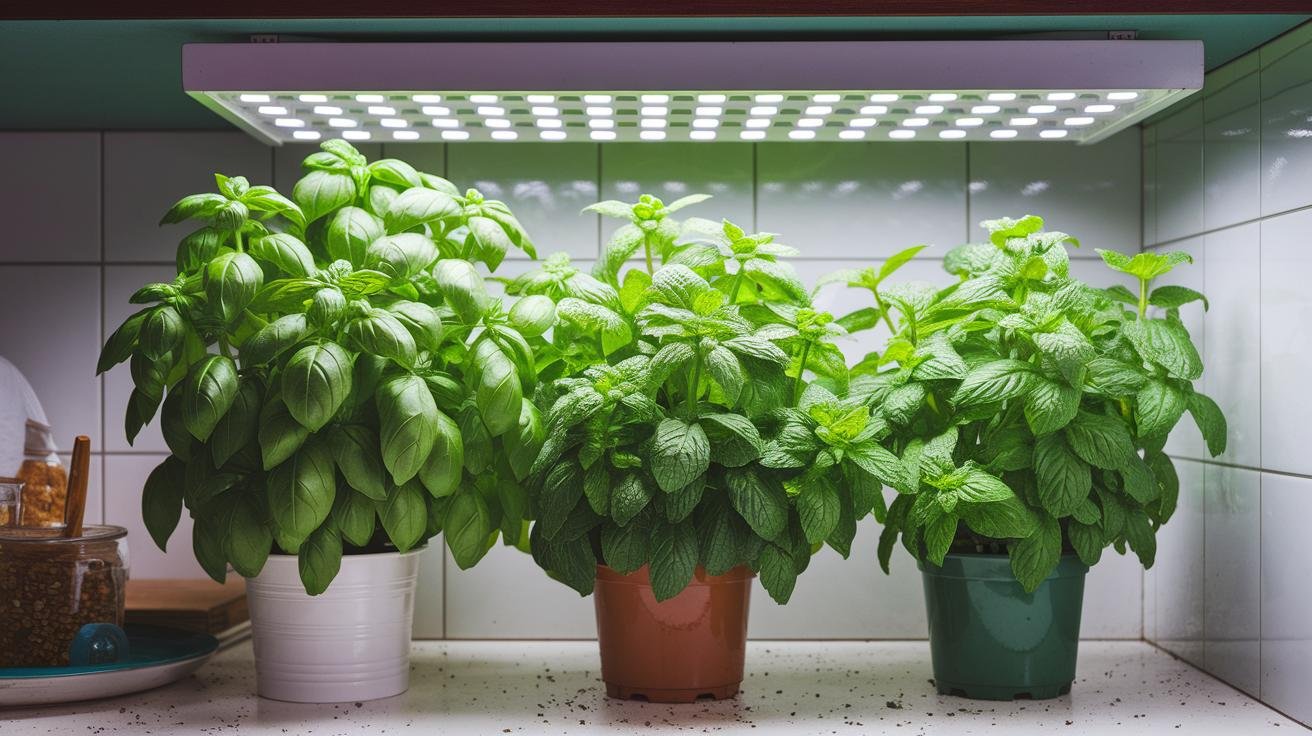
Indoor Hydroponic Herb Garden Setup
Here’s the thing about buying fresh herbs at the store: you pay for a clamshell of basil, use four leaves in a pasta sauce, and the rest turns to black slime in the crisper drawer by Thursday. I got tired of that years ago. An indoor hydroponic herb garden fixes it — you snip what you need, when you need it, and the plant keeps growing right there on your counter.
Hydroponics just means growing plants in nutrient-rich water instead of soil. No dirt, no mud, no hauling bags of potting mix. For herbs, it’s close to a cheat code: they grow faster, they grow year-round regardless of what the weather’s doing outside, and a countertop unit takes up less space than a dish rack.
I’ve run a few of these setups, from a little six-pod countertop kit to a DIY build I cobbled together from a storage tote. Below I’ll walk you through how the system works, how to pick one, which herbs actually thrive in water, and how to keep it all running without babysitting it. Let’s get into it.
As an Amazon Associate, Backyard Superstar earns from qualifying purchases at no extra cost to you.
Why Hydroponics Beats a Windowsill Pot for Herbs
I’m not against a pot of basil on the sill — I’ve killed plenty of them, though, and usually for the same two reasons. Either the soil dried out while I was traveling, or the window didn’t throw enough light and the plant stretched into a pale, leggy mess reaching for the glass.
Hydroponics solves both. The roots sit in oxygenated water that never goes bone-dry, so a missed day doesn’t cost you the plant. And most countertop systems come with their own grow light, so the herbs get a consistent dose of the spectrum they need no matter how gray it is outside.
The speed is the part that surprises people. With the roots bathed directly in nutrients and water, the plant spends less energy hunting through soil and more energy making leaves. In my experience you’ll be pinching usable basil weeks sooner than you would from a pot, and the plants stay productive far longer. If you’ve had luck with a self-watering vertical herb garden, think of hydroponics as the next step up — same hands-off watering, but faster growth and a built-in light.
How an Indoor Hydroponic Herb Garden Actually Works
Don’t let the word “hydroponic” scare you off. Strip away the jargon and every one of these systems is doing the same four simple things.
First, it holds the plant. Herbs start in small net cups or sponge-like grow plugs that cradle the stem while the roots dangle down into the water. Second, it feeds the roots. A reservoir of water mixed with hydroponic nutrients sits under the plants, and the roots drink directly from it. Third, it keeps the water oxygenated — most kits use a small air pump or a circulating pump so the roots don’t suffocate in still water. Fourth, it provides light, usually a full-spectrum LED on a timer.
That’s the whole machine. The countertop kits bundle all four into one tidy appliance you plug into the wall. A DIY build separates them into parts you assemble yourself, which costs less and teaches you more but asks for a little tinkering. Either way, you’re managing the same three inputs once it’s running: light, water level, and nutrients.
Choosing Your System: Countertop Kit or DIY Build
This is the first real fork in the road. Do you want an appliance that does the thinking for you, or a build you control top to bottom? Both grow great herbs. It comes down to budget, counter space, and how much you enjoy fiddling.
All-in-one countertop kits
If you’ve never grown hydroponically, start here. These are plug-and-play — reservoir, pump, light, and timer all in one base. You drop in the pods, fill the tank, and the unit tells you when to add water and food.
My top pick for most kitchens is the AeroGarden Harvest ($$). It holds up to six pods, runs a full-spectrum LED on an automatic timer, and has a control panel that nags you when the water’s low — which is exactly the kind of reminder a busy person needs. Six pods is plenty for a working herb garden: basil, parsley, mint, and a couple of others, all going at once.
If you cook a lot and want more plants at a friendlier price per pod, the iDOO 12-Pod Hydroponic Growing System ($$) is my value pick. It doubles the capacity to twelve pods, packs a roomy water tank that stretches the time between fills, and adds a small circulation fan that strengthens the stems. It’s the one I’d hand someone who wants a real harvest, not just a garnish.
Want the deluxe version with no compromises? The AeroGarden Bounty Elite ($$$) is the premium pick. It grows up to nine plants taller than the smaller units, runs a brighter 50-watt LED, and adds a touchscreen with Wi-Fi so it’ll text you, more or less, when something needs attention. It’s overkill for two herbs and perfect if you want a countertop centerpiece that basically runs itself.
The DIY route
If you like building things — and the price of a kit makes you wince — a DIY hydroponic herb garden is a satisfying afternoon project. The simplest version is a deep-water culture setup: a lidded tote or bucket, holes cut for net cups, an aquarium air pump and air stone to keep the water oxygenated, and a grow light hung above.
The parts that matter most are the net cups and the growing medium that fills them. A combo like these net pots with clay pebbles ($) covers both — the slotted cups let roots reach the water, and the lightweight clay pebbles wick moisture up to the seedling while leaving air gaps so the roots can breathe. You supply the reservoir, the pump, and the light, and you’ve got a system for a fraction of a finished kit. The trade-off is honest: you’re the timer, the sensor, and the alarm now, so you’ll check it more often.
The Best Herbs to Grow Hydroponically
Not every herb loves life in water, but the ones most of us actually cook with do beautifully. Fast-growing leafy herbs are the winners here.
Basil is the obvious all-star — it grows like it’s showing off, and the more you pinch it, the bushier it gets. Mint is almost too easy; in soil it’s a thug that takes over the bed, but in a contained reservoir it just gives you endless mojito leaves with no garden takeover. Cilantro, parsley, chives, dill, and oregano all do well too. These are the same workhorses I’d point you toward in my rundown of the best herbs for a vertical herb garden — fast, forgiving, and useful in the kitchen.
A couple of honest cautions. Woody Mediterranean herbs like rosemary and sage are slower and fussier in pure hydroponics — they can be done, but they’re not where a beginner should start. And mix your growth rates carefully: drop fast, tall basil next to low, slow thyme in the same unit and the basil will shade the little guy out. Group plants with similar appetites and heights, and everybody gets their share of light.
One more reason I love this setup: it doesn’t care what month it is. While the garden outside is under snow, your counter keeps producing. If you’ve ever fought to grow herbs through the winter, an indoor hydroponic unit is the most reliable way I’ve found to do it.
Light, Water, and Nutrients: Keeping It Dialed In
Once it’s running, you’re managing three things. Get these right and the rest takes care of itself.
Light
Herbs are hungry for light — figure on roughly 14 to 16 hours a day under a full-spectrum LED. The all-in-one kits handle this with a built-in timer, which is half of why I steer beginners toward them. If you’re running a DIY build, put your grow light on a cheap outlet timer so you’re not relying on memory. Keep the light close — a few inches above the canopy — and raise it as the plants grow so they stay compact instead of stretching. I get into the specifics of intensity and distance in my guide to herb garden lighting requirements.
Water and nutrients
Plants in water still need to eat. Soil quietly supplies minerals; in hydroponics, you add them. Use a nutrient formula made for hydroponics — a balanced powder like General Hydroponics MaxiGro ($) dissolves cleanly in water and carries the full menu of nutrients leafy herbs want. The branded kits sell their own liquid plant food, which works fine too; MaxiGro is the economical refill I reach for, especially on a DIY system. Mix to the label’s rate for herbs and don’t eyeball it — more is not better, and over-feeding burns the leaf tips. For a deeper look at feeding cadence, my herb fertilization schedule translates straight over to a hydroponic tank.
Top the reservoir off with fresh water as the plants drink it down, and do a full water change every couple of weeks so salts don’t build up. If you want to grow like someone who knows what they’re doing, a VIVOSUN pH and TDS meter combo ($) is the single most useful gadget you can add. Herbs are happiest with the water sitting around 5.5 to 6.5 pH, and the TDS pen tells you whether your nutrients are too weak or too strong. It takes the guesswork out — and guesswork is what kills most first-time hydroponic gardens.
Setting Up Your System Step by Step
Here’s the order I follow whether it’s a kit or a DIY build. Nothing here is hard; it’s just worth doing in sequence.
Start by setting the unit somewhere stable, out of direct draft and away from a heat vent, with an outlet nearby. Counters near the kitchen sink are ideal — you’ll be adding water often, and proximity makes that a five-second chore instead of a trek with a watering can.
Next, seat your plugs or seedlings in the net cups and settle them into the lid. If you’re starting from seed, expect to see sprouts in a week or so; if you’re transplanting starter herbs, rinse the soil gently off the roots first so it doesn’t foul the water. Fill the reservoir, mix in your nutrients to the label rate, and check that the pump is bubbling or circulating.
Then set the light timer for your 14-to-16-hour day and walk away. For the first week, just let the roots find the water. After that, your routine is simple: glance at the water level every few days, top it off, watch the pH and TDS if you’ve got the meter, and do a full reservoir change every two weeks. Once the herbs fill in, start harvesting — and harvesting is the secret to keeping them productive.
Common Problems and How to Fix Them
Even an easy system throws the occasional curveball. These are the ones I see most, and none of them are fatal if you catch them early.
Algae in the reservoir. If light hits the nutrient water, you’ll get green slimy algae. Keep the tank covered and opaque, and wipe it down at each water change. It competes with your herbs for nutrients, so don’t let it move in.
Leggy, pale plants. That’s a light problem nine times out of ten — the light’s too far away or not running long enough. Lower it closer to the canopy and bump the timer up toward 16 hours.
Yellowing or burnt leaf tips. Yellowing usually means the nutrients are too weak or it’s time for a water change; crispy brown tips usually mean the mix is too strong. This is exactly what the TDS meter settles in ten seconds.
Bugs indoors. Even inside, aphids and fungus gnats find their way to soft herb growth. Knock them back early with a rinse or insecticidal soap before they spread — the same gentle, non-toxic approach I lay out for organic pest control on herb gardens works on a countertop unit too.
Floppy stems. Indoor plants miss the wind that toughens them up outdoors. A small fan on low for a few hours a day (some kits build this in) thickens the stems and keeps mildew off the leaves.
Recommended gear for an indoor hydroponic herb garden
As an Amazon Associate, Backyard Superstar earns from qualifying purchases at no extra cost to you.
- Top pick — AeroGarden Harvest ($$). Plug-and-play 6-pod countertop kit with a built-in light and water-level reminders — the easiest start.
- Value pick — iDOO 12-Pod Hydroponic Growing System ($$). Double the pods and a bigger tank for a real harvest, plus a stem-strengthening fan.
- Premium pick — AeroGarden Bounty Elite ($$$). 9 plants, a brighter 50W LED, and a Wi-Fi touchscreen that nearly runs itself.
- Nutrients — General Hydroponics MaxiGro ($). Clean-dissolving powder feed; the economical refill for any system, especially a DIY tank.
- Water tester — VIVOSUN pH & TDS Meter Combo ($). Dials in pH and nutrient strength in seconds — the gadget that prevents most beginner failures.
- DIY build kit — Net Pots + Clay Pebbles Combo ($). The cups and growing medium for a build-your-own deep-water culture setup.
Start Small and Keep It Growing
You don’t need a basement full of equipment to grow fresh herbs indoors. Pick a system that matches how you cook and how much you like tinkering — a simple six-pod kit for most people, a twelve-pod unit if you cook a lot, or a DIY tote if you’d rather build than buy. Give the herbs their light, keep the reservoir topped and fed, and harvest often.
Within a few weeks you’ll be snipping basil for dinner straight off the counter while the snow piles up outside, and you’ll wonder why you ever paid for those sad little clamshells. Start with one system, get a feel for the rhythm, and let it grow from there. You’ve got this.
Indoor Hydroponic Herb Garden Questions, Answered
How long does it take to grow herbs hydroponically?
Most leafy herbs sprout within a week or two and are ready for light harvesting in about three to four weeks. Because the roots get water and nutrients directly, hydroponic herbs generally grow noticeably faster than the same herbs in soil, and they keep producing for months with regular trimming.
Do indoor hydroponic herb gardens need a grow light?
Yes. Herbs want roughly 14 to 16 hours of light a day, which a windowsill rarely delivers consistently. Most countertop kits include a full-spectrum LED on a timer; for a DIY build, add a grow light on an outlet timer and keep it a few inches above the plants.
What nutrients do hydroponic herbs need?
They need a complete hydroponic nutrient formula that supplies nitrogen, phosphorus, potassium, and trace minerals. Use a product made for hydroponics, mix it to the label rate for herbs, and refresh the reservoir every couple of weeks so mineral salts don’t build up and burn the roots.
Which herbs grow best in a hydroponic system?
Fast-growing leafy herbs do best: basil, mint, parsley, cilantro, chives, dill, and oregano all thrive in water. Woody Mediterranean herbs like rosemary and sage are slower and trickier, so they’re better left until you’ve got a few harvests under your belt.
Is a hydroponic herb garden hard to maintain?
No — it’s mostly topping off water, checking nutrient levels, and a full reservoir change every couple of weeks. An all-in-one kit with a timer and water-level reminders is close to hands-off; a DIY system asks for a little more attention since you’re managing the light timer and water yourself.