Lawn Aeration Tools for Every Yard Size
Ever pushed the mower across the yard and felt like you’d done your part, only to watch the grass sulk through July anyway? I used to think mowing was the whole job. Then I learned that most tired lawns aren’t starving for fertilizer — they’re choking on packed-down soil. The right lawn aeration tools are how you fix that, and the good news is you don’t need a $700 machine to do it.
Aeration just means punching small holes in the soil so air, water, and nutrients can reach the roots. Picture trying to sleep on a slab of concrete with no give to it — that’s what compacted dirt feels like to grass roots. Open it up and the whole lawn breathes again.
Below I’ll walk you through the tools that get it done, from a few-bucks pair of spiked sandals to a tow-behind plug aerator built for an acre. If you want the why behind all this first, here’s what lawn aeration actually does for your lawn. Otherwise, let’s match a tool to your yard.
As an Amazon Associate, Backyard Superstar earns from qualifying purchases at no extra cost to you.
Match the Aerator to Your Yard Size First
Before you buy anything, answer one question: how big is the lawn, and how hard is the ground? That alone narrows the field fast.
Small yard under about 2,000 square feet? A manual core aerator does the job for the price of a nice dinner, as long as you don’t mind a little sweat. Want to cover more ground without wrecking your back? Powered electric and gas aerators move faster, and a tow-behind unit handles the big stuff if you’ve got a tractor or riding mower to pull it.
Here’s the quick version, tier by tier — I’ve used relative price ranges ($ cheapest to $$$ priciest) instead of exact numbers, since prices bounce around by season and seller.
| Tool type | Best lawn size | Why it works | The catch | Price tier |
|---|---|---|---|---|
| Aerator shoes (spiked sandals) | Up to 2,000 sq ft | Cheapest way in; aerate as you walk | Shallow holes only | $ |
| Manual core aerator | Up to 2,000 sq ft | Pulls real soil plugs; budget-friendly | It’s a workout | $ |
| Corded electric scarifier/aerator | 2,000–5,000 sq ft | Fast, even passes; no fumes | Cord limits your range | $$ |
| Tow-behind plug aerator | Over 5,000 sq ft | Wide swaths, deep plugs, little effort | Needs a tractor or ATV | $$$ |
Manual Lawn Aeration Tools Worth Owning
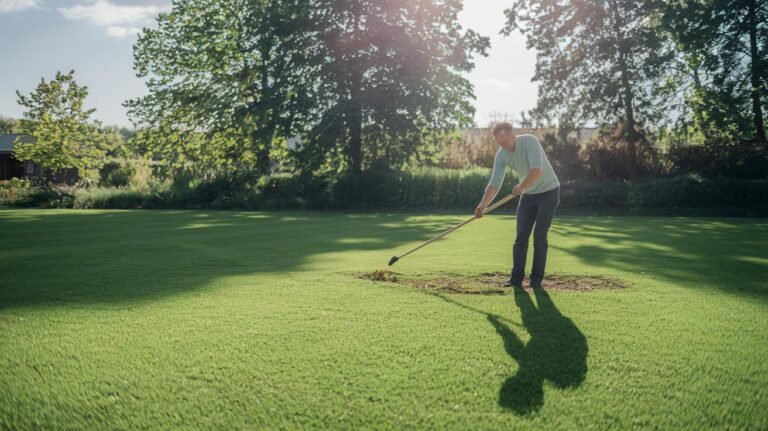
If your lawn feels like a parking lot, manual tools are the simplest place to start. You step on them, twist them, or strap them to your boots — each one pokes fresh holes. The trade-off is honest: they cost little and last forever, but you supply the horsepower.
Manual core aerator
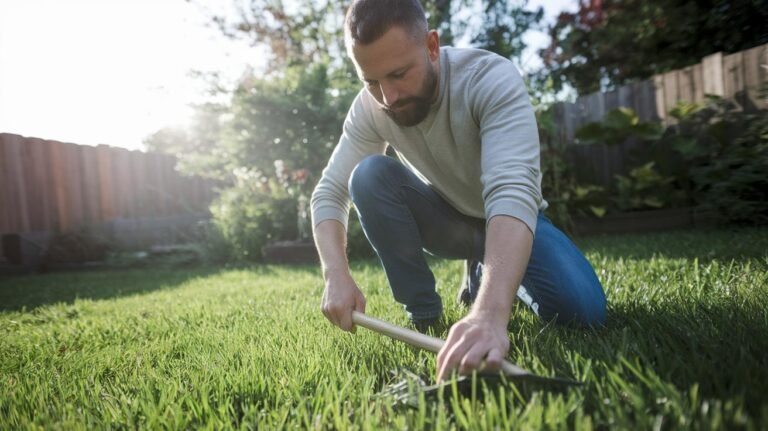
This is the one I reach for on small lawns. A manual core aerator uses hollow tubes to yank out plugs of soil two to four inches deep, which is what actually relieves compaction — solid spikes just press the dirt sideways. You set the foot bar, step down with your weight, and lift. Do a damp lawn, not a bone-dry one, and it pulls clean cores instead of fighting you.
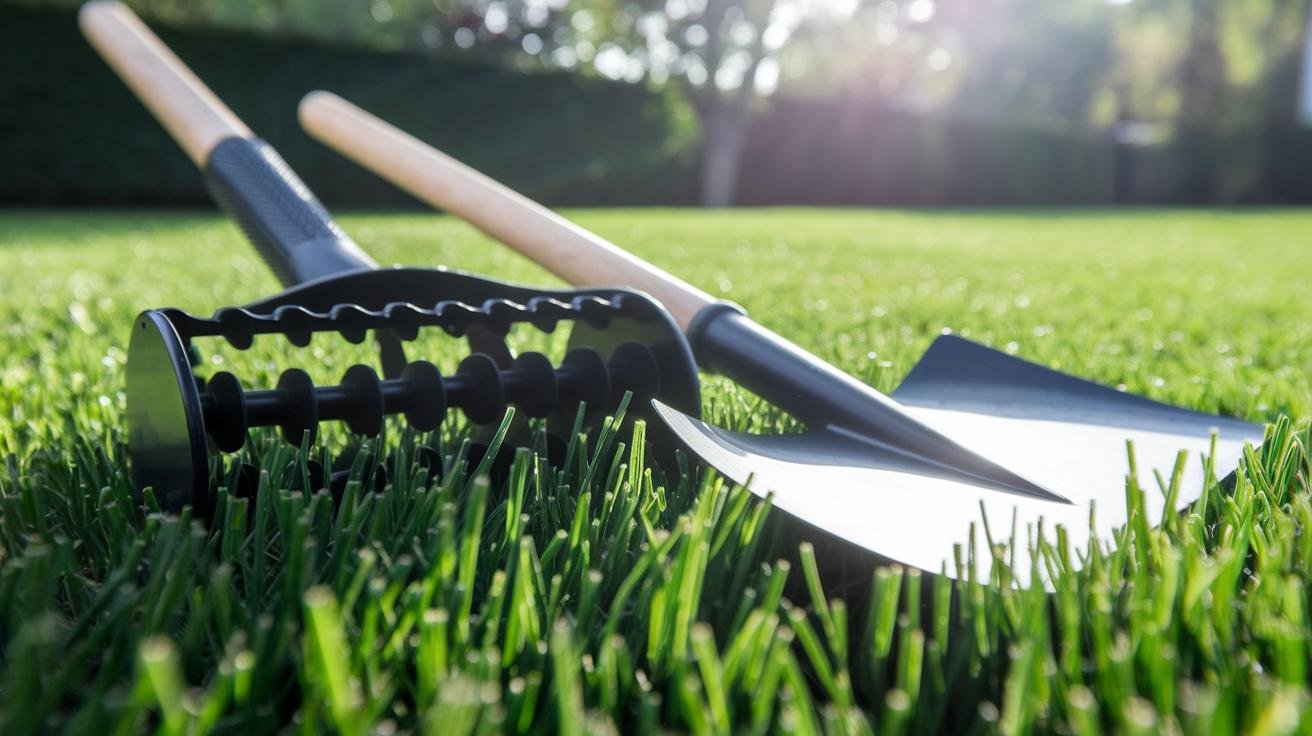
The Yard Butler ID-6C Manual Lawn Coring Aerator ($) is the workhorse here — powder-coated steel, a long handle, and two hollow tines that pull real plugs. It’s my top pick for most homeowners with a yard under 2,000 square feet because it does the actual job a core aerator is supposed to do without a power cord or a fuel can. Wipe the mud off the tines when you’re done and it’ll outlast a couple of mowers.
Aerator shoes
Aerator shoes strap right over your boots, so every step drives a row of spikes into the turf. Walk the yard, aerate as you go — that’s the whole pitch. They won’t pull plugs like a coring tool, and the holes stay shallow, but for a tiny lawn or for hitting thin spots between deeper passes, they’re hard to beat on price.
If you want to try aeration without spending real money, the Punchau Lawn Aerator Shoes ($) are my budget pick. They use metal buckles and three straps instead of the flimsy plastic ones that snap on cheaper pairs, and they cinch over whatever shoes you’re already wearing. Just hose the spikes off after — caked-on dirt is what gums these up.
Garden fork
Don’t overlook the spading fork already hanging in your shed. For a stubborn high-traffic patch or a heavy clay corner, drive a garden fork four to six inches down, rock it back and forth to crack the soil, and pull it out. It’s slow and it’s an arm workout, but for spot-fixing the worst few square feet, nothing’s cheaper or more available. Keep the handle dry and store it inside so it doesn’t rust.
Powered Aerators for Medium and Large Lawns
Past a few thousand square feet, doing it by hand stops being charming. Powered tools take the sweat out and let you finish a real lawn in an afternoon. Here’s how the main types stack up, and what each one asks of you.
Corded electric
Corded electric units plug into an outlet, stay quiet, and never need a tune-up. You walk them across the lawn while the tines spin. The cord is the obvious limit, so plan your route and grab a heavy outdoor extension cord rated for the run. These shine on lawns in the 2,000-to-5,000-square-foot range.
One honest note on this category: the Sun Joe AJ801E Electric Scarifier and Dethatcher ($$) is the corded machine I see most, and it’s a great tool — but it’s a scarifier and dethatcher, not a true core aerator. It slices the surface and rips out matted thatch rather than pulling plugs. I’m including it because dethatching and aeration go hand in hand: clear the thatch first and your aeration (and your seed) actually reaches the soil. If you’ve got a thick thatch layer, this is the powered companion to a coring pass, not a replacement for it.
Battery powered
Battery aerators cut the cord so you can roam the whole yard. Most run 30 to 60 minutes on a charge, so if you’ve got a big lawn, keep a spare battery on the charger and swap mid-job. Wipe the contacts after each use and store the packs somewhere cool and dry, not a freezing garage.
Gas powered and self-propelled
Gas machines hit hardest on lawns over 5,000 square feet and chew through hard-packed clay with almost no pushing from you. The cost is upkeep: fresh fuel, an oil check, a spark plug now and then, and a tune-up each season so it doesn’t strand you. Self-propelled models add a drive system that pulls itself forward — you just steer and pick the tine depth. Before each use, grease the drive parts, snug any loose belts, and make sure the safety levers click in.
Tow-behind plug aerators
If you own a riding mower or an ATV, a tow-behind plug aerator is the easiest big-lawn answer there is. You hitch it on, drive at a walking pace, and the gang of coring knives pulls plugs across a wide path in one pass. Most have a tray you load with bricks or a sandbag so the knives bite deeper.
For acreage, the Agri-Fab 40-Inch Tow Plug Aerator ($$$) is my premium pick. It runs 24 galvanized coring knives across a 40-inch width with a universal hitch and a weight tray, so it covers serious ground while you sit. When the season’s over, hose the mud off the knives and hitch and store it dry. If you’re weighing whether a machine like this even pencils out, my breakdown of what lawn aeration really costs walks through it.
Should You Rent or Buy Your Aerator?
Here’s where a lot of people overspend. If you only aerate once a year, renting a core aerator for a modest daily fee is often the smart move. You skip the machine taking up shed space, you dodge the maintenance, and you grab a heavy-duty unit for the one day you need it.
But if you aerate twice a year — say a spring and a fall pass — buying usually wins over time. A manual core aerator costs less than a single nice dinner out, and even a powered unit pays for itself against a few seasons of rental fees. Owning it also means you go when the soil’s right, not when the rental counter has one free.
The honest cons of buying: you’ve got to store it, and you’re the one sharpening tines or swapping worn knives. A quick wipe-down and a yearly check is the deal. If you’re aerating once and never again, rent. If it’s becoming a habit, buy. And when you’re ready to actually run the tool, here’s how to aerate your lawn step by step.
Caring for Your Tools and Your Lawn After Aeration
Your aerator earns a little attention when the job’s done. Scrape or hose the soil off every spike and tine, then drip a few drops of light oil on the moving joints so nothing seizes before next season. Once a year, check the tines and swap any that are bent or dull, then store everything on a dry shelf or shed hook — rust is what kills these tools, not use.
The lawn needs aftercare too, and this is where the payoff happens. For the next week or two, water deeply every other day so cool water sinks through the fresh holes. While the soil’s open and soft is the perfect window to overseed the thin spots — scatter seed and press it in with the back of a rake so it nestles into the holes.
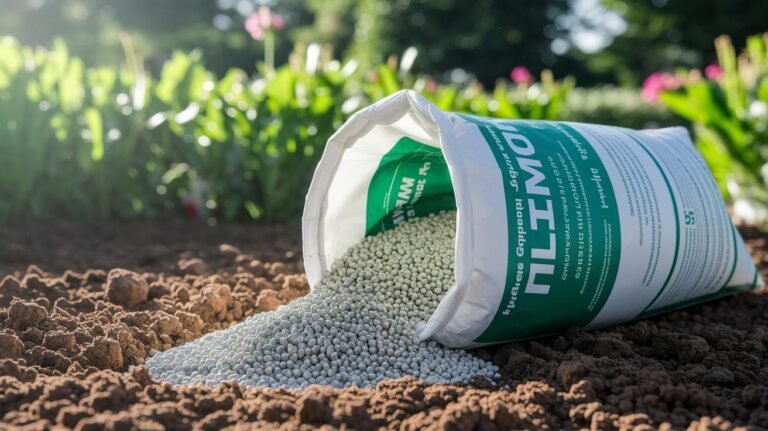
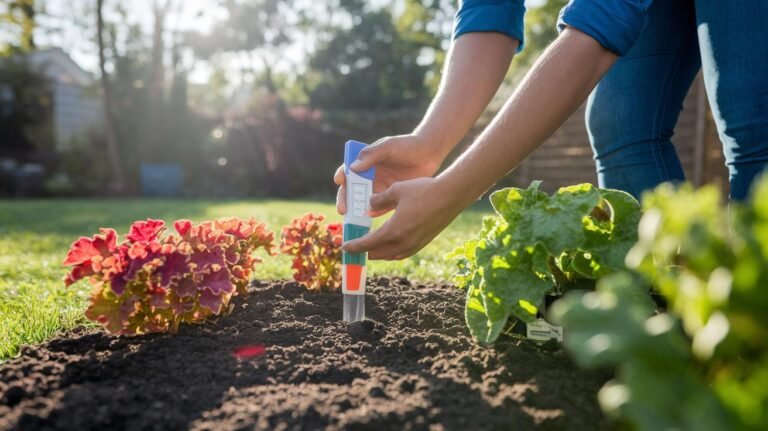
Once you see new sprouts, feed them with a gentle slow-release fertilizer so the young grass grows in strong instead of getting burned. It’s also a good moment to run a quick soil pH test, since aeration opens the door for any amendment you add to actually reach the roots. Then stay off the grass for a couple of weeks and let it recover. Patience here is what turns a holey lawn into a thick one.
Recommended gear for lawn aeration
As an Amazon Associate, Backyard Superstar earns from qualifying purchases at no extra cost to you.
- Top pick — Yard Butler ID-6C Manual Lawn Coring Aerator ($). Pulls real soil plugs, no power needed — the right call for most small-to-mid yards.
- Budget pick — Punchau Lawn Aerator Shoes ($). Metal-buckle spiked sandals that aerate as you walk; the cheapest way to start.
- Powered companion — Sun Joe AJ801E Electric Scarifier & Dethatcher ($$). Clears thatch before you aerate so air, water, and seed reach the soil.
- Premium pick — Agri-Fab 40-Inch Tow Plug Aerator ($$$). Twenty-four coring knives across a 40-inch path for big lawns — hitch it and ride.
Pick a Tool and Give Your Lawn Some Air
You don’t need the biggest machine on the rack — you need the one that fits your yard and how often you’ll use it. Match a manual core aerator or a pair of spiked shoes to a small lawn, step up to a corded or gas machine for a medium one, and hitch a tow-behind plug aerator behind the mower for the big stuff. Then water, overseed, and stay off it while it bounces back. Open that soil up and your grass will come in greener, thicker, and a lot tougher than mowing alone ever made it. You’ve got this.
Lawn Aeration Tool Questions, Answered
What are the best heavy-duty tools for lawn aeration?
For big or hard-packed lawns, gas-powered walk-behind aerators and tow-behind plug attachments do the most work for the least effort. They cover wide paths fast and pull soil plugs up to about four inches deep, which is what really breaks up compaction on a large property.
What manual aerators can I use on a small lawn?
The main three are manual core (plug) aerators, spike aerator shoes, and a basic garden fork. Core aerators pull plugs and relieve compaction best; shoes and forks punch holes and are cheaper, which makes them fine for tiny yards or spot-fixing thin patches.
Can I rent lawn aeration tools instead of buying?
Yes. Home improvement stores, garden centers, and equipment rental shops rent core aerators by the day for a modest fee. Renting makes sense if you aerate only once a year; if you aerate twice a year or more, buying your own usually costs less over time.
What is the best month to aerate a lawn?
Early fall is the sweet spot for cool-season grasses, when soil moisture and active growth help the lawn recover before winter. Warm-season grasses do best aerated in late spring to early summer as they hit their growth stride.
Do lawn aerator tools actually work?
They do, when matched to your soil and used on damp ground. By easing compaction and opening paths for air, water, and nutrients, aeration tools help roots grow deeper and turf come in thicker — especially when you follow up with overseeding and consistent watering.