How to Clean Patio Lounge Chairs by Material
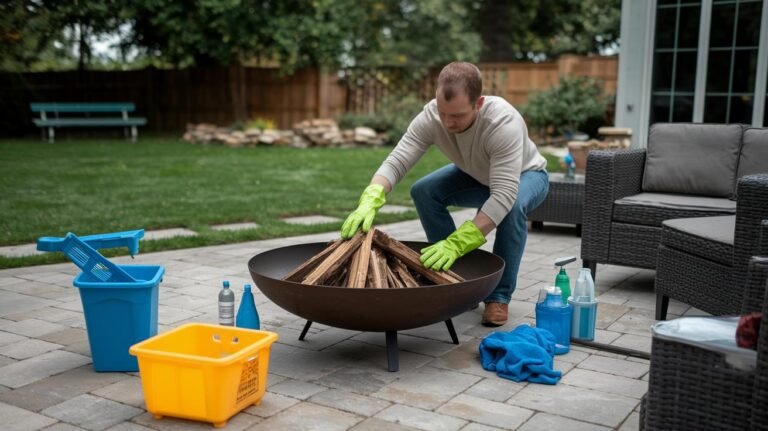
A lounge chair that has sat out through a summer of pollen, rain, and dropped snacks doesn’t need replacing — it needs the right cleaning method for what it’s actually made of. That’s the part most people get wrong. The soapy scrub that brings a plastic chair back to life is the same scrub that lifts the finish off aluminum and grays out teak. After years of babying outdoor furniture through Midwest weather, I’ve settled on a simple rule: figure out the material first, then match the cleaner and the muscle to it. Do that and a tired chair looks new again in an afternoon.
This guide walks through cleaning wood, metal and aluminum, wicker, and plastic lounge chairs one at a time, then covers the jobs that cross all four — mold, mildew, stubborn stains — and how to dry, seal, and store your chairs so you’re not doing this again every month.
As an Amazon Associate, Backyard Superstar earns from qualifying purchases at no extra cost to you.
Start With a Dry Brush-Down — Before Any Water Touches It
Every good cleaning starts dry, and skipping this step is the fastest way to make more work for yourself. If you hit a dusty, gritty chair with a wet brush, all you’ve done is turn loose dirt into mud and grind it into the finish. So pull off the cushions first, give them a shake, and set them somewhere in the sun.
Then knock the frame down with a dry, soft-bristled brush or a shop broom — get into the slat gaps, the joints, and the underside of the armrests where cobwebs and leaf bits collect. A long-handled OXO Good Grips extendable scrub brush saves your back here and reaches the low crossbars without you crouching on the patio; the same brush does the wet scrubbing later, so it earns its spot in the garage. Only once the loose stuff is gone should water come into the picture.
Cleaning Wooden Patio Lounge Chairs and Adirondacks
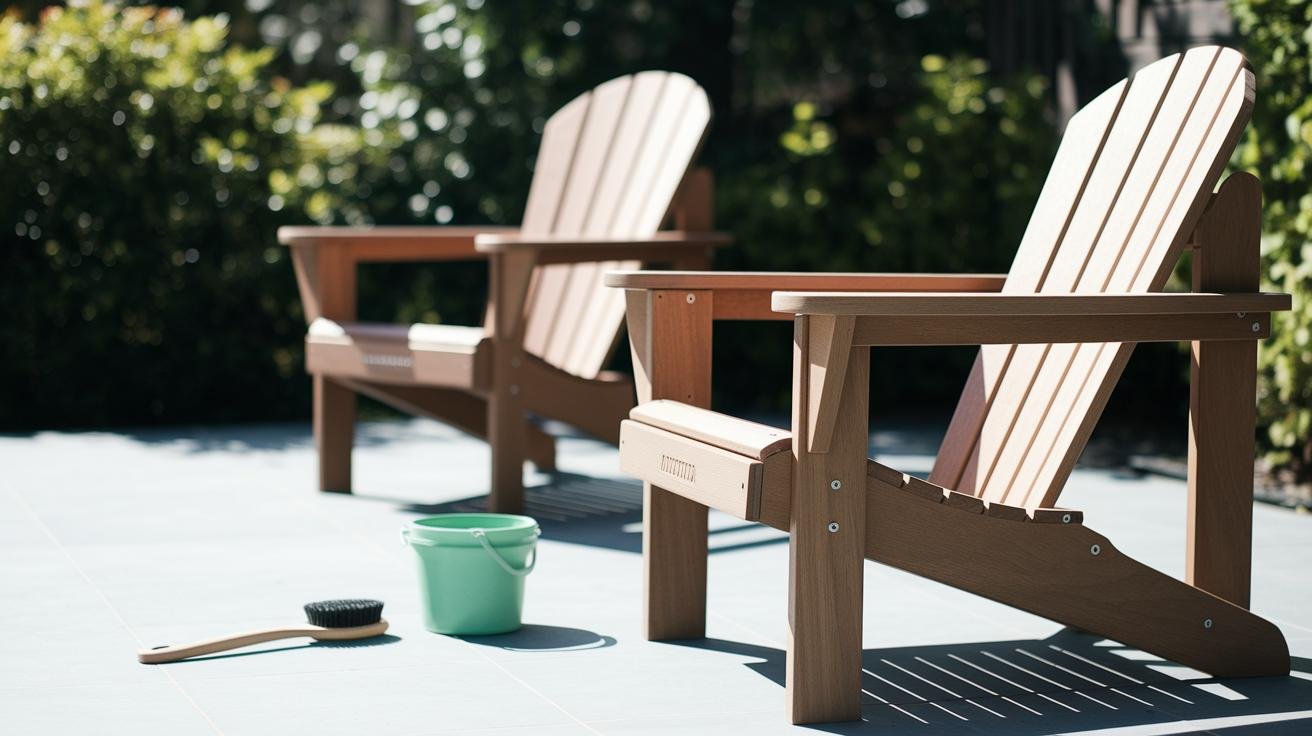
Wood is the material people worry about most, and for good reason — it’s the one that punishes over-cleaning. Whether you’ve got teak, cedar, eucalyptus, or a painted Adirondack, the goal is to lift dirt without soaking or stripping the timber. Start with the gentlest thing that works: a bucket of warm water and a squirt of mild dish soap, worked along the grain with a soft brush. Scrubbing across the grain scratches the surface and traps grime in the scuffs, so follow the lines of the wood. Rinse with a light spray and let the chair dry fully in the sun before you do anything else.
For weathered teak that’s gone silver-gray, or wood with ground-in mildew that soap won’t touch, step up to a dedicated wood cleaner rather than reaching for bleach. A product like Star brite Premium Teak Cleaner is formulated to pull out gray and grime while leaving the wood intact — the kind of thing bleach will lighten unevenly and eventually splinter. The catch with wood is water dwell time: don’t let it soak, or the boards can warp and crack as they dry. I learned that the hard way on a set of chairs I left half-submerged in a rain-filled kiddie pool of soapy water. Wobbly legs by August.
Once the chair is bone-dry, sand any rough spots with fine-grit paper, then give bare wood a coat of outdoor sealer once a year. Think of it as sunscreen for the chair — it’s what keeps moisture out and color in, and it’s the single biggest factor in whether a wooden lounger lasts three seasons or fifteen. If you’re weighing whether a set is even worth the upkeep, our guide to durable outdoor furniture that holds up to weather is a good gut check before you invest more time in it.
Washing Metal and Aluminum Lounge Chairs Without Wrecking the Finish
Routine Cleaning
Powder-coated aluminum and steel are the low-drama option — they clean up fast and rarely fight back — but the powder coat is the whole ballgame, and abrasives are its enemy. Mix warm water with a little mild dish soap or a splash of white vinegar and scrub the rails and joints in small circles with a soft brush. You’ll see grime lift without any grit scratching the finish. An all-surface spray like Star brite Outdoor Furniture Cleaner cuts the greasy film that sunscreen and food leave behind, which plain soap tends to smear around instead of removing.
The real key with metal is drying, not washing. Rinse every surface, then wipe it down with a microfiber cloth so water can’t sit in the seams and start rust. Moisture loves to hide under rims and inside hollow tubing, so flip the chair and check the undersides. Do this once a month or after any big cookout, and never touch metal with steel wool or an abrasive pad — those leave scratches that become tomorrow’s rust spots.
Rust Removal and Prevention
Caught a few rust spots already? They’re fixable. Soak the rusty patch in straight white vinegar for about ten minutes to loosen the flakes, then work it gently with fine steel wool — the soft grade, so you don’t gouge the surrounding paint. Sand the spot smooth with fine-grit paper, brush off the dust, and dab on a rust-resistant primer or a matching touch-up paint. Let it cure in the sun. Stubborn spots may need a second vinegar soak, and that’s fine; better two rounds than one aggressive one.
The prevention half matters more than the removal. Once everything’s clean and dry, finish metal frames with a UV-resistant protectant such as 303 UV Protectant Spray, which lays down a barrier against both corrosion and the sun-fade that chalks out colored powder coats. Before you kick back, run a hand over the frame and make sure it’s truly dry — trapped water is how the whole rust cycle starts over.

Deep-Cleaning Wicker and Plastic Lounge Chairs
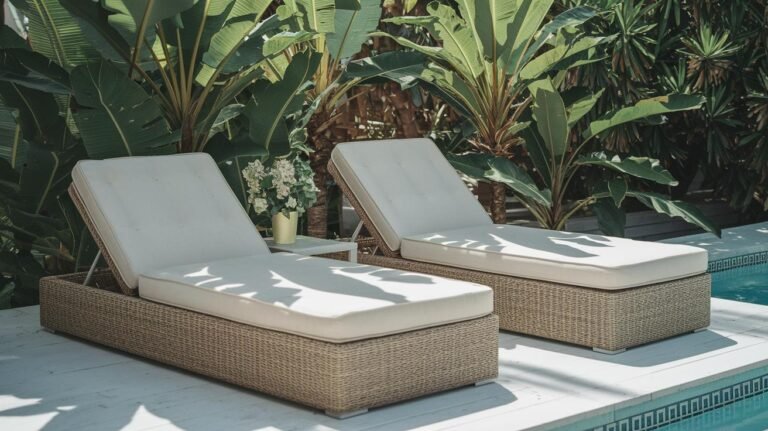
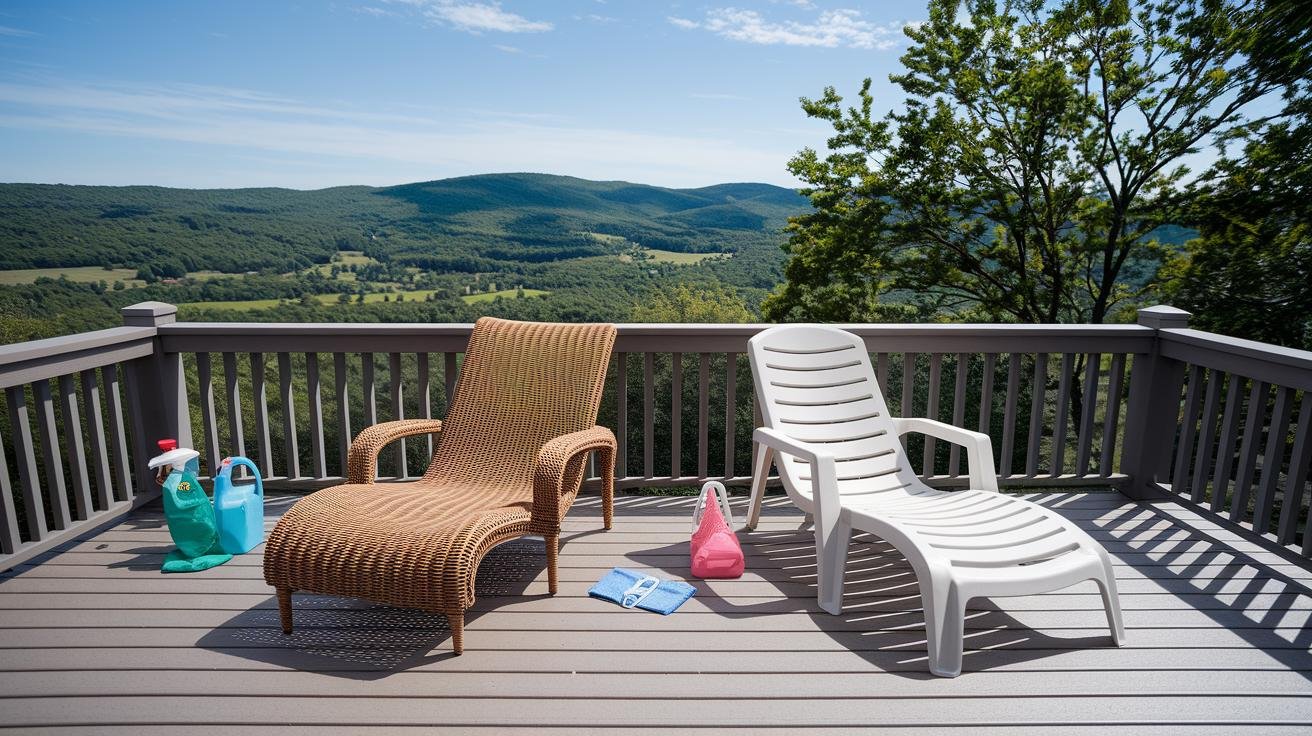
Wicker and plastic sit at opposite ends of the effort scale, so it’s worth taking them one at a time. Resin wicker is woven, which means dust settles deep in the weave where a brush can’t reach. Start with a vacuum and the brush attachment to pull loose dust out of the gaps, then scrub each section with warm soapy water and a soft brush, working gently so you don’t crack or fray the strands. Rinse with a light spray — too much water leaves wicker soggy and slow to dry — then tip the chair on its side so air can move between the weave. Green algae or mildew clinging to the back and arms is common on wicker that lives in the shade; an oxygen-bleach solution or a purpose-made remover (more on that below) clears it without the harshness of chlorine bleach on the fibers.
Plastic and resin chairs are the easy money. Warm water, a squirt of dish soap, a soft cloth or brush over every armrest, leg, and slat, then a full rinse to dodge the chalky white streaks that dried soap leaves behind. Flip them upside down to air-dry and you’re done. Plastic shrugs off water in a way wood and metal never will, which is exactly why it’s the go-to for anyone who wants furniture they can hose off and forget. If you’re leaning into that low-maintenance approach, the trade-offs are worth reading in our breakdown of the pros and cons of zero gravity patio chairs, since most of those use exactly this kind of wipe-clean frame.
A Quick Reference for Every Material
When you just want the short version before heading out to the patio, here’s how the four materials stack up on cleaner, tool, and the one mistake that ruins each.
| Material | Best cleaner | Tool | Avoid |
|---|---|---|---|
| Wood / teak | Mild soap or dedicated teak cleaner, with the grain | Soft brush | Long soaks, bleach |
| Metal / aluminum | Soap or vinegar; all-surface spray for film | Soft brush + microfiber | Steel wool, sitting water |
| Wicker (resin) | Soapy water; oxygen bleach for algae | Vacuum + soft brush | Over-wetting the weave |
| Plastic / resin | Warm soapy water | Cloth or soft brush | Leaving soap to dry on |
Removing Mold, Mildew, and Stubborn Stains
Some jobs cross every material, and mildew is the big one — those fuzzy gray-green spots that bloom on anything left damp and shaded. Before you attack a stain with any cleaner, test it on a hidden spot first. Bleach can leave a pale scar on colored plastic or fabric, and there’s no undo on that.
For plastic and wicker, a classic mix of one cup of bleach to a gallon of water, scrubbed on with a soft brush and rinsed clear, handles most mildew. If you’d rather skip the chlorine smell and the risk of splash-fade — which I usually would around a lawn and border beds — a targeted product like Star brite Mildew Stain Remover does the same work with less collateral damage to nearby plants. Whatever you use, rinse thoroughly and let the chair bake dry in full sun; the UV finishes off any spores you missed.
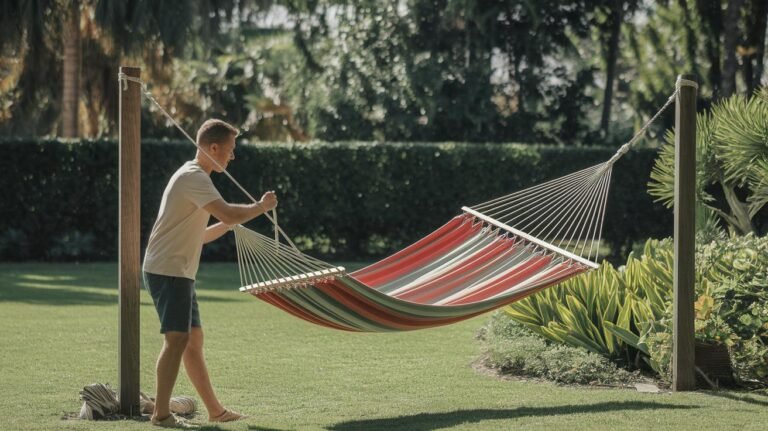
Fabric cushions and slings want a gentler touch. Stir one part white vinegar into three parts water with a drop of dish soap, dip a soft cloth, and blot stains rather than rubbing them — pressing lifts the stain, rubbing drives it deeper into the weave. For the grease drips that come with backyard snacking, a few drops of dish soap or a citrus degreaser left to sit a minute before a light scrub does the trick. Stand cushions on edge in a breezy spot until they’re completely dry, because a cushion put away even slightly damp is a mildew factory. The same blot-don’t-rub logic applies to woven gear generally — it’s the approach I lean on for cleaning and maintaining a backyard hammock too.
Drying, Sealing, and Storing So They Actually Last
Cleaning is only half the battle; how you dry and protect the chairs decides whether they still look good next season. After the final rinse, wipe each frame with a microfiber cloth and set the chairs in direct sun to finish. Blot any puddles that pool in seat wells so they don’t leave water spots, then hit metal and plastic frames with a UV protectant spray to slow the fade that turns bright chairs dull and chalky.
Covers are the unsung hero of furniture that lasts. The trick is breathability — a sealed, non-vented cover traps humidity against the frame and grows more mildew than it prevents. A water-resistant cover with air vents, like the Classic Accessories Veranda lounge chair cover, keeps rain off while letting the frame breathe, which is the combination that actually keeps chairs dry underneath. Pair that with a simple rhythm — a quick wipe-down weekly, a deeper clean monthly — and grime never gets the chance to set in.
When the season turns and the mornings get crisp, give everything a final deep clean, make sure it’s fully dry, and move cushions indoors to a labeled bin or a dry closet. Frames can go under a weatherproof cover on the patio or into the garage or shed. A quick swipe of anti-mildew spray on wood and metal before storage is cheap insurance against opening the shed in spring to a musty smell. Come the first warm weekend, run a spring check: tighten loose screws, sand any scuffed wood, reapply UV protectant, and air the cushions out before anyone sits down. A clean, well-stored set is what makes the rest of the yard feel finished — the same payoff you get from any backyard relaxation setup done right.
Recommended gear for cleaning patio lounge chairs
As an Amazon Associate, Backyard Superstar earns from qualifying purchases at no extra cost to you.
- Top pick — all-surface cleaner — Star brite Outdoor Furniture Cleaner ($$). Cuts sunscreen and food film that plain soap just smears around; safe on poly, resin, vinyl, and metal.
- Budget tool — OXO Good Grips extendable scrub brush ($). Long handle reaches low crossbars and undersides; soft enough for powder coat.
- For wood — Star brite Premium Teak Cleaner ($$). Pulls gray and grime out of weathered teak without the uneven lightening bleach causes.
- For mildew — Star brite Mildew Stain Remover ($$). Clears algae and mildew with less plant-and-fabric collateral than chlorine bleach.
- To protect — 303 UV Protectant Spray ($$). Blocks sun-fade and lays a corrosion barrier on metal and plastic frames.
- To store — Classic Accessories Veranda lounge chair cover ($$). Water-resistant with air vents, so it sheds rain without trapping mildew-growing humidity.
Frequently Asked Questions
How do I start cleaning patio lounge chairs?
Pull off the cushions, then knock loose dirt, leaves, and cobwebs off the dry frame with a soft-bristled brush before any water touches it. Wetting a gritty chair just grinds dirt into the finish, so the dry pass sets up a cleaner wash.
What soap is safe for cleaning outdoor chairs?
Mild dish soap in warm water is safe on every common material and won’t harm nearby plants. For greasy film, an all-surface outdoor furniture cleaner works better; for weathered wood, use a dedicated teak cleaner rather than soap or bleach.
How do I clean wooden patio lounge chairs without damaging them?
Scrub with warm soapy water along the grain, rinse lightly, and dry fully in the sun — never let wood soak, since dwell time is what causes warping and cracking. Seal bare wood once a year to keep moisture out and color in.
How do I wash metal and aluminum chairs and prevent rust?
Clean with soapy water or a water-vinegar mix and a soft brush, then wipe every surface dry with microfiber so water can’t sit in the seams. Skip steel wool and finish with a UV protectant to hold off both rust and sun-fade.
How do I remove mold and mildew from patio chairs?
Test any cleaner on a hidden spot first, then scrub with one cup bleach per gallon of water, or a gentler mildew remover, and rinse clear. Let the chair dry in full sun so leftover spores don’t take hold again.
How should I store lounge chairs over winter?
Deep clean and dry the chairs completely, move cushions to a dry indoor bin, and cover frames with a breathable, water-resistant cover or move them into a shed. A swipe of anti-mildew spray before storage prevents the musty spring surprise.