Best Native Plants for Pollinator Gardens
A pollinator garden really starts to sing the moment you stop fighting your climate and start planting with it. The best native plants for pollinator gardens are the ones that already belong to your corner of the country — the flowers that spent thousands of years learning your rainfall, your soil, and the habits of the bees and butterflies that evolved right alongside them. Put them in the ground and you water less, fuss less, and get more of that soft, drowsy hum drifting through the blooms on a warm morning. I’ve babied fussy exotics that sulked all through July, and I’ve watched natives shrug off a dry spell and flower anyway — and the natives win every single season.
As an Amazon Associate, Backyard Superstar earns from qualifying purchases at no extra cost to you.
What follows is how I actually choose these plants: by bloom time and hardiness zone, so something is always in flower; how I arrange them so the garden feeds pollinators from the first warm week of spring to the last mild afternoon of fall; and how to get them settled in without a lot of coddling. None of it is complicated, and most of it gets easier every year as the roots go deeper.
Match Your Native Plants to Your USDA Zone
Your USDA hardiness zone is just a shorthand for how cold your winters get, and it’s the single most useful number a gardener can know. Choosing native plants rated for your zone is like fitting the right key to a lock — when it turns, the plant survives the winter, wakes up on schedule, and blooms right when the local pollinators need it. Guess wrong and you’re forever nursing something that was never built for your climate. So before you fall for a photo, check the zone on the tag, then match it to yours.
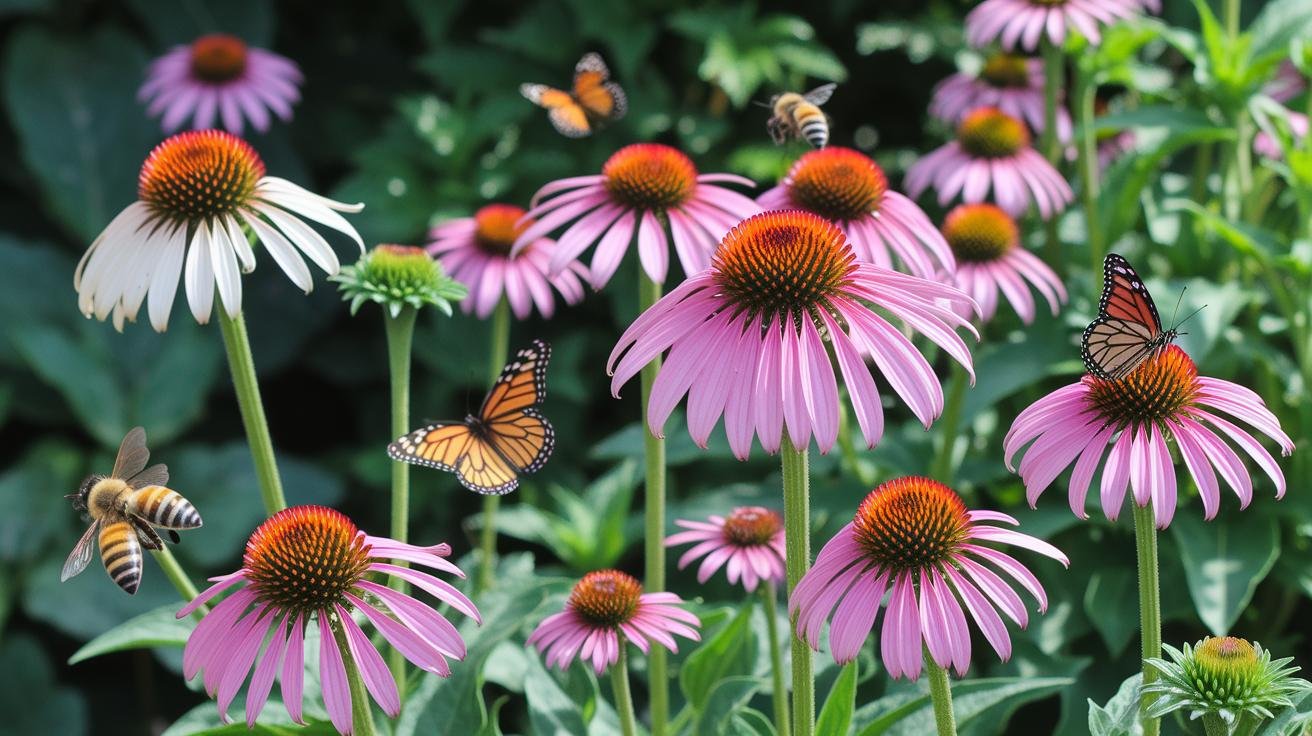
The trick to a garden that stays busy is spreading your bloom times across the whole season. Early risers like eastern redbud (Cercis canadensis) throw out rosy clusters just as the first honeybees stir, so there’s food waiting when they wake. Midsummer belongs to purple coneflower (Echinacea purpurea), which paints a bed pink and draws such a steady traffic of bumblebees you can almost hear it from the porch. Then, as the light turns golden in fall, goldenrod (Solidago) and asters (Symphyotrichum) carry the table right up to frost, fueling the monarchs heading south and the last tired bees of the year. Here’s how those four anchor plants line up:
| USDA zone (region) | Native plant | Bloom time | Sun / soil / water | Pollinators drawn |
|---|---|---|---|---|
| 4–8 (Mid-Atlantic) | Redbud (Cercis canadensis) | Early spring | Full sun to part shade, well-drained loam, moderate water | Honeybees, bumblebees |
| 3–9 (Great Plains) | Purple coneflower (Echinacea purpurea) | Midsummer | Full sun, sandy to loamy soil, low to moderate water | Bees, swallowtails |
| 4–9 (Northern U.S.) | Goldenrod (Solidago spp.) | Late summer–fall | Full sun, sandy well-drained soil, drought-tolerant | Monarchs, solitary bees |
| 5–8 (Eastern Woodlands) | Aster (Symphyotrichum spp.) | Fall | Full sun to part shade, moist loam, moderate water | Butterflies, late bees |
A quick word on the growing conditions in that last column, because they matter as much as the zone. Nearly every pollinator plant wants full sun — six or more hours of direct light — to fuel all those flowers, though a few shrubs are content with a little afternoon shade. Sandy soil drains fast and suits the drought-lovers; loam, that lovely crumbly mix of sand and clay, holds moisture longer for the plants that ask for it. The good news is that once a native settles in, its roots reach deep enough to ride out the short dry spells that would flatten a thirstier exotic.
The Native Perennials and Shrubs Worth Planting First
If you’re starting from bare ground, a handful of dependable perennials and shrubs will do most of the heavy lifting. These are the plants I reach for again and again — the ones that come back a little bigger every year and always bring the bees with them.
Purple coneflower is the workhorse, blooming pink-purple daisies through midsummer in full sun and well-drained soil, with bumblebees and swallowtails working it all day. Bee balm (Monarda) sends up shaggy scarlet, pink, or lavender crowns that smell faintly of mint when you brush past, and it’s a magnet for hummingbirds; give it sun and soil that stays evenly moist. For the monarchs specifically, nothing substitutes for milkweed. Common milkweed (Asclepias syriaca) opens soft pink globes in high summer, while butterfly weed (Asclepias tuberosa) lights up hot, dry spots with fiery orange — and both are the only plants a monarch caterpillar will eat, which is why a pollinator garden without milkweed is really only half a pollinator garden. The easiest way to add several kinds at once is a mixed packet like this Seed Needs milkweed seed collection (budget, $), which bundles common, swamp, and butterfly-weed varieties so you can scatter a whole monarch buffet across different corners of the yard.
Beyond those, garden phlox (Phlox paniculata) perfumes the late-summer evenings and butterflies drift to it like it’s a dessert table; it likes part shade and richer, moister soil. For structure and early food, lean on shrubs: viburnums bloom in spring and feed the first honeybees before most perennials have stirred, and spicebush (Lindera benzoin) offers pale yellow flowers in the thin light of early spring, then doubles as a host plant for spicebush swallowtails. Most of these want soil that drains well, phlox being the exception that likes to stay a touch damp — so group your plants by how thirsty they are and you’ll spend far less time dragging a hose around. If you’d like a broader list of tough, come-back-every-year bloomers to fill in around these, my guide to low-maintenance perennial flowers is a good next stop.
Design a Pollinator Garden That Blooms All Season
Once you’ve picked your plants, arrangement is what turns a collection of flowers into a garden that actually works for wildlife. The core idea is simple: layer heights and stagger bloom times so there’s always something open and something to hide in. Set low bloomers up front, medium perennials through the middle, and taller shrubs or grasses at the back — that way every layer stays visible and pollinators can move up and down the planting like a staircase of nectar.
How you apply that depends entirely on your space, and honestly, every size works:
- Balconies and small patios. Pick five to seven natives with staggered bloom times and grow them in pots you can shuffle around. A window box that runs violet in spring, coneflower-pink in July, and aster-blue in October keeps a steady sip of nectar coming all season in almost no square footage.
- Containers. Choose shallow pots, since many native roots run wide rather than deep, and always tuck in a milkweed for the monarchs. Pair bee balm with coreopsis and you’ll have color from June to frost.
- Raised beds. Tall grasses or native shrubs at the back, medium perennials like penstemon or black-eyed Susan in the middle, and low creeping phlox spilling over the front edge.
- Larger yards. Turn a fence line into a mini-meadow of goldenrod and ironweed, run a shrub border along the walkway for nesting cover, and let asters edge the lawn so butterflies can land right off the grass.
Whatever the scale, the most important design choice isn’t a plant at all — it’s skipping the pesticides, so the bees and butterflies you worked to attract have somewhere safe to feed. If you’d like a drawn-out plan to copy, I walk through the whole thing in my post on how to design a pollinator garden, and there’s a smaller, weekend-sized version in my DIY pollinator garden layout. Gardeners hoping to pull in more hummingbirds specifically will find tube-shaped, nectar-heavy picks in my hummingbird garden design ideas.
Planting and Caring for Native Pollinator Plants
Good soil is where a low-maintenance pollinator garden begins, and native plants don’t ask for much — just decent structure and the right acidity. Most pollinator natives are happiest in soil that reads between 6.0 and 7.0 on the pH scale, the range where roots can actually pull nutrients out of the ground. It’s worth knowing where you stand rather than guessing, and an inexpensive Luster Leaf Rapitest soil test kit (budget, $) checks pH and the main nutrients in a few minutes at the kitchen counter. If the reading comes back off, my guide on how to adjust soil pH after testing walks through nudging it gently with lime or sulfur — slowly, and retesting as you go, rather than dumping in a lot at once.
When it’s time to plant, loosen the bed and work in a couple inches of compost or aged leaf mold until the soil feels like a soft blanket under your fingers. Natives generally don’t need or want heavy fertilizing — too much nitrogen just pushes leaves at the expense of flowers — but a gentle organic starter mixed into the planting hole helps young roots knit into their new home faster. I like an organic, mycorrhizae-rich starter such as Espoma Bio-tone Starter Plus (mid-range, $$), which feeds the beneficial soil fungi that help natives establish deep, drought-proof roots. After that, ease off the feeding and let the plants do what they’re built to do.
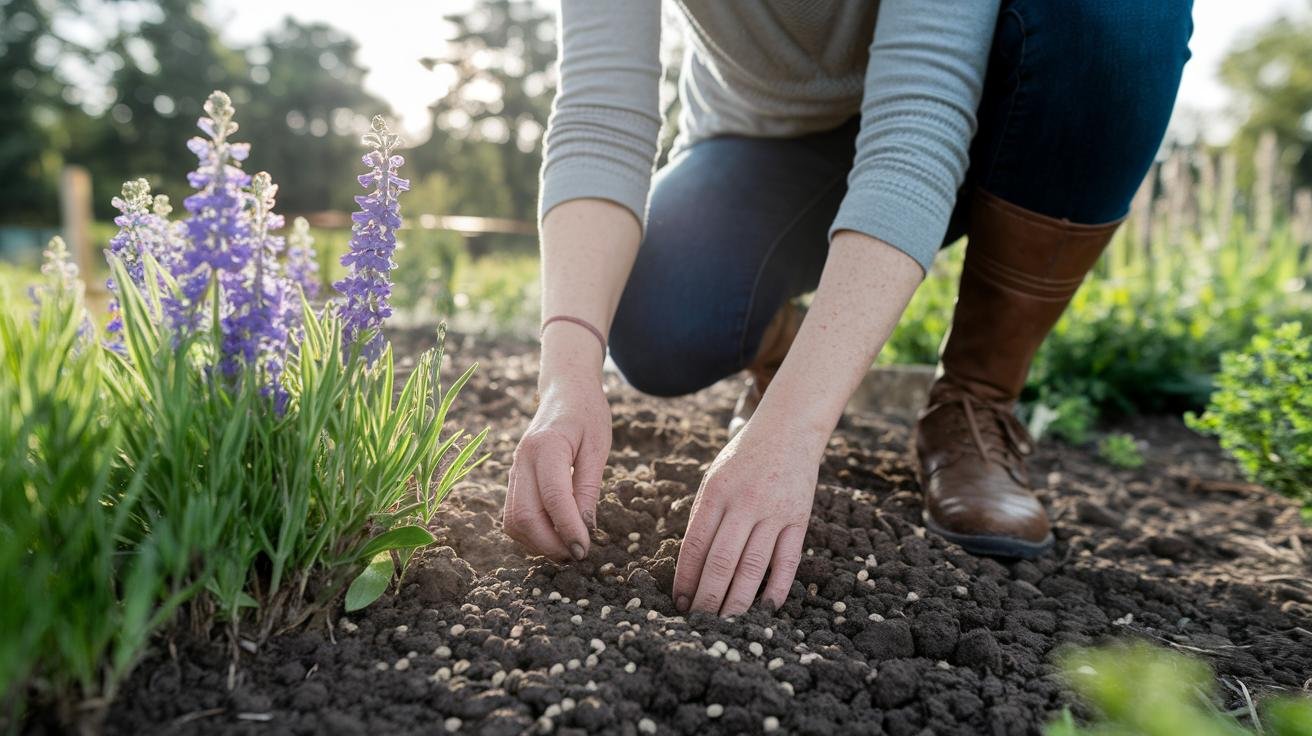
You can start natives a few ways: sow seeds indoors in late winter, divide established clumps in spring or fall, or take softwood cuttings from shrubs like spicebush. Many native seeds need cold-moist stratification first — a spell of cold, damp conditions, roughly 30 to 90 days, that mimics winter and convinces the seed it’s safe to sprout. Direct-sowing outdoors in early spring or late fall handles that chill for you and skips transplant shock entirely; just press the seeds about a quarter-inch into the soil and space them 12 to 18 inches apart. If you raise seedlings indoors instead, harden them off for a week or two before planting after your last frost.
Ongoing care is refreshingly light. Mulch with about two inches of shredded bark or straw to lock in moisture and keep weeds down — my roundup of the best organic mulch for weed suppression covers the options. Water new plants deeply once a week through their first season, then back off for the drought-lovers. Pinch off spent blooms through summer to coax more flowers, and hold your fertilizer hand. Then, when fall comes, resist the urge to tidy: leave the seed heads, hollow stems, and grasses standing through winter, because they feed the finches and shelter overwintering native bees. Wait until early spring to cut things back. One more small kindness to your knees — all that kneeling and planting adds up, and a padded TomCare garden kneeler and seat (mid-range, $$) flips from a cushioned kneeler to a low bench, which my back appreciates more with every passing season.
Where to Buy Native Plants (and Why Local Sourcing Matters)
Where your plants come from matters more than most people realize. A coneflower grown from local seed is genetically tuned to your region’s weather and soil, so it settles in faster and shrugs off local pests better than the same species trucked in from three states away. Start with a native plant nursery or a regional seed supplier near you — local growers usually print germination rates right on the packet and flag whether the seeds need that cold-moist stratification, which takes the guesswork out of getting them to sprout.
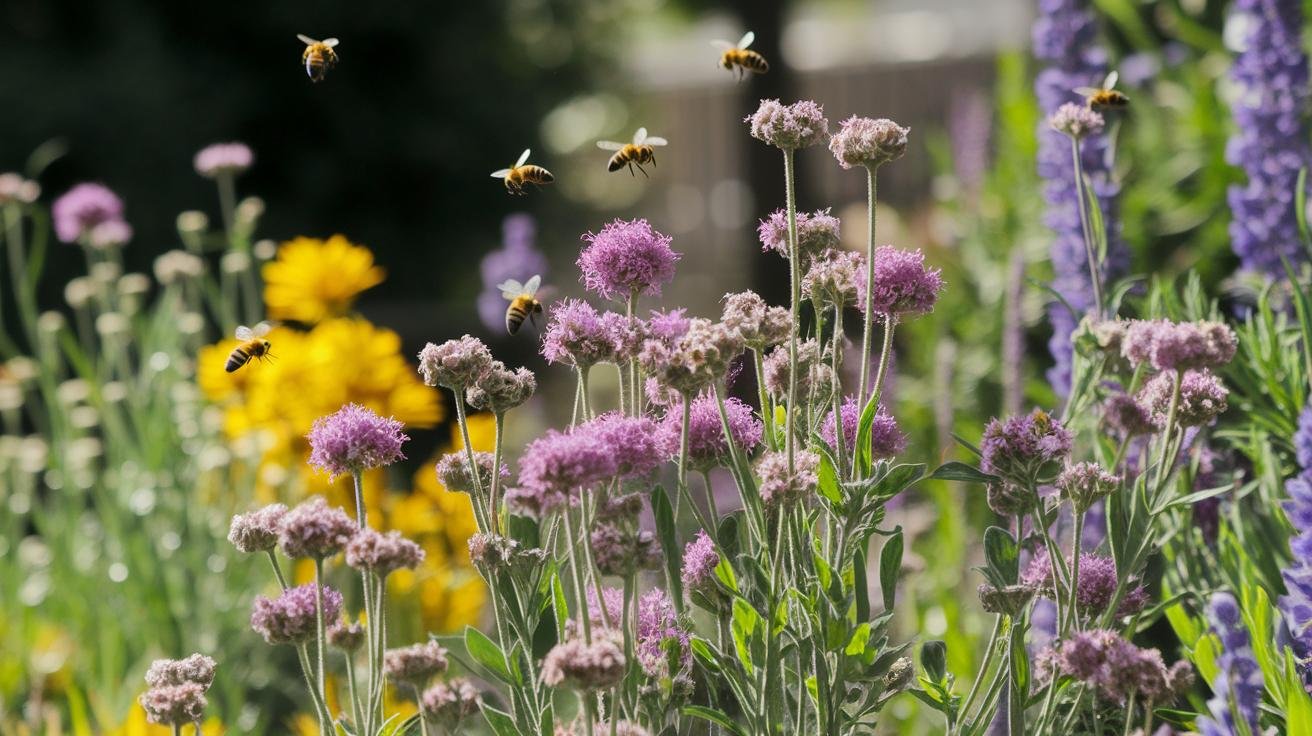
The payoff goes well beyond pretty flowers. As natives establish, their deep taproots and fine feeder roots break up compacted ground and let rain soak in, and earthworms and soil microbes move in behind them. Aboveground, the blooms become a working refuge: honeybees and bumblebees work the flowers, butterflies drift between them, and hummingbirds dart in for nectar, while the layers of grasses, shrubs, and perennials offer both food and shelter from spring straight through fall. Skip the chemical fertilizers and you build a living soil to match the living garden above it. A patch of the right native plants doesn’t just look good on a summer evening — it quietly props up a whole neighborhood of pollinators, and even helps nearby gardens and fields set better fruit.
Recommended gear for a pollinator garden
As an Amazon Associate, Backyard Superstar earns from qualifying purchases at no extra cost to you.
- Top pick — Seed Needs Milkweed Seed Collection ($). Common, swamp, and butterfly-weed varieties in one packet — the essential host plant for monarch caterpillars.
- Test first — Luster Leaf Rapitest Soil Test Kit ($). Checks pH and NPK in minutes so you plant into soil natives actually want.
- For strong roots — Espoma Bio-tone Starter Plus ($$). Organic, mycorrhizae-rich starter that helps new natives establish deep, drought-proof roots.
- Easy on the knees — TomCare Garden Kneeler and Seat ($$). Flips between a padded kneeler and a low bench for all that planting and deadheading.
Frequently Asked Questions
Why choose native plants based on USDA zones?
Matching natives to your USDA zone means they survive your winters, bloom on schedule, and feed local pollinators when it counts. Plants suited to your climate need less water and fuss, and they draw more bees, butterflies, and hummingbirds than exotics that were never built for your conditions.
What native plants attract pollinators in spring?
Early bloomers like redbud (zones 4–8), viburnum shrubs, and spicebush open just as the first bees stir, offering pollen and nectar before most perennials have woken up.
Which summer natives are best for bees and butterflies?
Purple coneflower (Echinacea purpurea) and bee balm (Monarda) are hard to beat — both thrive in full sun, ask for only moderate water, and pull in bees, swallowtails, and hummingbirds through the heart of summer.
What should I plant for fall pollinators?
Goldenrod and asters bloom into fall across zones 4–9, feeding migrating monarchs and late-season bees when little else is flowering. Both handle varied soils and shrug off short dry spells.
Do I really need milkweed?
If you want monarchs, yes. Milkweed is the only plant their caterpillars can eat, so it’s the one non-negotiable in a monarch-friendly garden. Common, swamp, and butterfly-weed varieties all work.
Where can I buy native pollinator plants?
Local native plant nurseries and regional seed suppliers are your best bet, since their stock is genetically suited to your area. Check seed packets for germination rates and whether they need cold-moist stratification before sowing.
Match your plants to your zone, spread the bloom times across the seasons, and skip the chemicals — do those three things and your backyard turns into a refuge that hums a little louder every year. Pick one native to start with this weekend, and let the pollinators find you.