Best Plants to Surround a Backyard Hammock
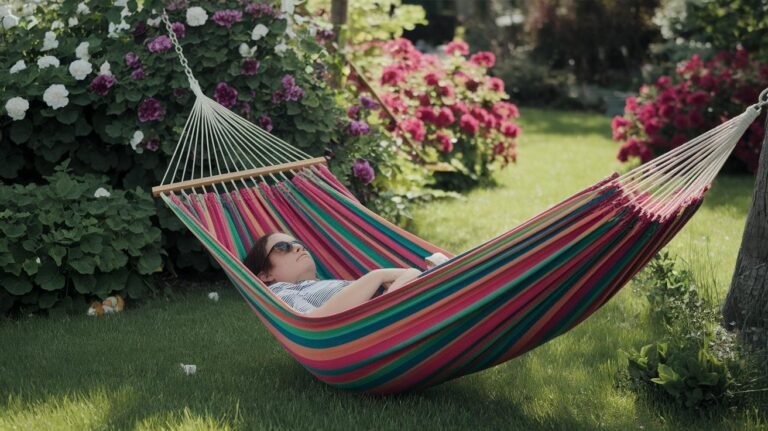
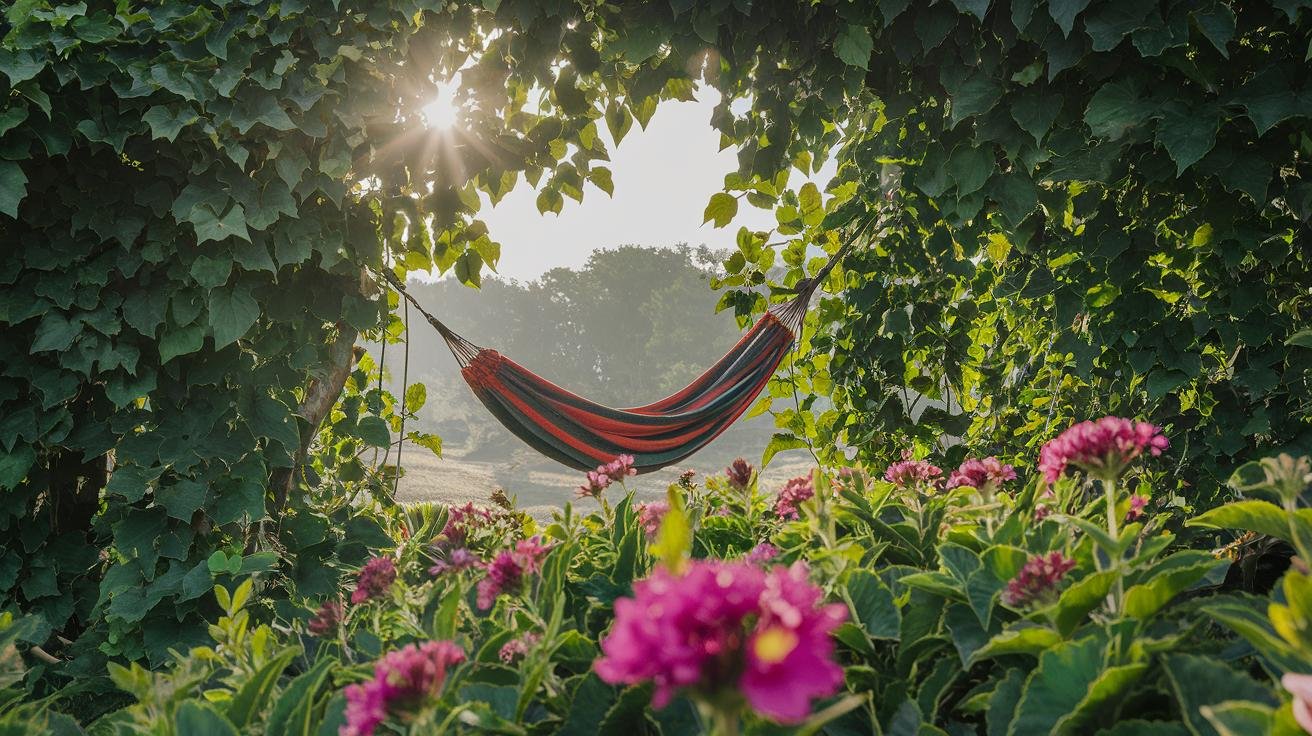
A hammock strung in the open is fine for a nap, but it never quite feels like a retreat until something green is growing around it. The right plants soften the frame, block the neighbor’s sightline, throw a little shade across your face at two in the afternoon, and give the breeze something to move through. Choosing the best plants to surround a backyard hammock isn’t complicated once you stop thinking about individual pretty flowers and start thinking about layers — a tall green wall behind you, some mid-height texture at your elbows, and low grasses swaying at your feet. Get those three layers right and even a cheap hammock on a stand starts to feel like the best seat in the yard.
I’ve planted a few of these nooks now, and the ones that worked shared a pattern: the plants matched the light they actually got, they were spaced so I could still walk around the frame, and none of them needed babysitting. Here’s how I’d build one, layer by layer, plus the picks I keep coming back to and the mistakes that cost me a season.
As an Amazon Associate, Backyard Superstar earns from qualifying purchases at no extra cost to you.
Start With the Light — It Decides Everything
Before you buy a single plant, stand where your hammock hangs and watch the sun for a day. This is the step most people skip, and it’s the one that quietly kills half of what they plant. A hammock slung between two shade trees lives in a completely different world than one on a stand out in the open lawn, and a plant that thrives in one will sulk or scorch in the other.
If your spot gets dappled or full shade — under a tree, along a fence’s north side — lean on foliage that likes it there: hostas, ferns, hydrangeas, and boxwood all hold up. If you’re out in six or more hours of direct sun, that’s where the daylilies, lavender, and ornamental grasses earn their keep, and where a shade-throwing vine overhead starts to matter. Most hammock corners are somewhere in between, part sun and part shade, which is actually the easy case because it opens up nearly everything on the list below. The point is simple: match the plant to the light you have, not the light you wish you had, and the rest of this gets a lot cheaper.
Layer by Height So the Hammock Feels Tucked In
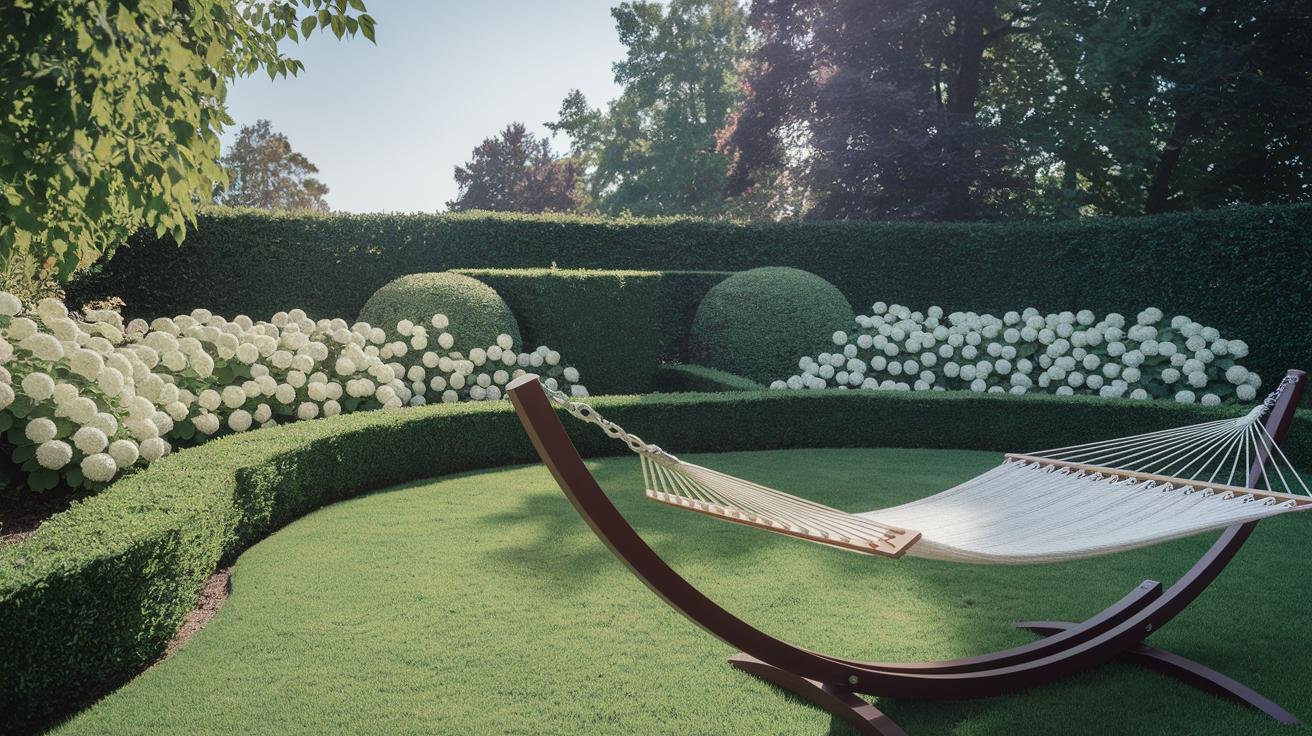
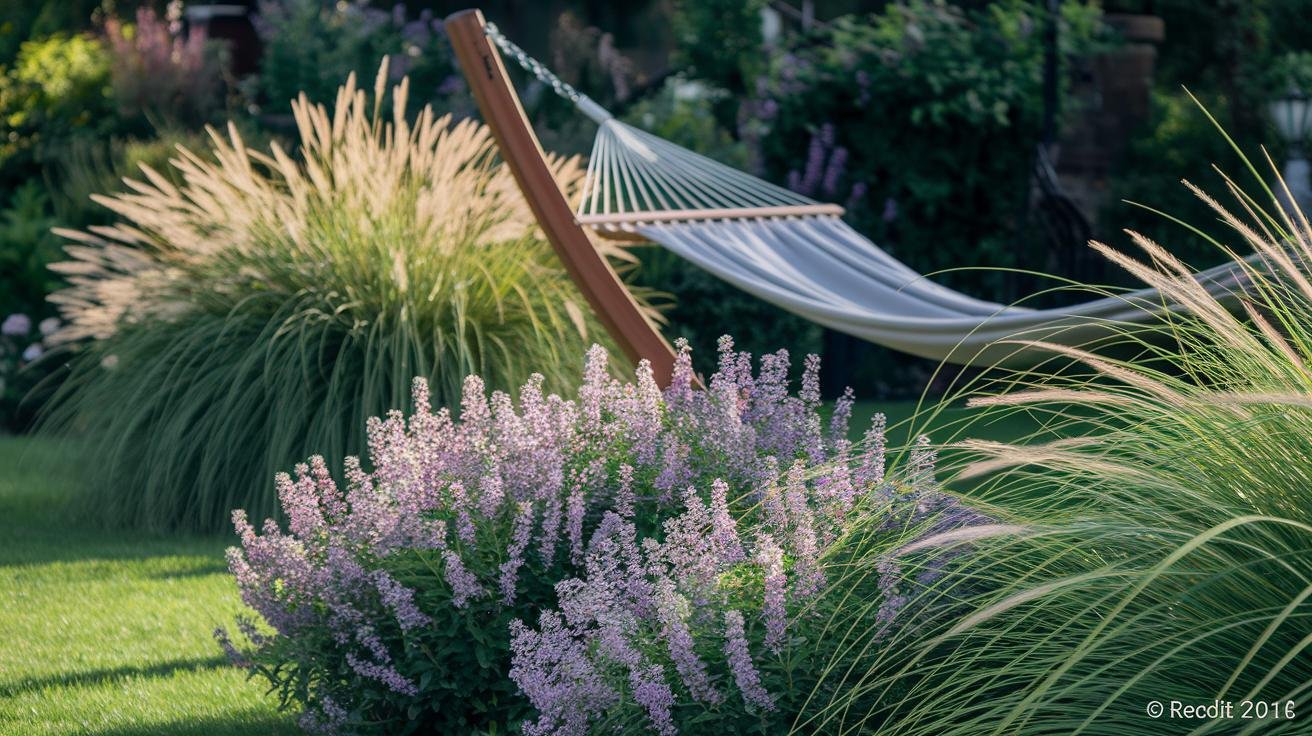
The trick that makes a hammock nook feel like a room instead of a plant scattered here and there is layering by height. Put the tall stuff behind the hammock, medium plants along the sides, and low growers up front where your feet swing. That back-to-front stagger does two things at once — it screens the view you don’t want and frames the view you do, so you’re looking out through your own little garden instead of at the shed.
Here’s the short list I’d build from, sorted by the job each plant does. Every one of these is widely available and forgiving, and the zones tell you whether it’ll overwinter where you live.
| Plant | Role / Layer | Type | USDA Zones | Light |
|---|---|---|---|---|
| Boxwood | Back — evergreen wall | Shrub | 5–9 | Part to full sun |
| Hydrangea | Back — flowering screen | Shrub | 3–9 | Part shade |
| Lavender | Mid — fragrant edge | Shrub | 5–9 | Full sun |
| Hosta | Mid — shade texture | Perennial | 3–9 | Shade to part shade |
| Daylily | Mid — easy color | Perennial | 3–9 | Full sun to part shade |
| Clematis | Overhead — blooming vine | Vine | 4–9 | Sun, shaded roots |
| Jasmine | Overhead — evening scent | Vine | 7–10 | Full to part sun |
| Fountain grass | Front — swaying plumes | Ornamental grass | 5–9 | Full sun |
| Blue fescue | Front — tidy blue mounds | Ornamental grass | 4–8 | Full sun |
You don’t need all nine. Pick one or two from each layer that fit your light, and you’ve got a complete nook. A workable starter set for a part-sun corner is a couple of boxwoods behind, a clump of daylilies and a lavender to the side, and a few blue fescue up front — evergreen structure, summer color, and movement, with almost nothing to do once it’s in the ground.
Shrubs for a Year-Round Green Wall
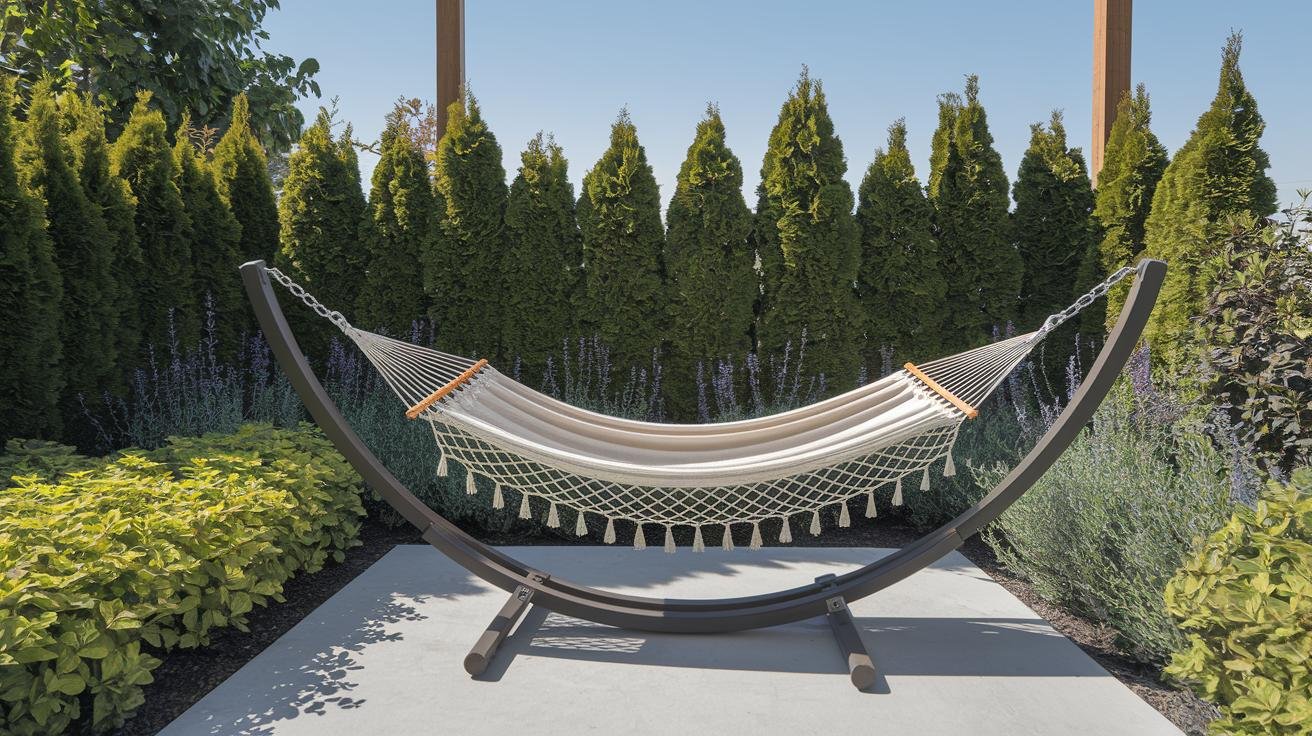
Shrubs are the backbone, because they’re the only layer that’s still there in January. Boxwood is the workhorse — a dense evergreen that holds its dark green leaves straight through snow, takes a shearing well, and asks for almost nothing. Space plants roughly two to three feet apart if you want them to knit into a solid low hedge behind the hammock, closer if you’re impatient. It’s slow, but slow is the point: a boxwood you plant this year is still standing guard a decade from now.
Hydrangeas do the opposite job — they’re the summer show. Big mophead blooms in blue, pink, or white give you a soft flowering screen from about knee height to shoulder height, depending on the variety, and they’re happiest in morning sun with afternoon shade, which is exactly the light a lot of hammock corners get. Give them moist, fertile soil and don’t let them dry out in a heat wave. Lavender rounds out the shrub layer on the sunny, well-drained side. Plant it where you’ll brush past it, because the whole reward is the smell when you do — and bees will work it all afternoon, which I count as a feature. The one thing lavender won’t forgive is wet feet, so if your soil holds water, plant it high or in a pot.
Vines Overhead for Shade and Scent
Vines are how you get shade and fragrance up at head height, where you’ll actually feel them. The catch is they need something to climb, so this is the one spot where a little hardware pays off. A freestanding metal garden obelisk trellis ($$) set just behind or beside the hammock gives clematis or jasmine a sturdy frame to run up without you having to build anything — I like the rustproof steel ones around six feet tall, because they hold a mature vine’s weight and don’t blow over in a summer storm.
Clematis (zones 4–9) is the showpiece. It wants its head in the sun but its roots cool and shaded, so plant it where the top of the trellis catches light and tuck a few flat stones or a low plant over the root zone to keep it cool. Train the stems as they grow and you’ll get big star-shaped blooms peeking through the frame from late spring on; cut the old stems back after flowering to push fresh growth. Jasmine (zones 7–10, so warm-climate only, or grow it in a pot you can bring in) is the one to plant if you sit out in the evening — the scent doesn’t really turn on until dusk, and having it drift across the hammock while you’re lying there is the whole reason to bother. Tie new shoots gently to the trellis with soft garden tape until they grab on their own.
Perennials and Grasses That Do the Soft Work
Perennials and grasses fill the middle and front, and they’re where the low-maintenance magic lives — plant them once and they come back every year. Hostas are unbeatable in shade: broad, ribbed leaves in green, blue-green, or gold that build a lush, tropical-looking mound under a tree-hung hammock, with the occasional spike of pale flowers in summer. They ask for shade, steady moisture, and basically nothing else. Daylilies take the sunny side — their trumpet blooms open a fresh set each morning in orange, yellow, or red, they shrug off drought once established, and snapping off the spent blooms keeps them going for weeks.
Grasses are what sell the whole thing, because they move. Fountain grass (zones 5–9) throws up feathery plumes that glow gold in low afternoon light and sway in a breeze you can barely feel; space clumps about two feet apart so they’ve got room to arch. Blue fescue (zones 4–8) is the tidy one — small blue-gray tufts that look great lining a path or spilling out of pots by the hammock legs, and they need very little water once their roots settle. Both hold their shape into winter, so even in the off-season you’ve got some structure and a light windbreak instead of bare dirt.
Container Planting When You Can’t Dig In
Not every hammock spot has bed space — plenty are on a patio, a deck, or a rental where digging isn’t an option. Containers solve that completely, and they come with a bonus: you can wheel the whole arrangement around until the light and the look are right. Group pots in odd numbers, mix heights (a tall grass, a mid daylily, a trailing something), and you get the same layered effect in a footprint you can move.
The honest downside of pots is that they dry out fast, especially in summer sun, and a hammock corner is exactly the place you’ll forget to water. That’s why I lean on self-watering planters ($$) out here — they hold a reservoir in the base and wick moisture up as the plant needs it, so a container can go a week or more between fills instead of wilting the first hot afternoon you’re lazy. Fill them with a quality organic potting mix ($) rather than scooped-up yard dirt, which compacts into a brick in a pot and drains badly. Good mix stays light and airy, and it’s the difference between plants that limp along and plants that fill in.
Soil, Mulch, Water, and a Little Evening Light
The plants above are forgiving, but they still want a decent start, and that mostly comes down to soil. Before planting in the ground, work about 30% compost into your native dirt — it loosens heavy clay, holds moisture in sandy soil, and feeds everything for months. Water new plantings deeply once or twice a week for the first season while roots establish; after that, most of this list gets by on rainfall plus a drink during a real dry spell.
Then mulch, because it does three jobs for the price of one. A two-to-three-inch layer of organic bark or cedar mulch ($) locks in moisture, smothers most weeds before they start, and gives the beds a finished look — just keep it pulled back a couple inches from stems and trunks so nothing rots. Once a year, give the shrubs and vines a quick trim so they don’t crowd the hammock frame or block your view; that’s genuinely the whole maintenance calendar for a nook like this.
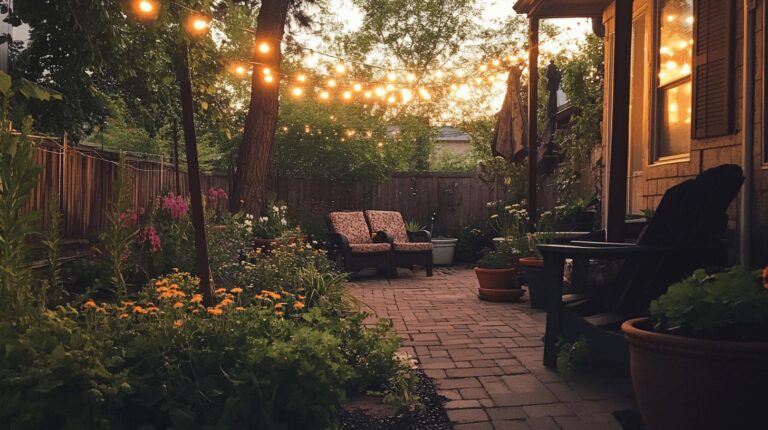
One finishing touch that’s worth the small spend: light. The best hours in a hammock are after dinner, and a string of solar-powered outdoor string lights ($$) run along the trellis or the tree limb overhead turns the plant wall you just built into a lit-up little room at night. Solar means no cord to run and no switch to remember — they charge in the day and come on at dusk on their own, right about when the jasmine kicks in.
Common Mistakes to Skip
The fastest way to ruin a good nook is to plant it too tight. It’s tempting to buy full-looking plants and pack them in, but leave yourself at least two feet of clear space around the hammock’s legs and swing path — you need room to climb in, kneel to weed, and let the hammock actually move without dragging through the foliage. Plants fill in faster than you expect, and a corner that looks a little sparse in May is usually perfect by August.
A few other traps worth naming. Don’t put thirsty containers or hydrangeas at the far end of the yard from the nearest hose, or you’ll skip watering them and lose them — put the needy plants where watering is easy. Be careful with anything labeled “vigorous” or “fast-spreading,” which is often code for a plant that’ll swallow the bed and climb your hammock ropes; mint, some honeysuckles, and running bamboo are the usual culprits. And don’t wall yourself in so completely that you kill the breeze — the airflow through a hammock corner is half of why it feels good, so leave a gap on the upwind side. Finally, resist the urge to make it a maintenance project. The whole idea is a place to do nothing, so pick plants that match your light and mostly fend for themselves.
Recommended gear for this project
As an Amazon Associate, Backyard Superstar earns from qualifying purchases at no extra cost to you.
- Top pick — Metal garden obelisk trellis (~6 ft) ($$). Rustproof steel frame that carries a mature clematis or jasmine and won’t topple in a storm.
- Space-saver — Self-watering planters ($$). Reservoir base keeps patio pots alive for a week-plus between fills.
- Budget basics — Organic potting mix ($) and organic bark mulch ($). Light, airy mix for containers; a 2–3″ mulch layer to hold moisture and block weeds.
- Ambiance — Solar-powered outdoor string lights ($$). Charge by day, glow at dusk — no cords, no switch.
Frequently Asked Questions
What are the best plants to surround a backyard hammock?
A complete hammock nook usually mixes shrubs, perennials, vines, and grasses: boxwood and hydrangea for a back wall, hosta and daylily for mid-height texture, clematis or jasmine trained overhead, and fountain grass or blue fescue swaying up front. Pick one or two from each layer that suit your light.
Which shrubs give the best privacy screening near a hammock?
Boxwood is the top choice for a dense, year-round evergreen backdrop in zones 5–9, and hydrangeas (zones 3–9) add a taller flowering screen in part shade. Both form a green wall behind the hammock that blocks sightlines without feeling like a fence.
What are the most low-maintenance plants for a hammock area?
Hostas in shade and daylilies in sun are about as easy as perennials get, and blue fescue and fountain grass need little more than sun and the occasional trim. Round them out with boxwood for structure and you’ve got a nook that mostly takes care of itself.
How do I add shade and fragrance overhead?
Train a vine on a trellis or pergola beside the hammock. Clematis (zones 4–9) gives you big blooms and light dappled shade, while jasmine (zones 7–10, or grown in a movable pot in colder areas) adds a sweet scent that turns on at dusk — perfect for evening lounging.
How should I arrange plant heights around a hammock?
Layer back to front: tall shrubs like boxwood or hydrangea behind the hammock, medium perennials such as hosta and daylily along the sides, and low grasses or groundcovers up front where your feet swing. That stagger screens the ugly view and frames the nice one.
Can I plant around a hammock if I only have a patio or deck?
Yes — use containers. Group pots in odd numbers, mix a tall, a medium, and a trailing plant for the layered look, and use self-watering planters with a good potting mix so they don’t dry out. The bonus is you can move the whole arrangement to chase the light.
How do I prepare the soil and water new hammock-area plants?
Work about 30% compost into your native soil before planting for fertility and drainage, water new plantings deeply once or twice a week through the first season, check containers about twice a week in summer, and keep a 2–3″ mulch layer pulled back from stems.
Putting It Together
A good hammock nook is really just three layers and a little restraint: a green wall behind you, soft texture at your sides, and something that moves at your feet — all matched to the light you actually have and spaced so you can still get in and out. Start with the shrubs for structure, add a vine overhead if you sit out in the evening, and fill the gaps with the easy perennials and grasses. Do that and you’ll have built the one corner of the yard where doing nothing finally feels like the plan.