Lawn Renovation Tips for Eliminating Weeds
Weeds don’t take over a healthy, thick lawn — they move into the gaps. Bare dirt, compacted soil, the spot where the grass thinned out last summer: that’s where the dandelions and crabgrass set up shop. So if you’re tired of spot-spraying the same patches every year, the fix isn’t another bottle of weed killer. It’s a renovation: clearing what’s there, fixing the soil underneath, and seeding thick enough that weeds never get a foothold again. Here’s the full lawn renovation process I use to eliminate weeds, in the order I actually do it.
Before you touch a single tool, here’s the whole arc so you can see where it’s going:
- Walk the lawn and map which weeds are growing where.
- Pull or spot-treat the weeds you already have.
- Lay down pre- and post-emergent control to stop the next wave.
- Test the soil and fix the pH before you seed.
- Aerate and dethatch to open up compacted ground.
- Overseed bare spots with the right grass and a spreader.
- Water and mow on a schedule so new grass crowds weeds out.
As an Amazon Associate, Backyard Superstar earns from qualifying purchases at no extra cost to you.
Map Your Lawn and Identify the Weeds First
Grab your phone and take a slow lap around the yard before you do anything else. Knowing what you’re fighting decides which treatment actually works — a crabgrass plan and a dandelion plan aren’t the same. I snap a photo of each problem patch so I don’t lose track of where they are once I’m down on my knees.
Sort what you see into two buckets. Broadleaf weeds have wide, flat leaves: dandelions show bright yellow flowers and toothy leaf edges, and clover pops up in clusters of three small leaves. Grassy weeds hide in plain sight because they look like turf — crabgrass spreads flat stems across the ground, annual bluegrass forms tight fuzzy tufts, and sedges feel bristly with triangular stems you can roll between your fingers.
That ID matters because the timing splits there. A pre-emergent stops grassy weeds like crabgrass before the seeds ever sprout, while a spot spray knocks out the broadleaf weeds you can already see, one at a time. If crabgrass is your main headache, I go deeper on getting ahead of it in my guide to getting rid of crabgrass in your lawn.
Pull and Spot-Treat the Weeds You Already Have
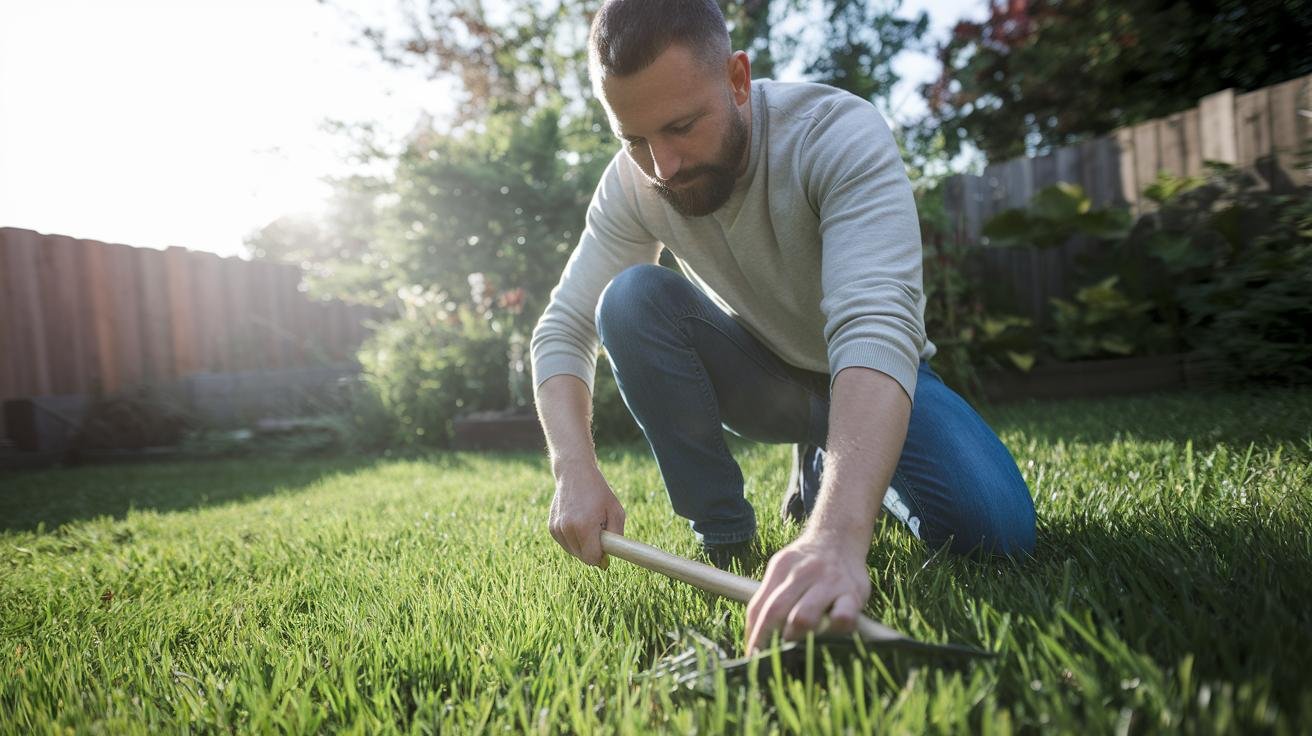
For small patches of clover or a few scattered dandelions, hand-pulling is hard to beat — and it’s most effective right after a rain or a deep watering, when the soil’s soft. Grip the stem low, close to the ground, and give it a slow twist as you pull. That twist-and-lift loosens the taproot so the whole thing comes free instead of snapping off and regrowing in two weeks.
The goal is the entire root system. Dandelions especially will come right back from a chunk of taproot left behind, so check each spot after you pull and dig out any stragglers with a hand weeder. Pull, don’t rush — a lawn you cleared properly stays cleared.
When the weeds are too widespread to pull by hand, a selective post-emergent does the heavy lifting. A selective formula like Ortho Weed B Gon Weed Killer for Lawns Concentrate targets broadleaf weeds like dandelion and clover without harming your fescue or bluegrass, which makes it the easy, do-it-all pick for an established lawn you’re renovating in place (budget range, $). Spray on a calm, dry day so the droplets cling to the leaves instead of drifting, and always follow the label’s rate and timing.
Pick the Right Pre- and Post-Emergent Weed Control
Pulling clears what’s there; control products stop the next generation. The trick is matching the product to the moment — and pre-emergents are all about timing.
I start the season with a pre-emergent, which stops weed seeds from sprouting in the first place. It goes down in early spring, right about when the soil warms to 55°F — too late and the crabgrass is already up. A granular like Scotts Halts Crabgrass & Grassy Weed Preventer spreads over the lawn and forms a barrier that keeps crabgrass and other grassy seeds from waking up (budget range, $). One important catch: a pre-emergent doesn’t know the difference between a weed seed and your grass seed, so you can’t lay it down and overseed at the same time — you pick one job per area, or you wait out the product’s window before seeding.
Prefer to skip the synthetics? Corn gluten meal is the organic stand-in. It releases proteins that choke out young seedlings as a natural pre-emergent, though it’s gentler and less reliable than a chemical one, so spread it evenly and give it time. I walk through that and other chemical-free options in my rundown of organic lawn weed control methods.
For weeds that are already up and growing, that’s where the selective post-emergent from the last section earns its keep. And if you’re clearing an area down to bare dirt for a full reseed, a non-selective spray kills everything it touches — useful for a total reset, but wait a week or two before you put seed down. Whatever you reach for, read the timing and rate on the label every time; this is the step where guessing gets expensive.
Test and Amend the Soil Before You Seed
Here’s the step most people skip, and it’s the one that decides whether the new grass actually outcompetes the weeds. Healthy turf needs the right soil chemistry, and you can’t eyeball pH. A simple Luster Leaf Rapitest soil test kit reads your pH plus nitrogen, phosphorus, and potassium in a few minutes at the kitchen table, so you’re amending on facts instead of hunches (budget range, $). For a deeper read, your county extension office will run a full lab test on a mailed sample for a small fee.
Once you’ve got numbers, adjust. If the pH reads below 6.0, your soil’s too acidic — work in agricultural lime to bring it up. If it climbs above 7.0, it’s too alkaline, and a light dusting of elemental sulfur brings it back down. Rake whichever one you use into the top inch of soil so it actually blends in. Most cool-season grasses are happiest right around 6.0 to 7.0.
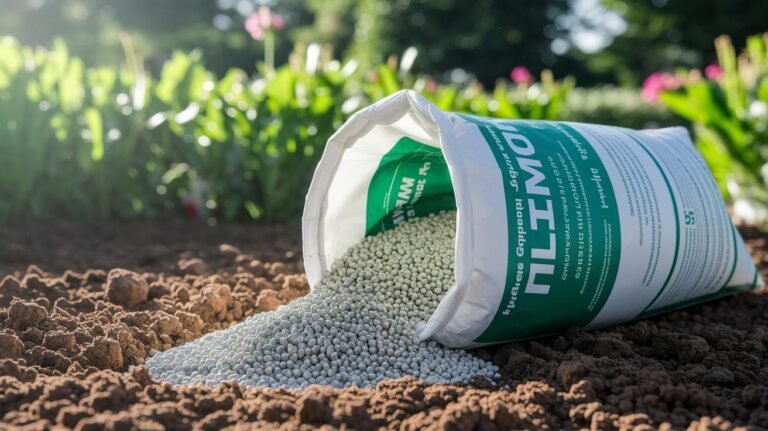
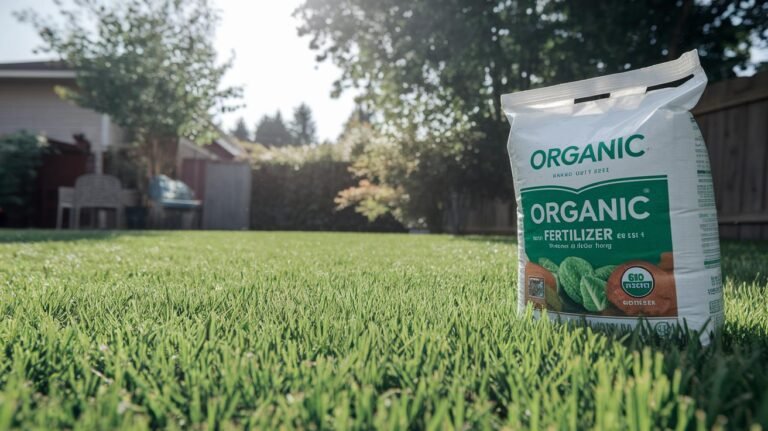
Then feed the soil. Pick a balanced or slow-release fertilizer that matches what your test called for — a 10-10-10 blend covers most lawns and feeds steadily instead of giving you a quick green spurt that fizzles. Scatter the granules evenly and water them in. For the organic route, a quarter-inch layer of compost worked into the surface holds moisture and feeds soil microbes; I get into product picks in my guide to using organic fertilizer for your lawn.
Aerate and Dethatch to Open Up the Soil
Compacted soil is a weed’s best friend — grass roots can’t push through it, but tough weeds will. Core aeration fixes that by pulling small plugs of soil out across the lawn, which relieves compaction and lets air, water, and seed reach the root zone. For a small-to-mid yard you don’t need to rent a machine; a manual tool like the Yard Butler ID-6C manual lawn coring aerator pulls real cores with a step and a pull, and it’s the one I reach for on anything under a few thousand square feet (mid range, $$). Leave the plugs on the surface to crumble back in over a week or so. If you’re weighing manual against powered options, I compare them in my manual lawn aeration guide.
One bonus: as those plugs come up, buried weed seeds rise to the surface where birds and a quick rake can clear them before they sprout.
While you’re at it, deal with thatch — that thin mat of dead grass and roots sitting on top of the soil. A little is fine, but a thick layer blocks water and seed. Drag a dethatching rake with stiff tines across the lawn to break up the mats and free the seedlings hiding underneath. The ground should feel springier and more open underfoot when you’re done.
Overseed With the Right Grass and a Spreader
Now the payoff step: thick new grass is the real weed control, because a dense lawn leaves weeds nowhere to land. Plan on about 5 to 10 pounds of grass seed per 1,000 square feet — roughly the size of a small garage and driveway — and pick a seed suited to your climate and how much sun the spot gets. A dependable cool-season mix like Jonathan Green Black Beauty Ultra grass seed blends fescue, bluegrass, and ryegrass that root deep and fill in dense, which is exactly the thick stand you want crowding weeds out (mid range, $$).
For even coverage, run it through a spreader instead of flinging it by hand. A Scotts Turf Builder EdgeGuard Mini broadcast spreader lays seed down evenly and keeps it off the sidewalk and flower beds with its edge guard, and it pulls double duty for fertilizer and lime too (mid range, $$). Timing matters as much as the seed: early fall is ideal, or spring, when soil temperatures sit around 60–75°F and the cooler nights help seedlings settle in.
After spreading, give the lawn a gentle rake so each seed just touches the soil without getting buried, and don’t pack it down — roots need room to push through.
Water and Mow to Crowd Out New Weeds
New seed lives or dies on moisture in the first three weeks. Keep the top layer damp like a wrung-out sponge: about a half-inch of water every day until the seedlings come up, usually somewhere in that 7-to-21-day window. Once most of the patch has sprouted, switch to a deeper soak — about an inch once a week — which drives roots down and makes the grass tougher and far better at resisting weeds.
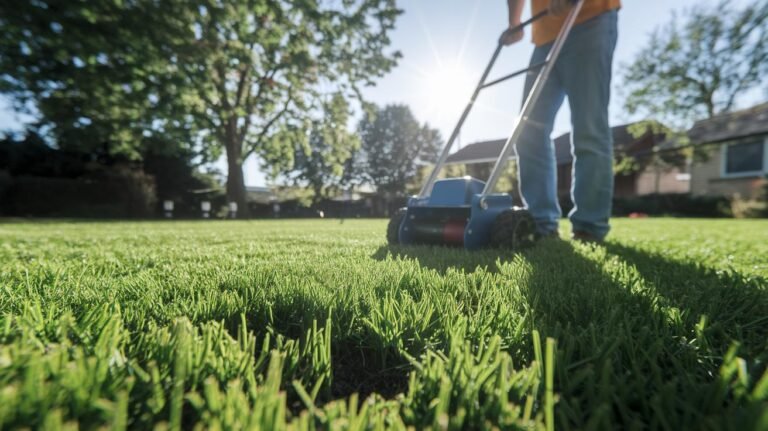
When the new grass is established, set your mower at 2.5 to 3.5 inches and keep it there. Taller grass shades the soil, and shaded soil is where weed seeds give up — it’s one of the simplest weed controls there is. Never cut more than a third of the blade in a single pass, or you’ll stress the lawn right when it needs its strength.
Then just keep an eye on it. Walk the lawn once a week, pull or spot-treat any stray weed before it goes to seed, and the dense turf does the rest. Spread these steps across the cooler months, stick with the watering and mowing, and in a few weeks you’ll have fresh blades filling the bare spots — and a lawn that finally keeps weeds out on its own instead of inviting them back every spring.
Recommended gear for renovating a weedy lawn
As an Amazon Associate, Backyard Superstar earns from qualifying purchases at no extra cost to you.
- Test the soil first — Luster Leaf Rapitest Soil Test Kit ($). Reads pH and N-P-K in minutes so you amend on facts, not guesses.
- Open up the soil — Yard Butler ID-6C Manual Lawn Coring Aerator ($$). Pulls real soil cores by hand — right-sized for small-to-mid yards.
- Stop the next wave — Scotts Halts Crabgrass & Grassy Weed Preventer ($). Early-spring pre-emergent that blocks crabgrass before it sprouts.
- Knock out what’s there — Ortho Weed B Gon Weed Killer for Lawns Concentrate ($). Selective post-emergent that kills broadleaf weeds without harming turf.
- Seed it thick — Jonathan Green Black Beauty Ultra Grass Seed ($$). Deep-rooting cool-season blend that fills in dense to crowd weeds out.
- Spread it evenly — Scotts Turf Builder EdgeGuard Mini Broadcast Spreader ($$). Even seed coverage with an edge guard to keep it off beds and walks.
FAQ
What are the steps in a lawn renovation process to eliminate weeds?
The process runs in order: identify and map the weeds, remove them by hand or with herbicides, lay down pre- and post-emergent control, test and adjust the soil pH, core aerate and dethatch, overseed bare spots, set an initial watering schedule, and keep up regular mowing and weekly inspections.
How do I identify common lawn weeds before renovation?
Sort weeds into broadleaf types (dandelions, clover) and grassy types (crabgrass, annual bluegrass) by leaf shape, growth habit, and seedhead. Getting the ID right tells you whether to spot-treat, hand-pull, or lay down a pre-emergent, so you don’t waste a product on the wrong weed.
What are effective mechanical weed removal techniques?
Hand-pull weeds by the whole root after a rain when the soil is soft, dethatch with a stiff-tined rake to free hidden seeds, and core aerate to break up compaction and bring buried weed seeds to the surface where you can clear them.
When should I use pre-emergent versus post-emergent herbicides?
Use a pre-emergent in early spring, around when the soil hits 55°F, to block weed seeds before they germinate. Use a selective post-emergent on broadleaf weeds that are already up and growing, and reserve a non-selective spray only for clearing an area before a full reseed.
How often should I test and amend my lawn soil?
Test at the start of each renovation with a home kit or a lab. Raise low pH with lime or lower high pH with sulfur, then add fertilizer matched to the test and a thin compost layer. Most cool-season lawns do best between a pH of 6.0 and 7.0.
What is the recommended overseeding rate and timing?
Spread 5 to 10 pounds of grass seed per 1,000 square feet, ideally in early fall or spring when soil temperatures sit between 60–75°F for quick, even germination. Use a broadcast spreader for even coverage and rake lightly so seed touches soil.
What watering and mowing schedule helps prevent weed regrowth?
Water about a half-inch daily until seedlings emerge, then shift to one inch once a week to drive roots deep. Mow at 2.5 to 3.5 inches to shade the soil, encourage density, and block new weeds, and never cut more than a third of the blade at once.
How often should I inspect my lawn for weeds after renovation?
Walk the lawn weekly and spot-treat or pull any new weed before it sets seed. Catching weeds early keeps the turf dense and healthy, so weed seedlings never get the foothold they need in your freshly renovated lawn.