Lawn Croquet Mallet Weight Comparison Expert Guide

Ever swung your croquet mallet and felt it drag like a bowling ball? Oops, I once tried a heavy one and felt like a beginner all over again. It can totally mess with your aim. Have you ever felt that?

Most lawn croquet mallets tip the scales between 2.5 and 4.5 pounds (1.1–2 kg). We split them into light, medium, and heavy so you get the right tap and steady control. In this guide, we’ll walk through each weight group so you feel confident and ready for smooth shots.

Overview of Lawn Croquet Mallet Weight Categories

Lawn croquet mallets (the wooden club you use to tap the ball) usually range from about 2.5 to 4.5 pounds (1.1 to 2 kilograms). Splitting them into light, medium, and heavy helps you match the feel to your swing style and energy. A light mallet zips through the air for quick, accurate taps. A medium one still packs a punch but won’t wear you out. And a heavy mallet gives extra oomph to send the ball over thick grass or on windy days.

Light mallets (2.5–3 pounds or 1.1–1.4 kg) are great if you’re new to the game or love precise shots around tight hoops. You’ll swing faster with less strain on your wrists and shoulders, so you can play longer without getting tired. Just know that very long drives may need an extra push.

Medium heads (3–3.5 pounds or 1.4–1.6 kg) blend speed with power in one tool. You can set up a delicate croquet shot, then smoothly hit a stronger knock down the lawn. It’s perfect for players who mix careful placement with casual backyard drives.

Heavy mallets (3.5–4.5 pounds or 1.6–2 kg) really pack a punch. The extra weight builds momentum for forceful hits that carry farther. But wait, be ready for a bit of a workout, your arms and wrists will feel it.

Weight Category Weight Range (lbs/kg) Ideal Player Profile
Light 2.5–3 lbs (1.1–1.4 kg) Beginners or finesse fans who want quick swings and less fatigue
Medium 3–3.5 lbs (1.4–1.6 kg) Casual players balancing control with driving power
Heavy 3.5–4.5 lbs (1.6–2 kg) Seasoned hitters craving strong, stable impacts

Benefits of Lightweight Croquet Mallets

Benefits of Lightweight Croquet Mallets.jpg

Light mallets feel like an extension of your arm. You’ll notice right away how easy they glide through the air.

Faster swing speed. You can whip the mallet back and through in one smooth motion, almost like slicing through butter.

More finesse in your shots. That lighter touch gives you extra control over the ball’s gentle roll.

Less fatigue over a long game. No more shoulder ache or sore wrists after a few rounds.

But here’s the trade-off: you might lose a bit of oomph on those long drives. It’s a small price for better accuracy.

By the way, my friend Molly grabbed a 2.7-lb mallet last weekend. She was amazed at how her wrist didn’t tire out…and her winning streak? Let’s just say it got a lot longer.

Advantages of Heavy Croquet Mallets

A heavy mallet in the 3.5 to 4.5 pounds (about 1.6 to 2 kilograms) range really helps you send the ball farther. As you swing, you’ll feel the weight shift and the momentum (that’s the pushing power) build, almost like you’re holding a mini catapult. One smooth follow-through and the ball zips down the grass.

When that hefty head connects, you’ll hear a solid thunk and feel a steady, powerful shot. It’s exactly what seasoned players want. Even if the lawn is thick or a breeze picks up, your aim stays true.

And here’s where weight classes come in handy. Lighter mallets let you finesse around hoops, but these heavy ones crush it on long drives. If you’ve tried a medium mallet, you’ll notice how much farther your ball carries once you bump up the weight.

But heads up: those heavier sticks can tire you out fast. Your shoulders and wrists work harder, and after a few rounds they might feel a bit tingly. An afternoon match can turn into a mini workout if you’re not used to the extra heft.

Picking the right weight isn’t just about going as heavy as possible. You’ve got to keep your swing speed and accuracy in sync. Practice your backswing rhythm, let that extra weight do the work, and you’ll hit cleaner, longer shots every time.

Why Medium-Weight Mallets Suit Most Players

Why Medium-Weight Mallets Suit Most Players.jpg

Medium-weight mallets (golf clubs with a bit of heft in the middle) give you a soft but solid push. They help the ball fly farther while you keep a smooth, easy swing. Have you ever felt that crisp click when the ball rolls true? So many players find this balance just right for their game.

Key Factors in Selecting Your Mallet Weight

Your strength makes every swing feel different. A heavier head (3.5–4.5 lbs) asks your arms and shoulders to work harder. You’ll feel that extra push with each stroke. A lighter head (2.5–3 lbs) leans on wrist speed (a quick flick of your hand) and keeps arm fatigue at bay. Give a few practice swings and notice when your arms shake or stay steady.

What kind of shots do you go for? Gentle rolls around the hoops call for a light, balanced head so you can place each ball just right. But if you love powerful drives that blast past your friend’s ball, a dense, heavy head turns weight into momentum (the force that keeps your mallet moving). Some players even swap mallets mid-game, one for hoops and another for long pushes.

Materials change the feel too. Traditional wooden heads bring a warm tap on the ball but shift most weight away from your hands. Composite or carbon fiber tubes are lighter near the head and move weight closer to your grip. That helps speed up your backswing and follow-through. It almost feels like the mallet becomes part of your arm.

Length matters more than you’d think. A longer shaft gives you a bigger swing arc and extra momentum, but it can feel bulky if you’re shorter or like a compact grip. A shorter shaft feels lighter and more nimble but loses some of that long pull through the grass. Think of it like a broom handle, longer ones sweep across more floor, shorter ones are easier to steer.

And don’t forget the grip. Rubber grips give you a tacky, sure hold even when your palms get sweaty. Cork feels soft and springy but might slip if you play on a hot, humid afternoon. If you can, try both in a sporting goods store. Pick the one that hugs your hand so you barely think about the handle and can focus on nailing that perfect shot.

Side-by-Side Weight Comparison of Popular Mallet Models.jpg

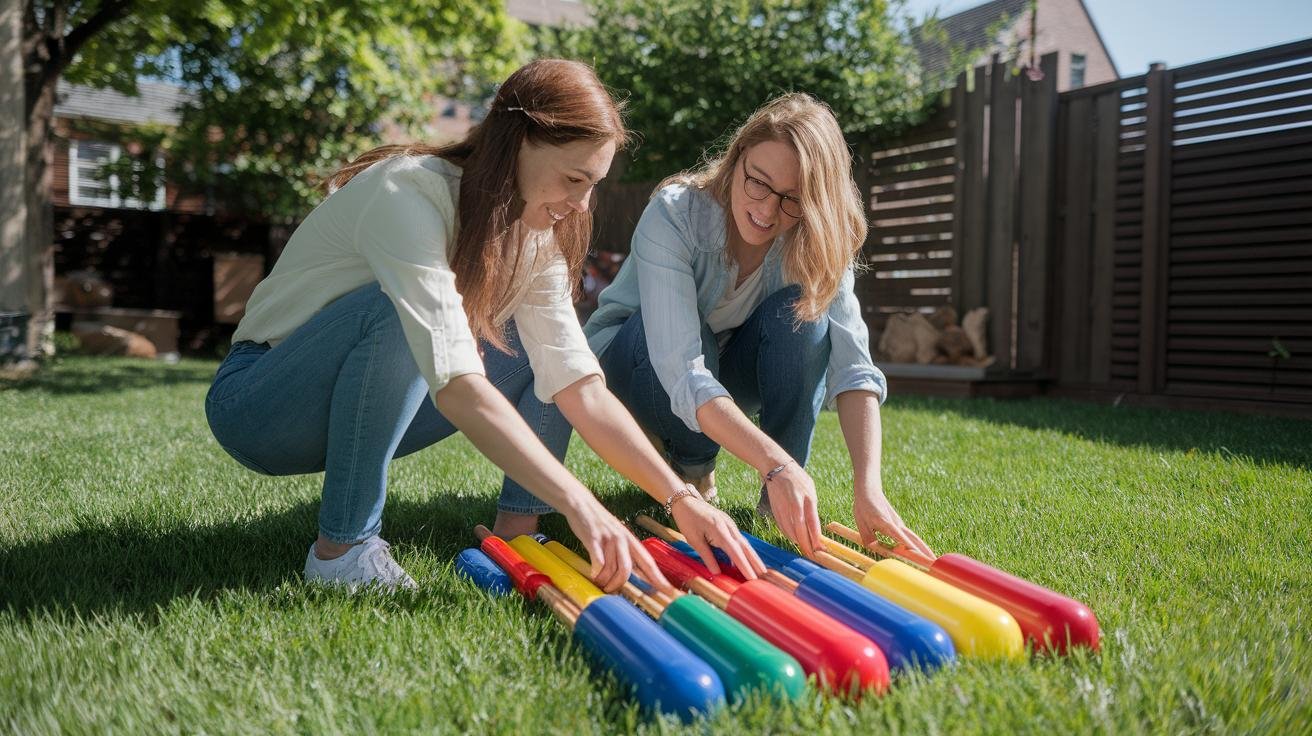
Feeling a mallet’s weight in your hand can change your game. Here’s a quick look at three top picks so you can spot the one that clicks with your swing.

I like to heft the Jaques of London Classic first. It’s about 3.1 pounds (1.4 kg) with a wood head and shaft. That warm, even swing feels balanced in your hands.

The Champion Heavy-Duty tips the scales at 4.2 pounds (1.9 kg). With its steel-core head, every swing feels like a power boost for long drives across a windy lawn. It’s your go-to if you love strong, confident hits.

Now, the Pro Balance Composite is a bit different. At roughly 2.1 pounds (0.95 kg), its carbon-fiber head and shaft shift weight closer to your grip. That gives you lightning-fast control when you’re navigating tight hoops.

Manufacturers often list weight in grams (g) or ounces (oz), usually with a small variance of around 50 g or 2 oz. That’s as light as a thin apple slice but it can change how your swing feels. If you see ounces only, remember 2.2 pounds equals about 1,000 grams.

Comparing these models side by side helps you match your swing speed to your shot style. Pick the one that feels like an extension of your arm.

Model Weight (lbs/kg) Material Best Use
Jaques of London Classic 3.1 lbs (1.4 kg) Wood Balanced backyard play
Champion Heavy-Duty 4.2 lbs (1.9 kg) Steel-core head Long drives and windy lawns
Pro Balance Composite 2.1 lbs (0.95 kg) Carbon-fiber Quick finesse shots

Final Words

In the action: we unfolded how mallets from 2.5 to 4.5 lbs break down into light, medium, and heavy choices. We saw lighter heads boost finesse and swing speed, heavy heads add driving power, and medium mallets strike a balance for most players.

We also covered how grip style, head material, and shaft length shift weight and feel, helping you choose based on your strength and shot preference. Plus, our side-by-side model chart gave real-world weights to guide your pick.

This lawn croquet mallet weight comparison leaves you ready to step onto the court with confidence and fun.

FAQ

What weight categories are available for lawn croquet mallets?

The weight categories for lawn croquet mallets include Light (2.5–3 lbs/1.1–1.4 kg), Medium (3–3.5 lbs/1.4–1.6 kg), and Heavy (3.5–4.5 lbs/1.6–2 kg), each fitting different player needs.

How do lightweight mallets benefit gameplay?

Lightweight mallets boost maneuverability and swing speed, giving you precise ball placement and reducing wrist and shoulder fatigue—ideal for beginners or finesse-focused play, though they may limit long-shot distance.

What advantages do heavy mallets offer?

Heavy mallets deliver greater momentum and driving power, making forceful, stable impacts that experienced players favor, though they demand more strength and can cause faster fatigue or wrist strain.

Why are medium-weight mallets recommended for most players?

Medium-weight mallets strike a balance between speed and power, offering reliable control on finesse shots and ample driving capability, making them versatile for backyard games and club-level matches.

What factors should I consider when choosing mallet weight?

Choosing mallet weight depends on your strength, playing style, and materials: lighter heads suit precision, heavier heads boost power, shaft length alters momentum, and grip material affects feel.

How does mallet construction affect performance?

Mallet construction affects performance by altering density and balance: wooden heads feel classic and balanced, composite or carbon-fiber heads can be lighter or denser, and shaft length changes swing momentum.

Which popular mallet models match specific weights?

Popular models include Jaques of London Classic (~3.1 lbs/1.4 kg wooden head for balanced play), Champion Heavy-Duty (~4.2 lbs/1.9 kg steel-core for long drives), and specialty options outside the 2.5–4.5 lbs range.

Similar Posts

Leave a Reply

Your email address will not be published. Required fields are marked *