Pet-Safe Lawn Fertilizer Picks That Actually Work
Every “pet-safe” fertilizer bag I’ve picked up defines the term a little differently — some mean the ingredients, some mean the application timing, some just mean the marketing department got creative. What none of them mean is that your dog can eat the stuff with no consequences. After a decade of fertilizing my own lawn with a scavenging Lab two steps behind me, here’s how I actually sort pet-safe lawn fertilizer: what the label claims mean, which ingredient categories and certifications hold up, the specific products I’d put my own name behind, and when it’s genuinely fine to let the dog back out.
As an Amazon Associate, Backyard Superstar earns from qualifying purchases at no extra cost to you.
What “Pet-Safe” Actually Means
No fertilizer is safe for a dog or cat to eat in quantity — start there and the rest of the label makes more sense. When a reputable manufacturer prints “safe for pets” on a bag, they’re usually saying two things: the active ingredients skip compounds that are acutely toxic in small doses, and the product form (typically slow-release granules) doesn’t leave loose powder or concentrated residue that a pet can pick up on wet paws and lick off.
What the claim doesn’t mean is just as important. Even a fully organic fertilizer can cause vomiting or worse if a dog eats a meaningful amount, because ingredients like bone meal smell like dinner to them. And “pet-safe” doesn’t mean immediately re-enterable — nearly every product still wants a watering-in and a waiting period before paws hit the grass. The bag is describing relative risk, not an invitation to skip precautions.
I find it useful to think in three risk levels. Acute-toxicity products — most synthetic herbicide-fertilizer combos — can cause serious harm in small amounts, and no amount of “pet-friendly” branding changes that. Moderate-risk ingredients need a larger quantity to cause trouble but actively attract pets: bone meal, blood meal, fish emulsion. Low-risk materials are neither toxic nor interesting to animals — finished compost, alfalfa meal, kelp, earthworm castings. Products marketed as pet-safe generally live in the second and third categories, and the good ones tell you exactly which.
Organic Ingredient Categories to Look For
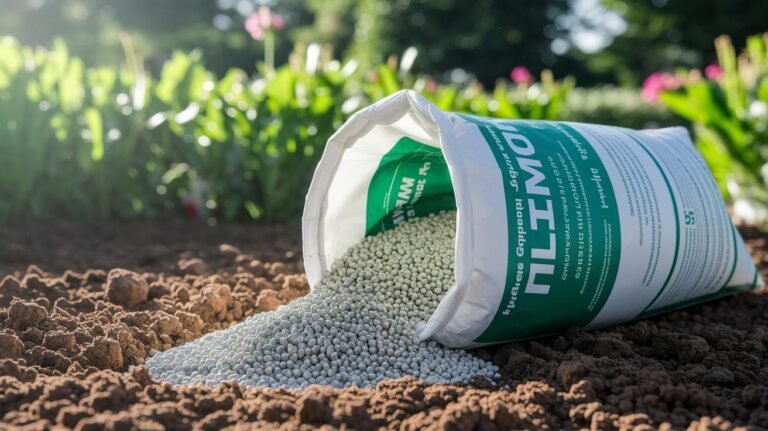
The ingredients list tells you more than any front-of-bag claim, because ingredients are regulated and slogans aren’t. Plant-based nitrogen sources — alfalfa meal, soybean meal, cottonseed meal, corn gluten meal — are the backbone of most genuinely mild formulas. They release slowly, they’re low in toxicity, and dogs mostly ignore them.
Animal-derived ingredients deserve more caution. Feather meal and composted poultry manure are common and workable around pets when watered in thoroughly, because the goal is keeping them from sitting on the surface where a dog can roll in them. Bone meal and blood meal are the two I treat with real respect: both are legitimate organic nutrients, and both are so attractive to dogs that a spilled cup becomes an emergency. A dog that eats enough bone meal can develop pancreatitis or a genuine GI obstruction. If a blend contains either, I water it in hard and keep the dog off the lawn for a full 48 hours.
Marine ingredients — fish emulsion, fish meal, kelp — sit in an odd middle spot. The actual toxicity is low, but the smell is irresistible to cats and dogs alike, which is how pets get into trouble with them. Mineral amendments like sulfate of potash and gypsum are low-risk at label rates. And earthworm castings are the closest thing to a free pass: no attraction, no meaningful toxicity, gentle slow-release feeding. If wool interests you as another low-risk slow-release option, my wool pellets guide covers a fiber-based amendment that behaves similarly.
Certifications Worth Checking
Third-party seals mean somebody outside the marketing department reviewed the product. OMRI Listed is the workhorse: the Organic Materials Review Institute approves products for certified-organic production, which screens out the synthetic chemistry that causes most acute pet poisonings. It isn’t a pet-safety certification — no such certification exists — but it’s the strongest widely-available signal on a fertilizer bag. USDA Organic applies similar standards to the finished product, though formal certification is less common on lawn fertilizers than on garden amendments.
Front-of-bag phrases like “child and pet friendly” are marketing, not certification. The way to test them is to flip the bag over and check whether the claim survives the ingredients list. Red flags that contradict any pet-safety claim: glyphosate, 2,4-D or any other herbicide, iron sulfate (iron toxicity risk for dogs), and every “weed-and-feed” combination product — those always contain herbicide regardless of how the front of the bag is dressed.
Reading the full label
Three things on the label carry most of the signal. The NPK numbers (say, 9-0-0) tell you nutrient concentration — lower numbers generally mean a milder, slower product with less burn risk and a smaller consequence if a pet samples it. The ingredients list, printed in order of concentration, should lead with named plant or animal meals rather than a vague “proprietary blend”; undisclosed ingredients under a pet-safety claim are a walk-away signal for me. And the application section should address pets directly — conservative products specify a re-entry window, usually 24 to 48 hours after watering in. A label that never mentions pets wasn’t formulated with them in mind, whatever the front of the bag says.
My Picks: Pet-Safe Lawn Fertilizers That Deliver
These are the products I’d actually run through my own spreader with a dog in the household. Every one uses disclosed ingredients, and where I cite a certification or a “safe around pets when used as directed” claim, that claim is the manufacturer’s — read the label and follow it, because application-and-waiting instructions are where the safety actually lives.
Top pick: Espoma Organic All Season Lawn Food (EOLF28) ($$). A 9-0-0 slow-release granular from the company that’s been doing natural organics since 1929. The nitrogen comes from named organic meals rather than synthetic urea, it’s approved for organic gardening, and the low-and-slow analysis is exactly the profile I described above — no concentrated spike for a curious nose to find. It won’t burn the lawn and covers cool- and warm-season grasses alike. This is my default recommendation for a dog household that wants one bag that just works.
Faster green-up: Safer Brand Lawn Restore (9-0-2) ($$). Plant-based, non-burning, and noticeably quicker to show color than most organics — the manufacturer cites visible greening within days rather than weeks, with a 25-pound bag covering up to 5,000 square feet. If the slow pace of organic feeding is what’s kept you on synthetics, this is the compromise pick.
Lowest-risk option: Wiggle Worm Pure Worm Castings, 15 lb ($). OMRI Listed, mineral-dense, and the single mildest thing you can feed a lawn or garden bed. Castings don’t interest dogs, don’t burn anything, and double as a top-dress for beds and containers. On their own they feed lightly — I use them as the “pet zone” fertilizer for the strip of yard where my Lab spends her day, and back them up with the Espoma everywhere else.
Liquid option: Dr. Earth Super Natural Liquid Lawn Fertilizer, 32 oz ready-to-spray ($). Hose-end liquids are the easy button for small lawns — no spreader, no granules to water in. The tradeoff around pets is that you must wait for the lawn to dry completely before re-entry, since wet residue transfers to paws. Dr. Earth’s lawn line is built on natural ingredients with disclosure you can actually read.
Weed-pressure alternative: Espoma Organic Turf-Tone Weed Preventer Plus Lawn Food ($$). This is 100% corn gluten meal — a slow-release nitrogen source that also suppresses crabgrass germination as a natural pre-emergent. It’s the honest answer to weed-and-feed: it does both jobs without the herbicide that disqualifies every synthetic combo product from a pet household. Timing matters — apply in early spring before weed seeds germinate.
| Product | Form | NPK | Best for | Tier |
|---|---|---|---|---|
| Espoma All Season Lawn Food | Slow-release granules | 9-0-0 | Default whole-lawn feeding | $$ |
| Safer Brand Lawn Restore | Granules, faster feed | 9-0-2 | Quicker visible green-up | $$ |
| Wiggle Worm Worm Castings | Castings top-dress | Mild/gentle | Lowest-risk pet zones, beds | $ |
| Dr. Earth Super Natural Liquid | Hose-end liquid | Liquid feed | Small lawns, no spreader | $ |
| Espoma Turf-Tone Weed Preventer | Corn gluten meal | Nitrogen + pre-emergent | Herbicide-free weed pressure | $$ |
Application and Re-Entry Timing
How you apply matters as much as what you buy. I schedule fertilizing for a morning when the dog can stay inside, because the whole job — spread, water in, dry — wants an uninterrupted window. A broadcast spreader like the Scotts Turf Builder EdgeGuard Mini ($$) earns its keep here: it comes pre-calibrated, holds enough for 5,000 square feet, and the edge guard keeps granules off the driveway where they’d otherwise sit in the open for a pet to find. Even application isn’t just cosmetic — clumped granules are both a burn risk for grass and a concentrated mouthful for a dog.
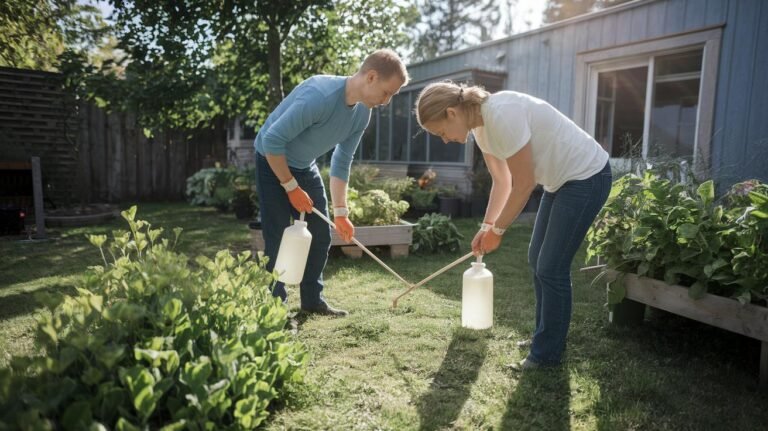
Water in immediately after spreading. Dry granules sitting on the surface are an invitation; a thorough watering dissolves them down into the soil where they belong. Then the rule I never bend: pets stay off until the surface is fully dry, at minimum 24 hours for watered-in granulars, 24 to 48 for liquids, and 48 for anything containing bone or blood meal. That’s also roughly the buffer most municipalities require for commercial lawn applications, which tells you something.
Seasonally, early spring and early fall are the windows I aim for on cool-season grass — the lawn is actively growing and can use the feed, and the mild weather makes the keep-the-dog-inside window painless. For rates, dilution, and the broader seasonal schedule that applies to any organic product, my organic lawn fertilizer application guide goes deeper than I can here.
Tradeoffs vs. Conventional Fertilizers
I’ll be straight about the costs, because they’re real. Organic pet-safe products run meaningfully more per pound than synthetic equivalents — expect to pay a tier up ($$–$$$ per season versus $–$$ for a synthetic program) and to apply more often, three to four times a year against two for synthetics. They’re also slower: a synthetic greens up a lawn in under two weeks, while slow-release organics take two to four weeks because soil microbes have to break them down first.
Here’s the thing — that slowness is the safety. There’s no concentrated nutrient spike sitting on the lawn at peak, which is precisely why the risk profile around pets is better. And the microbe-feeding that makes organics slow also builds soil structure year over year, something synthetic programs don’t do and can actively degrade. The one place synthetics genuinely can’t compete in a pet household is weed control: weed-and-feed combos are off the table entirely, so an organic program handles weeds with corn gluten pre-emergent, mowing height, and hand-pulling. More work, no herbicide exposure. If insects rather than weeds are your pressure, the same logic applies in my garden pest control guide.
DIY Recipes for Pet Households
Three recipes cover most of what a pet household needs, none requiring special equipment. Compost tea is the easiest: steep a shovel of finished compost in a 5-gallon bucket of water for 24 to 48 hours, strain through cheesecloth, dilute about 1:10, and apply with a watering can in the early morning. Even runoff is low-risk. The full brewing method, including aeration, is in the compost tea fertilizer guide.
Alfalfa meal makes a legitimate slow-release lawn feeding at about 5 pounds per 1,000 square feet, watered in — it breaks down over four to six weeks, and rabbit owners literally feed the same material as a treat. Simplest of all: stop bagging your grass clippings. A mulching mower chops them fine enough to decompose in days, returning nitrogen and potassium continuously and trimming your fertilizer needs by a quarter or more over time.
A few DIY ideas to skip. Large quantities of coffee grounds concentrate caffeine, which is toxic to dogs. Wood ash from treated lumber carries the treatment chemicals with it. Manure from medicated animals passes the medication along. And every vinegar-and-salt “homemade weed killer” recipe kills grass just as happily as weeds and is rough on paw pads — there’s no pet-friendly version of that one.
Storage and Spill Cleanup
Most fertilizer incidents I’ve heard of — including the near-miss at my own place — involve the stored bag, not the treated lawn. My Lab once nosed a folded-over bag of fish-based fertilizer off a garage shelf I’d have sworn was out of reach. Now everything lives inside a sealed plastic tote in the shed, and the fish and bone meal products get the top shelf of that. An open bag is not a barrier; treat it like pet food you don’t want eaten.
Spills get swept up immediately and completely, because a dog that finds a spilled cup of bone meal will finish it before you’re back with the broom. Outdoor spills on the lawn: sweep what you can, then water heavily to dissolve the rest down into the soil. Replace torn bags rather than taping them, and re-seal opened bags inside a secondary container.
If a pet does ingest fertilizer, don’t wait for symptoms. Identify the product, photograph the label, and call your veterinarian or the ASPCA Animal Poison Control hotline (888-426-4435, staffed around the clock). Many ingestions are far easier to treat early, and the label photo answers the first ten questions the vet will ask.
FAQ
Is organic fertilizer always pet-safe?
No. “Organic” means the ingredients come from natural sources, not that they’re safe in any quantity. Bone meal and blood meal are organic and still risky for dogs that scavenge. The reliably mild options are plant-based meals (alfalfa, soybean, cottonseed), finished compost, earthworm castings, and kelp.
How long should I keep pets off the lawn after fertilizing?
For watered-in pet-safe granulars, at least 24 hours and until the surface is fully dry. For liquids, 24 to 48 hours. For anything containing bone or blood meal, 48 hours minimum. For conventional synthetics and any weed-and-feed product, 48 to 72 hours — and ideally don’t use weed-and-feed at all in a pet household.
What fertilizer ingredients are most dangerous for dogs?
Herbicide-fertilizer combinations top the list. Beyond those: bone meal and blood meal (strong attraction, GI obstruction and pancreatitis risk in quantity), and iron sulfate (iron toxicity). Cocoa mulch, while not a fertilizer, contains theobromine and doesn’t belong anywhere a dog goes.
What’s the safest fertilizer for households with dogs?
Earthworm castings carry the lowest risk of any common option — no attraction, no meaningful toxicity, gentle release. Finished compost and compost tea are close behind, and plant-based meal fertilizers are also low-risk. Skip bone- and blood-meal blends if your dog scavenges.
Are pet-safe fertilizers as effective as conventional ones?
Effective, but slower and applied more often — two to four weeks for visible results versus under two for synthetics, and three to four applications a year versus two. In exchange you drop herbicide exposure entirely and build soil health that compounds over seasons.
Can I make pet-safe fertilizer at home?
Yes. Compost tea (finished compost steeped 24–48 hours, diluted 1:10) is the easiest. Alfalfa meal at 5 pounds per 1,000 square feet works as a slow-release feeding. Mulch-mowing your clippings returns a quarter or more of the lawn’s nitrogen needs at no cost.
What should I do if my dog eats fertilizer?
Identify the product, photograph the label, and call your veterinarian or the ASPCA Animal Poison Control hotline (888-426-4435) right away. Symptoms can develop over hours, and early treatment is easier. Bring the packaging or photo to the vet visit.
Is corn gluten meal pet-safe?
It’s among the milder options — it’s a common ingredient in commercial pet foods — and it doubles as a natural crabgrass pre-emergent. Apply in early spring before weed seeds germinate, and follow the label rate and re-entry guidance like any other product.
Recommended gear for this project
As an Amazon Associate, Backyard Superstar earns from qualifying purchases at no extra cost to you.
- Top pick — Espoma Organic All Season Lawn Food (EOLF28) ($$). Slow-release 9-0-0 organic granular — the default whole-lawn feed for a dog household.
- Faster green-up — Safer Brand Lawn Restore ($$). Plant-based, non-burning, and quicker to show color than most organics.
- Budget / lowest-risk — Wiggle Worm Pure Worm Castings, 15 lb ($). OMRI Listed castings — the mildest thing you can feed a pet zone.
- Liquid option — Dr. Earth Super Natural Liquid Lawn Fertilizer ($). Hose-end feeding for small lawns — let it dry fully before re-entry.
- Weed-pressure alternative — Espoma Turf-Tone Weed Preventer Plus Lawn Food ($$). 100% corn gluten meal — feeds and suppresses crabgrass without herbicide.
- Application gear — Scotts Turf Builder EdgeGuard Mini Broadcast Spreader ($$). Pre-calibrated, even coverage, keeps granules off the driveway.