Classic Lawn Games for Every Backyard
A backyard gets a lot more use when there’s something to do in it. A couple of good lawn games turn a plain cookout into the kind of afternoon people remember — cornhole going by the patio, horseshoes clanging near the fence, kids running a sack race across the grass. The classics have stuck around because they’re simple to learn, cheap to own, and they work for a six-year-old and a sixty-year-old in the same match. Here’s how the staples play, how to build a few yourself, and which sets are actually worth buying.
As an Amazon Associate, Backyard Superstar earns from qualifying purchases at no extra cost to you.
The Lawn Games Worth Owning

You don’t need a garage full of gear to have a fun backyard. Three or four games cover almost any gathering: one toss game everyone can play with a drink in hand, one active game for the people who want to move, and one big showpiece game for a crowd. The classics below hit all three, and most pack down small enough to live in a closet or the trunk of a car.
A good set of lawn games also plays well with the rest of the yard. They’re the daytime entertainment between the cookout at the grill and the evening wind-down around the fire pit. Set them up where there’s room to throw without anyone walking through the lane, and keep a few chairs nearby for the people waiting their turn.
Cornhole: The Backyard Standard
If you buy one lawn game, make it cornhole. It’s easy to learn, genuinely competitive once you get the hang of it, and you can play it on a patio, a lawn, or a driveway. Two boards sit 27 feet apart (front edge to front edge). Players take turns tossing bags: a bag through the hole scores 3 points, a bag that lands and stays on the board scores 1. First to 21 wins, and most house games use “cancellation” scoring, where opposing points in a round cancel out.
Quality matters more here than with most games because the boards take a beating and a warped surface ruins the slide. The GoSports Tournament Edition Regulation Cornhole Set is the one I’d point most people to — full 4 ft x 2 ft regulation boards, eight dual-sided “slide and stop” bags, and a build sturdy enough to survive years of backyard use (mid-range, $$). If you’re tight on space or buying for kids, a smaller tabletop or 3 ft set works too, but the regulation size is what you’ll want once people get hooked.
Bocce, Horseshoes, and Ladder Toss
The tossing games are the heart of a relaxed backyard afternoon — low effort, easy to pick up, and forgiving of a drink in your free hand. Three are worth owning.
Bocce is the most flexible of the bunch because it needs no fixed setup. You toss a small target ball (the pallino), then take turns rolling larger balls to land closest to it. It plays on grass, gravel, or sand, and it scales from two players to eight. A regulation set like the GoSports 100mm Regulation Bocce Set comes with eight balls, the pallino, a measuring rope for close calls, and a carry case (mid-range, $$).
Horseshoes is the old-school pick, and it’s all precision. You pitch shoes at a stake 40 feet away (closer for casual play); a ringer that encircles the stake scores 3 points, and the closest shoe inside about six inches scores 1. A classic steel set like the Champion Sports Classic Horseshoe Set gives you four forged shoes and two stakes that’ll outlast almost anything else in the yard (mid-range, $$). Just pick a spot well clear of foot traffic — thrown steel and bystanders don’t mix.
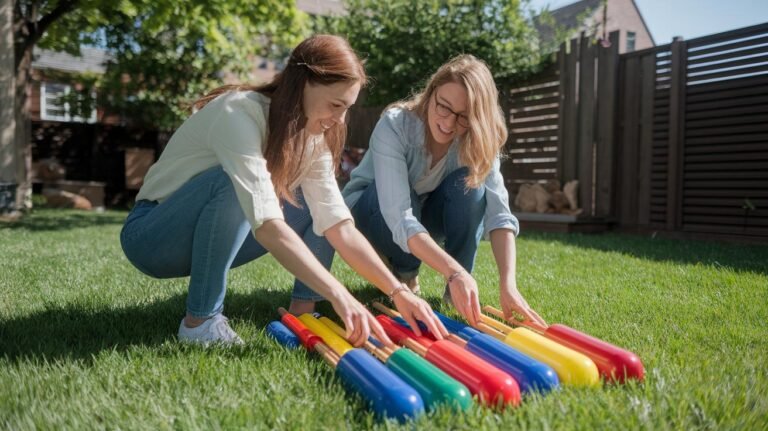
Ladder toss (also called ladder golf or ladder ball) is the easiest to teach. You throw a bola — two balls joined by a cord — at a three-rung ladder, scoring 3, 2, or 1 point depending on which rung it wraps. The GoSports Ladder Toss Game Set is an inexpensive, snap-together set with soft rubber bolas and a carry case, which makes it a good first buy or a kid-friendly option (budget range, $).
Badminton for a More Active Game
When the crowd wants to move, badminton is the one that gets everyone off their chairs. You set a net about five feet high, then rally a shuttlecock back and forth, scoring when it lands on the opponent’s side. Games go to 21, and because the shuttlecock slows down fast in the air, beginners can keep a rally going far more easily than they can in tennis.
Most backyard sets are combo kits that also include volleyball gear, which stretches your money. The Franklin Sports Elite Badminton and Volleyball Combo Net Set includes the net, poles, stakes, four rackets, birdies, and a volleyball, with a boundary kit so you can mark a court on the grass (mid-range, $$). Set the poles firmly and guy them out if it’s windy — a sagging net is the fastest way to kill a good rally.
Giant Games for a Crowd
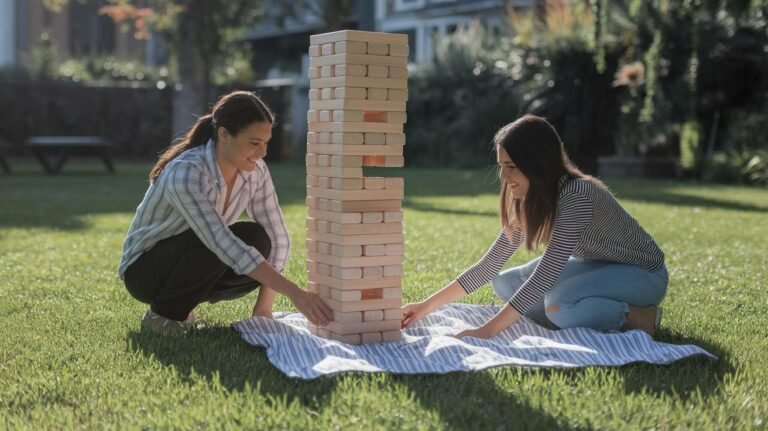
For a party, a single oversized game pulls people in better than any number of small ones. A giant toppling tower — the backyard-sized version of the wooden block-stacking game — is the easiest crowd-pleaser. Players take turns pulling a block from the stack and placing it on top until someone topples it, and the tower grows to chest height or taller as the game goes on.
The GoSports Giant Wooden Toppling Tower starts around 2.5 feet and can stack past 5 feet during play, which is exactly the kind of slow-building tension that draws a crowd at a barbecue or a wedding (premium range, $$$). It’s the splurge of this list, but it’s the one guests gather around. Store it dry between uses so the blocks don’t swell or warp.
Building Your Own on a Budget
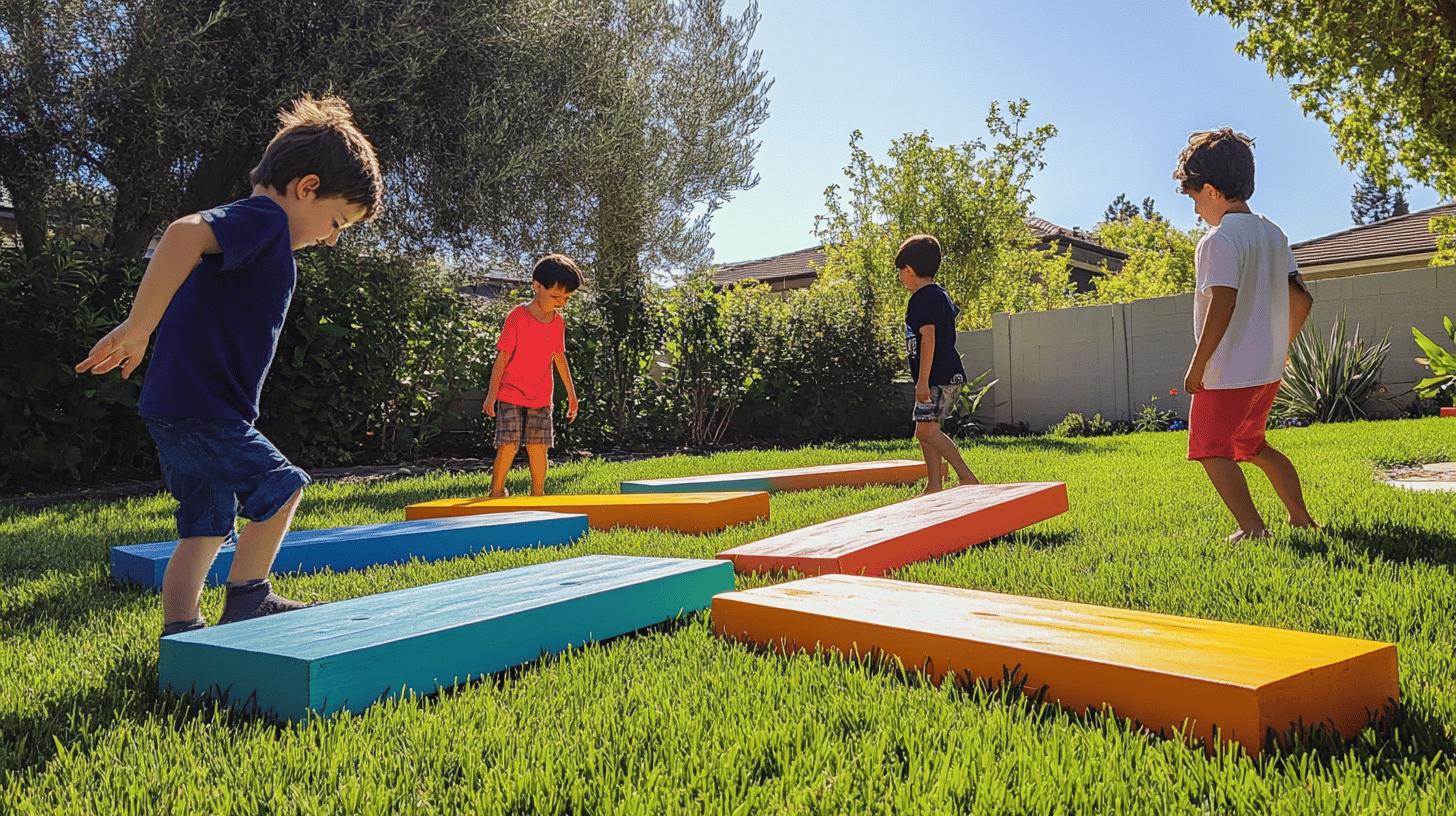
If you’d rather build than buy, several of these games are weekend projects. The payoff is a set you can size and paint exactly how you want, often for less than a store-bought version — and it’s a good project to pull the kids into. A few that are genuinely worth making yourself:
- Cornhole boards from a sheet of plywood and some 2×4 framing — the most common DIY build, and a great first one.
- Yardzee dice cut from a 4×4 post and sanded smooth, played with an oversized scorecard.
- Ring toss from a base board and a few dowels, with rope or rubber rings.
- Ladder toss from PVC pipe and a couple of balls on a cord.
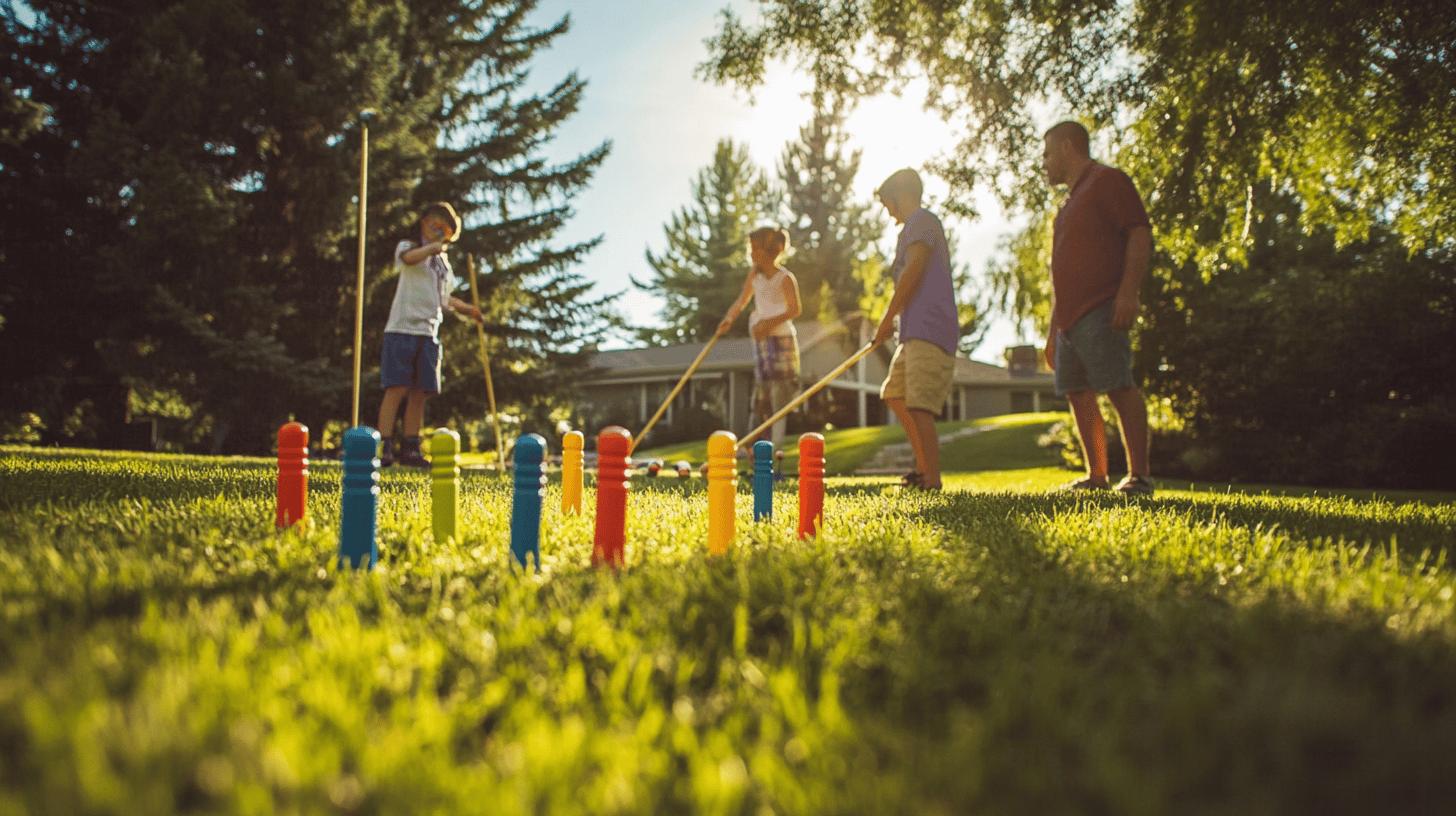
- A painted croquet course if you already have a set and want custom wickets.
Source what you can from the scrap pile or a flea market before buying new. The one place I wouldn’t cut corners is the playing surface on a DIY cornhole board — sand it well and seal it so the bags slide cleanly. A rough or unsealed top plays badly no matter how good the frame is.
No-Equipment Games for Kids and Adults
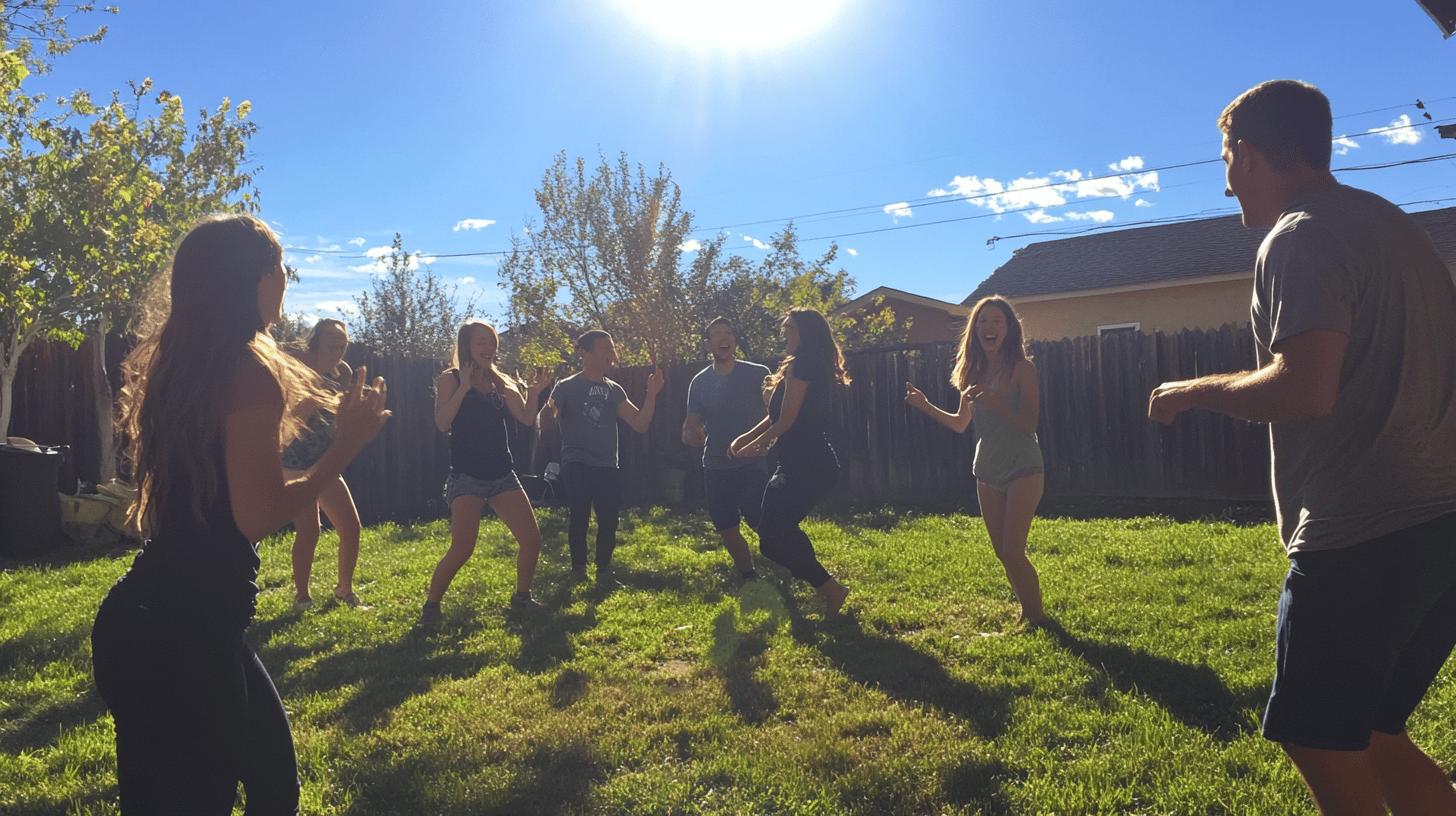
Some of the best backyard fun costs nothing. No-equipment games are perfect for spur-of-the-moment play, big groups, and kids who’ll happily run for an hour. For teens and adults, capture the flag, freeze tag, and red rover scale to almost any yard and group size, and you can adjust the play area to whatever space you’ve got.
For younger kids, the timeless ones still work best: hopscotch, four square, sack races, and duck-duck-goose. They build coordination and burn energy, and they need almost no setup. A couple of safety habits make them go smoother — pick an open, soft area clear of obstacles, set simple ground rules before you start, and keep an eye on the little ones. If your yard is short on open ground, a few of the small-backyard design ideas on the site can help you carve out a clear play zone.
How to Choose a Set That Lasts
Lawn games take abuse — sun, dew, dirt, and the occasional toss that goes way wide. A few things separate a set you’ll still be using in five years from one that warps after one summer.
- Materials. Solid wood boards and forged-steel horseshoes hold up far better than thin particleboard or hollow plastic. For nets, look for steel poles over flimsy fiberglass.
- Storage and portability. A carry case or bag is worth a lot — it keeps pieces together and makes the game easy to grab. Folding boards and snap-together frames store smaller.
- Size for your space. Regulation sizes play best but need room. If your yard is tight, a compact or tabletop version keeps the game playable without dominating the lawn.
- Budget tiers. A budget pick like a ladder toss set gets a yard started cheaply; mid-range sets (cornhole, bocce, horseshoes) are the everyday workhorses; a premium showpiece like a giant tower is the party splurge.
Owning your own beats renting for anything you’ll use more than once or twice — you can play whenever the mood strikes, and you get used to the feel of your own set. Keep wood and nets out of the weather between games and a good set will last for years. Pair them with some comfortable backyard seating for the people waiting their turn, and you’ve got a yard built for a crowd.
Recommended lawn game sets
As an Amazon Associate, Backyard Superstar earns from qualifying purchases at no extra cost to you.
- Cornhole (top pick) — GoSports Tournament Edition Regulation Cornhole Set ($$). Full 4×2 boards, 8 dual-sided bags, built to last.
- Bocce — GoSports 100mm Regulation Bocce Set ($$). 8 balls, pallino, measuring rope, and case; plays anywhere.
- Horseshoes — Champion Sports Classic Horseshoe Set ($$). Forged steel shoes and stakes that outlast the yard.
- Ladder toss (budget pick) — GoSports Ladder Toss Game Set ($). Snap-together, soft bolas, easy to teach — a great first game.
- Badminton + volleyball — Franklin Sports Elite Badminton & Volleyball Combo Net Set ($$). Net, poles, rackets, birdies, and a volleyball in one kit.
- Giant tower (party splurge) — GoSports Giant Wooden Toppling Tower ($$$). Stacks past 5 feet during play; the game guests gather around.
FAQ
What is the most popular backyard lawn game?
Cornhole is the most popular, thanks to simple rules, a low barrier to entry, and play that gets genuinely competitive. It works on grass, patios, and driveways, which is part of why it shows up at nearly every cookout.
What are good lawn games for all ages?
Cornhole, bocce, ladder toss, and horseshoes all scale well from kids to adults because you can shorten the throwing distance or relax the rules for younger players. Bocce and ladder toss are the easiest for mixed-age groups to pick up.
How far apart do cornhole boards go?
Regulation distance is 27 feet from the front edge of one board to the front edge of the other. For casual or kids’ play, move them closer until the game feels fair, then stretch the distance back out as players improve.
Can I build my own lawn games?
Yes. Cornhole boards, yardzee dice, ring toss, and ladder toss are all straightforward DIY projects from plywood, scrap lumber, or PVC. Sand and seal any playing surface — especially cornhole tops — so the pieces slide and last.
What lawn games can I play without equipment?
Capture the flag, freeze tag, and red rover work for teens and adults with no gear at all, while hopscotch, four square, sack races, and duck-duck-goose are kid favorites. All of them adjust to whatever space you have.
Are giant lawn games worth it?
For parties and big gatherings, yes. A giant toppling tower or oversized game draws a crowd and keeps people engaged better than several small games. Store wooden giant games dry so the blocks don’t swell or warp.