How to Play KanJam: Rules, Scoring, and Throws
If you can throw a frisbee even a little, you can play KanJam by the end of your first driveway session. I keep a set in the garage next to the cooler, and it’s the game that comes out most when people drop by — it takes two minutes to set up, the rules click after one round, and a close match goes right down to the last throw. What follows is everything you actually need: the gear, the setup, the scoring, the three throws that win games, and the mistakes I made early so you can skip them.
What You Need to Play KanJam
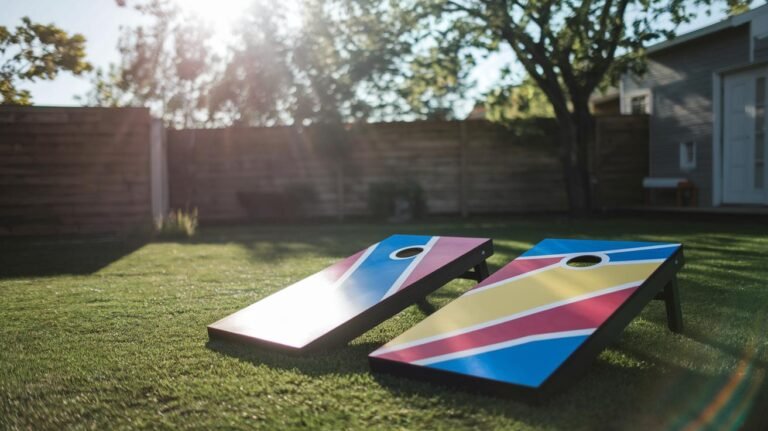
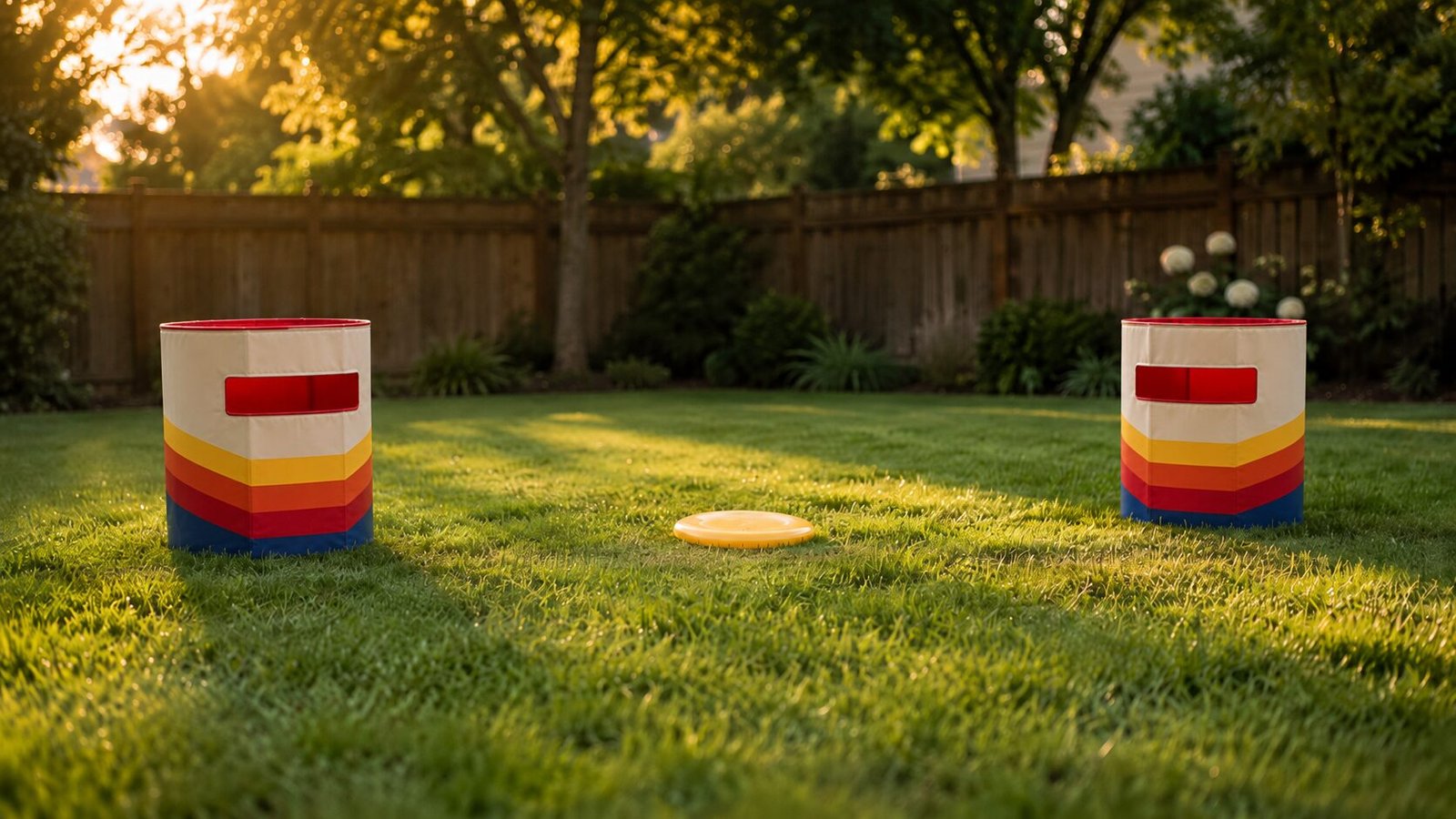
The gear list is refreshingly short. You need two slotted goal cans, one flying disc, and a flat patch of grass, sand, or pavement. That’s the whole kit. The cans are lightweight plastic cylinders — roughly the size of a kitchen trash can — with a rectangular slot cut into the front face. The disc is a standard-weight flyer about 10.5 inches (27 cm) across, a touch heavier than the featherweight discs you’d hand a dog, because you want it to hold a line in a breeze.
You can absolutely rig your own version with two buckets and any old frisbee, and it works fine for a first try. But the gear is cheap enough that most people don’t bother staying homemade for long. As an Amazon Associate, Backyard Superstar earns from qualifying purchases at no extra cost to you.
The KanJam Original Disc Game is the set I’d point almost everyone toward first. It comes with the two official goal cans and a matched disc, the cans nest inside each other for storage, and the whole thing lives in a car trunk without complaint. It sits at the low end of the price range ($–$$), which is part of why it’s the standard set you’ll see at tailgates and cookouts. If your games tend to run past sundown, the KanJam Illuminate light-up set swaps in an LED disc and glowing goal cans so the game doesn’t end when the porch light comes on — it runs a bit more ($$) for the electronics. And for pool people, the KanJam Splash floating set uses buoyant goals you toss right into the water, which is a genuinely different (and very forgiving) way to play.
One small thing that saves headaches: keep a stub of sidewalk chalk or a roll of painter’s tape in the bag. You’ll want it to mark a throwing line, and it always seems to vanish right when you need it.
How to Set Up the Court in Two Minutes
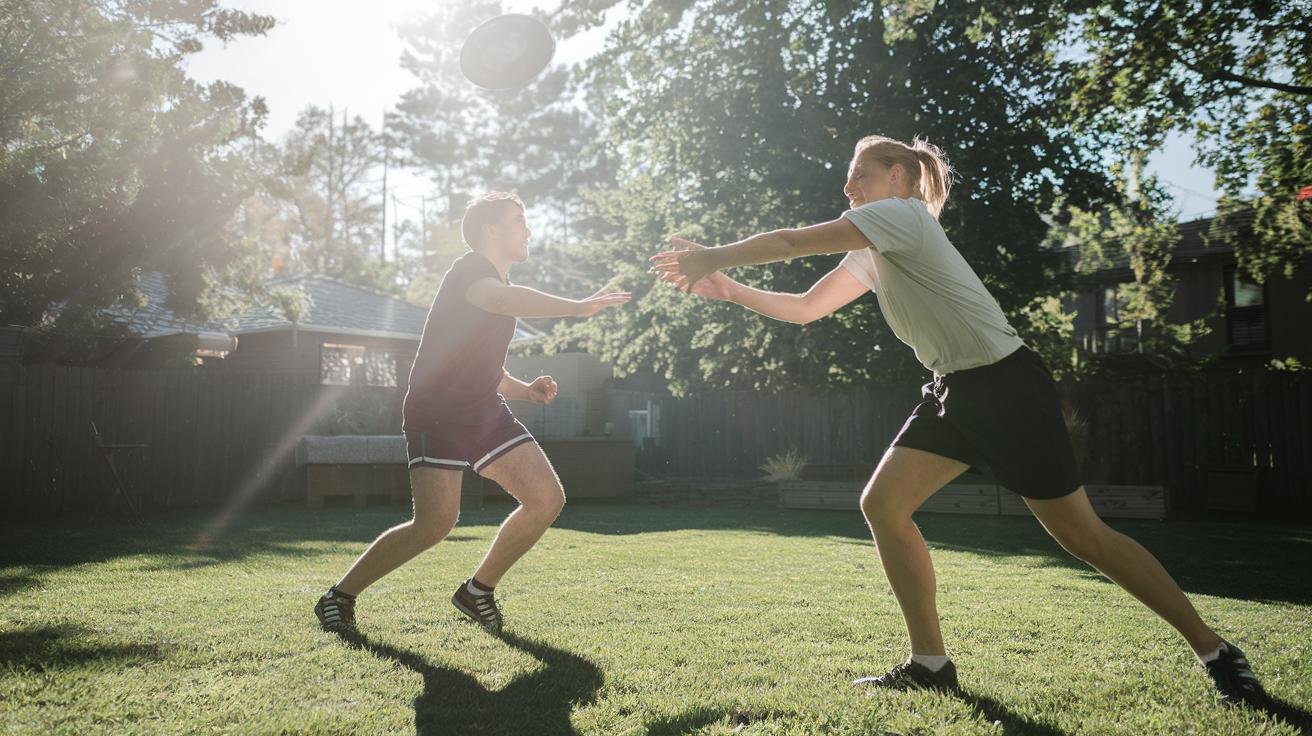
Setup is the easiest part. Stand the two cans upright, slot facing each other, and pace off 50 feet between them — that’s about 17 or 18 normal strides. If you’re teaching kids or you’re short on lawn, pull the cans in to 30 feet; the shorter throw makes those first hits land and keeps everyone hooked. Wind matters more than distance, honestly. If there’s a steady breeze, set the cans so you’re throwing across it rather than straight into it, or you’ll spend the first game watching the disc sail wide.
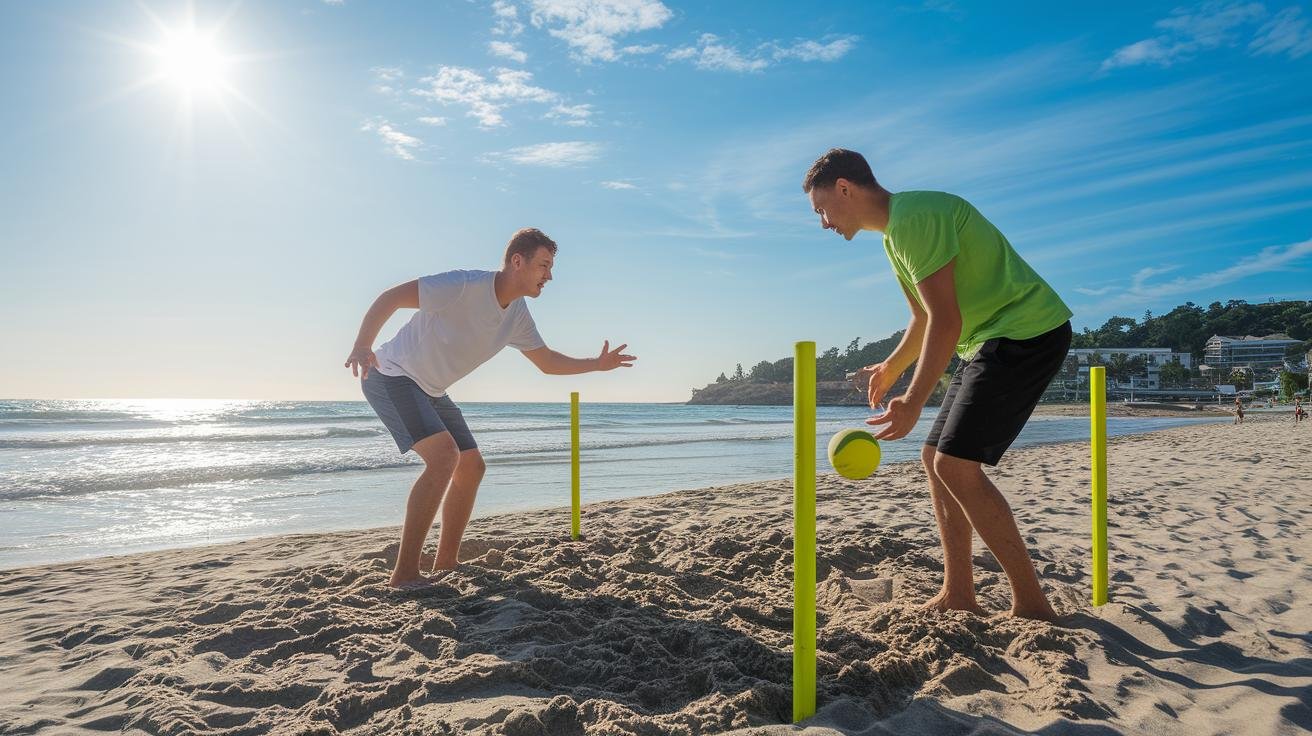
Mark a throwing line at each can with your chalk or tape if you want it official, though for a casual game people just stand at the can and let it go. The ground doesn’t need to be perfect. I’ve played on patchy backyard turf, on a gravel church lot, and on hard-packed beach sand, and the only real requirement is that the cans stand up straight and don’t tip in the wind. On sand, press the base down until it bites; on a windy day, a rock or a water bottle tucked against the back of each can keeps them from walking.
KanJam Rules and Scoring
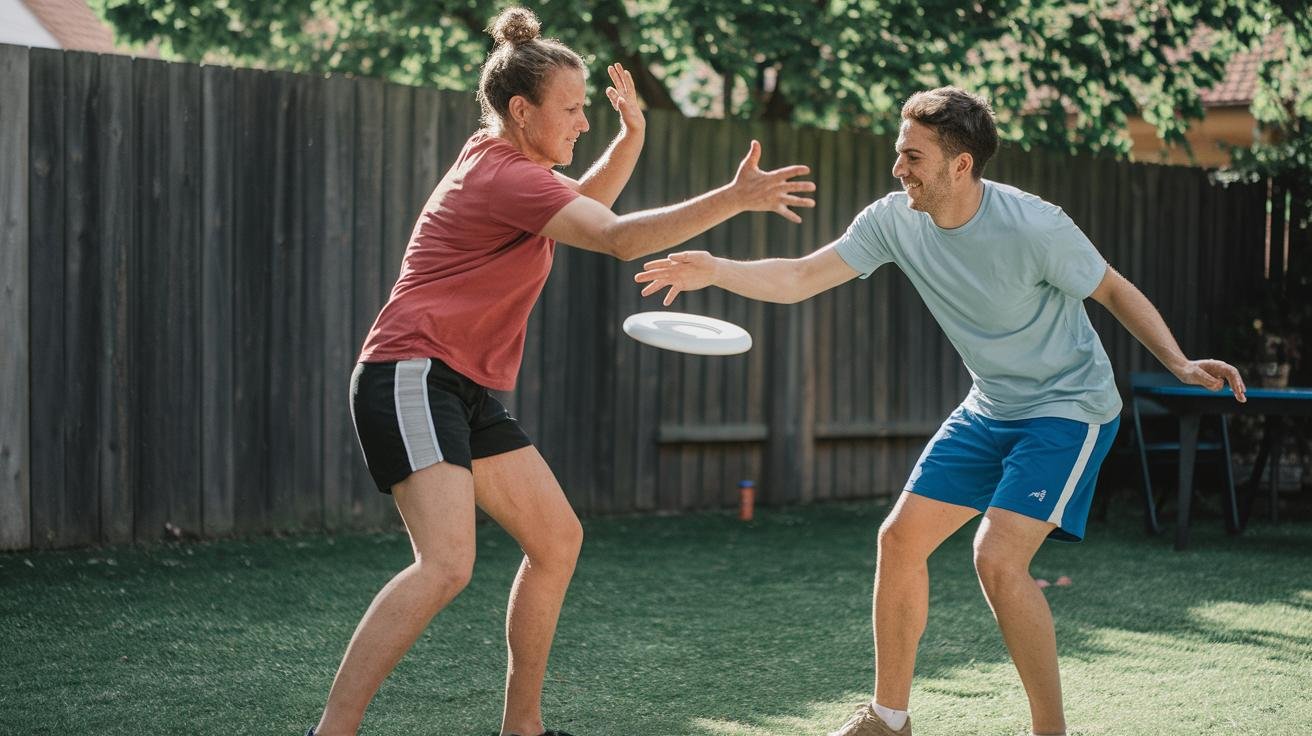
Here’s the flow. You play two-on-two: you and your partner stand at one can, the other team stands at the far can, and you take turns throwing the disc toward the opposite goal. Your partner stands down at that far can and is allowed to deflect your throw — a nudge with a hand, forearm, or chest to steer it home. What nobody’s allowed to do is catch the disc. Guiding it is legal; grabbing it is not.
Scoring comes down to where the disc ends up, and it’s worth memorizing because it shapes your whole strategy.
| What happens | Points |
|---|---|
| Your throw hits the can with no help (direct) | 2 |
| Your partner deflects your throw onto the can | 1 |
| Your partner deflects your throw into the slot | 3 |
| Disc slides through the front slot on its own | Instant win |
The target is exactly 21 points, and this is the wrinkle that makes the endgame fun: you have to land on 21 on the nose. Overshoot and you don’t just miss the win — you give points back (many groups play that going over drops you back to 17), so the number matters more than the size of the throw. When you’re sitting on 19 or 20, you stop swinging for the big deflection and start playing for the small, controlled point that lands you right on 21. If both teams reach 21 in the same round, you go to sudden death — next score wins, straight up. And a clean throw straight through the slot ends everything on the spot, no matter the score. That “instant win” is rare, roughly a hole-in-one, but when it happens the whole yard hears about it.
Keep score on your phone or a scrap of paper. After a game or two the tallying becomes second nature, and you’ll catch yourself doing the mental math on every throw — “a two puts us on 21, a deflection risks the overshoot.” That’s when KanJam stops being a toss game and starts being a strategy game.
The Three Throws That Win Games
You can get by on one throw, but you’ll win with three. Each one solves a different problem, and switching between them is what keeps the far team guessing.
Backhand — your bread and butter
This is the throw you already know from beach frisbee, and it’s the most accurate of the three. Grip the disc with your fingers curled under the rim and your thumb on top, stand with your feet about shoulder-width apart and your shoulders square to the target, then pivot off your back foot and snap your wrist at the release. The snap is where the accuracy lives — a lazy arm with no wrist gives you a wobbly disc that the wind eats alive. Aim a hair above the can’s lip and let it settle. Most of your two-point direct hits will come off a clean backhand.
Forehand flick — for angles
The forehand (or flick) is thrown with two fingers tucked under the rim and your elbow pinned close to your body, and you release it like you’re snapping a towel sideways. It curves. That’s the point — a forehand lets you bend the disc around a defender or drop it onto the can from an angle a backhand can’t reach. It takes more practice to control, so don’t debut it in a close game. Groove it in the yard first, keeping the disc flat by tilting your wrist up at the release.
Hammer throw — going over the top
The hammer is your overhead option: grip it in a relaxed power grip, reach up high, step forward with the opposite foot, and push the disc up in an arch so it comes down steep. Because it drops nearly vertical, it’s the throw that clears a leaping defender and gives your partner an easy tip, and it’s deadly for feeding the slot on a high, soft descent. It’s the flashiest of the three and the one that turns a backyard game into a highlight reel — just give it a little spin so it doesn’t tumble on the way down.
Deflections: Playing the Partner Game
Half of KanJam happens at the receiving can, and this is where new players leave points on the table. When your partner throws, your job is to read the flight and decide, in about half a second, whether to let it ride or reach out and steer it. Stand just behind and to the side of the can so you can see the disc coming and pick your angle. A soft forearm glide can pop a low throw up and onto the can for a deflected point; a chest cushion can drop a high one straight down into the slot for the big three.
The teams that win are the ones that talk. My regular partner and I call “up” for a lofted deflection and “low” for a bounce, and that one word tells each of us what the other is about to do. When a straight redirect isn’t there, you improvise: bounce the disc off the ground so it hops up toward the slot, clip it off the can’s rim so it curls back around, or cushion it against your chest and let it fall where you want. None of it is legal to catch, but all of it is legal to guide — the line is whether the disc keeps moving. Read the angle, keep your feet moving, and you’ll turn defense into points instead of just swatting at air.
Game Variations for Night, Beach, and Small Yards
Once the standard game gets easy, the fun is in bending the setup. Bring the cans to 30 feet for kids, tight yards, or an indoor gym floor, and the whole game speeds up — more scoring, more laughs, less chasing. On the beach, drive the goal bases into the sand until they’re solid and put extra spin on every throw to cut the sea breeze. For pool days, a floating set turns the deck into a court and makes a missed throw a splash instead of a jog.
Night play is my favorite variation. Glow discs and LED-ringed cans turn a dark yard into something that looks like a sci-fi movie, and tracking a neon disc through the air is genuinely mesmerizing. You can also just play more people — a 1-versus-1 sharpens your solo aim since there’s no partner to bail you out, while a rotating 3-versus-3 keeps a party moving. If KanJam has you looking for more throwing games, the same crew and the same flat lawn will happily host outdoor ladder toss or a round of washers toss, and both pack down as small as a KanJam set.
Drills and Common Mistakes for Beginners
You don’t need to practice much to have fun, but a little goes a long way, and three short drills cover most of it. Start close — 10 feet from a single can — and throw five backhands, then five forehands, adjusting your grip until every toss feels the same in your hand. That consistency is worth more than raw power. Next, chalk a couple of target zones on the can body and keep a quick tally of hits versus misses; watching that number climb tells you exactly where your aim is drifting. Finally, spend a minute reading the wind before a real game — tie a ribbon to a stick, hold it beside the can, and aim slightly into the breeze so the disc holds its line.
As for the mistakes, three cost beginners the most points. The first is throwing all arm and no wrist, which gives you a wobbling disc with no accuracy — the snap at release is the whole thing. The second is forgetting the overshoot rule and swinging for a big deflection while sitting on 20, then watching your score crash back to 17. The third is neglecting your disc: I once left mine baking on the dashboard for an afternoon, and it warped just enough to fly like a wounded bird for the rest of the summer. Wipe it down after a session and store it out of the sun, and it’ll fly true for years.
That’s really the whole game. Two cans, a disc, a flat spot, and a partner who calls “up” and “low” at the right moments. KanJam sits right alongside the other classic lawn games that earn their spot in the garage — quick to set up, easy to learn, and hard to walk away from once the score gets close. Set the cans at 50 feet, throw until the wrist snap feels natural, and you’ll be sealing games before the burgers are off the grill. If you want another two-person yard game to rotate in, how to play horseshoes is the natural next stop.