Grilled Vegetable Skewer Meal Prep Ideas
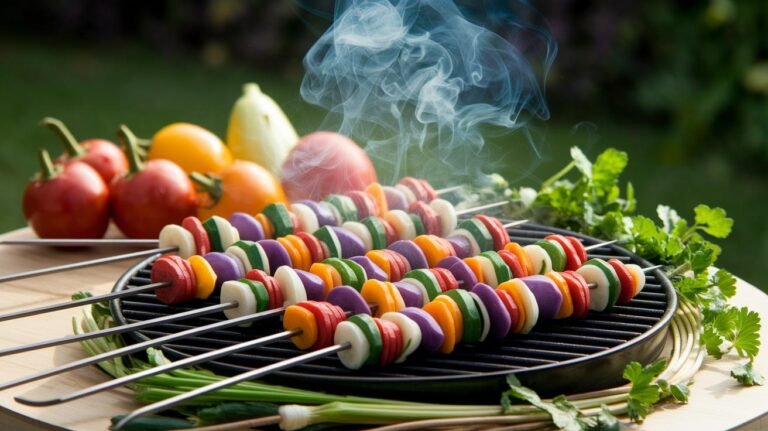
If your weeknight dinners fall apart by Wednesday, a Sunday batch of grilled veggie skewers fixes it. I shop once, thread and marinate in one sitting, grill everything in a single run, and pack it into grab-and-go containers. By Tuesday, dinner is reheating while everyone else is still deciding what to cook. This is my full system for grilled vegetable skewer meal prep — what to buy, how to cut it, four marinades so the week never gets boring, and how to store and reheat it so the skewers taste grilled and not sad.
As an Amazon Associate, Backyard Superstar earns from qualifying purchases at no extra cost to you.
Pick a Prep Day and Map the Week
Meal prep lives or dies on the plan, so I start there before I touch a vegetable. Pick one prep day — Sunday works for most people — and block two short windows: about 30 minutes to chop, and another 30 to marinate and grill. Putting it on the calendar is half the battle. When “prep skewers” is a real appointment, it actually happens.
Then assign marinades to nights so there are no last-minute decisions. A week might look like this:
- Monday: garlic herb
- Tuesday: sesame ginger
- Thursday: balsamic
- Friday: chili lime
Four marinades across four nights means the same base skewers never taste the same twice. Add a midweek nudge — “Wednesday, 6:00: reheat and eat” — and the week runs itself. If you want the base recipe down cold before you scale it up to a batch, our easy grilled vegetable skewers recipe walks through a single round first.
The Best Vegetables and Plant Proteins for Skewers
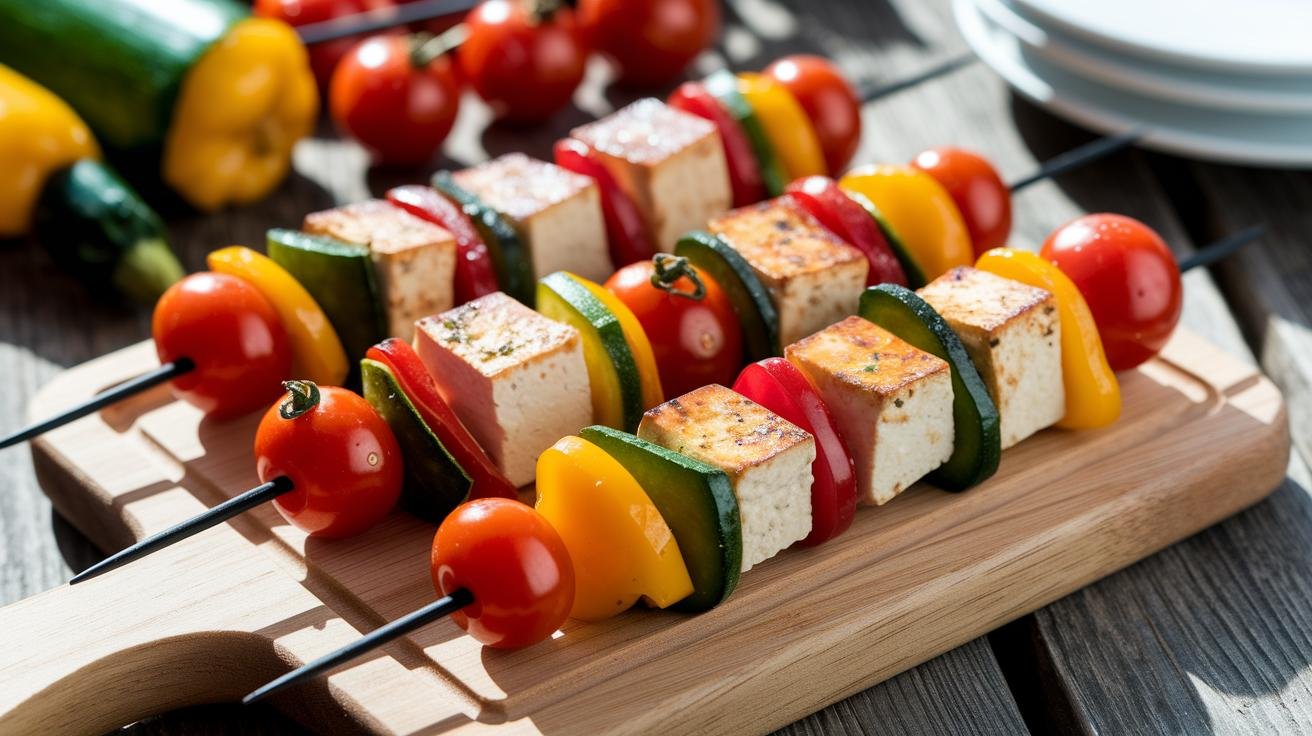
For a week of meals you want firm vegetables that hold their shape over heat. Soft, watery ones turn to mush the second they hit the grates and they don’t survive reheating. Here’s my standard shopping list for about 18 to 20 skewers — enough for four dinners if you serve four or five skewers a head:
- 4 bell peppers (any color)
- 3 zucchini
- 2 pints cherry tomatoes
- 16 oz mushrooms
- 2 large red onions
- 1 medium eggplant
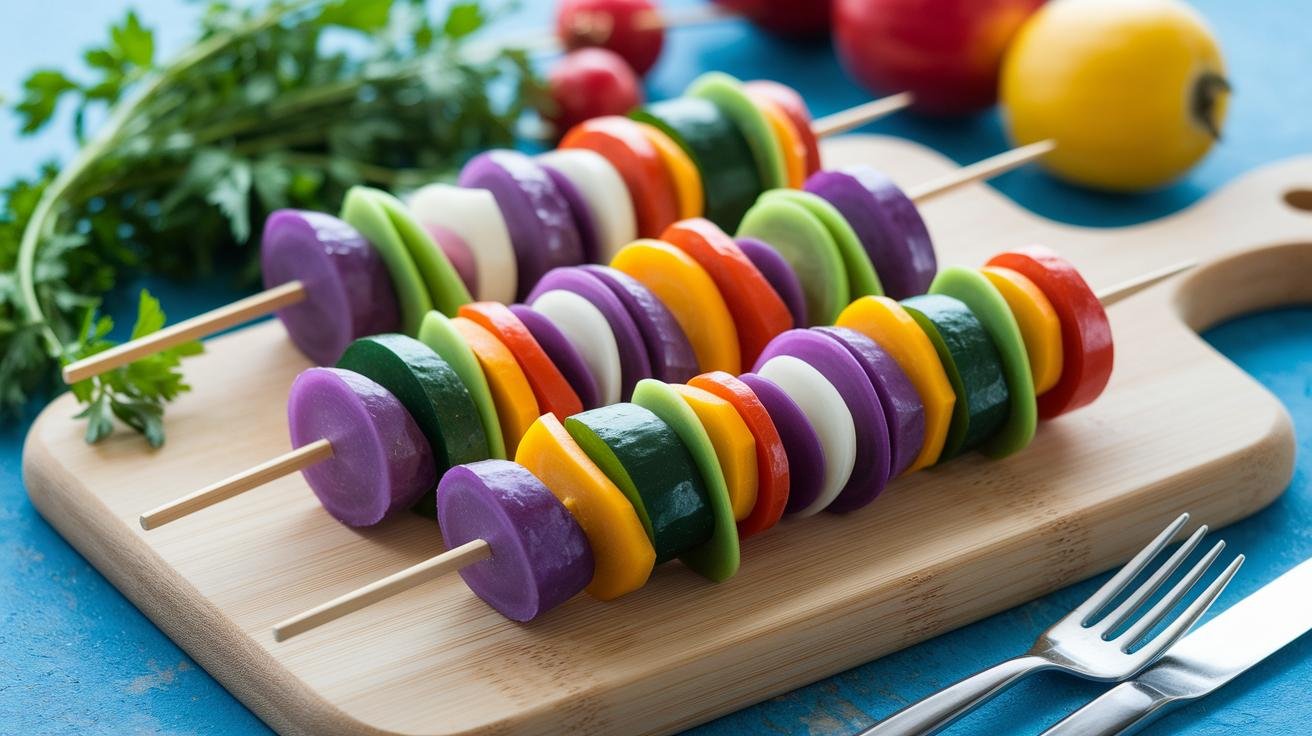
How you cut matters as much as what you buy. Uniform pieces grill evenly and stay put when you flip them:
- Eggplant: ½-inch discs so they don’t split or slide off.
- Bell peppers: 1-inch chunks.
- Zucchini: ¾-inch rounds — thick enough to hold together on the turn.
- Mushrooms: trim tough stems, thread caps whole or halved.
- Red onion: wedges, with a little root left on each so the layers stay attached.
Then add a plant protein so each skewer is an actual meal, not a side. I cube about 8 ounces of firm tofu and slip it onto every other skewer; pressing it under a weighted plate for 15 minutes first helps it grab the marinade and firm up on the grill. Halloumi (a firm grilling cheese that won’t melt through the grates) and tempeh strips both work too. Aim for roughly one part protein to two parts vegetables — hearty, but still veggie-forward. I rotate tofu one week and halloumi the next just to keep things interesting.
Threading Skewers for Fast Batch Prep
When you’re building 18 to 20 skewers in one sitting, the skewer itself matters more than you’d think. Round skewers let everything spin when you flip — half-grilled sides face up, the other half stays raw. Flat skewers solve that: the food locks in place and turns as one piece.
My everyday pick for prep is a set of FLAFSTER Kitchen flat stainless steel skewers with a push bar (mid range, $$). The flat blade keeps food from spinning, and the push bar is the real time-saver for meal prep — slide the bar and a whole skewer’s worth of veggies drops straight into a container in one motion. No picking pieces off one at a time.
If you’d rather not babysit reusable skewers at all, a big bag of GoodCook 12-inch bamboo skewers is the budget route (budget range, $). Soak them in water for at least 20 minutes so the ends don’t char, use them once, and toss them — handy when you’re prepping for a crowd and don’t want a sink full of metal afterward.
For folks who grill year-round and want skewers that’ll outlast the grill, the Steven Raichlen Signature Series flat skewers are the premium pick (premium range, $$$). Heavy, wide, genuinely flat — wet vegetables like tomatoes and mushrooms won’t slip or spin, and they feel like they’ll last a decade.
Whatever you use, leave a small gap between pieces so heat reaches every side. Crammed-tight skewers steam instead of char.
Four Marinades to Keep the Week Interesting
One batch of skewers, four marinades — that’s how you eat the same prep all week without getting bored of it. Mix these in separate bowls or zip-top bags and let the threaded skewers soak before they go on the grill.
- Garlic herb: ½ cup olive oil, 2 smashed garlic cloves, juice of one lemon, 1 tsp salt, ½ tsp pepper, 1 tsp fresh thyme. Soak 30 minutes to 2 hours.
- Sesame ginger: ¼ cup soy sauce, 1 tbsp grated ginger, 1 tbsp sesame oil, 1 minced garlic clove, 1 tsp honey. Soak 30 to 60 minutes.
- Balsamic: 3 tbsp balsamic vinegar, zest of one lemon, 2 tbsp olive oil, 1 tsp dried oregano, a pinch of salt. Soak 30 minutes to 2 hours.
- Chili lime: 1 tbsp chili powder, 1 tsp cumin, 1 tsp paprika, juice of half a lime, ½ tsp salt, 2 tbsp olive oil. Rub on and rest 30 to 45 minutes.
You can marinate before grilling, or grill plain and brush the marinade on as you reheat each night — that second approach keeps the flavors brighter across the week. The sesame ginger is my personal favorite; it’s the one batch that never makes it to Friday.
Batch-Grilling Without Babysitting the Grill
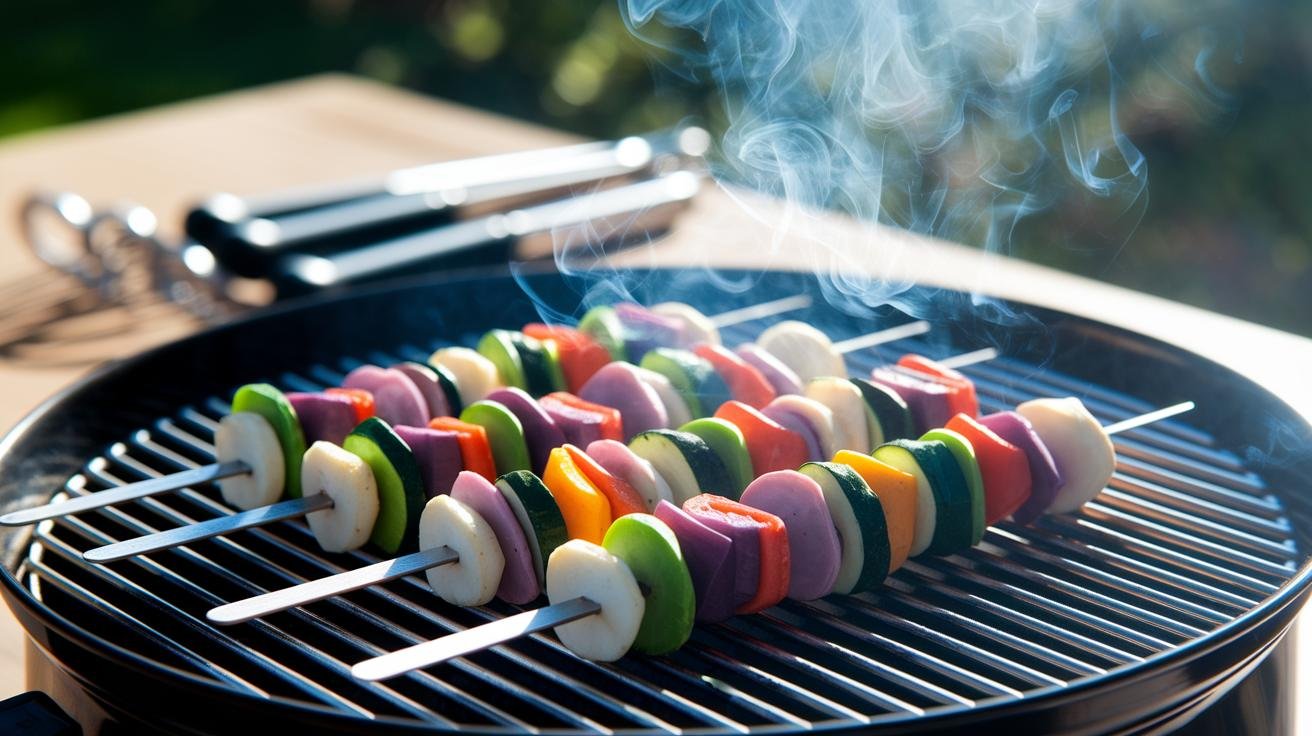
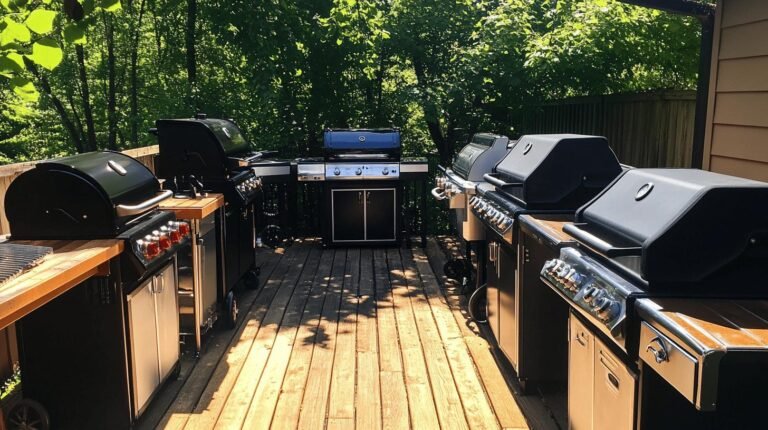
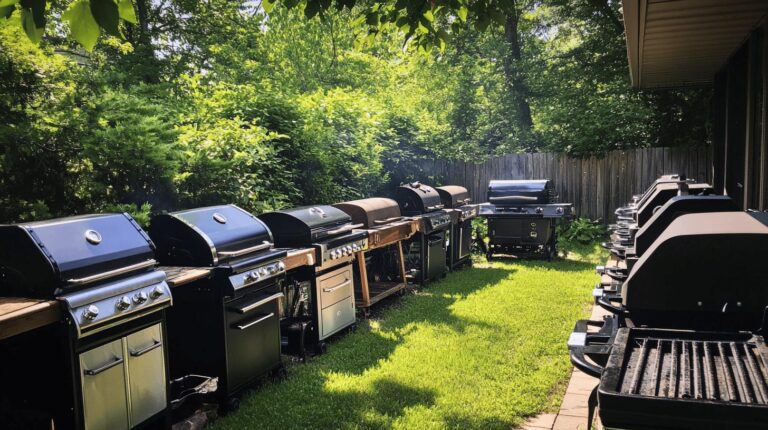
Heat the grill to medium-high — you want a soft hiss when the vegetables touch the grates, not a violent sizzle that scorches the outside before the inside softens. Scrub the grates with a wire brush and wipe on a little oil so nothing sticks. Charcoal or gas both work fine here; if you’re still deciding which grill suits how you cook, our rundown of the pros and cons of different grill types lays it out.
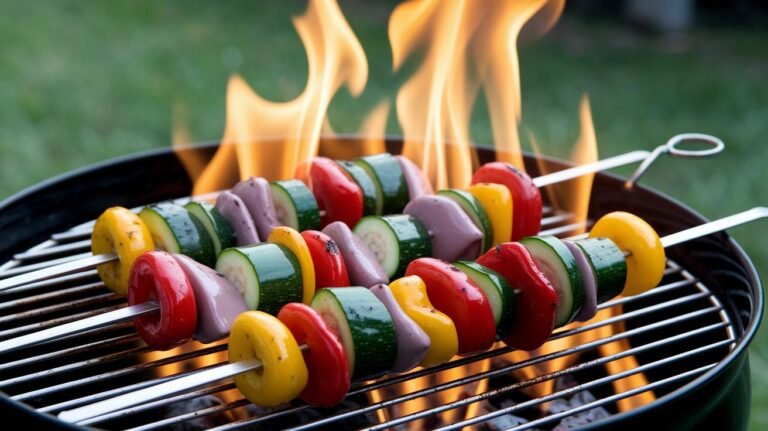
For a full batch, fit as many skewers across the grate as you can without crowding, and turn each one every 3 to 4 minutes so every side gets even color. Total time is usually 10 to 15 minutes. Go light on the oil — a quick brush or spritz is plenty; drenched vegetables flare up and turn bitter at the edges.
The small loose pieces are the ones that give people trouble — cherry tomatoes and mushroom caps love to roll off and vanish between the grates. A Grillaholics stainless steel grill basket handles those (mid range, $$). I grill the threaded skewers on the open grate and toss the odds and ends — extra tomatoes, mushrooms, onion that fell apart — into the basket alongside, then fold it all into the week’s containers. Nothing gets lost to the fire. If you want to add a make-ahead grilled side while the coals are hot, our charcoal grilled corn on the cob cooks right alongside the skewers.
Setting up a dedicated spot for these big cook days makes them faster, too — a few ideas in our DIY backyard grilling station ideas.
Portioning, Storing, and Reheating
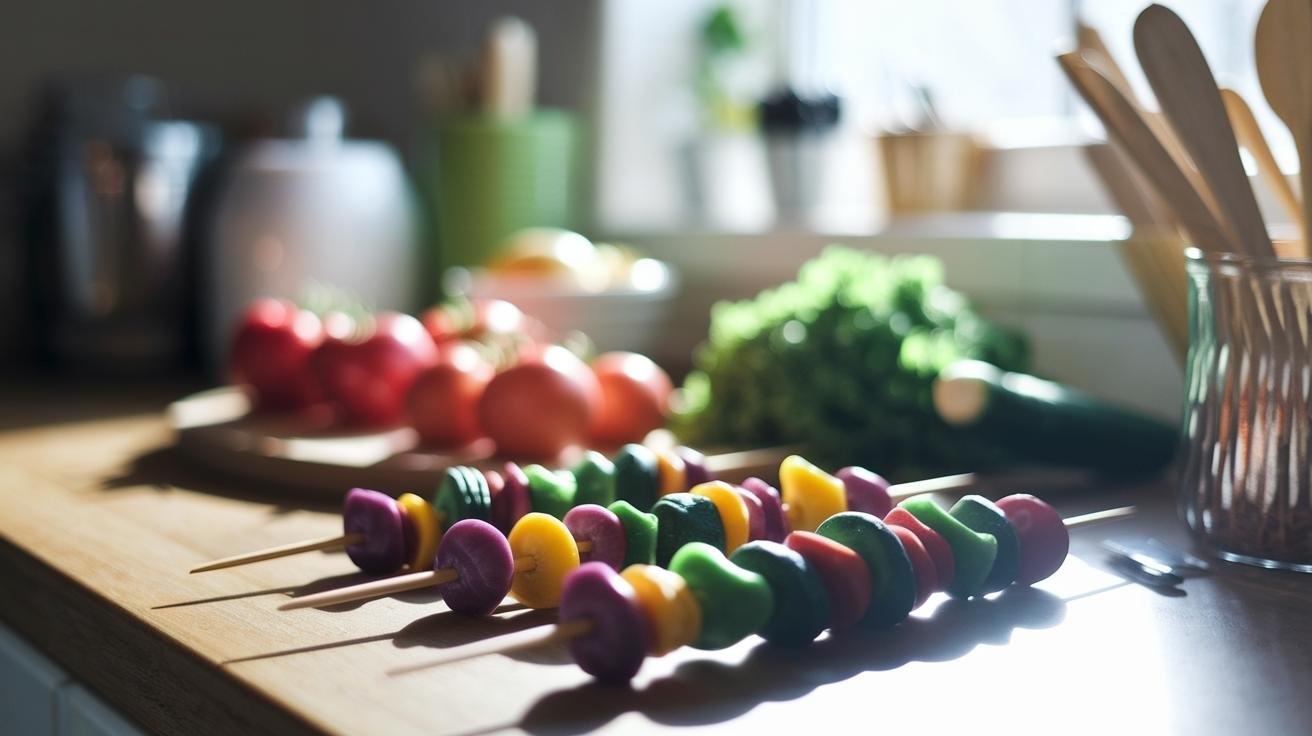
Let the skewers cool fully before you pack them — sealing in steam is what turns crisp-tender vegetables into soggy ones. Once they stop steaming and the color stays bright, they’re ready.
This is where the right container earns its keep. I use a set of PrepNaturals glass meal prep containers (mid range, $$). Glass doesn’t hold onto garlic and chili-lime smells the way plastic does, it goes straight from fridge to oven without warping, and the airtight lids keep everything fresh for days. I lay a paper towel in the bottom of each to catch extra moisture, pack 3 or 4 skewers per meal, and sort by marinade so mornings are a grab-and-go.
Here’s how long it all keeps and how to bring it back to life:
| Method | Storage duration | Reheat approach |
|---|---|---|
| Refrigerate | Up to 4 days | 350°F oven, 5–7 min |
| Freeze | Up to 2 months | 350°F oven, 10–12 min |
| Quick refresh | — | Hot grill, 3–5 min per side |
To freeze, lay the skewers flat in a single layer first so they don’t freeze into one block; once solid, you can stack them. Bell peppers and zucchini freeze especially well and come back crisp. For the best texture all around, reheat in the oven or on the grill rather than the microwave, which tends to steam the char right out of them.
Why Veggie Skewers Earn a Weeknight Spot
Beyond being easy, a tray of grilled veggie skewers is just a solid thing to have in the fridge. They’re naturally low in calories and high in fiber, and the mix of peppers, tomatoes, and eggplant brings vitamins A and C to the table. Skipping heavy sauces keeps them light, and the smoky char means you don’t need much else to make them taste like a real meal.
Mostly, though, the win is practical: when dinner is already grilled and portioned, you actually eat the vegetables instead of ordering takeout because you’re tired. That’s the whole point of prepping ahead.
Recommended gear for veggie skewer meal prep
As an Amazon Associate, Backyard Superstar earns from qualifying purchases at no extra cost to you.
- Top pick (skewers) — FLAFSTER Kitchen Flat Stainless Steel Skewers with Push Bar ($$). Flat blade stops spinning; the push bar drops a whole skewer into a container in one motion.
- Budget pick (skewers) — GoodCook 12-Inch Bamboo Skewers (100-count) ($). Soak, use once, toss — perfect for big-batch days.
- Premium pick (skewers) — Steven Raichlen Signature Series Flat Skewers ($$$). Heavy, wide, truly flat — wet veggies won’t slip or spin.
- Loose-veg saver — Grillaholics Stainless Steel Grill Basket ($$). Keeps cherry tomatoes and mushrooms from falling through the grates.
- Storage — PrepNaturals Glass Meal Prep Containers ($$). Airtight, fridge-to-oven glass that won’t hold marinade smells.
FAQ
How do I meal prep grilled vegetable skewers for the week?
Pick a prep day, shop once, then chop and marinate in one sitting. Thread 18–20 skewers, grill them all in a single run, cool them fully, and portion 3–4 per container sorted by marinade. Refrigerate up to four days or freeze up to two months.
Which vegetables hold up best for make-ahead skewers?
Firm vegetables survive grilling and reheating best: bell peppers, zucchini, mushrooms, red onion, eggplant, and cherry tomatoes. Cut them into uniform pieces so they grill evenly, and add firm tofu, halloumi, or tempeh for a complete meal.
How long do grilled vegetable skewers last in the fridge?
Stored in airtight containers after cooling fully, grilled vegetable skewers keep up to four days in the fridge or up to two months frozen. Freeze them flat in a single layer first, then stack once solid.
What’s the best way to reheat grilled veggie skewers?
Reheat in a 350°F oven for 5–7 minutes (10–12 minutes from frozen) or give them 3–5 minutes per side on a hot grill. Skip the microwave, which steams out the char and softens the vegetables.
Should I use metal or bamboo skewers for batch grilling?
Flat metal skewers keep food from spinning and last for years, and push-bar versions slide a whole skewer into a container at once. Bamboo skewers are cheaper and disposable — just soak them 20 minutes first so the ends don’t burn.
How do I keep small vegetables from falling through the grates?
Thread larger pieces onto skewers and cook loose, small items like cherry tomatoes and mushroom caps in a stainless steel grill basket alongside. Everything chars evenly and nothing drops into the fire.