Backyard Grilling: Types of Grills Pros and Cons
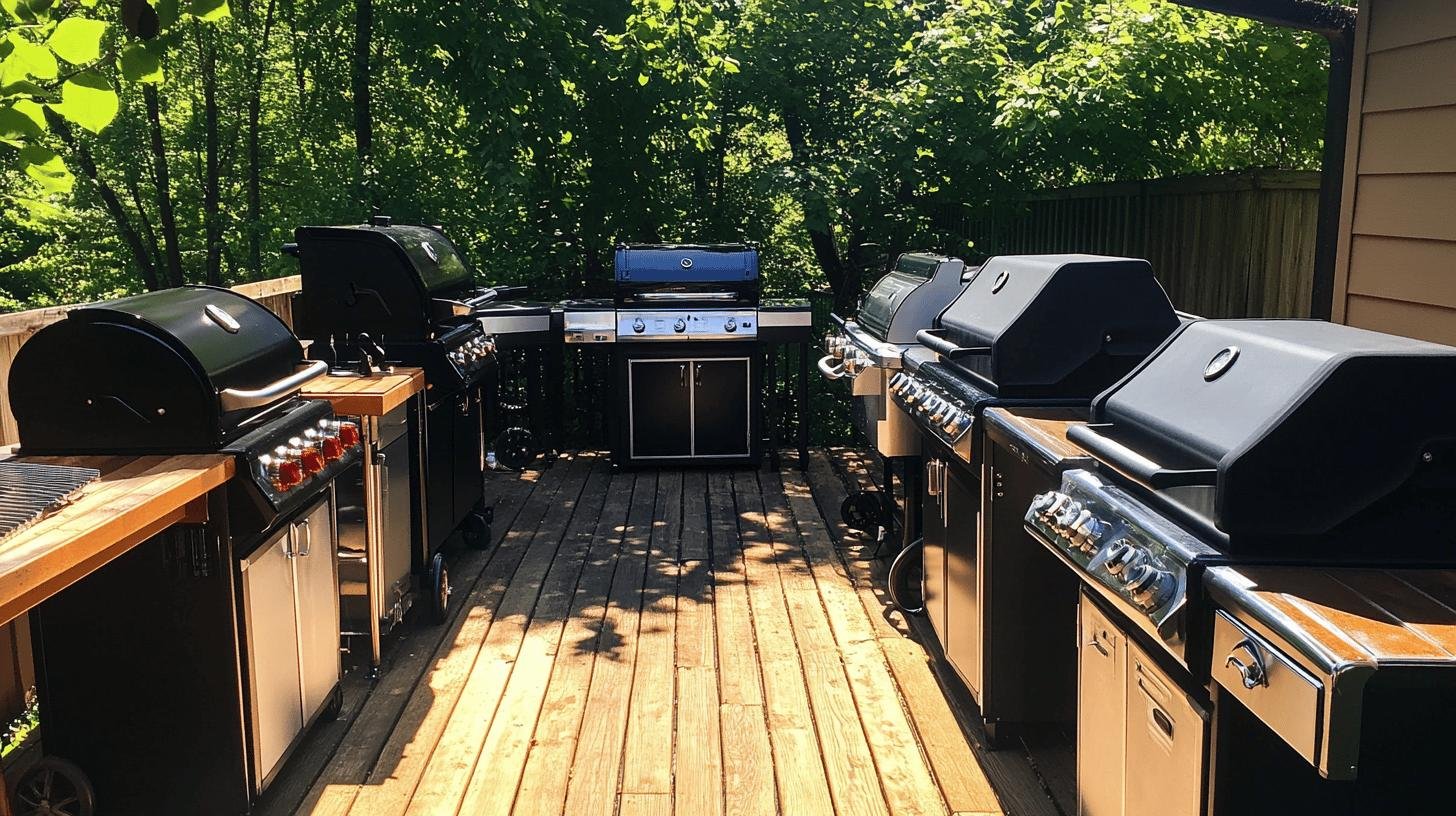
I’ve owned four grills in fifteen years, killed two of them by leaving them uncovered through a couple of rough winters, and learned the hard way that the best grill isn’t the priciest one on the floor — it’s the one that matches how you actually cook. The main types of grills all do the same basic job, but they get there in very different ways, and the gap between them shows up in flavor, cleanup, running cost, and how much fuss you’re signing up for on a Tuesday night. Below I’ll walk you through gas, charcoal, pellet, electric, and portable grills: what each one is genuinely good at, where it falls short, and which one I’d steer you toward depending on your yard, your budget, and your patience.
As an Amazon Associate, Backyard Superstar earns from qualifying purchases at no extra cost to you.
Gas Grills: Fast, Predictable, and Easy to Live With
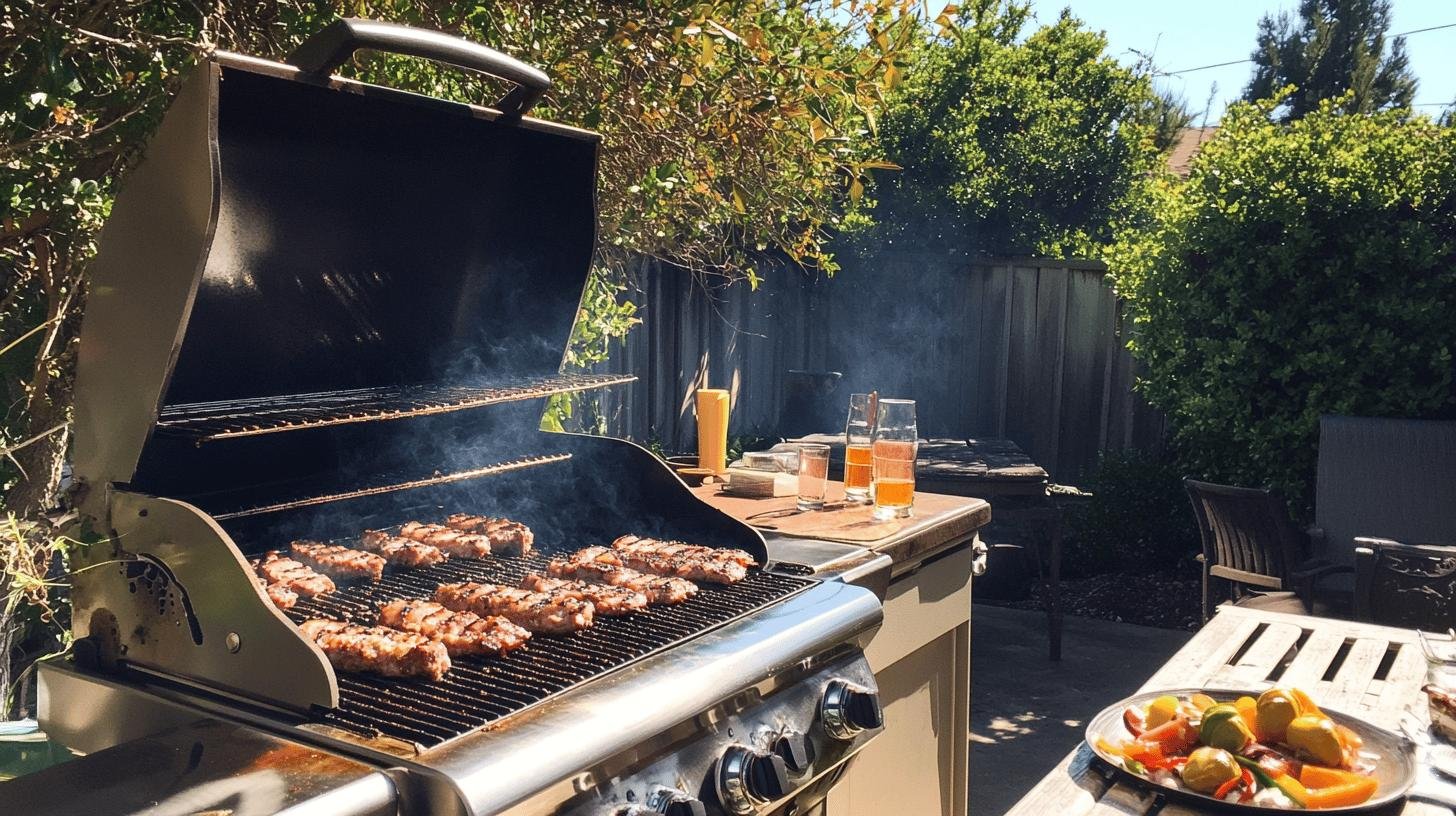
Gas is what most people end up with, and for good reason. You turn a knob, hit the igniter, and in about ten minutes you’re at searing heat with no chimney, no lighter fluid, and no waiting around. Propane or natural gas gives you dial-in temperature control that charcoal simply can’t match, which is what makes gas the forgiving choice for weeknight cooking — burgers on Monday, chicken thighs on Wednesday, nobody stressing about coal placement.
The workhorse I point most people to is the Weber Spirit II E-310, a three-burner propane grill pushing 32,000 BTUs across roughly 529 square inches of cooking space (premium range, $$$). That’s enough real estate to run a two-zone fire — hot side for searing, cool side for finishing — which is the single most useful trick a gas grill can pull off. The porcelain-enameled cast-iron grates hold heat well enough to lay down proper sear marks, and the whole thing shrugs off weather better than the budget stuff.
The honest downside is flavor. Gas burns clean, and clean means you miss the smoky depth that charcoal and wood put into the food — you can chase it with a smoker box and wood chips, but you’re working against the design. Good gas grills also cost more up front than a basic charcoal setup. But if what you want is to feed the family without a project every time, gas earns its keep. It’s the same reason a gas grill sits behind most of my weeknight cooking, including the quick stuff like fast-cooking proteins that only need a few minutes a side.
Charcoal Grills: The Flavor Trade-Off Worth Making
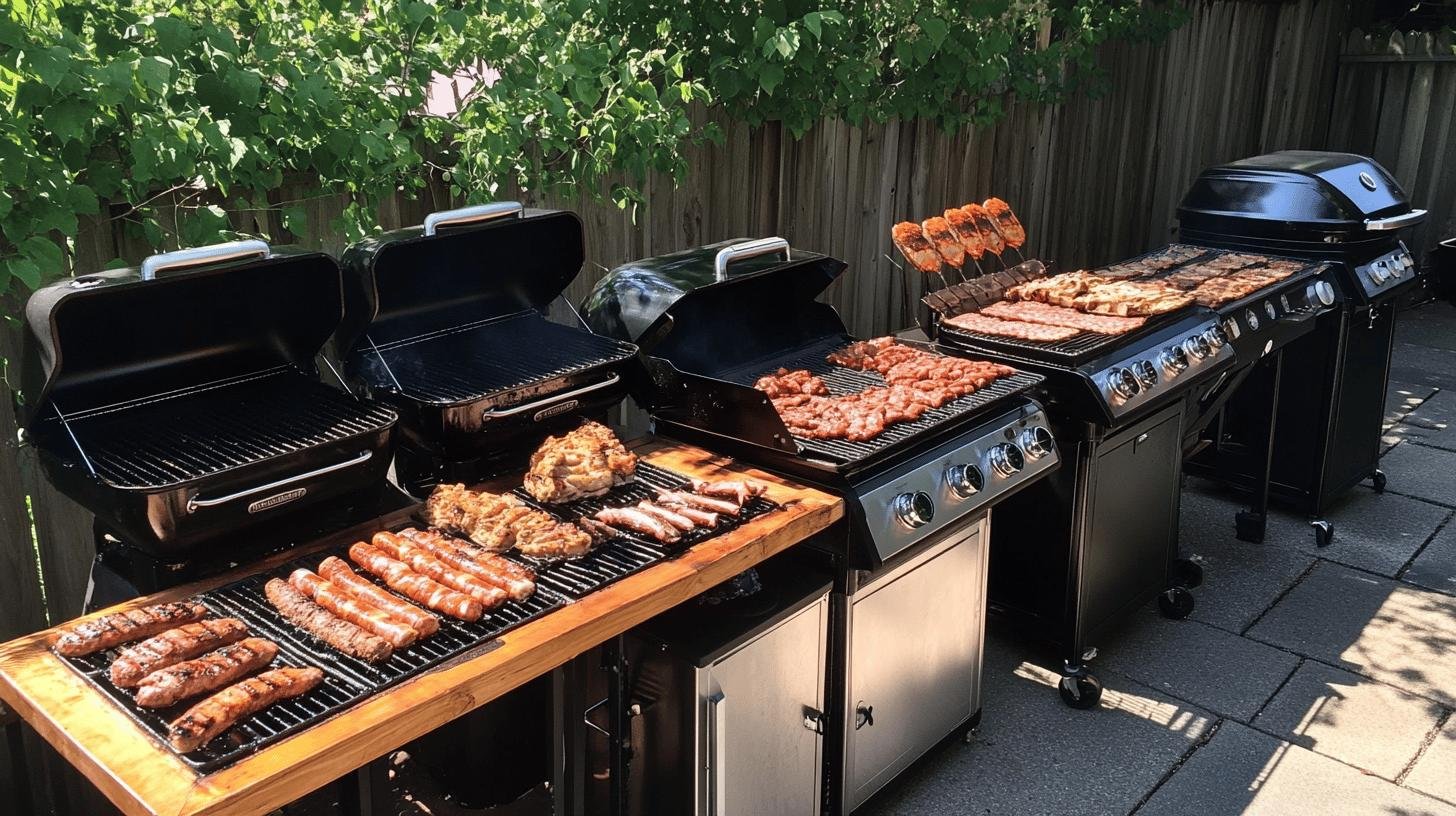
If flavor is the whole point for you, this is the section that matters. Charcoal burns hotter than most gas grills and throws off that deep, woodsy smoke you can’t fake with a burner. The trade-off is time and attention: you’re lighting coals in a chimney starter, waiting fifteen to twenty minutes for them to ash over, then banking them to one side to build your heat zones by hand. It’s a little ritual, and plenty of us love it precisely because it slows the evening down.
For value, nothing beats the classic kettle. The Weber Original Kettle Premium 22-inch gives you about 363 square inches of grate, a built-in lid thermometer, and a hinged grate that lets you top up coals mid-cook without pulling everything off (budget-to-mid range, $–$$). One-touch dampers on the top and bottom are how you dial the temperature — crack them wide for a screaming-hot sear, choke them down for low-and-slow. Learn those vents and an inexpensive kettle will out-cook a gas grill costing several times as much on flavor every single time.
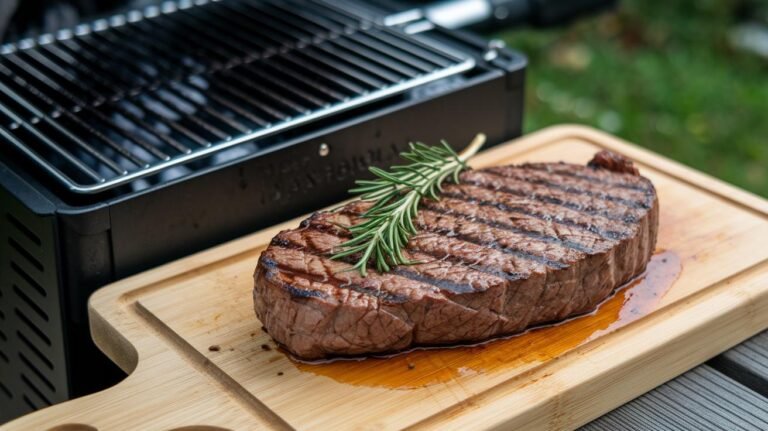
Where charcoal frustrates people is consistency and cleanup. Holding a steady 350°F takes practice, and you’re dealing with ash after every cook, which needs to cool for hours before it’s safe to dump. It’s also the fuel type behind most of the recipes I actually get excited about, from a reverse-seared steak to bone-in chicken cooked over a two-zone fire. If you don’t mind the extra ten minutes, charcoal rewards you.
Pellet Grills: Set-It-and-Forget-It Smoke
Pellet grills are the closest thing to cheating in the smoke world, and I mean that as a compliment. They burn compressed hardwood pellets fed automatically by an auger, with a digital controller that holds your set temperature the same way an oven does. You get real wood smoke without babysitting a fire — you set 225°F for ribs, walk away, and come back to something that tastes like you fought for it.
The Traeger Pro 575 is the one that made me a believer, with 575 square inches of grate, a range from about 180°F up to 500°F, an 18-pound hopper for long overnight cooks, and WiFi so you can watch the temp from your phone while you’re inside dodging the mosquitoes (premium range, $$$). It grills, smokes, bakes, and roasts, which makes it the most versatile single machine here.
Two catches worth knowing. First, a pellet grill needs an electrical outlet to run the auger and fan, so it’s not going anywhere off-grid. Second, most pellet grills top out around 500°F, so they’re phenomenal at low-and-slow but only decent at a hard steak sear — you’ll want to crank it and use a cast-iron pan on the grate if searing is your thing. For anyone who leans toward brisket and ribs over quick burgers, though, the convenience is hard to walk back from.
Electric Grills: For Balconies and No-Flame Zones
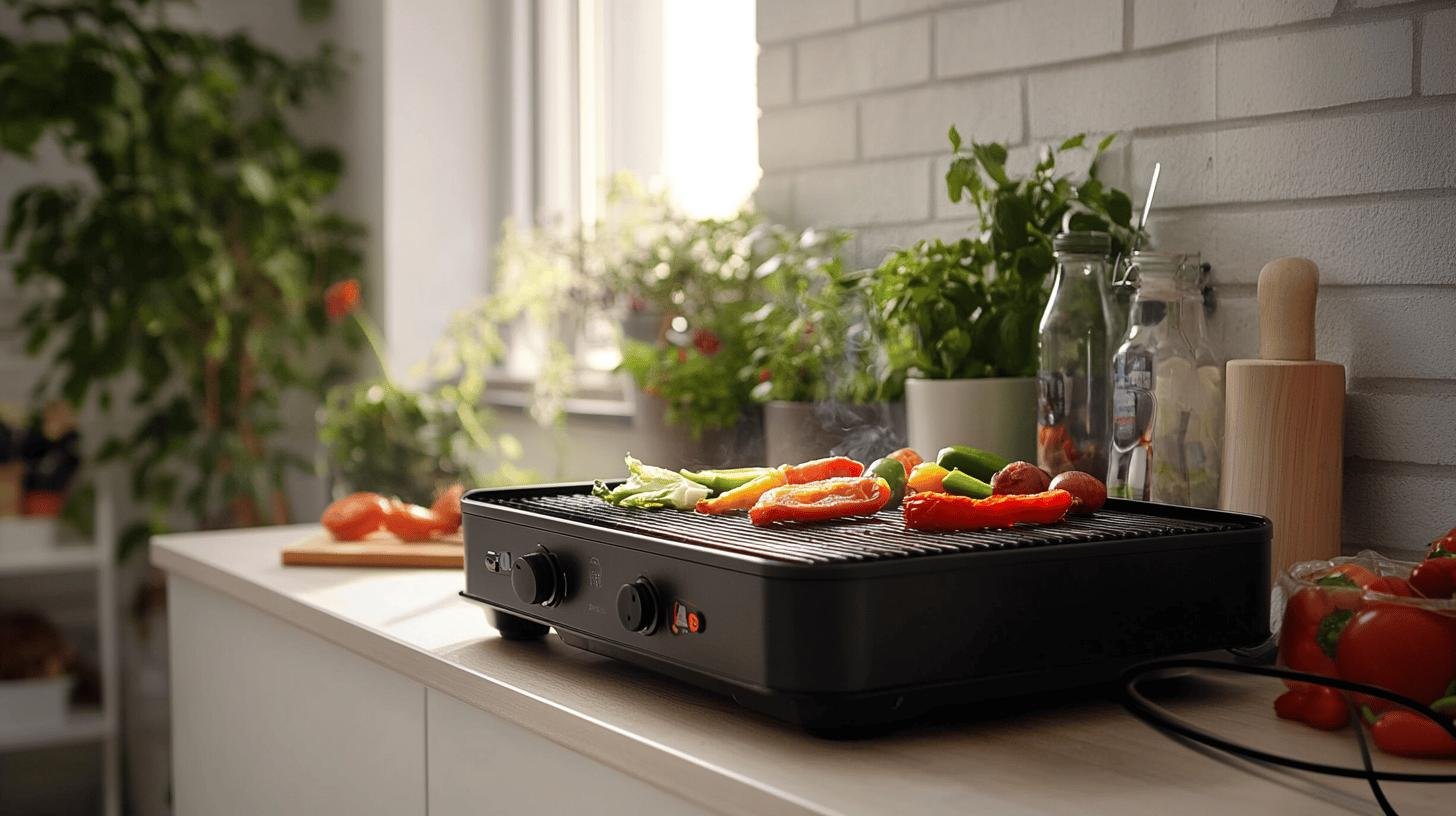
Electric grills exist for a specific reader: the apartment dweller, the condo owner, the person whose building bans open flames on the balcony. They plug into a standard outlet, heat a metal element under the grates, and ask almost nothing of you beyond turning a dial. No propane tank to refill, no ash to dump, no flare-ups.
The Weber Q1400 Electric is the one I’d hand someone in a fourth-floor walk-up — 1,560 watts, porcelain-enameled cast-iron grates, and about 189 square inches of cooking area, which is plenty for two to four people (mid range, $$). It heats evenly and holds temperature better than the cheap tabletop electrics that warp after a season.
Be clear-eyed about the limits. You will not get smoke flavor out of an electric grill, full stop — there’s no combustion to make it. You’re also tethered to an outlet and out of luck in a power cut. But for someone who otherwise couldn’t grill at all, an electric setup is the difference between fresh grill marks and another skillet dinner, and that’s not a small thing.
Portable Grills: Camping, Tailgates, and Tight Spaces
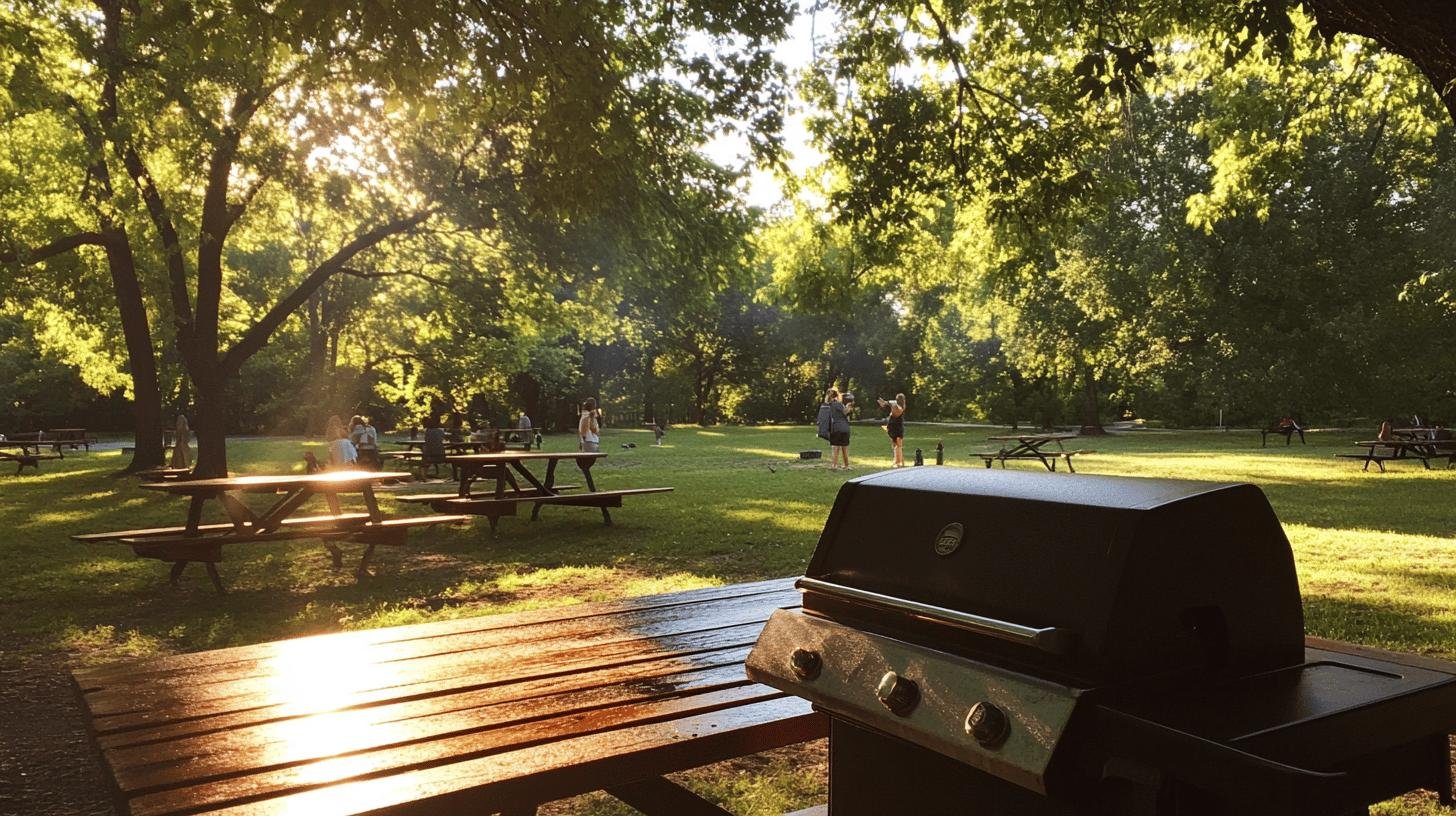
A portable grill isn’t really a separate technology so much as a shrunk-down gas or charcoal grill built to travel. The point is mobility: you want grilled food at the campsite, the trailhead, the stadium parking lot, or the tiny balcony where a full-size grill would never fit. Lightweight cast-aluminum bodies and folding legs make these easy to throw in a trunk.
My go-to is the Weber Q1200 portable propane grill, which runs an 8,500-BTU burner over 189 square inches of cast-iron grate, with an electronic igniter and folding side tables (mid range, $$). It runs off the little green one-pound propane canisters, or a 20-pound tank with an adapter hose, and it puts out enough heat to actually sear — a real weak spot on most portables.
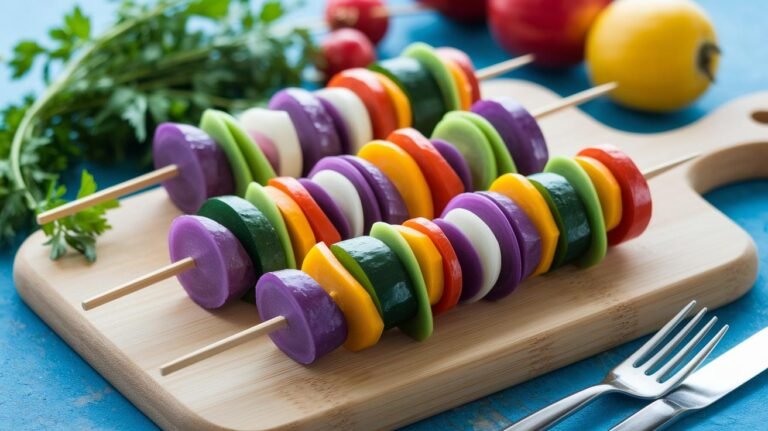
The compromise is capacity and, on the smaller ones, heat. A portable won’t feed a backyard party or hold the steady low temperature you need for smoking. Think of it as a second grill for the road rather than your everyday cooker, and it’ll never disappoint you. Pack it alongside a few skewers and you can even manage quick grilled vegetables at the campsite.
Matching the Grill to How You Actually Cook
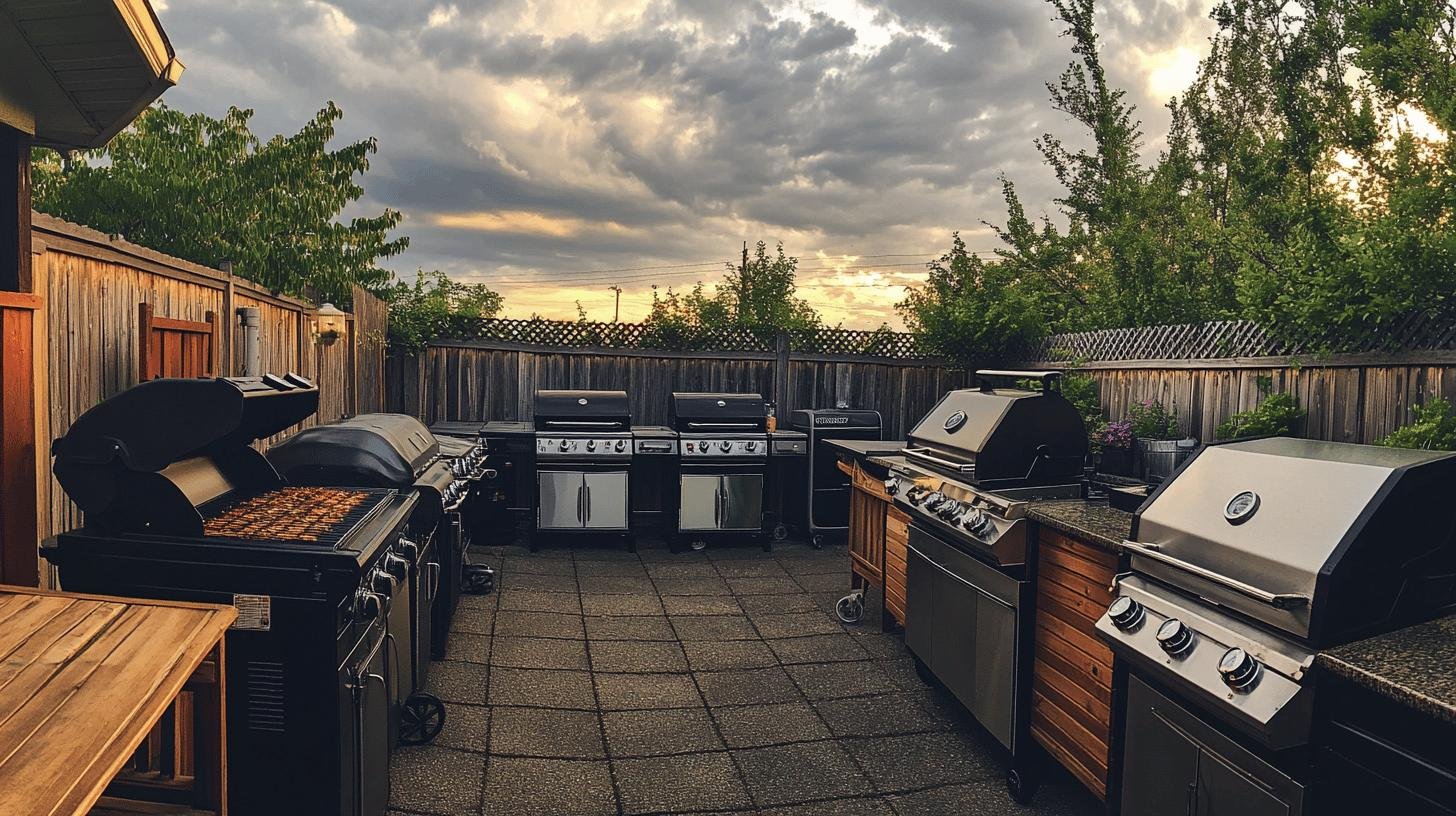
Forget which grill is “best” in the abstract — the right answer depends entirely on your space, your budget, and how much of the cooking you want to be hands-on. A renter on a balcony and a suburban dad smoking a brisket every Sunday are shopping for completely different machines. Here’s how the five types stack up side by side so you can find your row fast.
| Grill type | Ease of use | Flavor | Up-front cost | Best for |
|---|---|---|---|---|
| Gas | High — ready in ~10 min | Clean, mild | $$–$$$ | Weeknight family cooking |
| Charcoal | Moderate — 15–20 min to light | Deep, smoky | $–$$ | Flavor chasers on a budget |
| Pellet | High — set the dial, walk away | Real wood smoke | $$$ | Low-and-slow smoking |
| Electric | Very high — plug and go | None to speak of | $$ | Balconies, no-flame zones |
| Portable | High — grab and go | Depends on fuel | $$ | Camping, tailgates, small spaces |
The mistake I watch people make most often is shopping on BTU numbers alone. A higher BTU figure just means the grill can burn more fuel per hour — it says nothing about even heat, build quality, or how well the thing holds a low temperature, which is where cheap grills fall apart. A well-built 30,000-BTU grill with thick grates and a tight lid will out-cook a flimsy 45,000-BTU box every time. The other common miss is buying too big: a six-burner monster looks impressive, but if you cook for two most nights you’ll waste fuel heating grate space you never use, and it takes up half the patio. Buy for the cooking you actually do, not the party you throw twice a year.
If you’re new to this, start with gas or a good charcoal kettle — they teach you fire management without a steep learning curve or a big outlay. If you already know you’re the type who wants to babysit a brisket, jump to a pellet grill and skip the frustration. And if a balcony or an apartment rule is boxing you in, an electric grill quietly solves a problem the flashier machines can’t touch. Whatever you land on, buy a cover and actually use it — that one habit will outlast the grill itself, and it’s the mistake that cost me two of mine.
Recommended grills for your backyard
As an Amazon Associate, Backyard Superstar earns from qualifying purchases at no extra cost to you.
- Best all-around gas — Weber Spirit II E-310 ($$$). Three burners and 32,000 BTUs make two-zone weeknight cooking effortless.
- Best value / flavor — Weber Original Kettle Premium 22″ ($–$$). A cheap kettle that out-flavors grills three times its price.
- Best for smoking — Traeger Pro 575 ($$$). Set-and-forget wood smoke with a hopper big enough for overnight cooks.
- Best for balconies — Weber Q1400 Electric ($$). Plug-in grilling where open flames aren’t allowed.
- Best portable — Weber Q1200 Portable Propane ($$). Enough heat to actually sear at the campsite or tailgate.
Frequently Asked Questions
What is the best type of grill to buy?
There’s no single best grill — it comes down to budget, space, and how hands-on you want to be. Gas and electric grills are the easiest to run and the friendliest to beginners, while charcoal and pellet grills reward you with deeper, smokier flavor in exchange for more attention. Match the grill to your cooking habits and you’ll be happy with it.
What are the main types of grills?
The five you’ll actually shop for are gas, charcoal, pellet, electric, and portable. Gas runs on propane or natural gas for quick, controlled heat; charcoal burns lump or briquettes for high heat and smoke; pellet grills feed hardwood pellets automatically for hands-off smoking; electric grills plug into an outlet; and portable grills are travel-sized versions of gas or charcoal setups.
Which grill is best for beginners?
A gas grill or a simple charcoal kettle. Gas gives you dial-in temperature control with almost no learning curve, and a kettle teaches you real fire management cheaply. Both are forgiving enough that you can focus on the food instead of fighting the equipment, and neither one requires a big up-front investment to get started.
Do pellet and electric grills give you smoke flavor?
Pellet grills do — they burn real hardwood pellets, so you get genuine wood smoke. Electric grills do not, because there’s no combustion involved; they’re built for convenience and no-flame situations rather than flavor. If smoke is what you’re after, a pellet grill or charcoal is the way to go.