Lawn Croquet Set Maintenance Tips Ultimate Care Guide
Have you ever grabbed your croquet mallet only to find the warm wood stick to your sweaty palm? You know that feeling right before a big play. Then you lean in for your winning shot and see the cool metal hoop (the ring your ball passes through) flaking rust. Ugh.
Skipping a quick clean and check can turn a friendly match into a frustrating stall. But here’s a simple routine that’ll get your gear gliding smooth every time.
First, we’ll scrub the dirt and old grass out of every groove. Next, we’ll peek at each joint for tiny cracks or rust spots. Then we’ll wipe everything dry and tuck your mallet and hoops into a snug, dry spot so they stay ready.
Think of your mallet like your favorite coffee mug. A little rinse and care make each swing feel fresh.
Ready for a match with zero surprises? Let’s dive in and keep your croquet set feeling like new.
Essential Cleaning Techniques for Your Croquet Set
Keeping your croquet gear clean makes every game smoother and more fun. Dirt and grass stains sneak into every tiny groove. If you skip a gentle scrub, wood handles can warp and metal hoops may rust. Ever felt that squeaky rust mid-match? No, thanks!
Recommended tools and materials:
- Soft cloth for wiping off loose dirt
- Mild soap (cuts through grime without harsh chemicals)
- Soft-bristled brush (great for those little crevices)
- Microfiber cloth (an extra-soft, streak-free fabric)
- Eco-friendly cleaner (protects wood finishes and paint)
- Water bucket for mixing your soap solution
- Protective gloves (to keep your hands clean)
Step-by-step cleaning:
- Spray each piece with gentle water to soften mud.
- Dip your cloth or brush into the soapy mix and apply.
- Scrub grass stains softly so you don’t scratch surfaces.
- Rinse until the water runs clear and no bubbles remain.
- Wipe with a microfiber cloth to catch drips and avoid spots.
- Air-dry in the shade until every part feels totally dry.
Oops, I once left mine out in the sun, ended up with warping! Never pack away damp gear. Make sure mallet handles, ball seams, and hoop bases feel bone-dry. That way, your set will be ready for your next backyard showdown.
Inspecting and Repairing Lawn Croquet Equipment for Longevity
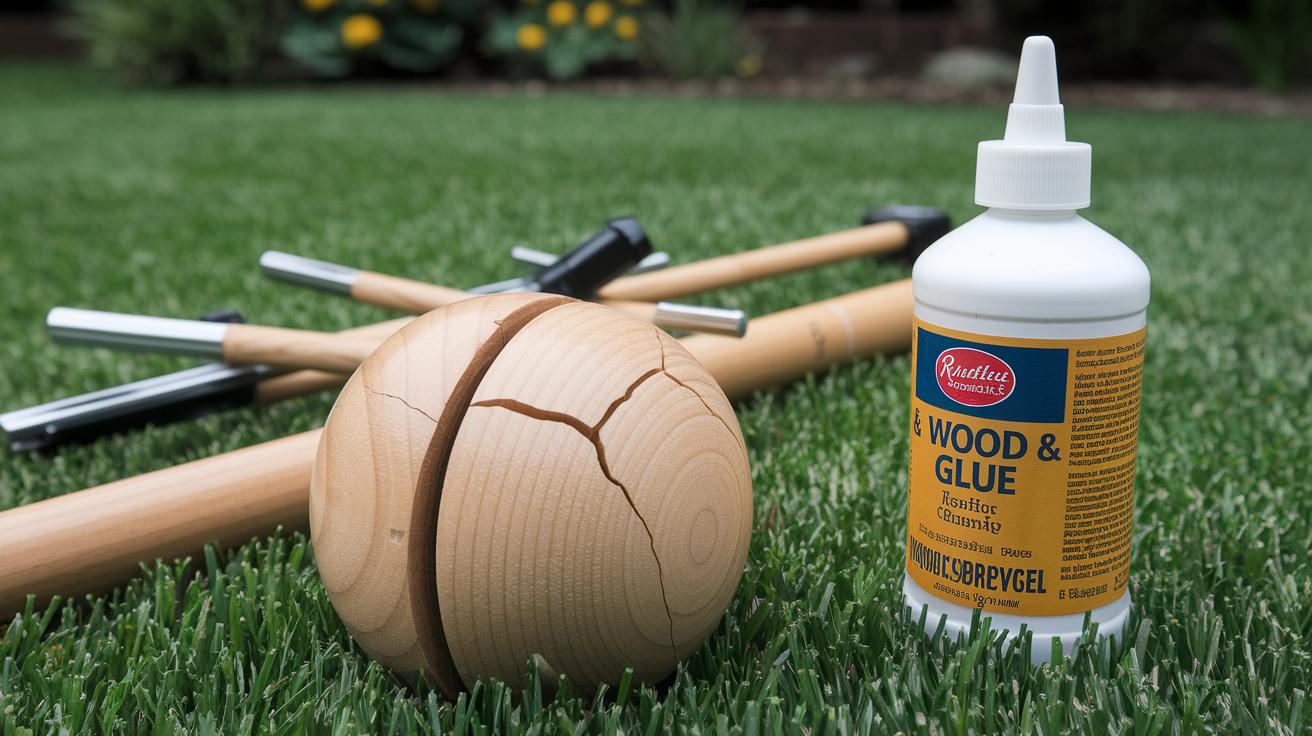
Don’t wait for a major break to show up mid-match. Every month, take time to gently feel each mallet (the wooden hammer-like stick) and ball. You’ll spot tiny cracks, loose joints, or rough spots before they turn into frustrating repairs. Have you ever felt the warm grass under your bare feet before a big game? It’s the best.
Common Damage and Inspection Signs
Feel the wooden mallet head for hairline splits or rough patches where moisture got in. Roll each croquet ball across your palm to check for dents or chips. Wiggle those metal hoops (the U-shaped frames) to see if they’re bent or need tightening. By the way, I once missed a chip on my ball, surprise pop right in the middle of a match! Don’t be like me.
DIY Repair Methods
A simple kit with glue, sandpaper, pliers, and rust-resistant paint goes a long way. Sand splintery mallets until they feel smooth, then clamp and glue cracks shut. Use pliers to reshape bent hoops with gentle pressure. Oops, I spilled paint on the lawn once trying to touch up hoops, but a fresh coat really stops rust.
| Issue | DIY Fix |
|---|---|
| Wood cracks | Glue & clamp |
| Dents on balls | Wood filler & sand |
| Bent hoops | Pliers reshape |
| Rust spots | Sand & rust-resistant paint |
| Loose joints | Tighten bolts |
If that mallet crack grows wider than a dime or a ball chip won’t smooth out, it’s time to replace parts. Serious breaks can throw off your swing and spoil the fun. Better safe than stuck with a splintery hit!
Protective Treatments and Oiling Strategies for Wooden Croquet Components
Want your wooden mallets and balls to stay smooth and shiny? Every couple of months, I rub on a thin coat of wood oil (a liquid that soaks into wood to protect it) or varnish (a clear finish that seals the surface). You’ll smell that warm cedar scent and feel the slick finish under your hand. Skip it, and cracks creep in while the shine just… fades.
First, wipe each piece with a soft cloth to clear off dirt and grit, then let it air-dry. I lightly sand any rough spots with fine sandpaper until the wood feels smooth between my fingers. Next, grab a natural-bristle brush and paint on a thin coat, always going along the grain. After ten minutes, wipe off any extra oil so it won’t stay sticky. Lay the parts flat and let them cure for at least 24 hours, this gives the finish time to harden.
Now, about the metal frame: wipe it down with a damp rag to knock off dust or flaking paint. Once a year, I spray on a rust-resistant spray (holds off moisture and stops rust). Keep the can about eight inches away and move in steady strokes. No more rusty patches when summer storms roll in.
Finally, a thin layer of protective wax or UV-resistant coating keeps sun fading and warping at bay. Gently buff the wax in circles until it gleams, and you’re all set for bright, breezy afternoons of backyard croquet.
Optimal Off-Season Storage Tips for Lawn Croquet Sets
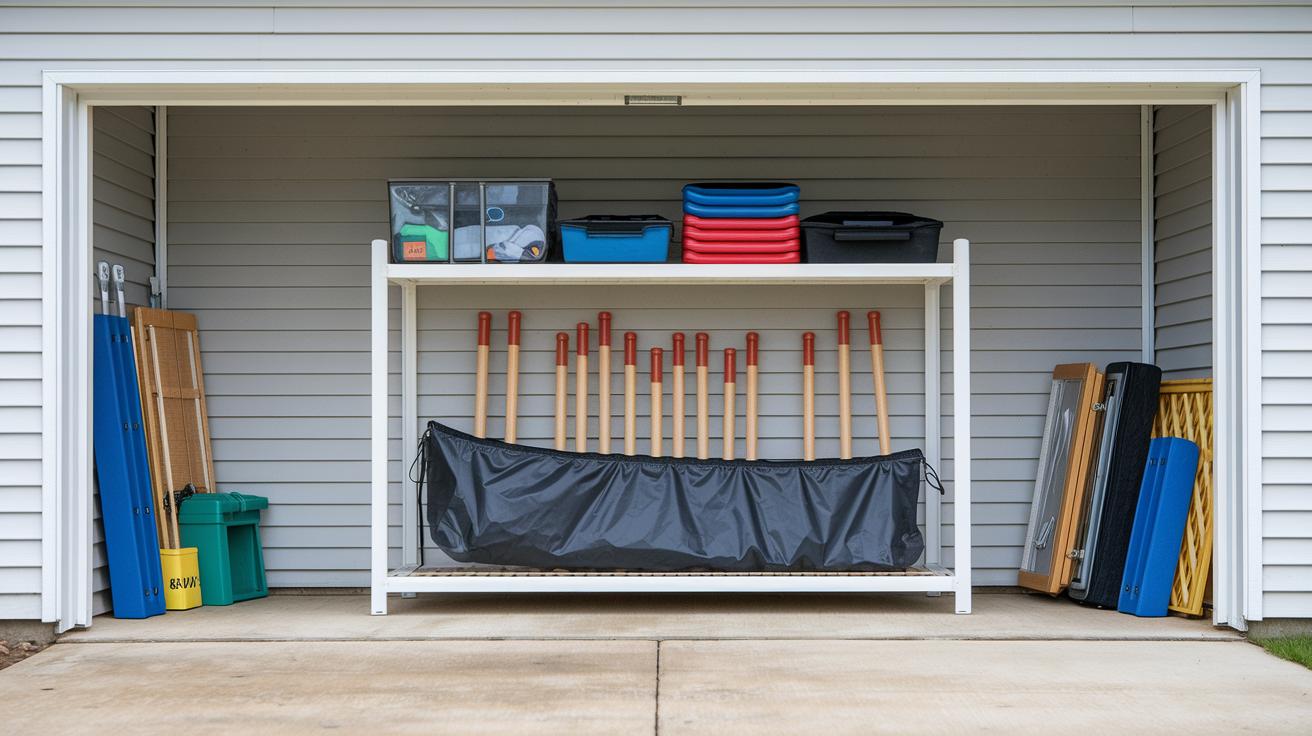
Have you ever set up for a match only to find a warped hoop? I have, right when my friends showed up. But a little off-season care keeps your croquet set feeling sharp and ready to play.
First, find a high shelf in your garage or shed where it stays cool and dry. Slide each hoop and mallet into sealed plastic bins or waterproof storage bags. That way, if your roof ever drips, your gear stays safe and your paint won’t flake.
Next, give the storage spot a quick vacuum to pick up dust bunnies. Cover the bins with an old sheet so dust can’t settle in. For extra protection, tuck a few silica gel packets inside each box (they soak up moisture). This stops mold and mildew before they sneak in.
Stick this checklist on your fridge or pegboard and you’re all set:
| Step | Action |
|---|---|
| Dry off gear | Wipe each piece completely dry |
| Seal up | Use bins or waterproof bags |
| Clean storage area | Vacuum and cover with a sheet |
| Fight moisture | Add silica gel packets |
| Keep off the floor | Store on a shelf or table |
Preparing the Lawn Surface for Optimal Croquet Play
A smooth, even turf (grass surface) makes every croquet shot feel like a gentle glide. Keep your grass trimmed to about 1.5 to 2 inches so the ball rolls steadily. Mow once a week in spring and early summer, then switch to every 10 days as growth slows. Short blades mean fewer surprises, no sudden hops, and less grass under your hoops.
Low spots turn balls into puddle magnets, so you’ll want to level your ground. After a rain shower, take a walk on the course and mark each dip with a flag. Fill those hollows with a mix of topsoil (the rich upper soil layer) and sand (tiny rock grains). Then drag a leaf rake back and forth until the surface looks even. These simple steps help water run off instead of pooling and making the ground squishy.
Now let’s talk wicket (croquet hoop) placement. You need firm, level ground so each wicket sits steady and spacing stays the same. Grab a tape measure and a piece of string to mark straight lines. Then pop in wickets at equal distances from the first hoop to the final stake. When everything’s squared up, your backyard really turns into a croquet playground.
Routine and Seasonal Maintenance Schedule for Croquet Set Care
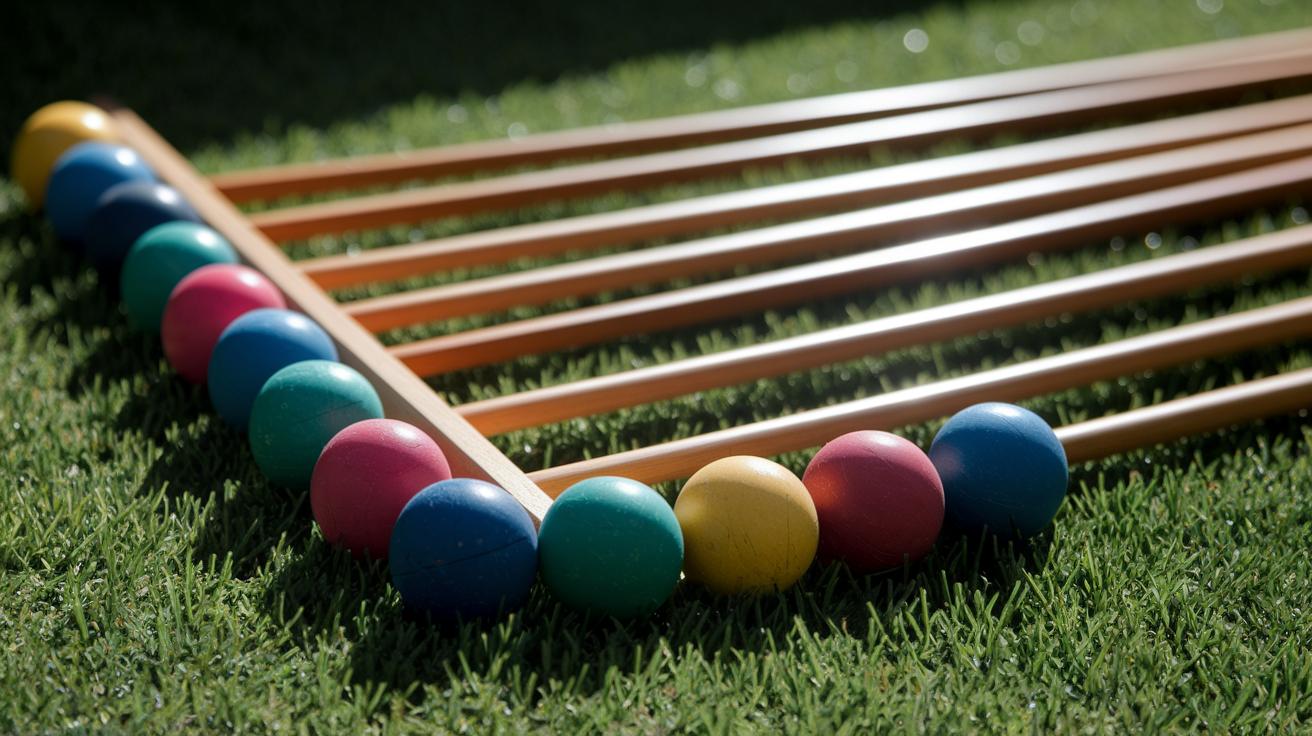
Keep your croquet gear ready for fun days in the yard. This quick planner helps you remember each step without flipping through old notes. Think of it as your go-to check in. Ready to dive in?
| Task | Frequency |
|---|---|
| Wash and dry each piece (post-game clean) | After every match |
| Check mallets, balls, and hoops (look for cracks and wear) | Once a month |
| Rub in wood oil or varnish (clear protective coat) | Every three months |
| Apply rust-proof treatment to metal hoops | Annually |
| Store gear for winter (winterization prep) | At season end |
Tools & Resources
By the way, I set phone alarms to remind me when it’s time to oil the wood or check for rust. You can use any mobile app that lets you create simple alerts. That way you won’t forget a step and your croquet set will last for years.
Final Words
In the thick of it, you’ve rolled up your sleeves to scrub mallets, check for cracks, oil wooden handles, stash gear in its off season home, smooth out the lawn, and lock in a steady schedule.
Each step keeps play smooth, gear sturdy, and memories growing.
Keep an eye on wear and routine upkeep, it really pays off.
Grab this list of lawn croquet set maintenance tips and enjoy every game under the sun.
Here’s to many happy hours chasing that perfect wicket!
FAQ
What essential tools do I need to clean my croquet set?
Essential tools for cleaning a croquet set include a soft cloth, mild soap, soft-bristled brush, microfiber cloth, eco-friendly cleaning solution, water bucket, and protective gloves to keep equipment spotless and damage-free.
How do I remove grass stains and dirt from croquet equipment?
Removing grass stains and dirt from croquet equipment starts with rinsing pieces in clean water, applying mild soap, gently scrubbing with a soft-bristled brush, then rinsing again and drying each part with a microfiber cloth.
How often should I inspect and repair my croquet equipment?
Inspecting and repairing croquet equipment should happen monthly during the playing season to spot wood cracks, loose joints, bent hoops, rust spots, and dents before they worsen.
What simple DIY fixes can I use for common croquet equipment damage?
Simple DIY fixes for croquet gear include gluing and clamping wood cracks, filling and sanding dents, reshaping bent hoops with pliers, applying rust-resistant paint on spots, and tightening loose joints with a wrench.
How do I protect wooden croquet mallets and balls with oiling or sealants?
Protecting wooden croquet mallets and balls involves cleaning surfaces, applying a thin coat of wood oil or sealant, wiping off excess, and letting them cure for 24 hours to guard against moisture and sun damage.
How should I store my croquet set off-season?
Proper off-season storage for a croquet set means drying each piece, storing indoors in a cool, dry spot inside sealed bags or containers, adding moisture absorbers, and keeping equipment dust-free and rust-free.
How do I prepare my lawn surface for optimal croquet play?
Preparing a lawn for croquet involves mowing grass to 1.5–2 inches, leveling low spots with topsoil or sand, improving drainage, and placing wickets on flat ground for consistent ball roll and hoop stability.
What routine maintenance schedule should I follow for my croquet set?
A routine maintenance schedule for a croquet set includes cleaning after each use, monthly inspections, quarterly oiling of wood parts, annual rust-proofing of metal hoops, and end-of-season storage prep in a climate-controlled area.