Best Materials For Durable Patio Lounge Chairs Guaranteed
Have you ever leaned back with a cold drink only to hear a crack? Your chair gives way just as you sink into relaxation. I’ve been there. Major bummer.
But you don’t have to settle for sudden spills and soggy seats. There’s a way to dodge those backyard bloopers, um, and keep kicking back in comfort year after year. We’re diving into four rock-solid choices that laugh in the face of blazing sun, pouring rain, and even your rowdiest Friday night BBQs. Ready to find your perfect patio throne?
First up is teak (a strong tropical wood with warm, earthy grain). It feels smooth under bare toes, you know, even after baking in the sun. Then there’s aluminum (a light metal that won’t rust), which stays cool against your skin no matter the heat.
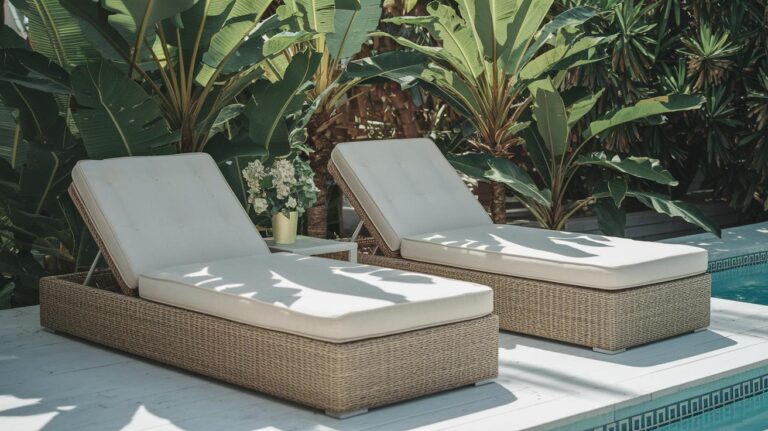
Next is HDPE wicker (a plastic weave made from high-density polyethylene). It gives you that classic wicker look without rot or mold. Then marine polymer (a tough plastic often used on boats) feels sleek and stays bright for years, even after heavy rain. I once left one in a downpour. No rust, no drama.
Pick any of these, and you’ll be chilling in a patio throne that lasts for decades. Go ahead, put your feet up and relax. You deserve it.
At a Glance: Quick Summary of Top 4 Durable Patio Lounge Chair Materials
-
Teak (a durable hardwood): Rich golden wood that laughs at sun and rain. You’ll love the smooth grain under your fingertips as it ages to a soft silver gray. Have you ever smelled fresh rain on teak? It’s like nature’s own welcome mat.
-
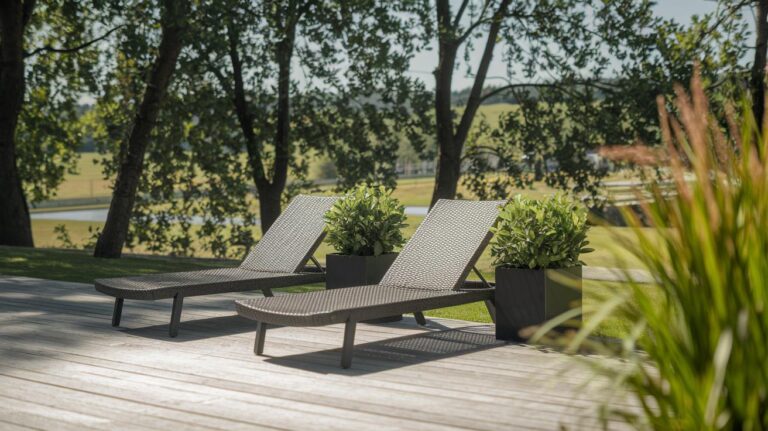
Aluminum (a lightweight, rustproof metal): Slick, shiny, and oh-so-easy to move around. It won’t flake or fade under the hot sun. And if it rains? No worries, it just beads the water and carries on.
-
HDPE wicker (high-density polyethylene – a sturdy plastic fiber): Feels like woven rattan but stays bright and strong even after splashy pool days. No brittle strands or dull finish here. It’s backyard tough and ready for your afternoon chill sessions.
-
Marine polymer (a maintenance-free outdoor plastic): Rain, snow, and salt air? It laughs at them all with zero upkeep. Just wipe off the dirt, sit back, and enjoy the breeze. Seriously, it’s that easy.
Teak Wood Lounge Chairs: Weatherproof Natural Material
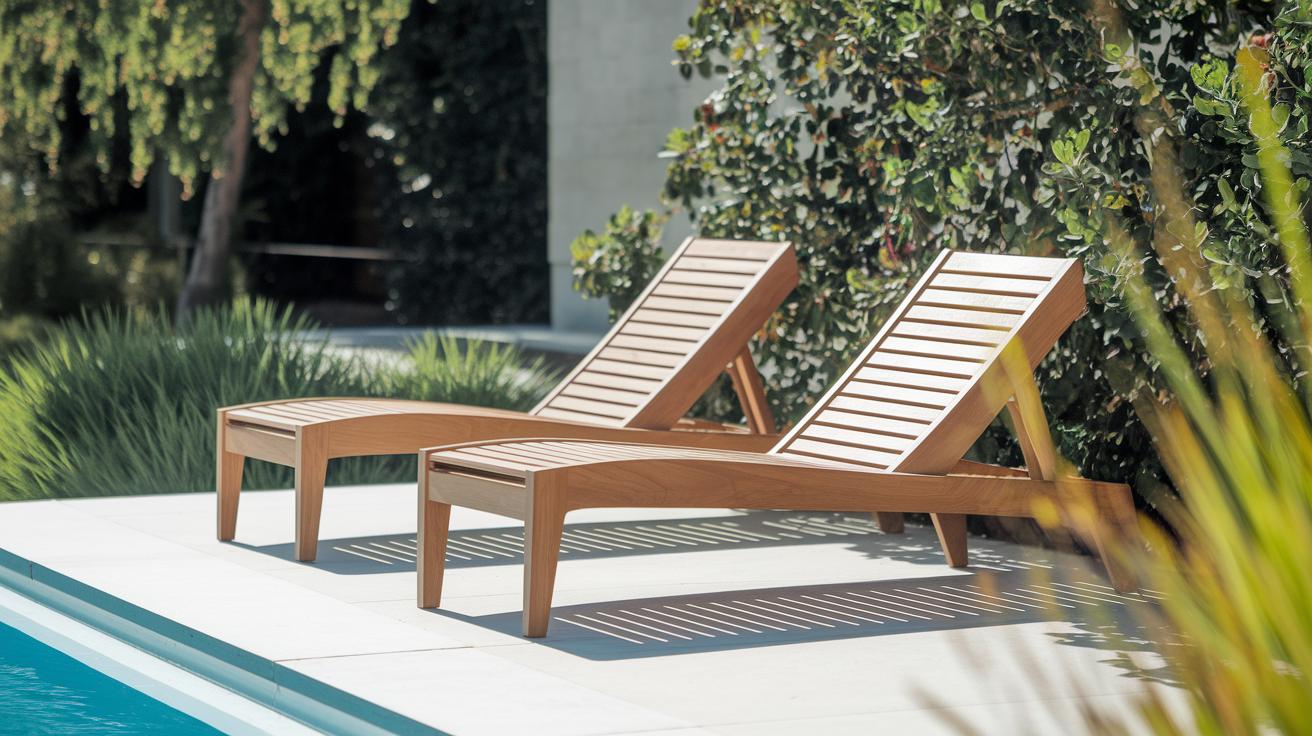
Teak has natural oils that shrug off rain, sun, and bugs. You can leave your chair out through summer storms or winter chills, and it stays sturdy. No rot, no termites. That’s why gardeners can’t stop talking about teak in their backyard setups.
It barely needs any fuss. Every now and then I give mine a quick scrub with soapy water. If you want that warm golden-brown glow, wipe on teak oil (wood protector) once a year. If you’d rather skip it, watch it turn a cool silver-gray all on its own. Either way looks great.
Think decades instead of seasons. Teak furniture often lasts 30 to 50 years before you worry about a repair. Other patio chairs usually give up long before that.
You’ll pay about $500 to $1500 per seat. It is an investment, but one teak chair can outlast two or three cheap sets. That makes it a solid pick for long-term value in eco friendly patio furniture.
Picture the smooth grain warmed by the sun or hear raindrops dancing on its surface. Teak turns every outdoor moment into a cozy reminder of nature’s resilience.
Aluminum Frames: Lightweight Rust-Resistant Seating
Aluminum lounge chairs feel almost weightless. You can slide one to the pool or tuck it under a bistro table without straining your back. It’s like moving a feather but with solid support.
This metal laughs at rust. It builds a natural oxide layer (a thin rust guard) and gets a powder coating (dry paint baked on for UV protection). So rain or salt air just rolls off like water on a duck’s back.
And when the sun beats down day after day, color stays bright. Powder-coated aluminum won’t fade or peel. You know, water just beads up on the surface, no wiping or oiling needed.
These chairs ask almost nothing of you. A quick spray with your garden hose now and then keeps them looking fresh. By the way, my neighbor’s set still looks new after two summers.
At $200 to $700 per chair, you’re choosing furniture built to last. You’ll spend less time fixing and more time relaxing poolside.
HDPE Wicker: Synthetic, Fade-Resistant Lounge Designs
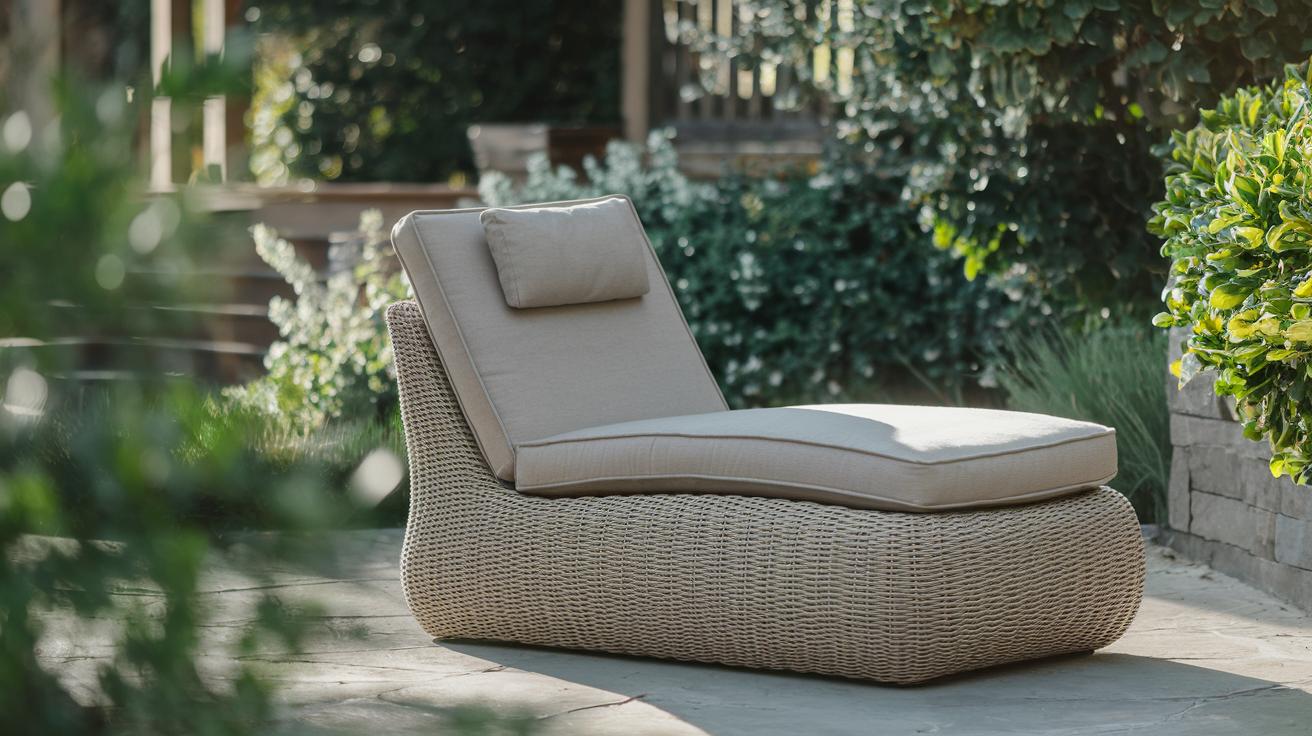
Have you ever sunk into a wicker chair that feels as cozy as a soft hug outdoors? HDPE wicker uses benches made from HDPE (high density polyethylene – a tough plastic) woven to mimic real rattan. It looks natural, but it laughs at sun, rain, and pool splashes. You’ll spot the best wicker patio lounge chairs in UV stabilized (protected from sun damage) weave patterns that stay bright year after year.
This premium synthetic wicker means no cracking or peeling under scorching heat or heavy dew. It just shrugs off bad weather like an old garden buddy. So you can leave your chairs on the patio, deck corner, or poolside and not fret.
Slide onto the smooth plastic fiber and you’ll feel it flex around you, kind of like a gentle hug that never loses its shape. Ahh, comfort!
Some sets even pair benches with matching side tables or rockers for your afternoon book break. Caring for these seats is easy. A quick scrub with soapy water every few months keeps them looking fresh. No sanding, oiling, or sealing needed – just simple, low-fuss outdoor seating.
Expect to spend around $300 to $900 per chair, which feels fair for years of carefree lounging. And from charcoal gray to warm brown, HDPE wicker comes in a bunch of looks to match your backyard vibe.
Marine Polymer: Durable Coastal-Ready Loungers
Picture running your hand along the smooth, cedar-like slats without a splinter in sight. Marine polymer (a sturdy plastic made for boats) blends that warm wood feel with rock-solid strength.
Thanks to its marine-grade polymer durability, salt spray, UV rays, and damp sea air just slide right off. And here’s a tip: these loungers laugh at moisture and sudden temperature swings.
I once left one chair out during a tropical storm, no warps, no cracks. It still shines next to teak and aluminum chairs built for salty breezes.
Shopping on a budget? Each marine polymer chair usually costs between $400 and $1,000. And you won’t ever need to sand, seal, or oil again. A quick wipe with a soft cloth or a blast from your garden hose wipes away bird droppings or sand in seconds. No upkeep.
Marine polymer tops the list for durable patio furniture materials. In coastal patios or steamy backyards, these loungers stay looking sharp year after year.
Choosing the Best Material for Your Budget and Climate
Have you ever stared at patio sets and felt lost? Oops, I totally get it. We’re here to match your wallet and your weather without any extra digging. We’ll break down price, simple care, and how each material handles sun, rain, or frost.
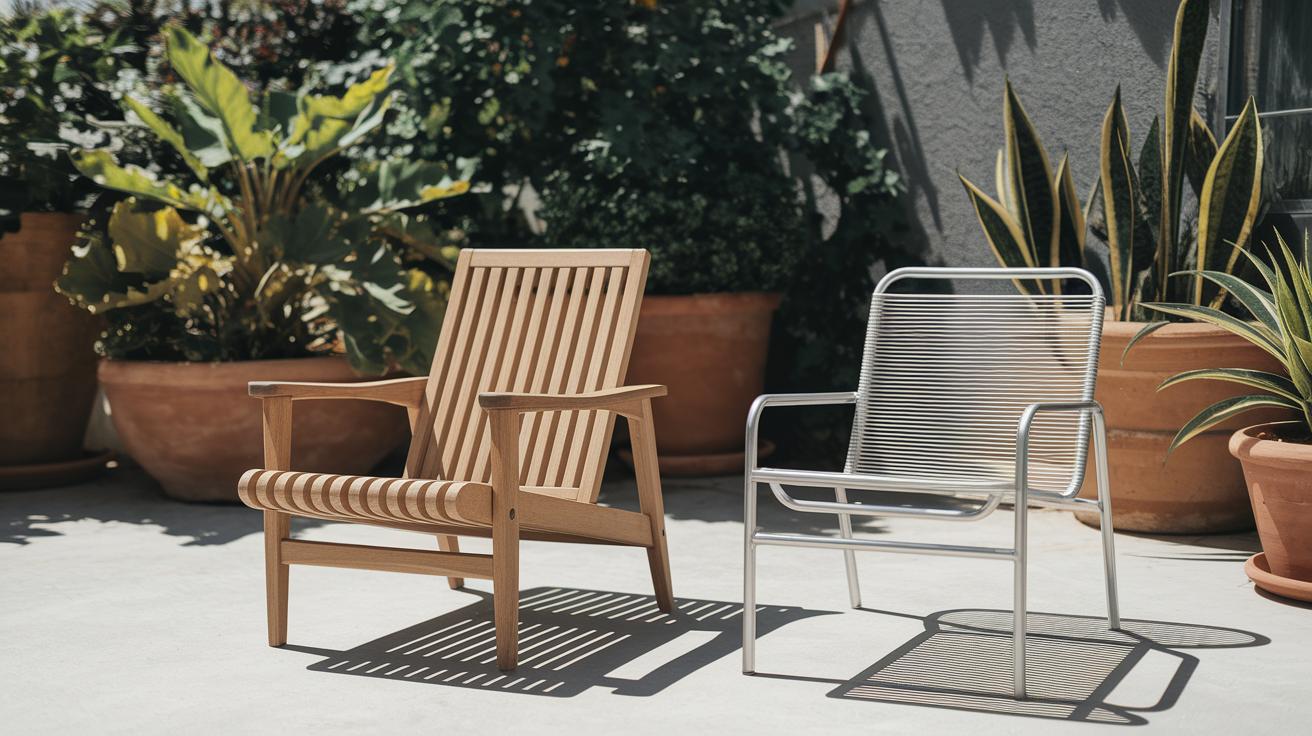
Teak (tropical hardwood) is the luxury pick, running about $200 to $500 per chair. I love its warm grain and how it ages to a soft silver. Care is easy: scrub with soapy water once a year and let nature work its magic.
Aluminum (lightweight metal) costs around $100 to $300 per seat. It’s so light you can move it on a whim. A quick rinse keeps rust away, and it stands up to sun, wind, and rain without blinking.
HDPE wicker (woven plastic resin) lives in the $150 to $350 range. Just wipe with soap and water, and you’re set! It won’t crack or fade under bright sun, making lazy summer evenings even cozier.
Marine polymer (weatherproof plastic) is the budget hero at $80 to $200 a piece. Think of it as super-strong plastic that laughs at storms and salt air. Hose it down now and then, and it barely notices years outdoors.
Picking the right material now means endless backyard hangs later. So grab a cold drink, picture your perfect patio, and choose what fits your budget and climate!
Final Words
In the action, you’ve glimpsed four top picks: teak with its natural oils, lightweight aluminum, fade-proof HDPE wicker, and coastal-ready marine polymer.
Each brings low-fuss care, weather-safe strength, and style to your patio.
Match cost and upkeep to your budget and weather, teak for classic warmth, aluminum for easy moves, wicker for beginner-friendly charm, polymer for moisture zones.
Enjoy picking from the best materials for durable patio lounge chairs and kick back in a space that feels truly yours.
Happy lounging under sunny skies!
FAQ
What are the top four materials for durable patio lounge chairs?
The top four materials for durable patio lounge chairs are teak, aluminum, HDPE wicker, and marine polymer, each offering weather resistance and low maintenance.
Why is teak a durable choice for patio lounge chairs?
Teak’s natural oils provide superior weather and insect resistance, require minimal upkeep, and develop a silvery patina over decades, making it a long-lasting, natural option.
How does aluminum stand up outdoors?
Aluminum stands up outdoors by resisting rust, staying lightweight for easy moving, and often receiving a powder coat that protects against UV rays and fading.
What makes HDPE wicker weather resistant?
HDPE wicker earns weather resistance from its synthetic, UV-stabilized fibers that resist fading, cracking, and moisture, with simple cleaning via rinsing or a mild soap wash.
Are marine polymer chairs low maintenance?
Marine polymer chairs are low maintenance since their plastic-based blend repels water, blocks UV damage, and handles temperature swings without sanding or sealing.
How do I choose the best patio lounge chair material?
To choose the best patio lounge chair material, weigh cost, maintenance needs, and climate challenges against the benefits of teak, aluminum, HDPE wicker, or marine polymer.