How to Install a Backyard Hammock Between Trees Easily
Ever tried swinging in a hammock – um, only to land flat on your back? Ouch. That flop happens when your set-up is off. But hang it right and you’ll feel like you’re floating on a soft cloud!
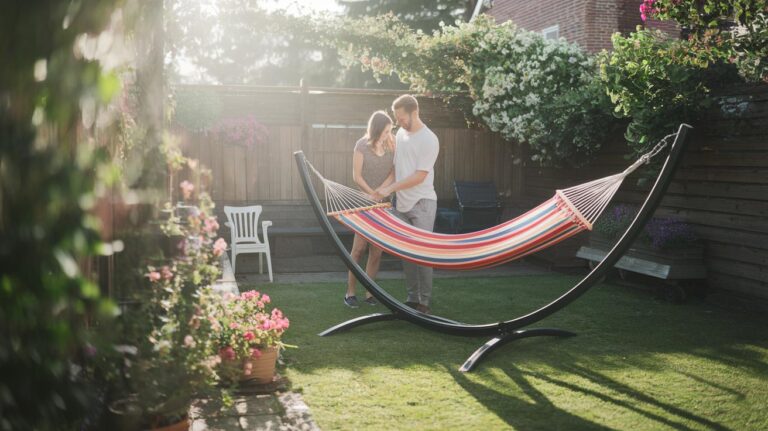
Hammocks can turn two backyard trees into your own lazy retreat. Feel leaves whisper overhead and the warm breeze dancing through the fabric. It’s like finding a secret escape spot you never knew you had.
I’ll walk you through each step. We’ll pick sturdy trees (at least 8 inches wide) and find that sweet spot between trunks. Then we’ll wrap tree-friendly straps (wide fabric bands that protect bark) and tie simple knots so your hammock cradles you gently. Um, I once wrapped a strap backwards – don’t worry, I’ll show you how to avoid that.
No guesswork. No droopy ends. Just an easy set-up for steady sways under leafy shade. Ready to relax?
Quick Guide to Backyard Hammock Installation Between Trees
Plant your trees about 12 to 15 feet apart (that’s roughly the length of a small car plus a bit). Hang your straps 4 to 5 feet up (around chest height for most folks). Aim for about a 30 degree angle between the strap and your hammock. This gives your hammock a gentle curve and stops it from sagging flat or swinging wildly.
I love the soft sway you feel when you’re settled in. And good tension like this helps the fabric hold its shape season after season. By the way, my cat loves sunning herself under the hammock, just saying.
Ready to grab your tools? You’ll want:
-
tree-friendly straps (wide bands you wrap around each trunk)
-
tape measure (tool for checking distance)
-
level (tool to make sure straps sit straight)
-
hardware (hooks and clips to attach your hammock)
-
sturdy rope (strong cord for tying knots)
Selecting and Assessing Trees for Hammock Hanging

Start by choosing two sturdy trees with trunks about 6 inches wide (think a big soda bottle). Oaks, maples, and cedars make solid hammock anchors. Their wood is strong and roots dig deep. Run your hand around each trunk; feel for firmness and avoid any soft, spongy spots.
Next, give the trees a quick health check. Look for big cracks or peeling bark (that’s the tree’s outer layer), and watch for dark spots that could mean rot (wood decay). Scan the branches, too, skip trees with dead limbs or fuzzy growths. Have you ever felt rough bark scratch your palm? A gentle shake of smaller branches can reveal weak areas you might miss.
Oops, I once skipped this step and ended up with a droopy hammock. Lesson learned!
Now, protect the bark before you hang your hammock. Slip soft, weatherproof padding under your straps. They act like cushions for the tree. Then loop on eco-friendly, 1-inch-wide straps. The wider band spreads the weight so nothing digs in. The padding keeps the bark from rubbing raw. Your hammock stays secure, and your trees thank you.
Happy trees, happy hammock.
Measuring Distance and Height for Proper Hammock Hang
How Far and How High?
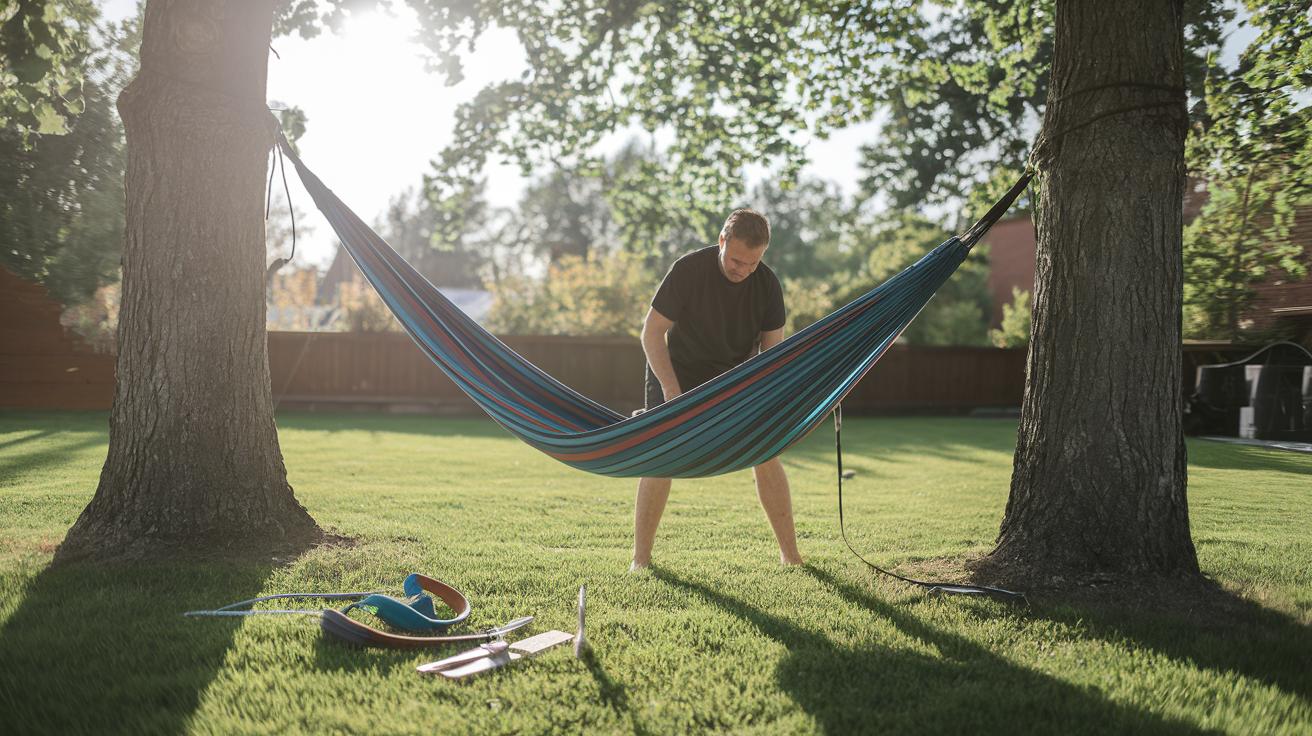
Pick two strong trees about 12 to 15 feet apart. That’s roughly the length of a big pickup truck, right? Next, wrap your hammock straps around each trunk about 4 to 5 feet off the ground (around chest height). That spot gives you enough lift without being too tight.
Getting the Right Hang
And here’s the cool part. When you’re in the hammock, the straps should meet the trees at about a 30° angle. Think of a gentle “V” shape, just enough to cradle you. Feels like you’re floating!
| Tree Spacing | 12–15 ft (about a pickup truck’s length) |
|---|---|
| Strap Height | 4–5 ft (around chest level) |
| Hang Angle | About 30° (gentle “V” for a comfy lay) |
Pro Tips from the Backyard
- Mark each tree base with a little rock or chalk so you don’t forget your spots.
- Double-check both straps at chest level, keeps your hammock nice and even.
- Clip in, then bounce once or twice to find that perfect sag (the slight U-curve when you lie down).
- By the way, my cat loves lounging under mine, just saying.
Choosing the Right Hardware: Straps, Ropes, and Hooks

Let’s start with wide straps (flat bands at least 1 inch wide that are gentle on your tree). When you wrap them around the warm bark, they spread the weight and stop thin cuts. Thin rope (cord for tying) can dig in under tension, ouch. Straps hug the trunk smoothly, so you’ll avoid dings and scratches.
Ratchet straps (straps with a little gear tightener) let you adjust one click at a time. I click mine until the hammock hangs with that perfect sag. They do add some weight and bulk, though, so they work best if you plan to leave your hammock up for days. For quick weekend hangs, lighter straps might win.
For a more permanent setup, try screw-in hooks (twist-in hooks you install into wood). Install them at chest height, about 4 to 5 feet up. Drill slow so you don’t strip the hole. Go for stainless steel (rustproof metal) or galvanized hooks, and you won’t worry about rain ruining them.
Carabiners (metal clips that snap open) or ring connectors make hanging and taking down your hammock a breeze, snap in, snap out. Stainless steel hardware fights off rain, sun, and winter’s chill. If you get heavy snow or ice, that extra rustproofing really pays off. Mix and match straps, hooks, and rings for a sturdy, fuss-free hang. Then lean back, feel the gentle sway, and enjoy your backyard retreat.
Securing Your Hammock: Knots and Suspension System Setup
Bowline Knot
Have you ever wanted a loop that never slips, one that holds you steady as you sink into your hammock on a warm afternoon? First, make a small loop in your rope (strong cord) and leave a long tail. Feed that tail up through the loop, wrap it around the main line, then tuck it back down through the loop. Pull both ends tight and you’ve got a rock-solid loop to hook onto a strap (flat band) or nail.
Taut-Line Hitch
If you need to tweak your hammock’s sag without untying it, wrap your rope around a tree-friendly strap or anchor line. Loop the free end twice inside the first wrap and once outside. Then slide the hitch up or down until your hammock cradles you just right. I still give mine a gentle tug after each tweak.
Figure Eight Knot
Nice and simple, this stopper knot keeps rope ends from slipping through carabiners or rings. Make a loop, wrap the tail around the standing line, thread it back through the original loop, pull tight, and trim any extra tail. It sits at the rope end like a little plug so nothing can slide past your clip.
And the three together? The bowline gives you a fixed loop at each end, the taut-line hitch lets you tweak tension on the fly, and the figure eight knot locks every line in place. Together they hold steady through lazy sways and sudden shifts, so you can melt into your backyard retreat worry-free.
Safety and Maintenance Tips for Year-Round Hammock Use

Make sure your hammock’s weight capacity (how much weight it holds, usually between 250 and 450 pounds) can handle everyone using it. Then you’ll avoid surprise snaps.
Every month, peek at the straps, hardware (the metal parts), and knots for frays, rust, or loose ends. Give each strap a good tug. Then bounce gently. That quick test catches little hiccups before they turn into big headaches.
Clear at least four feet around and beneath your hammock. That way you won’t bump into branches or patio chairs if you roll over. And you’ll have plenty of room to stretch out.
Pick UV-resistant straps that shrug off the hot sun. Go for quick-dry, mildew-resistant fabric (material that resists mold) to keep things fresh after rain or humid mornings. Those weatherproof bits mean your hammock is ready whenever you are.
When cold weather shows up, wash your hammock with mild soap, rinse it well, and let it air dry in a sunny spot. I drape mine over a railing so it dries evenly. Then I roll it up and tuck it indoors before the first frost. Nice and ready for spring.
Final Words
In the action you’ve seen why 12–15 ft spacing and a 30° strap angle make all the difference in comfort and strap life.
You’ve picked sturdy trees, measured heights, and weighed hardware options from straps to hooks and learned simple knots for a solid hold.
Monthly checks and simple cleaning keep your setup strong through sun or rain.
Grab your tools and swing into that sweet shaded spot, this is how to install a backyard hammock between trees and enjoy lazy afternoons for seasons to come.
FAQ
What tree spacing is ideal for a backyard hammock?
The ideal tree spacing is 12–15 feet to let your hammock hang with the proper sag and angle for comfort and stability.
How high should I place hammock straps on trees?
You should place straps 4–5 feet up each tree trunk to achieve about a 30° hanging angle and balance sag and support.
Which trees and straps work best for hanging a hammock?
Pick hardwoods like oak or maple with at least 6-inch trunks. Use 1-inch-wide tree-friendly straps under protective wrap to avoid bark damage.
What hardware and knots keep my hammock secure?
Use stainless steel hooks or carabiners with 1-inch straps. Tie a bowline knot for fixed loops and a taut-line hitch to adjust tension easily.
How do I measure and level my hammock correctly?
Measure 12–15 feet between trees, set straps at equal heights, use a level or tape measure, and tweak your knots for a flat lay.
How often should I inspect and maintain my hammock setup?
Inspect straps, knots, and hardware every month for wear or corrosion. Clean fabric with mild soap, air dry, and store indoors during heavy rain.