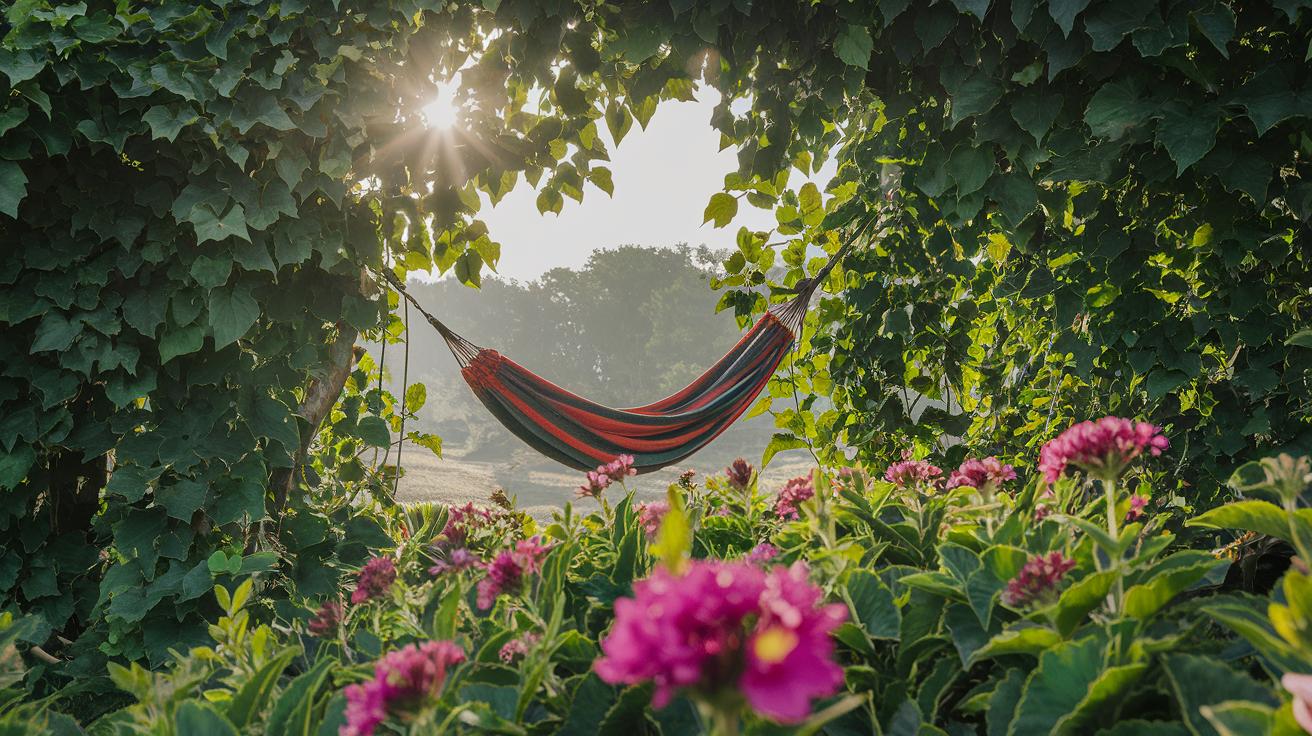
Best Plants To Surround A Backyard Hammock Area
Have you ever swayed in a hammock and felt like you were floating on air? Or smelled jasmine (a sweet-smelling climbing plant) in the soft glow of dusk? It’s a little piece of magic that turns your backyard into a quiet escape.
Here’s the trick: choose plants that hug your hanging seat like old friends. Boxwood (an evergreen shrub) gives you a steady green backdrop all year. Clematis vines (climbing flowers) spill soft blooms overhead. Ornamental grasses (tall decorative grasses) whisper in the breeze and carve out secret shade spots.
By the way, my cat naps under those grasses every afternoon. I guess she knows the best spots already.
Next, you’ll meet the best shrubs, perennials (plants that live more than one year), vines (climbing plants), and ornamental grasses. They’ll help you build a dreamy hideaway full of life and visits from hummingbirds and butterflies.
Top Plant Picks for Your Backyard Hammock Area
When you pick plants for your hammock nook, aim for a cozy mix that hugs the space and draws in birds and butterflies. Think shrubs, perennials, vines, and grasses that soften hard edges and whisper with life. Some of these love shade, others make a private hideaway, and a few are so low-maintenance you barely have to garden.
Have you ever sniffed jasmine at dusk – a sweet scent that drifts on the breeze?
| Plant | Type | Hardiness Zones | Light | Soil |
|---|---|---|---|---|
| Boxwood | Shrub | 5-9 | Partial to Full Sun | Well-Drained |
| Hydrangea | Shrub | 3-9 | Partial Shade | Moist, Fertile |
| Hosta | Perennial | 3-9 | Shade to Partial Shade | Moist, Well-Drained |
| Daylily | Perennial | 3-9 | Full Sun to Partial Shade | Average, Drains Well |
| Clematis | Vine | 4-9 | Full Sun (Roots Shaded) | Well-Drained |
| Jasmine | Vine | 7-10 | Full Sun to Partial Shade | Well-Drained |
| Fountain Grass | Ornamental Grass | 5-9 | Full Sun | Well-Drained |
| Blue Fescue | Ornamental Grass | 4-8 | Full Sun | Well-Drained |
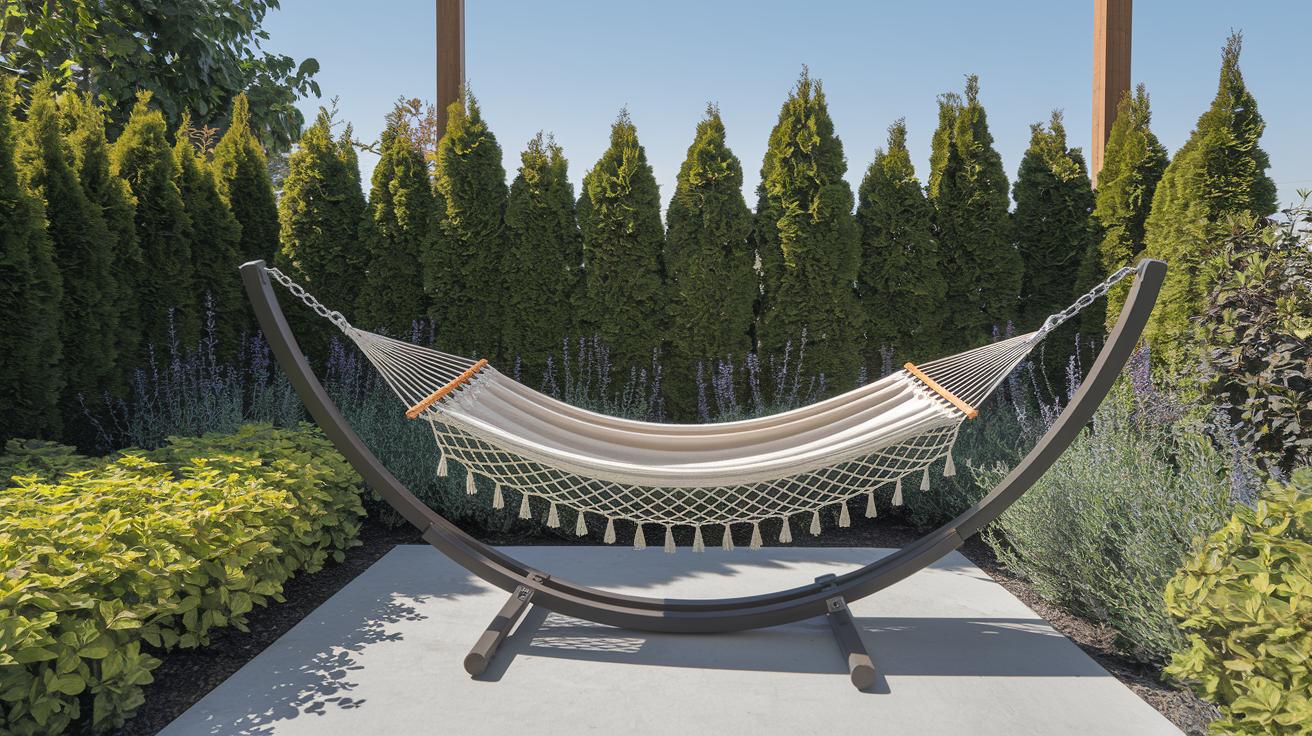
Tall shrubs like boxwood or hydrangea tuck in behind your hammock for a calm green backdrop. Medium plants – hosta (shady leafy plant) or daylily (bright flower) – fill the middle ground. Ground-hugging grasses such as fountain grass or blue fescue sway at your feet in every breeze.
Water new plants regularly until they really anchor in the soil. Spread 2 to 3 inches of organic mulch (decayed bark or wood chips) around them to lock in moisture and block weeds. Oops, spilled a little mulch here – guess that’s part of the fun.
Give shrubs and vines a quick annual trim so they don’t crowd your hammock frame. That way your view stays open and inviting.
To keep things interesting all year, let boxwood stand guard in winter – its leaves stay green under snow. Hydrangea lights up your summer days, and daylily buds bring color in late spring. Seasonal shifts mean your hammock nook never looks the same garden to garden.
Backyard Hammock Plant Ideas: Shrubs & Perennials
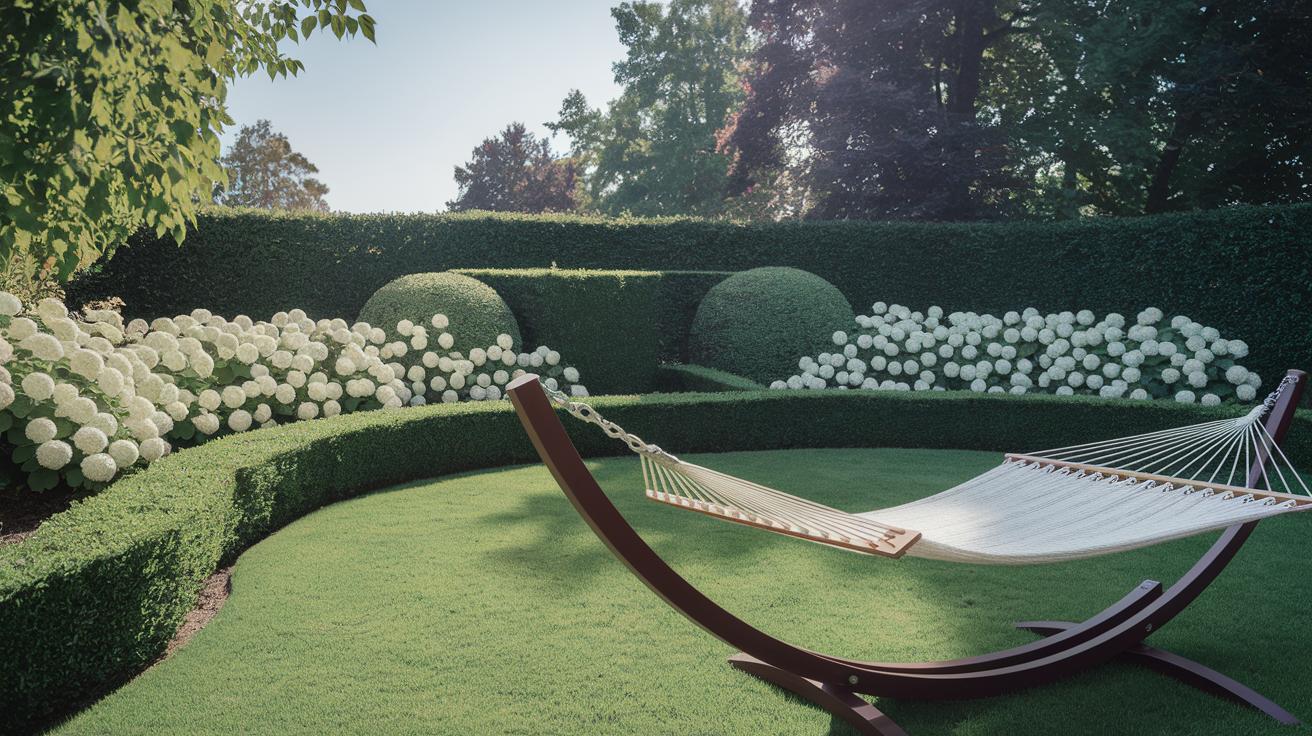
Picture yourself swaying in a hammock, a soft breeze carrying sweet flower scents your way. Surrounding you are shrubs (woody plants that stay leafy year after year) and perennials (plants that come back each spring). Together, they make your backyard feel like a private retreat.
Try lavender (a fragrant shrub with purple blooms). Its soft, gray-green leaves smell like a spa. Plant it in well-draining soil so roots don’t sit in water. And hey, bees will hum around it all afternoon, pure magic.
Next up: butterfly bush (a shrub that draws fluttering visitors). Its tall flower spikes come in pink, white, or deep purple. Plant near your hammock’s head so every flutter feels right beside you. By the way, don’t worry if you see way too many butterflies, best problem ever!
For a pop of color at your feet, add daylilies (perennials that bloom in July). Their trumpet-shaped flowers open each morning. Deadhead (snip off spent blooms) to keep them going. You’ll love how orange, yellow, or red blossoms peek through green leaves.
Don’t forget hostas (perennials with big, tasty-to-touch leaves). They thrive in shade, perfect under a tree-hung hammock. Their blue-green foliage feels velvety between your fingers. And if you’re lucky, little white flowers bloom in summer.
Planting now sets you up for a summer harvest of sights and scents. So grab your trowel and some potting mix (soil blend for growing plants). Let’s turn that hammock corner into your cozy, colorful hideaway.
Vertical & Textural Greenery: Vines and Ornamental Grasses
Climbing Vines for Vertical Interest
Vines are like living curtains reaching skyward. Clematis (zones 4 to 9, the plant hardiness regions) bursts with big, colorful blooms that peek through trellis slats. Have you ever felt those soft petals brushing your hand?
Plant its roots in cool shade, tuck a few stones or wood chips around the base, and let the top soak up full sun. Train each stem onto a wooden frame or metal arch. Then buds pop in late spring. After blooms fade, trim old stems to spark fresh shoots.
Jasmine (zones 7 to 10) brings a sweet scent at dusk. It climbs a nearby pergola or fence like a fragrant hug. Start new shoots in well-drained soil, and tie them gently to twine or soft garden tape. In a few weeks you’ll see tiny blooms weaving through lattice gaps. At night you might catch that heady perfume drifting your way. Perfect while you sway in a hammock.
Soft Ornamental Grasses for Movement
Grasses add a whisper of motion at your feet. Fountain grass (zones 5 to 9) forms clumps of feathery plumes that glow gold in afternoon light.
Space each plant about two feet apart so plumes can dance in even the gentlest breeze. In summer its brownish blooms flutter above slender blades.
Blue fescue (zones 4 to 8) fits right into rock gardens or containers by your hammock. Its fine, blue-gray leaves form neat tufts and need little water once roots settle in.
Line up a few pots of fescue along a path, and you’ll get soft ribbons of foliage that sway like water. In winter these grasses hold their shape. Their dried blades add subtle color and offer a light windbreak when your hammock corner feels chilly.
Plant Arrangement Tips Around the Hammock
-
Container ideas: Gather potted ferns (shade-loving plants with feathery leaves) and caladiums (heart-shaped leaves splashed with color) in pretty, movable pots around your hammock. The soft rustle of fern fronds and the pop of red or pink caladium leaves make it feel like a tiny rainforest hideaway. I like to wheel the group around until the afternoon sun dances just right on the leaves. By the way, a little potting soil on the boardwalk is a small price for that lush look.
-
Color combos: Try creamy white hydrangea blooms (shrub with round flower clusters) paired with purple coneflowers (tall flowers with spiky centers) for a crisp, cool contrast. Or go for golden daylilies (bright, trumpet-shaped blooms) alongside deep blue salvias (spike flowers that bees adore) to catch that sunset glow. Picture soft vanilla flowers dotted with velvety blueberries. It’s like sipping lemonade under a cotton candy sky.
-
Vertical and texture play: Mix broad-leaf hostas (shade-loving plants with big, smooth leaves) and fountain grass (ornamental grass with arching blades) to blend chunky leaves with wispy strands. Then train clematis vines (vining plants with star-shaped flowers) up your pergola (wooden garden frame) so you get dapples of shade and bursts of petals overhead. I once had one rogue vine tangle itself, oops!, but those purple stars peeked out all summer.
-
Easy upkeep: Keep at least 2 feet of space around your hammock legs so you can kneel down, pull weeds, or swap pots without bumping into a frame or wrestling tangled roots. It’s a simple trick but makes pruning shrubs and mulching beds way less of a hassle. Your back will thank you. Planting now sets you up for a summer harvest.
Seasonal Planting Schedules and Mulch for Year-Round Appeal
Early spring means we can pop bright tulips and daffodils into spots with dappled light. These fragrant bulbs (underground flower buds) love about four to six hours of gentle sun and soil that feels rich and crumbly between your fingers. Have you ever smelled daffodils on a misty morning? Spread two inches of organic mulch (decayed plant bits that keep soil moist) or shredded bark around the bulbs to guard roots from cold snaps and keep weeds away.
Then summer arrives and you slide daylilies into full sun patches. These flowers sip about an inch of water a week once their roots settle in. Coneflowers (tall blooms in pink or purple) thrive in sandy, well-drained soil and beckon bees and butterflies on hot afternoons. They make a natural screen that hums with pollinators.
In fall, tuck asters (star-shaped flowers) and sedum (water-storing succulents) among grasses for late-season color. The asters nod in soft breezes. Sedum holds dew like tiny gems at dawn. Now’s the time to bump your mulch and groundcover depth to three inches so the soil stays damp and young roots sleep snug under the first frosts.
Even winter has its moments. Evergreens like boxwood (small shrub with dark green leaves) and holly bring life to the garden edge where your hammock hangs. Ornamental grasses keep golden plumes that sway and block cold gusts. Keep two to three inches of mulch through the cold months so plants rest under a cozy blanket of protection.
Care, Soil Preparation, and Watering Guidelines for Hammock Plants
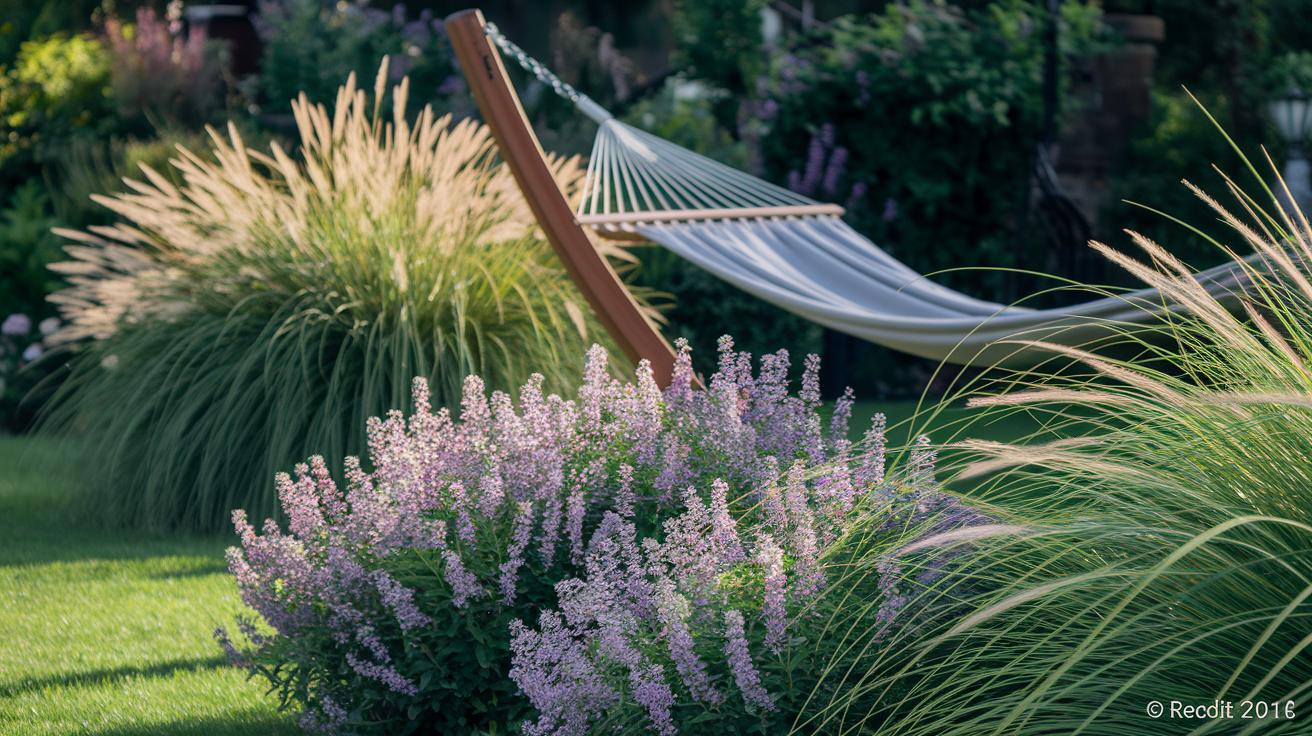
Mix about 30% compost (decayed organic matter that enriches soil) into your native dirt, and you’ll end up with soil that feels loose, light, and thirsty for water. Fluffy!
Plant bamboo or Areca palm (tropical palm with feathery fronds) on the upwind side of your hammock. They’ll form a living wall that tames gusts and keeps breezes gentle. Ah, that soft rustle is so relaxing.
Then pick pest-resistant buddies like fountain grass (tall, arching blades) or boxwood (evergreen shrub with glossy leaves). That means you’ll spray less and swing more – sound good? By the way, check the watering, mulching, and pruning tips above for all the details.
Final Words
Mixing shrubs, perennials, vines, and grasses sets a soothing backdrop for your hammock. From boxwood’s year-round green to clematis’ summer blooms, you’ve mapped out easy-care picks in our plant table.
Layer tall shrubs, mid-height hostas, and low grasses around the hammock for depth. Apply seasonal bulbs, mulch, and simple watering steps to keep things thriving from spring through winter.
With these best plants to surround a backyard hammock area, you’ve got a cozy retreat ready to enjoy. Happy lounging!
FAQ
What are the best plants to surround a backyard hammock area?
The best plants to surround a backyard hammock area include boxwood and hydrangea shrubs, hosta and daylily perennials, clematis and jasmine vines, plus fountain grass and blue fescue grasses.
Which shrubs work for privacy screening near a hammock?
The shrubs that work for privacy screening near a hammock include boxwood (dense evergreens zones 5–9) and hydrangeas (large blooms zones 3–9) to form a green backdrop.
What low-maintenance perennials add texture around a hammock?
Low-maintenance perennials that add texture around a hammock include hostas (shade-loving broad leaves) and daylilies (bright blooms, drought-tolerant) for contrast without much care.
How do I add vertical interest and movement with vines and grasses?
Vertical interest and movement around a hammock come from clematis or jasmine vines trained on trellises for blooms overhead, plus fountain grass and blue fescue for swaying plumes.
How should I arrange plant heights around a hammock?
Plant heights around a hammock should be arranged with tall shrubs at the back, medium perennials in the middle, and low grasses or groundcovers up front to frame your hammock.
What seasonal planting and mulch schedule keeps a hammock area appealing year-round?
The seasonal planting and mulch schedule that keeps a hammock area appealing year-round starts with early spring bulbs and 2″ mulch, summer sun perennials, fall asters with 3″ mulch, then winter evergreens and grasses.
How do I prepare soil and manage watering for hammock plants?
Soil should be prepared by mixing 30% compost into native soil for fertility and drainage, watering new plantings 1–2″ weekly, checking containers twice weekly, and maintaining a 2–3″ mulch layer clear of stems.