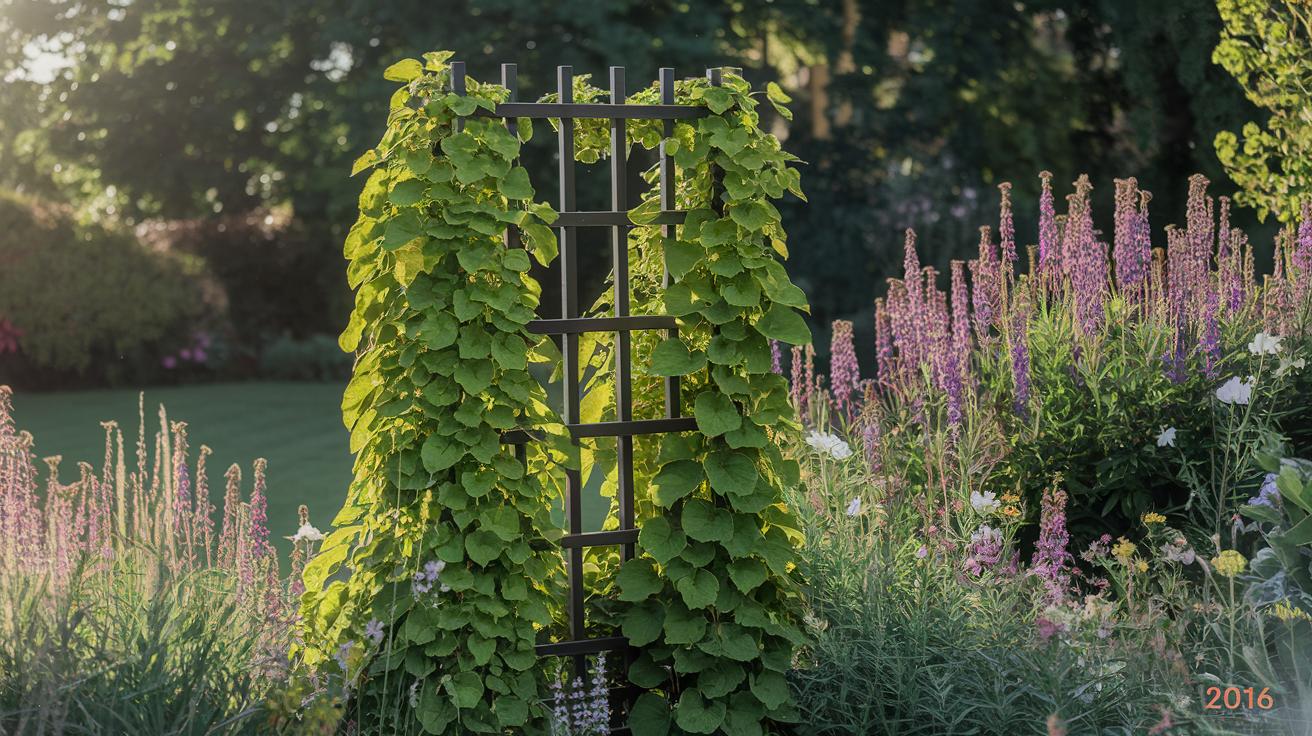
Best Climbing Plants for Vertical Garden Walls
A vertical garden lives or dies on its plant selection. The wrong climber overgrows its support and damages walls; the right one creates a layer of green that softens hardscape, attracts pollinators, and adds fragrance through the evening. Climbing vines specifically — as opposed to potted plants mounted on a wall system — give you the fastest coverage and the lowest ongoing cost.
This guide covers six reliable climbing vines for vertical garden walls, the sun and soil they need, the support hardware that holds each type, seasonal maintenance, design combinations for year-round interest, and a hardiness zone reference so you pick vines that survive your local winter. For shade-only walls, see our companion guide on shade-tolerant plants for vertical gardens. For the structural side — frames, panels, mounting systems — see our guide on best materials for vertical garden structures.
Six Reliable Climbing Vines
Six vines cover most situations from full sun to part shade, from cold-winter climates to subtropical ones, and from fast cover to long-term ornamental.
Clematis. The flowering champion. Large showy blooms in purple, white, pink, or red appear on supports anywhere from 6 to 20 feet tall. Best in full sun to part shade with “feet in the shade, head in the sun” — mulch or plant low groundcovers around the base. Twining stems, so it needs a trellis with gaps to weave through. Hardy in USDA zones 4-9.
Jasmine. Sweet evening fragrance and small star-shaped white flowers. Best for warmer zones (7-10); some varieties tolerate light frost. Twining vine that climbs 10 to 15 feet on a trellis or wire grid. The scent at dusk is genuinely the reason to plant jasmine — even a small vine perfumes a whole patio.
English ivy. The shade-tolerant evergreen workhorse. Glossy green leaves stay through winter even in cold zones (4-9). Climbs by sticky pads that grip flat surfaces — wood, brick, stucco. Caution: sticky pads can damage some siding materials when removed later. Aggressive grower; needs annual pruning to stay in bounds.
Passionflower. Exotic-looking purple-and-white blooms with intricate centers. Attracts butterflies and hummingbirds. Climbs with tendrils 10 to 20 feet up a wire grid or trellis. Best in zones 6-10. The flowers are short-lived (each lasts a day) but plants produce them continuously through summer.
Wisteria. The dramatic one. Cascading clusters of purple, pink, or white flowers drape from supports in late spring. Needs a sturdy trellis or pergola — mature wisteria is heavy and can pull down weak supports. Hardy in zones 5-9. Slow to bloom (3 to 5 years from planting) but spectacular once established.
Morning glory. The fast cover. Trumpet-shaped purple, blue, pink, or white blooms open at dawn and close by midday. Grows from seed each year in cooler zones, perennial in zones 9-10. Climbs 8 to 12 feet in a single season. Best for renters and anyone wanting summer coverage without long-term commitment.
Sun, Soil, and Water Requirements
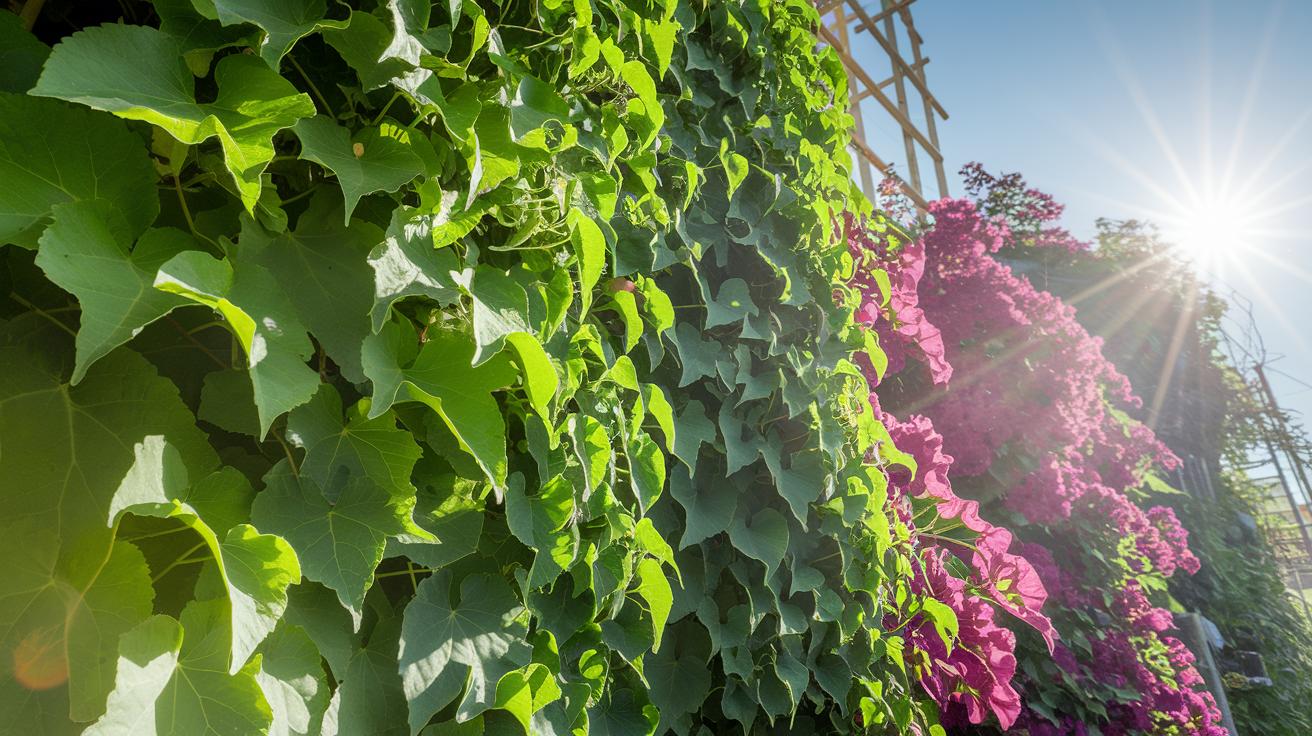
The single most important factor in vine success is matching sun exposure to the plant’s needs.
Full sun (6+ hours direct): Clematis (with shaded roots), jasmine, morning glory, passionflower, wisteria. These will sulk and produce few blooms in shaded spots.
Part sun (4-6 hours): Clematis tolerates this; some jasmine varieties; passionflower with afternoon shade.
Part to full shade (under 4 hours): English ivy is the standout. For more shade-tolerant options including pothos, ferns, and begonias, see the shade-tolerant vertical garden plants guide.
Soil mix for vertical-garden vines:
- Loamy garden topsoil as the base (60%)
- Compost for nutrients and structure (25%)
- Perlite for drainage (10%)
- Aged bark or coconut coir for air pockets (5%)
Vertical gardens often use pocket planters or troughs that drain faster than in-ground beds, so the perlite and coir help retain moisture without making the mix soggy.
Water requirements by vine:
- Clematis — steady moisture; never lets the soil dry out completely
- Jasmine — evenly moist soil; water when top inch is dry
- English ivy — hates wet feet; let top inch dry between waterings
- Passionflower — moderate moisture; tolerates some drought once established
- Wisteria — deep but infrequent watering; drought-tolerant when mature
- Morning glory — even moisture during germination, then moderate water
A 2-inch mulch layer over the planter or root zone slows evaporation and reduces watering frequency by 30 to 50%.
Support Structures by Vine Type
Different vines climb differently. Match the support to the climbing mechanism or the vine will fail to attach.
Twining vines (stems coil around supports): Clematis, jasmine, morning glory, wisteria. Need open-frame supports with vertical or diagonal gaps — wire grids, lattice with 4 to 8 inch openings, or wooden trellis. Solid wall surfaces don’t work for twiners.
Tendril climbers (curly bits grip supports): Passionflower. Need thin supports the tendrils can wrap around — wire mesh, thin trellis members, string grids. Tendrils don’t grip thick lumber well.
Sticky-pad climbers (adhesive discs grip flat surfaces): English ivy, Boston ivy. Climb walls, fences, and tree trunks directly without external supports. The catch: sticky pads can damage wood siding, stucco, and paint when the vine is later removed. Either plant on supports you don’t mind permanently marked or use a separate trellis offset from the wall.
Support options worth considering:
- Metal wire mesh grids: lightweight, durable, lets air flow through. Best for twiners and tendrils. Mount with stand-offs that hold the grid 1 to 2 inches off the wall for airflow.
- Wooden lattice or trellis: natural appearance, paintable, gives a solid garden feature. Seal the wood with exterior stain so it doesn’t rot under the vine. Replace every 8 to 12 years depending on weathering.
- DIY bamboo or PVC grid: low-cost option; tie poles into a grid with garden wire. Works well for annual vines like morning glory; less durable for long-term perennials.
- Cable or wire-rope system: stainless steel cables anchored at top and bottom, tensioned with turnbuckles. Modern look, low maintenance. Best for permanent installations.
Whatever support you choose, anchor it with outdoor-rated hardware (stainless steel or galvanized) spaced 12 to 18 inches apart. Leave 1 to 2 inches between the support and the wall so air circulates and mildew doesn’t develop. For the broader choice between materials, see our guide to vertical garden structure materials.
Seasonal Maintenance
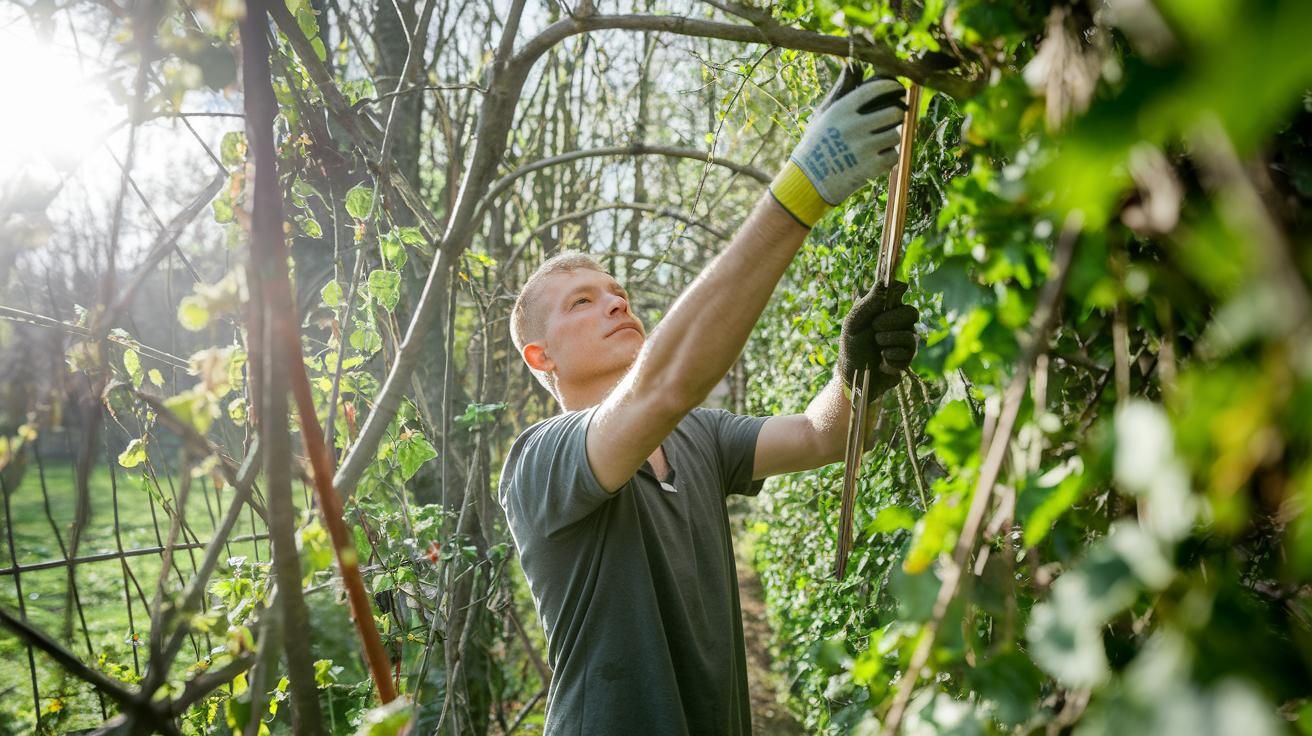
Climbing vines need three maintenance touches a year. None take more than 30 minutes.
Spring (March-April):
- Prune back winter-killed stems on clematis, jasmine, and wisteria using sharp bypass pruners. For Group 3 clematis (those that bloom on new growth), cut back to 12 inches. For wisteria, cut last year’s growth back to 2 to 3 buds.
- Top-dress the root zone with a 2-inch layer of compost.
- Apply a balanced organic fertilizer when new buds are visible.
- Inspect support hardware for winter damage; tighten or replace as needed.
Mid-summer (July):
- Check leaves for aphids (small green or black pests on new growth) and spider mites (visible as fine webbing). Blast off light infestations with a hose; release ladybugs for heavier ones.
- Tie loose new shoots to the support so they grow in the direction you want.
- Deadhead spent flowers on perennial vines to encourage repeat blooming.
- Refresh mulch if it’s broken down or washed away.
Fall (October-November):
- Remove spent annual vines (morning glory) and add to the compost pile.
- Cut back perennials per their specific pruning windows (consult plant tags or local extension guidance for your variety).
- Add a fresh 3-inch mulch layer for winter root insulation.
- Tighten ties and replace any rusted hardware before winter.
That’s the whole maintenance picture. Vines mostly thrive on benign neglect once established — they just need the right setup the first year.
Design Combinations for Year-Round Interest
A vertical garden of just one species blooms hard for a few weeks and looks empty the rest of the year. Combining vines with staggered bloom times and varied foliage stretches visual interest across the seasons.
Pair flowering with evergreen. Plant English ivy as the year-round green base and weave clematis or jasmine through it. The ivy provides structure and color in winter when the flowering vines are dormant.
Sequence bloom times. Combine clematis (late spring), jasmine (early summer), wisteria (late spring overlap), and morning glory (mid to late summer) on a single wall. Something is blooming from April through September.
Mix flower colors deliberately. Cool-color walls (blue and purple clematis, white jasmine) feel calming and recede visually. Warm-color walls (red clematis, orange honeysuckle, hot pink mandevilla) command attention. Pick one direction per wall rather than mixing.
Plan for small spaces. A 4-foot wide trellis or wall-mounted planter can hold two compatible vines — one early bloomer, one late — that share root space without competing aggressively. Container vertical gardens work well for renters: 15-gallon pots hold most of these vines with annual root-pruning.
Add fragrance for evening enjoyment. Jasmine, honeysuckle, and Carolina jessamine all release scent at dusk. Plant near a patio, deck, or open window where you’ll enjoy it.
Fragrant and Pollinator-Friendly Vines
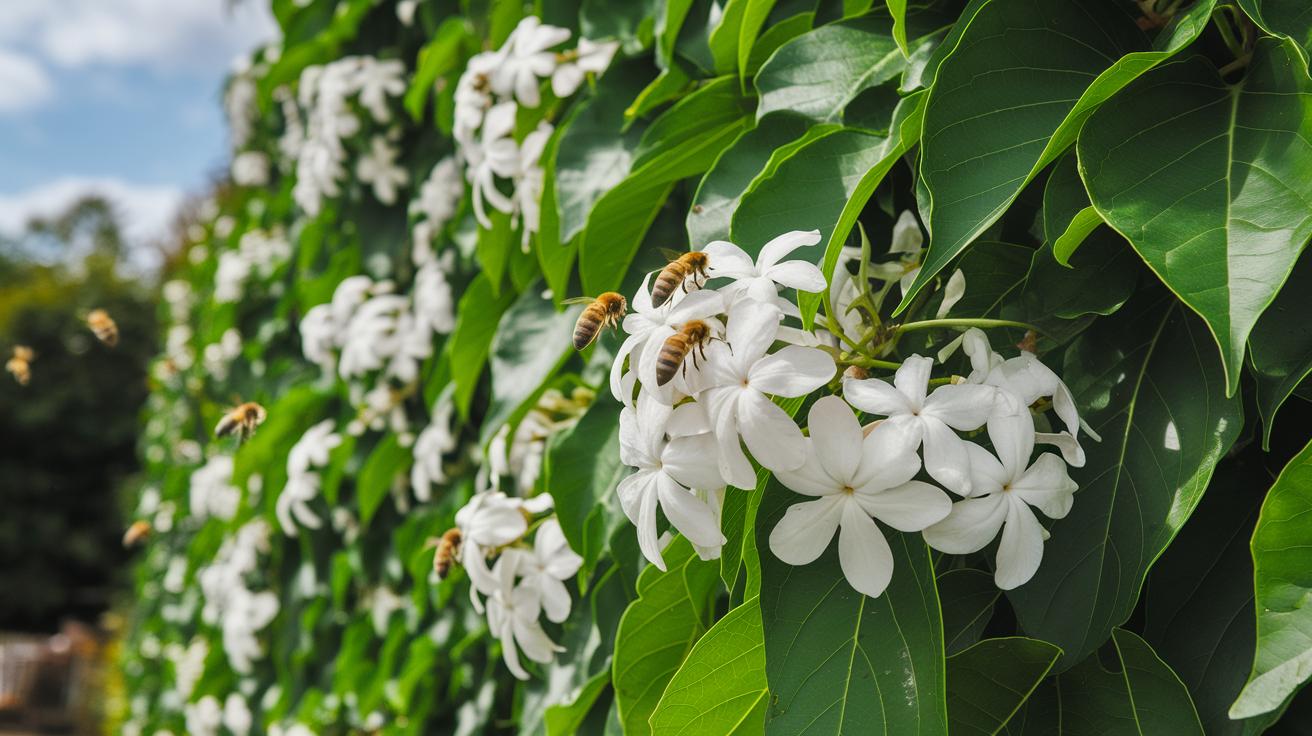
Two specialty categories worth highlighting if scent or wildlife value is a priority.
Fragrant vines
Honeysuckle (Lonicera). Tubular yellow, pink, or red flowers from late spring through summer. Sweet vanilla-like scent strongest in the evening. Hardy in USDA zones 4-9. Plant in full sun to part shade in well-draining fertile soil. Water when top inch is dry. Lightly prune after blooming to shape and encourage fresh growth. Deer tend to leave it alone because of the strong scent.
Carolina jessamine. Yellow trumpet blooms in early spring, often before other vines have leafed out. Sweet daytime fragrance. Hardy in zones 7-9. Evergreen in mild winters. Note: all parts are toxic if eaten — avoid planting where children or pets graze.
Pollinator-friendly vines
Bougainvillea. Bright papery bracts in magenta, orange, white, or red with tiny nectar-rich blooms in the centers. Hardy in zones 9-11 (treat as annual in colder zones, or overwinter indoors). Loves full sun. Plant in a gritty fast-draining mix and let soil nearly dry between deep waterings. Needs sturdy support — woody stems get heavy. Butterflies and hummingbirds visit constantly through the bloom season.
Trumpet vine (Campsis radicans). Large orange or red trumpet flowers irresistible to hummingbirds. Hardy in zones 4-9. Aggressive grower — will overwhelm small structures and spreads by underground runners. Plant only where you have space to manage, or in containers to contain.
Coral honeysuckle (Lonicera sempervirens). Native to eastern North America. Tubular red flowers attract hummingbirds without the invasiveness of Japanese honeysuckle. Better-behaved than its non-native cousin and more ecologically valuable.
Hardiness Zones and Climate Notes
USDA hardiness zones describe average winter low temperatures and predict which perennial vines will survive in your area. Match the vine to your zone or be prepared to treat it as an annual.
| Vine | USDA Zones | Light needs | Mature height |
|---|---|---|---|
| Clematis | 4–9 | Full sun to part shade | 6–20 ft |
| Jasmine | 7–10 | Full sun to part sun | 10–15 ft |
| English ivy | 4–9 | Part to full shade | 50+ ft if unchecked |
| Passionflower | 6–10 | Full sun | 10–20 ft |
| Wisteria | 5–9 | Full sun | 10–30 ft |
| Morning glory | 3–10 (annual in cold zones) | Full sun | 8–12 ft per season |
| Honeysuckle | 4–9 | Full sun to part shade | 10–20 ft |
| Bougainvillea | 9–11 | Full sun | 15–40 ft |
Microclimate matters too. A south-facing wall holds heat and may support vines half a zone warmer than your USDA designation. A north-facing wall or wind-tunnel side-yard runs cooler and tougher. Track which corners of your yard freeze first and last in winter to identify your warm and cold microclimates.
Wisteria and clematis both need a cold winter chill (below 45°F for several weeks) to set the next year’s flower buds. In frost-free zones (10+) they grow but don’t bloom reliably.
Pick vines that match both your zone and your specific spot’s microclimate, and the rest of the project mostly takes care of itself. The first year is establishment; year two starts the real show; year three onward the wall reaches its potential. For pairing climbing vines with ground-level pollinator-friendly plantings, see our guide on how to design a pollinator garden — vines plus a pollinator border becomes a layered habitat that pulls in butterflies, bees, and hummingbirds from a wider radius than either alone.
Vertical Garden Climbing Vine FAQ
What are the best climbing vines for a vertical garden?
Six reliable climbers cover most situations: clematis (large showy blooms), jasmine (evening fragrance), English ivy (shade-tolerant evergreen), passionflower (exotic-looking pollinator magnet), wisteria (dramatic cascading flowers), and morning glory (fast annual cover). Pick based on your sun exposure, USDA hardiness zone, and whether you want flowers, foliage, or both.
How much sun do vertical garden vines need?
Most flowering vines need at least 6 hours of direct sun for reliable blooming — clematis, jasmine, morning glory, passionflower, wisteria all fall in this group. English ivy is the standout shade-tolerant climber, thriving in 2 to 4 hours of light. Clematis is unusual in wanting “feet in shade, head in sun” — plant low groundcovers around the base to keep roots cool.
What soil mix works for vertical garden climbers?
A mix of 60% loamy garden topsoil, 25% compost, 10% perlite, and 5% aged bark or coconut coir holds moisture without staying soggy. Vertical garden planters and pocket systems drain faster than in-ground beds, so the perlite and coir help retain moisture. Mulch the root zone with 2 inches of bark to slow evaporation.
What support structures work for climbing vines?
Twining vines (clematis, jasmine, morning glory, wisteria) need open-frame supports with 4 to 8 inch gaps — wire grids, lattice, or trellis. Tendril climbers (passionflower) need thin supports the tendrils can grip — wire mesh or string grids. Sticky-pad climbers (English ivy) climb flat surfaces directly. Mount any support 1 to 2 inches off the wall for airflow.
When should I prune and feed climbing vines?
Prune in early spring before new growth, with the specific pruning method varying by vine — Group 3 clematis cuts back to 12 inches; wisteria cuts to 2 to 3 buds on last year’s wood. Apply balanced organic fertilizer when new growth starts, top-dress with compost in spring, and add a second light feeding in early summer. Deadhead spent flowers through the bloom season to encourage repeat blooming.
How do I create year-round color on a vertical garden?
Combine an evergreen base (English ivy) with sequenced flowering vines (clematis in late spring, jasmine in early summer, wisteria overlapping, morning glory in mid to late summer). Mix bloom colors within a temperature family — cool blues and purples on one wall, warm reds and oranges on another. The evergreen keeps the wall looking alive in winter when the flowering vines are dormant.
Which vines attract pollinators?
Honeysuckle, passionflower, bougainvillea, trumpet vine, and coral honeysuckle all attract bees, butterflies, and hummingbirds. Native species (like coral honeysuckle in the eastern US) are higher value for local pollinator populations than ornamental imports. Pair with shorter pollinator-friendly perennials at the base for layered habitat value.
How do I match a climbing vine to my hardiness zone?
Check the USDA zone listed for the vine against your local zone (lookup at planthardiness.ars.usda.gov). Clematis fits zones 4-9, jasmine 7-10, English ivy 4-9, passionflower 6-10, wisteria 5-9, morning glory 3-10 (annual in cold zones), bougainvillea 9-11. South-facing walls run half a zone warmer than your designation; north-facing walls run cooler.