How to Build DIY Modular Garden Wall Panels
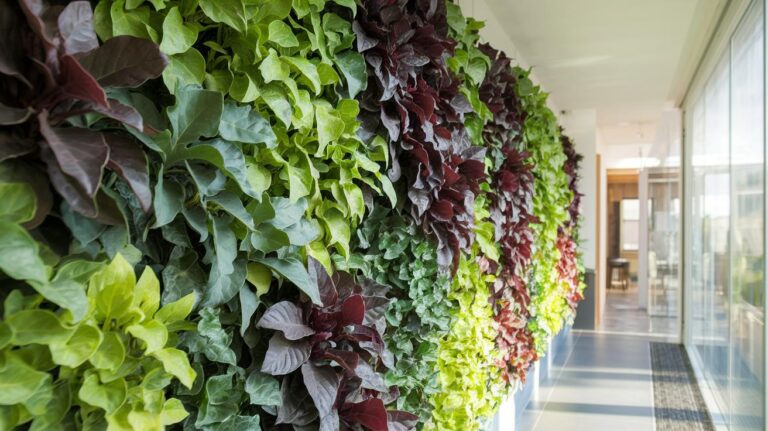
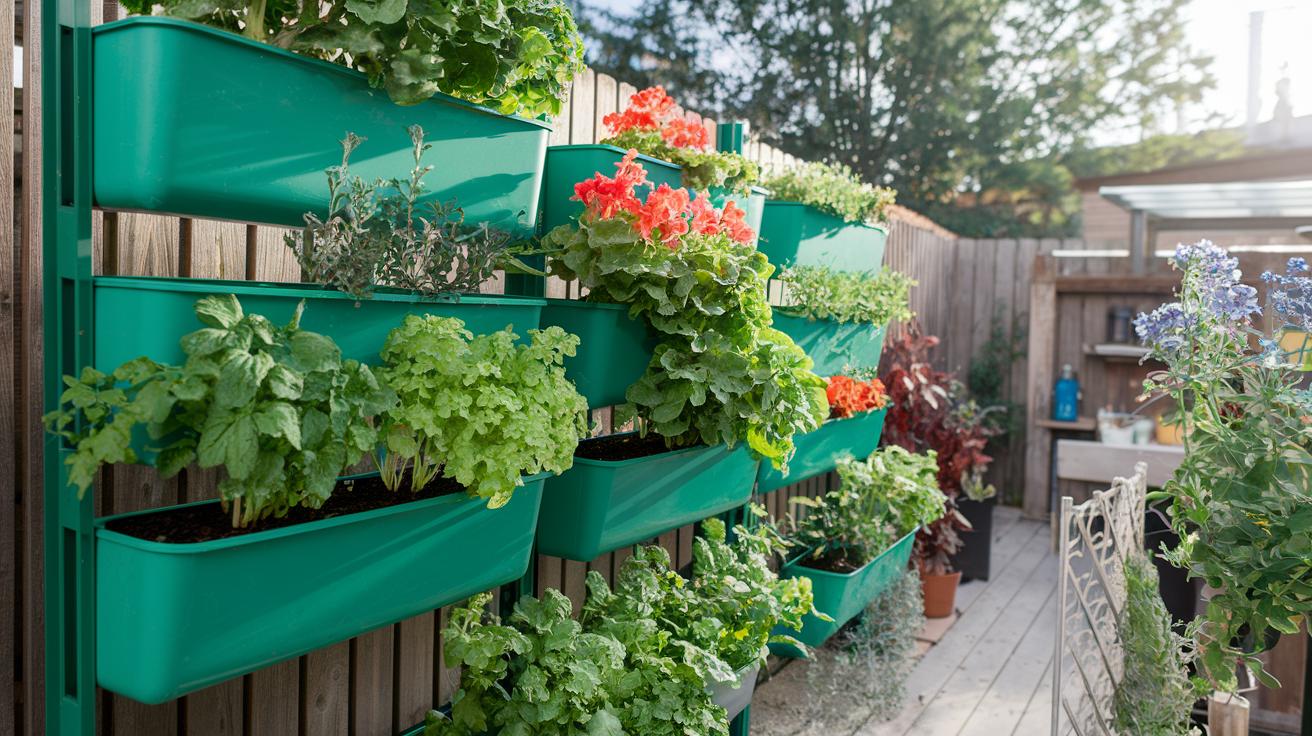
A modular vertical garden panel turns 8 square feet of bare wall into 32 square feet of planting space. Built from cedar or powder-coated metal in a 24×36-inch format, a single panel holds 4 to 6 plants — herbs, lettuce, trailing greens, even small strawberries. Once you have the build dialed in, adding more panels is a 30-minute affair, and your wall fills out over a couple of seasons.
This guide covers the full build: materials and tools, planning and design, step-by-step assembly and mounting, integrated drip irrigation, budget breakdown, expansion options, and the maintenance routine that keeps panels productive. For broader comparisons of vertical garden materials and plant choices, our cluster guides cover best vertical garden structure materials, climbing plants for vertical gardens, and shade-tolerant plants for vertical gardens.
Materials and Tools
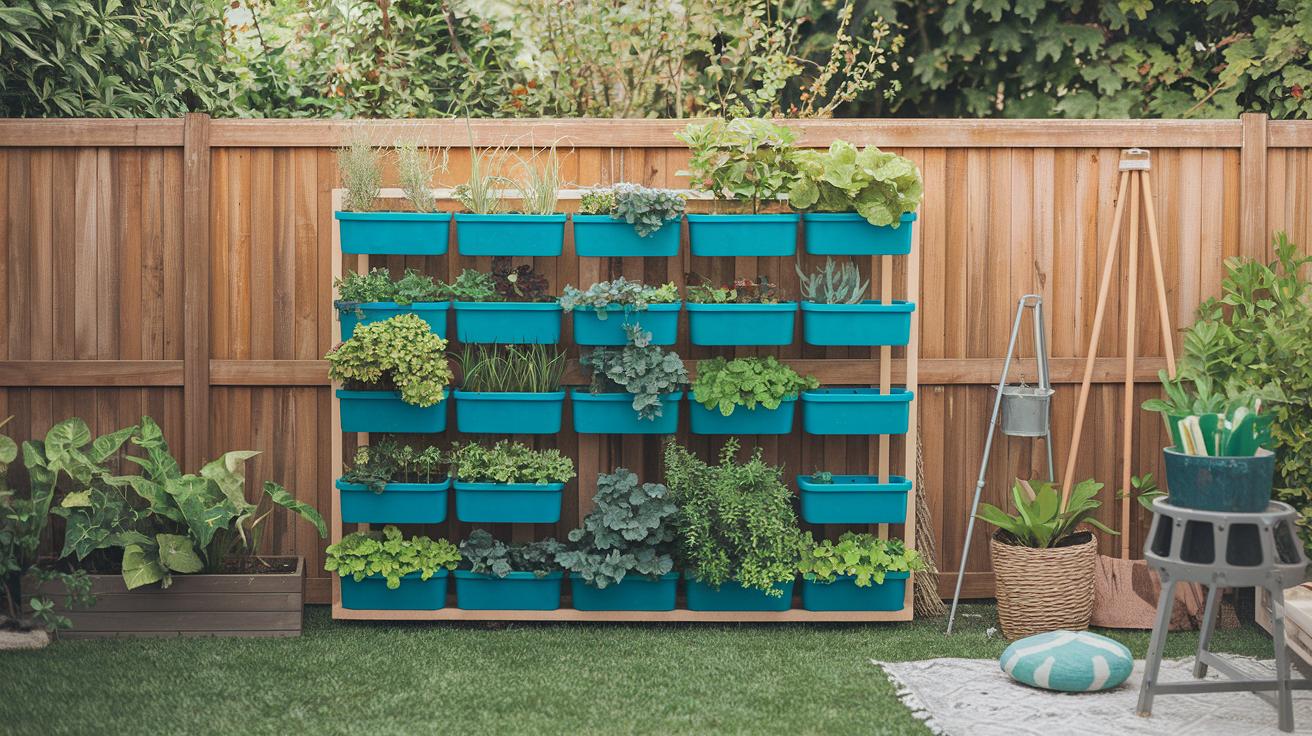
A 24×36-inch panel needs weather-resistant lumber, plant pockets, and outdoor-rated hardware. Total materials run $50 to $150 per panel depending on choices.
Materials per panel:
- Cedar or redwood boards (1″×4″×36″, 4 pieces; 1″×4″×24″, 2 pieces) — or powder-coated metal profiles for a modern look
- Plastic pots, fabric grow bags, or small wooden boxes for plant pockets (6 total)
- 1¼” exterior screws (30) and 2″ exterior screws (20)
- Metal L-brackets for corners and mid-panel support (8 total)
- Mounting hardware: heavy-duty bracket or horizontal rail rated for the wall material
Tools:
- Power drill with Phillips and flat bits
- Circular saw or miter saw for clean cuts
- Tape measure (inches), pencil, carpenter’s square
- 4-foot level for plumb mounting
- Gloves and safety goggles
Lumber choice notes:
- Kiln-dried cedar — naturally rot-resistant, weathers attractively to silver-grey, 30% lighter than pressure-treated lumber. Best balance of cost and longevity.
- Redwood — similar properties to cedar with deeper natural color. Costs 20-40% more.
- Powder-coated metal profiles — modern industrial look, no warping, no annual sealing. Heavier and slightly more expensive than wood.
- Reclaimed pallet slats — cheapest option. Inspect for “HT” (heat-treated) stamp; avoid “MB” (methyl bromide treated) which is chemically unsafe for food crops.
Use rust-resistant screws and brackets throughout. Galvanized works fine; stainless costs more but never rusts.
Planning and Designing the Layout
Measure the wall or fence area before buying anything. A 6×8-foot section holds six 24×36-inch panels in a 3×2 grid. A narrow 4×4-foot patch fits two panels stacked vertically. Sketch the layout on graph paper at 1 square per foot, marking your panel positions, the path of any irrigation tubing, and where you’ll need access for maintenance.
Plant capacity by panel: 4 to 6 plants per 24×36-inch panel depending on root depth. Shallow-rooted herbs (basil, thyme, parsley) and leafy greens (lettuce, spinach, arugula) fit 6 per panel. Deeper-rooted plants (kale, chard, small tomatoes) fit 4. Mix textures and growth habits so the wall reads as a varied composition rather than a uniform grid.
Sun exposure matters more than soil for vertical panels. South-facing walls turn into ovens in midsummer — plants dry out fast and frames bake. For south-facing installations, pick UV-rated wood finish and use larger or deeper plant pockets that retain more moisture. North-facing walls suit shade-tolerant plants (see the shade-tolerant plant guide). East and west exposures are the gentler middle ground.
Soil mix for vertical panels: 50% high-quality potting mix + 50% compost. The potting mix gives drainage and air pockets; the compost provides nutrients and water retention. Avoid garden topsoil — it compacts in containers and suffocates roots.
Weatherproofing the frame: Brush on an exterior wood stain or clear sealant before adding planters. Two coats with 24 hours between. End-grain cuts (the cut ends of every board) soak up water fastest — give those a third coat.
Assembly and Installation
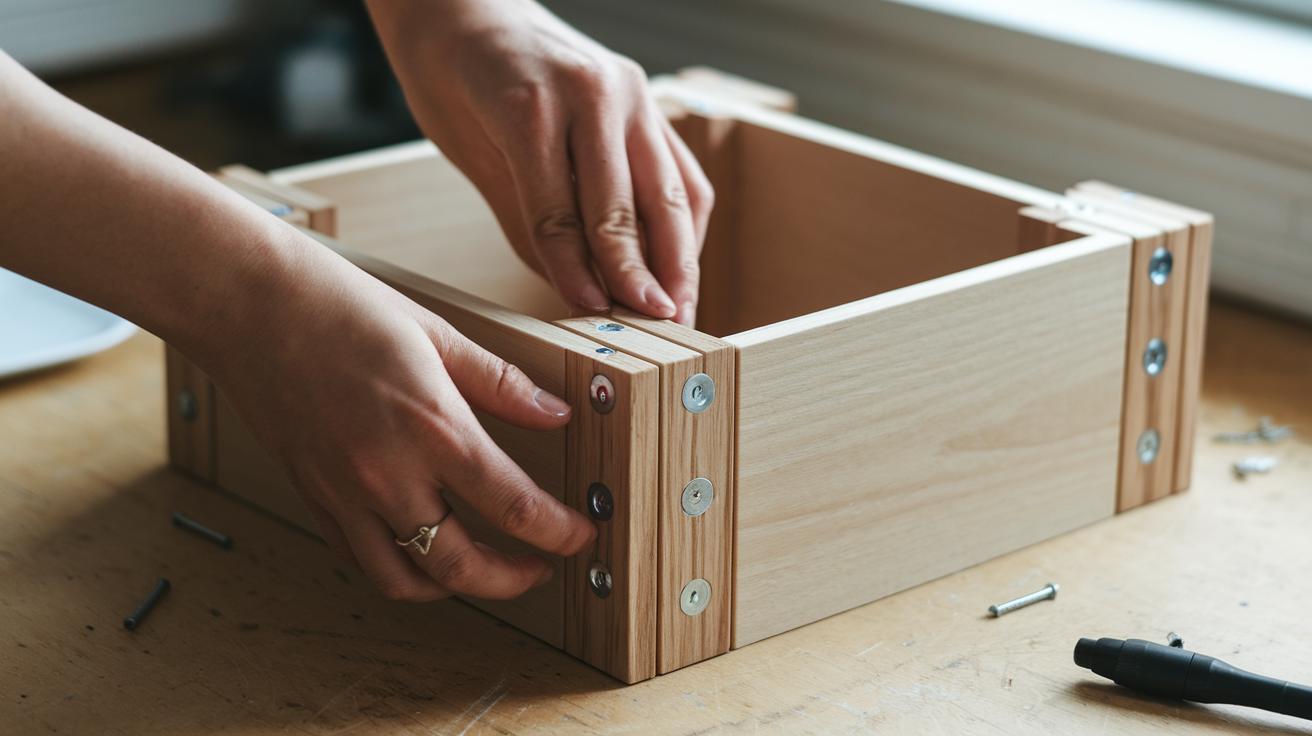
Plan on 2 to 3 hours per panel the first time through, faster on subsequent builds.
Building the frame
- Mark and cut all six boards to dimensions: four at 36″ for vertical sides, two at 24″ for top and bottom horizontals. Sand cut edges with 120-grit then 220-grit sandpaper.
- Lay the boards on a flat surface forming a 24×36-inch rectangle. The horizontals go inside the verticals at top and bottom.
- At each corner, install a metal L-bracket. Drive 1¼” screws through the bracket into both boards. Don’t overtighten — snug is enough.
- Add a cross support every 12 inches with additional L-brackets. These prevent frame twist once soil weight loads it.
- Check the frame is square by measuring both diagonals — equal diagonals mean a true rectangle.
Attaching plant pockets
- Lay the frame face-down on the work surface.
- Place plastic pots or fabric grow bags in the planting positions — typically two rows of three pockets, evenly spaced.
- Drill ½-inch drainage holes every 6 inches in the bottom of each pocket if not pre-drilled.
- Fasten each pocket with four L-brackets — two on each side. Drive 1¼” screws through the brackets into the frame.
Mounting the panel
- Identify a wall or fence section with at least 6 hours of sunlight (for most edible plants).
- Mount powder-coated steel brackets or a horizontal rail to the wall. Use masonry anchors for brick or concrete; standard screws into wood studs for siding or fence boards.
- Use a 4-foot level to confirm the mounting hardware is plumb (vertical) and the rail or top bracket is horizontal.
- Slide the panel onto the rail or hook over the brackets. Add a bottom bracket or strap to prevent shifting.
- Give the mounted panel a firm shake to confirm stability before adding soil and plants.
Integrating Drip Irrigation and Drainage
Vertical panels dry out faster than in-ground beds — the pockets are smaller and exposed on more sides. Drip irrigation prevents the daily watering chore.
Top-rail drip system setup:
- Run ¼-inch polyethylene drip tubing along the top rail of the panel. Clip it in place with drip-line clips or zip ties every 12 inches.
- Install a pressure-compensating emitter (0.5 to 1 gallon per hour) above each planting pocket. Pressure-compensating means each emitter delivers the same flow regardless of distance from the source — uniform watering across the panel.
- Connect the supply end to an outdoor spigot, a timer tap, or a smart irrigation controller. A $25 mechanical timer running 20 minutes a day handles most installations.
Self-watering reservoir option (for installations without a hose connection):
- Add a 2-gallon resin reservoir beneath each pocket inside the frame.
- Layer a thin sand or gravel base in the bottom of each pocket.
- Insert a felt or cotton wicking strip from the reservoir up into the soil. Capillary action pulls water upward as roots draw down.
- Check reservoir levels weekly through a fill tube.
Drainage: ½-inch drainage holes every 6 inches in pocket bottoms let excess water escape so roots don’t drown. A 1-inch absorption mat under each pocket catches drips before they hit your siding or patio. A capillary mat between the liner and soil holds the lower zone’s moisture and slowly releases it back to roots.
Customization and Expansion
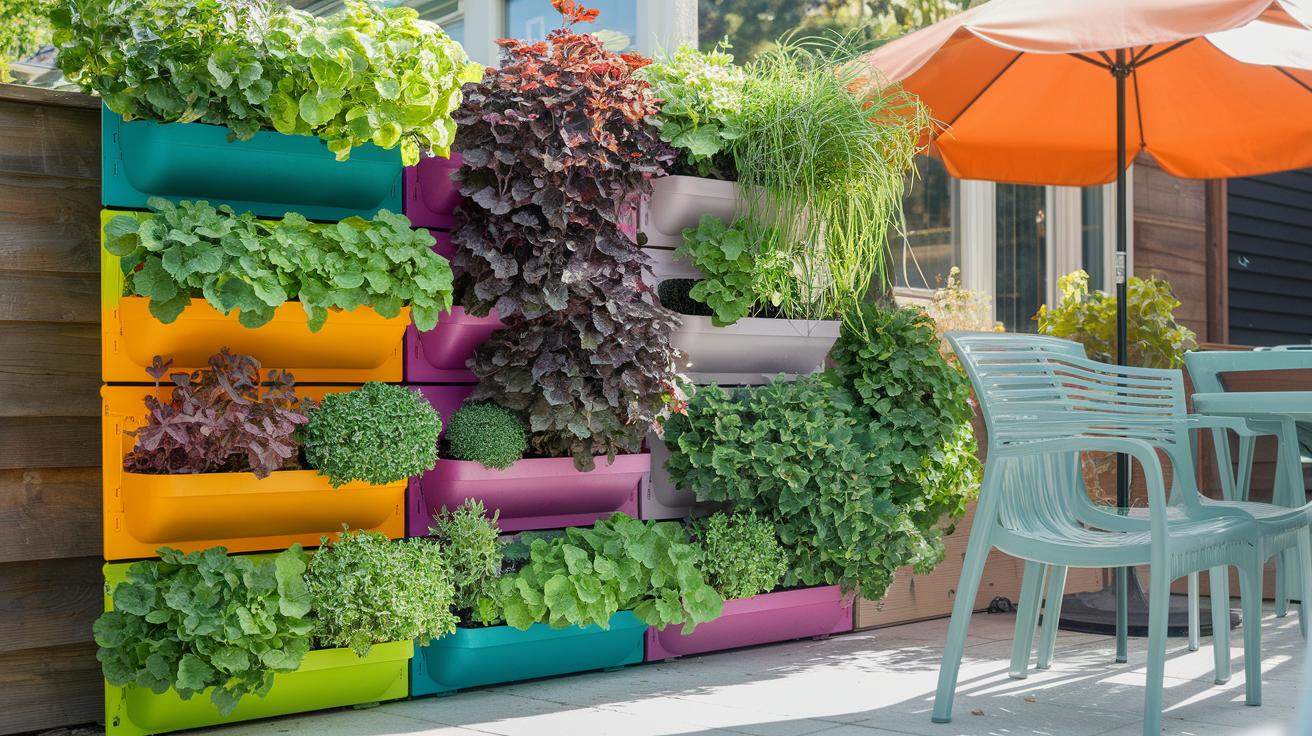
The modular design’s whole point is that the wall grows with you. A few useful ways to expand or customize after the first panel is up:
- Snap-on additional panels. Build each new panel to the same dimensions and mount on the same horizontal rail. The wall fills out as your time and budget allow rather than as a single all-at-once project.
- Climbing trellis attachment. Mount a removable trellis behind a panel and grow climbing peas, beans, or morning glories upward through the wall. For climbing vine ideas, see the climbing plants for vertical gardens guide.
- Painted or stained frames. Skip the natural wood look and use exterior latex in any color. Muted gray, soft white, terracotta, or contrasting accent colors that match the adjacent siding or trim.
- Seasonal plant rotation. Spring panels of lettuce and spinach swap to summer basil and tomatoes, then to fall kale and chard, then to overwintering parsley and thyme. Fabric-backed wicking liners make pod swaps quick.
- Garden art and lighting. Hang small shelves, wind chimes, or solar string lights from the panel frames. The wall becomes a focal point at dusk as much as during the day.
- Built-in herb labels. Slate paint on a corner of each pocket lets you chalk-label what’s planted there. Useful when the seasonal rotation cycles in something new.
Budget Breakdown
Costs scale roughly linearly with panel count. Per-panel ranges below; multiply by your panel count for the total project budget.
| Category | Cost per panel | Notes |
|---|---|---|
| Frame lumber | $20–$50 | Cedar mid-range; redwood and powder-coated metal at the upper end |
| Plant pockets | $10–$30 | Fabric grow bags cheapest; rigid plastic mid-range; wooden boxes pricier |
| Hardware (screws, brackets) | $5–$15 | Stainless steel at upper end |
| Drip irrigation components | $10–$40 | Includes tubing, emitters, connector, and a basic timer if needed |
| Wood stain or sealant | $5–$15 | One quart covers 4-6 panels at two coats each |
| Total per panel | $50–$150 | Mid-cedar build with drip irrigation lands around $90 |
For a 4-panel installation: $200 to $600. For a full wall of 8 panels: $400 to $1,200. Compared to off-the-shelf modular vertical garden systems (which run $150 to $300 per panel and don’t include irrigation), the DIY approach saves 40 to 60% while letting you customize dimensions and finish to match your space.
Maintenance and Troubleshooting
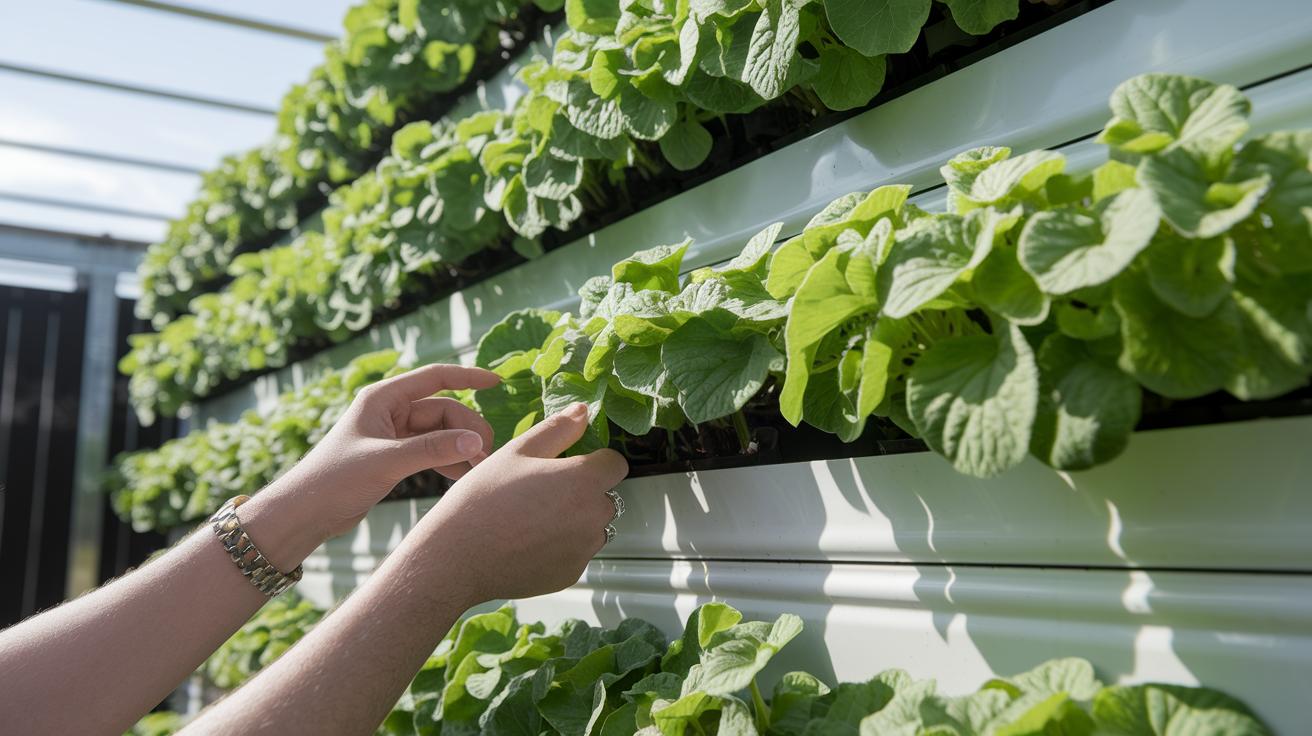
Once the panels are installed and planted, maintenance is light.
Weekly: visual check on each pocket. Wilting leaves mean dry soil; yellowing leaves often mean overwatering or nutrient depletion. Adjust drip timer frequency as the season progresses (hotter summer days need more water than cool spring mornings).
Monthly: add a half-strength liquid fertilizer to the irrigation supply (called fertigation) or hand-feed each pocket with a watering can of compost tea. Vertical panel soil depletes nutrients faster than in-ground beds because the volume is smaller.
Quarterly:
- Flush drip lines by disconnecting the end cap and running water through for 30 seconds. Clears mineral buildup and prevents emitter clogs.
- Check leaves for aphids (small green or black bugs on new growth) and spider mites (fine webbing under leaves). Spray with insecticidal soap at first sign — small infestations stay small if caught early.
- Prune so individual leaves sit 4 to 6 inches apart. Good airflow prevents fungal disease in dense plantings.
Annually (early spring): top-dress each pocket with 2 inches of fresh compost-and-potting-mix blend. Replenishes nutrients that watering has leached through. Inspect and re-stain the frame if the finish has weathered.
Common problems and fixes:
- Wilting in afternoon despite moist soil: heat stress on south-facing wall. Add shade cloth during the hottest hours or relocate the most heat-sensitive plants to the bottom row where they get afternoon shade from upper panels.
- Water pooling at the bottom of pockets: drainage holes clogged or too small. Drill additional ½-inch holes. Replace fabric pockets if the original drainage fabric is matted.
- Emitter not dripping: mineral buildup. Soak the emitter in vinegar for an hour to dissolve deposits, or swap in a fresh one from your spare kit.
- Frame loosening over time: wood expands and contracts; bolts can back out. Retighten with a screwdriver once a year.
A well-built modular vertical garden panel system pays back the build time across years of fresh herbs and greens. Start with one panel to dial in the build technique, then expand as confidence and budget allow. By the third season the wall is fully established and the maintenance routine takes about 20 minutes a week.
DIY Vertical Garden Panel FAQ
What are DIY modular vertical garden panels?
DIY modular vertical garden panels are prefabricated frames, typically 24×36 inches, that hold 4 to 6 plants in pocket planters. They mount on walls or fences with heavy-duty brackets to optimize vertical space, simplify watering with optional drip irrigation, and allow easy expansion as you add more panels over time.
What materials and tools do I need to build a 24×36-inch panel?
Essential materials: kiln-dried cedar, redwood, or powder-coated metal boards for the frame; plastic pots or fabric grow bags for plant pockets; L-brackets, exterior screws, and outdoor mounting hardware. Tools: power drill, circular or miter saw, tape measure, carpenter’s square, 4-foot level, and basic safety gear. Total cost per panel: $50 to $150 depending on choices.
How do I plan and design my vertical panel layout?
Measure the wall area and sketch the layout on graph paper at 1 square per foot. A 6×8-foot section fits six 24×36-inch panels in a 3×2 grid. Mark panel positions, irrigation tubing paths, and maintenance access. Match plant choices to sun exposure (full sun for herbs and tomatoes; shade for ferns and pothos) and use a 50/50 potting mix and compost soil blend.
How do I assemble and install a DIY vertical garden panel?
Cut six boards to size (four 36-inch verticals, two 24-inch horizontals), join with corner L-brackets and exterior screws, add cross supports every 12 inches for frame stability. Attach planters with four L-brackets each, drilling drainage holes if needed. Mount on outdoor-rated brackets or a horizontal rail, using a 4-foot level to confirm plumb installation. Total build time: 2 to 3 hours per panel.
How do I integrate drip irrigation and drainage?
Run ¼-inch polyethylene drip tubing along the top rail, clipping it every 12 inches. Install a 0.5 to 1 GPH pressure-compensating emitter above each planting pocket. Connect to an outdoor spigot with a timer tap. For drainage, drill ½-inch holes every 6 inches in pocket bottoms and add a 1-inch absorption mat to catch drips before they hit the wall or patio.
How can I customize and expand my vertical garden panels?
Build additional panels to the same dimensions and mount on the same horizontal rail — the wall fills out incrementally as you add panels. Mount removable trellises behind panels for climbing vines, paint or stain frames in custom colors, rotate seasonal plant pods (spring greens to summer herbs to fall kale), and add solar string lights or garden art from the frame edges.
What’s the per-panel budget for DIY vertical garden panels?
Plan on $50 to $150 per panel: frame lumber $20-$50, plant pockets $10-$30, hardware $5-$15, drip irrigation components $10-$40, and wood stain $5-$15. A mid-cedar build with drip irrigation lands around $90 per panel. Compared to commercial modular vertical garden systems at $150 to $300 per panel, DIY saves 40 to 60%.
How do I maintain and troubleshoot the panels?
Weekly: visual check for wilt or yellowing. Monthly: fertigation or compost tea feeding. Quarterly: flush drip lines, pest check, prune for airflow. Annually: top-dress with fresh compost-and-potting-mix blend and re-stain the frame. Common problems: heat stress on south-facing walls (add shade cloth), clogged emitters (soak in vinegar or replace), and loosening frame bolts (retighten yearly).