How to Choose an Outdoor Swing Bench for Your Yard
A well-built outdoor swing bench delivers the satisfying combination of comfortable seating and the gentle rocking motion that turns a porch into the most-used part of the house. The buying decision comes down to four questions: what material handles your climate without constant maintenance, what mounting style fits your space (hanging chain, A-frame stand, or porch-installed bracket), what weight rating do you need, and what cushion-and-comfort setup makes the bench inviting enough to actually use.
This guide covers the four main frame materials and their tradeoffs, the three mounting styles and when to choose each, assembly and installation basics, weatherproofing and care across seasons, pricing tiers, and a clear FAQ. For fixed-position (non-swinging) bench options, see our companion guide on modern outdoor bench ideas. For the hardware specifics on hanging from beams (much of which overlaps with hammock hanging), see our guide on hammock hardware load ratings.
Four Frame Material Options
Material drives durability, weight, maintenance, and look. The four common categories cover most outdoor swing benches.
Cedar or redwood. Natural rot resistance from the wood’s own oils. Cedar smells distinctively cedar after rain and weathers to a soft silver-grey if left unsealed. Redwood holds deeper reddish-brown color longer. Both require annual clear-sealant application to maintain color and structural longevity (15-25 years sealed; 8-15 unsealed). Weight: 60-120 pounds for a 4-foot bench; mounting hardware must rate accordingly.
Teak hardwood. The premium choice. Natural oils and silica in teak repel water, insects, and rot without sealing. Weathers to a silver-grey patina over 1-2 years if left untreated; annual teak oil preserves the warm golden-brown original color. Lasts 30-50 years outdoors. Costs 2-4x more than cedar. Weight: 80-150 pounds.
Powder-coated steel or aluminum. Modern look, lighter weight than wood (40-70 pounds), no annual sealing. Powder coating provides UV protection that doesn’t peel like liquid paint. Steel is heavier and feels more stable; aluminum is rust-proof but flexes more under load. Both handle outdoor exposure for 15-25 years with minimal care. Aluminum benches heat up significantly in direct sun — cushions help.
Resin wicker over metal frame. The classic woven look without the rot of natural rattan. UV-stabilized resin (high-density polyethylene) doesn’t crack or fade like cheap plastic. Aluminum frame underneath inherits aluminum’s rust resistance. Lasts 10-15 years. Lightest of the four options. Weave hides metal-bracket attachment points cleanly for a refined finish.
| Material | Lifespan | Weight | Maintenance | Typical price (4-ft bench) |
|---|---|---|---|---|
| Cedar / redwood | 15-25 years | 60-120 lbs | Annual clear sealant | $200-$500 |
| Teak hardwood | 30-50 years | 80-150 lbs | Optional annual teak oil | $600-$1,500 |
| Powder-coated steel / aluminum | 15-25 years | 40-70 lbs | Hose rinse; minimal upkeep | $200-$700 |
| Resin wicker over aluminum | 10-15 years | 50-90 lbs | Soap wash twice per season | $300-$900 |
Three Mounting Styles
How the bench attaches to its anchor determines installation complexity and where the swing can live.
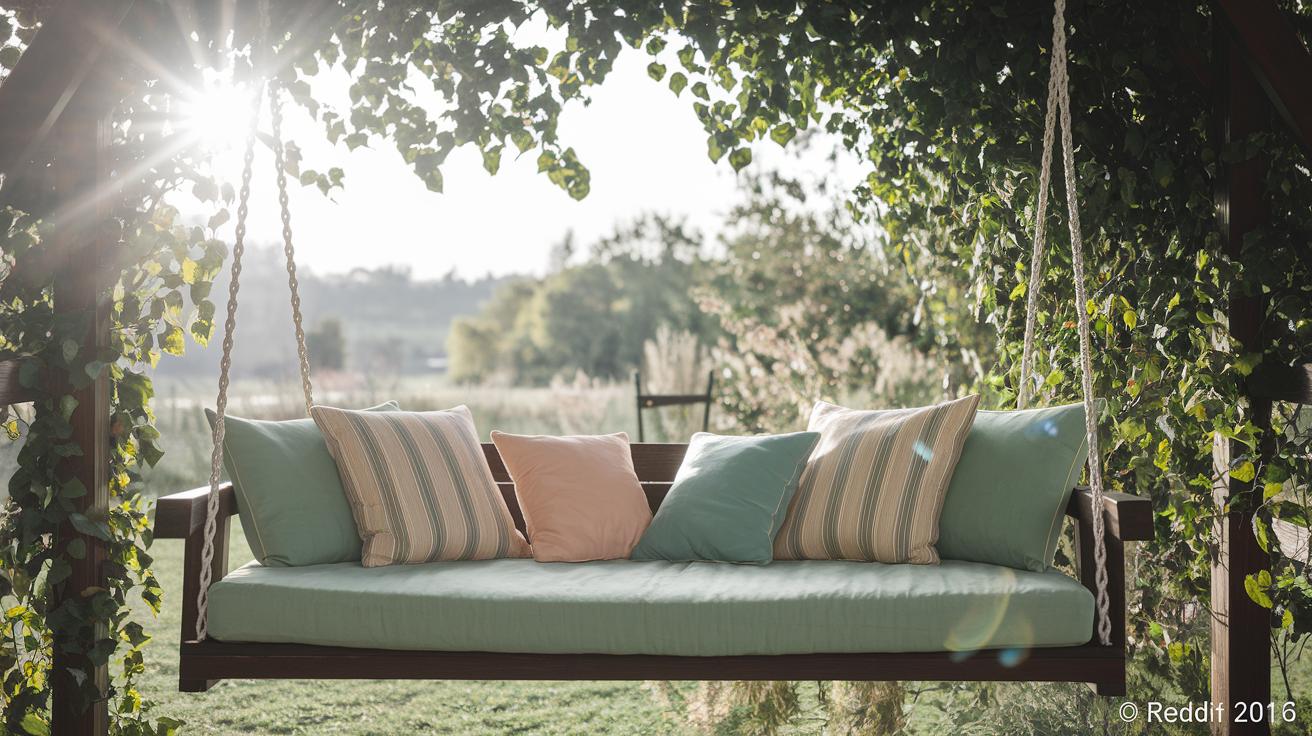
Chain-hung from an overhead beam. The traditional porch swing. Two chains or ropes attach to porch ceiling joists, pergola crossbeams, or a custom-built A-frame above. Requires solid overhead structure rated for the bench weight plus 200+ pounds of seated occupants (call it 400+ pounds total minimum). Easy to remove for off-season storage by unhooking the chains.
Freestanding A-frame stand. A self-supporting metal or wood frame holds the swing without needing overhead attachment. Useful for yards with no covered porch or pergola, or for renters who can’t drill into structures. A-frame stands add 30-60 pounds of frame weight and a 6-by-7-foot footprint. Less portable than a hammock stand because the bench is permanently mounted.
Glider mechanism. A bench attached to a fixed frame via a glide rail (similar to a recliner mechanism) that sways back and forth without hanging. Best for open patios where there’s no overhead anchor and no space for an A-frame. The glide motion is more subtle than a true hanging swing — gentle rocking rather than the longer-arc sway of chain-hung benches.
Choosing between them:
- Have a covered porch with sturdy ceiling joists? Chain-hung is the classic and least visually intrusive option.
- Have open patio or lawn space? Freestanding A-frame works without permanent installation.
- Need something on a deck or paved patio with no overhead? Glider mechanism delivers the swinging feel without overhead requirements.
- Renting? A-frame stand or glider — both require no drilling.
Assembly and Installation Basics
Most outdoor swing benches arrive as flat-pack kits with assembly required. Plan on 1-3 hours for the first build.
What to check before unboxing:
- Confirm the hanging hardware (chains, S-hooks, eye bolts, or carabiners) is rated for the bench weight plus 400+ pounds of occupant capacity.
- Inspect all wood pieces for cracks or warping; cracked components should be replaced rather than installed.
- Count fasteners against the parts list — missing bolts mid-assembly is the most common avoidable frustration.
Tools you’ll likely need:
- Phillips and flat screwdrivers (often included as cheap basics; bring your own quality versions)
- Adjustable wrench or socket set for bolts
- Cordless drill for pilot holes (sometimes recommended in instructions; sometimes the drill is needed for the final assembly itself)
- Level for confirming the bench hangs evenly
- Stepladder for ceiling-beam installation
Chain-hung installation steps:
- Locate beam or joist. Stud finder or visual inspection of the porch ceiling structure. The bench needs to hang from solid wood, not just ceiling material.
- Install eye bolts. Drill pilot holes slightly smaller than the eye-bolt threads. Screw bolts in by hand or with a tool through the eye until at least 1.5 inches of thread is buried in the beam. Eye bolts must be rated for 250+ pounds each.
- Mount chains. Attach chains to the eye bolts with rated quick-links or screw-locked carabiners (not snap-clip carabiners — those can pop open).
- Adjust chain length. Seat height should land at 16-18 inches above the floor. Cinch chains higher on the bench or shorten with extra links as needed.
- Level the bench. Use a level across the seat. If one side is low, shorten that side’s chain or check that both eye bolts are at equal heights.
For A-frame stand assembly, follow the manufacturer’s specific sequence. Most assemble in 60-90 minutes with one helper. Confirm the stand sits level on the ground before final tightening.
Weatherproofing and Seasonal Care
Outdoor exposure shortens lifespan if not addressed. Different materials need different approaches.
Wood (cedar, redwood, teak):
- Apply exterior clear sealant or wood oil annually in spring. Cedar and redwood need a UV-blocking sealant to preserve color. Teak can be left untreated to develop silver-grey patina, or oiled annually to maintain golden-brown.
- Inspect joints and fasteners each spring. Wood expands and contracts seasonally; bolts work loose over years. Retighten anything that’s loose.
- Check end-grain cuts (the cut ends of every board) — these absorb water fastest. Brush extra sealant on end grain.
Steel and aluminum:
- Hose-rinse every few weeks to remove pollen, dust, and tree sap.
- Inspect powder coat for chips. Touch up with matching outdoor-rated paint to prevent rust at chips.
- Check fasteners annually; tighten loose bolts.
Resin wicker:
- Soap-and-water wash twice per season. A soft brush works dirt out of the weave without damaging the strands.
- Avoid pressure washers — high-pressure water can pop wicker strands loose at joints.
- Bring cushions inside off-season; foam cushions destroyed by moisture and freeze-thaw cycles within a single winter.
Off-season storage: in mild climates, swing benches stay outdoors year-round with cushions stored inside. In cold climates with serious snow load, take the bench down (or cover with a fitted waterproof bench cover) for winter. Snow accumulating on a hanging bench can stress the chains and hardware over months.
Pricing Tiers and What to Expect
Outdoor swing benches range widely in price. Three useful tiers:
Budget tier ($200-$500). Cedar or powder-coated steel construction, basic chain hardware, no included cushion. Reasonable longevity (10-15 years with care). Best for first-time buyers testing whether a porch swing fits their lifestyle.
Mid-range tier ($500-$1,000). Better cedar/redwood construction or thick aluminum frame, included cushions in weather-resistant fabric, occasionally included A-frame stand. 15-25 year lifespan with care. The sweet spot for most buyers.
Premium tier ($1,000-$3,000+). Teak construction, complete hardware kit with stainless steel components, custom cushions in Sunbrella fabric, often hand-built or made-to-order. 30-50 year lifespan. Heirloom quality.
Hidden costs to budget for:
- Hanging hardware if not included — $30-$80 for quality eye bolts, chains, and carabiners
- Cushions — $80-$300 for quality outdoor cushions if the bench doesn’t include them
- Installation help — overhead installation requires two people; budget time or budget for a helper
- Annual sealant — $15-$30 per year for wood benches
Where to buy: local outdoor furniture stores often have better quality than big-box options at a 20-40% markup. Amish furniture makers offer the best cedar/redwood swings for around $500-$1,200 (mid-range tier). Online specialty retailers (Wayfair, Plow & Hearth, regional sites) carry the full range. Avoid the lowest-tier $99-$150 listings that flood Amazon during summer — quality at that price point reliably fails within 2-3 seasons.
Choosing the Right Swing Bench for Your Space
The decision framework: working backward from your space and use pattern.
Match material to climate:
- Coastal / salt air: teak is purpose-built; aluminum holds up well. Avoid uncoated steel.
- Hot dry climates (Southwest): teak weathers well; powder-coated aluminum handles UV. Resin wicker can become brittle in extreme heat over many years.
- Cold winter climates: all materials handle freeze-thaw if cushions come inside. Wood expands and contracts more with humidity swings.
- Humid temperate climates: cedar/redwood with proper sealing; aluminum or resin wicker as low-maintenance alternatives.
Match style to architecture:
- Traditional farmhouse or craftsman home: chain-hung cedar swing on covered porch
- Modern minimalist patio: powder-coated aluminum with clean lines, possibly a glider mechanism
- Coastal cottage or beach house: teak or resin wicker, warmer-toned cushions
- Eclectic / cottage garden: cedar with decorative chain hardware or A-frame stand styled with hanging baskets and ivy
Match weight rating to occupants: single-rider benches typically rate 300-400 pounds, two-person 500-600 pounds, family-size three-person 700+ pounds. Always include a 20-30% safety margin over expected combined weight. A bench rated 400 pounds shouldn’t routinely hold 380 — too close to the line.
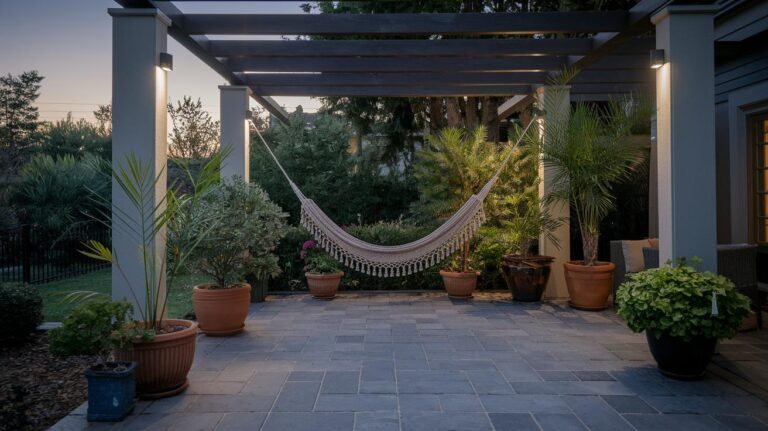
For evening use, consider pairing with outdoor lighting near the swing. Our guide on pergola lighting ideas covers string lights, lanterns, and dimmable options that turn a swing area into an after-dark hangout. For small-patio spaces where the bench needs to fit a tight footprint, our guide on patio lounge chairs for small spaces covers alternative seating that pairs with a single small swing.
A well-chosen outdoor swing bench gets used year after year, slowly weathering into a beloved piece of the yard rather than just another piece of furniture. The right material, mounting style, and weight rating, decided up front, set up the long-term success.
Outdoor Swing Bench FAQ
What’s the best material for an outdoor swing bench?
Teak is the longest-lasting (30-50 years) and lowest-maintenance, but costs 2-4x more than other options. Cedar and redwood are the traditional middle choice — beautiful and reasonably priced at $200-$500 with annual sealing. Powder-coated aluminum is lightest and rust-proof. Resin wicker over aluminum offers a classic woven look without the rot of natural rattan. Choose based on your climate, budget, and aesthetic.
What weight capacity should I look for?
Single-rider benches typically rate 300-400 pounds. Two-person benches rate 500-600 pounds. Family-size three-person benches rate 700+ pounds. Include a 20-30% safety margin over the expected combined weight of all users — a bench rated 400 pounds shouldn’t routinely hold 380. Eye bolts and chain hardware must match or exceed the bench’s rating.
How do I install a porch swing on my ceiling beam?
Locate solid wood beams or ceiling joists with a stud finder. Drill pilot holes slightly smaller than the eye-bolt threads. Screw eye bolts in until at least 1.5 inches of thread is buried in the beam — eye bolts must be rated for 250+ pounds each. Attach chains with quick-links or screw-locked carabiners. Adjust chain length so the seat sits 16-18 inches above the floor. Use a level to confirm the bench hangs evenly.
Can I install a swing bench without drilling into my porch?
Yes — freestanding A-frame stands provide an overhead anchor without needing existing ceiling structure. Glider-mechanism benches deliver gentle rocking motion through a base-mounted glide rail rather than overhead hanging. Both are renter-friendly and don’t require permanent installation.
How do I maintain a wooden outdoor swing bench?
Apply exterior clear sealant or wood oil annually in spring. Cedar and redwood need UV-blocking sealant to preserve color and structural integrity (15-25 year lifespan with annual care vs. 8-15 untreated). Teak can be left untreated to develop a silver-grey patina, or oiled annually to maintain golden-brown color. Inspect joints and fasteners each spring; retighten anything that’s worked loose over the winter.
What’s the difference between a swing bench and a glider?
A swing bench hangs from overhead chains and sways in a wide arc, swinging both front-to-back and slightly side-to-side. A glider sits on a fixed frame with a glide rail that rocks the bench front-to-back only, in a narrower and more controlled motion. Gliders work in open spaces without overhead anchors; swings need either a porch ceiling or A-frame stand.
What does a quality outdoor swing bench cost?
Budget tier: $200-$500 for cedar or powder-coated steel construction with basic chain hardware. Mid-range: $500-$1,000 for better wood construction, included cushions, sometimes an A-frame stand. Premium: $1,000-$3,000+ for teak with stainless steel hardware and custom cushions. Include $30-$80 for hanging hardware if not included, and $80-$300 for quality cushions if not included.