How to Water Your Garden During a Heat Wave
A garden that looks healthy in the morning can collapse by mid-afternoon during a stretch of 85°F-plus days. The standard watering schedule that works fine in mild weather isn’t enough when temperatures spike — plants transpire faster, soil dries out from the top down, and shallow-rooted plants run out of accessible moisture in hours. The fix isn’t more frequent watering. It’s deeper watering, better timing, smart use of mulch and shade, and knowing which plants to prioritize when you can’t get to everything. Here’s the practical playbook for keeping a garden alive through a heat wave.
Why a Normal Watering Routine Fails Above 85°F
Once daytime highs cross 85°F for several consecutive days, three things happen at once. Plants pull more water from their roots to cool themselves through transpiration. The top inch or two of soil dries out faster than usual, sometimes within a single afternoon. And shallow root systems that survive in mild weather suddenly can’t reach moisture that’s retreated to deeper soil layers.
A garden that gets a “normal” inch of water on Monday may already be wilting by Tuesday afternoon. A plant that’s chronically water-stressed during a heat wave doesn’t just survive worse — it loses productivity for the rest of the season, even after temperatures cool back down. Stressed tomato plants drop blossoms instead of setting fruit. Stressed lettuce bolts. Newly planted shrubs that miss two consecutive deep waterings during their first summer often die outright.
The good news: heat-wave watering isn’t more work than normal watering — it’s smarter work. The strategies below take maybe 30 extra minutes to set up and require less day-to-day attention than the “small, frequent drinks” most people fall back on.
Deep Watering Is the Foundation
The single most effective heat-wave watering change is going deeper and less often. Light, frequent watering — a few minutes every morning, say — keeps soil wet only in the top inch or two, where the soil temperature can climb above 100°F under afternoon sun. Roots that grow toward that surface moisture then bake. Deep watering pushes moisture six to eight inches down, into cooler, more stable soil layers, and trains roots to follow it.
In practice, deep watering means:
- Vegetables and annuals: 1 to 1.5 inches of water per session, every 2–3 days during a heat wave. More for shallow-rooted crops like lettuce, spinach, and cucumbers.
- Perennials and established shrubs: 1 to 2 inches every 3–5 days, applied slowly enough to soak in.
- Young trees and recently planted shrubs (first 1–2 years): 10–15 gallons per plant every 5–7 days, applied at the drip line, not at the trunk.
- Lawn: 1 inch per week total, ideally in one or two sessions rather than daily shallow waterings.
The watering method matters as much as the volume. Three options, ranked by water efficiency:
- Drip irrigation. Slow, targeted, ground-level delivery. Loses almost no water to evaporation and never wets the leaves. Best for vegetable beds and ornamental borders. Basic kits run $30–$80 plus a hose timer ($20–$40).
- Soaker hose. Porous rubber hose that weeps along its length. Less precise than drip but cheaper and easier to install. Snake it through the bed in spring, cover with mulch, and you can leave it for the whole season.
- Hand watering with a wand. Slowest method per area covered, but useful for containers and small beds. The trick is taking long enough — most people stop after 30 seconds when each pot really needs 1–2 minutes to soak through.
Overhead sprinklers are the least efficient option in a heat wave — 30–40% of the water evaporates before it reaches the soil, and wet foliage in humid conditions invites fungal disease. If sprinklers are your only option, run them only at dawn so leaves dry quickly as the sun comes up.
When to Water in Extreme Heat
Early morning, between 5 a.m. and 8 a.m., is the ideal watering window during a heat wave. The soil is cool, moisture has time to soak in before the day heats up, and plants have hours of hydration in reserve before transpiration peaks at midday.
Late evening (after sunset) is the second-best option. The soil is still warm but no longer baking, and moisture soaks in rather than evaporating off. The caveat: wet leaves overnight, especially in humid climates, can promote powdery mildew, leaf spot, and other fungal problems. Water at soil level only — don’t spray foliage.
Mid-afternoon watering — between roughly 11 a.m. and 4 p.m. — wastes water. Most of what you apply evaporates off the soil surface before roots can use it. The exception is genuine plant emergency: if a young plant is wilting severely and won’t last until evening, a careful midday watering is better than losing the plant. Make it a one-off rescue, not a habit.
Avoid watering right before a rainstorm — supplemental water just runs off saturated soil — and avoid heavy watering right at sundown in humid climates if mildew has been a problem in past seasons.
Mulching, Shade Cloth, and Soil-Cooling Tools
The cheapest way to reduce watering during a heat wave is to lose less of the water you’re already applying. A 2–3 inch layer of organic mulch over the soil surface can drop soil temperatures by roughly 10°F and cut evaporative water loss by 30–50%. Mulch goes on before the heat hits, ideally in late spring.
Mulch options and what they’re best for:
- Shredded bark or wood chips (3 inches): Long-lasting, attractive in ornamental beds. Replenish every 1–2 years. $30–$50 per cubic yard delivered.
- Straw or salt-marsh hay (3–4 inches): Light, easy to apply in vegetable beds. Decomposes in a single season — work it into the soil at end of year.
- Grass clippings (1–2 inches, never thicker): Free if you have a lawn. Apply in thin layers so they don’t mat down and rot.
- Compost (1–2 inches): Doubles as a soil amendment as it breaks down. Best for vegetable beds.
- Newspaper or cardboard topped with mulch: Emergency moisture-saving layer for paths and around individual plants when you don’t have a real mulch on hand.
Shade cloth covers the next gap. A 30–50% shade cloth draped over a raised bed or hoop frame cuts the most intense midday radiation by half and noticeably reduces water demand. Use:
- 30% shade cloth: Cool-season crops (lettuce, spinach, peas) struggling in summer heat. Doesn’t slow flowering or fruiting in heat-tolerant plants.
- 50% shade cloth: Newly planted seedlings, recently transplanted shrubs, areas where multiple days of 95°F+ are forecast.
- 70% shade cloth: Emergency protection for shade-loving plants that ended up in unexpectedly hot positions, or for short-term rescue of severely stressed plants.
A 6×8-foot shade cloth runs $15–$30 at garden centers. Old bedsheets, beach umbrellas, or patio umbrellas can substitute on small areas if you don’t want to invest in dedicated shade cloth.
Containers Need Different Treatment
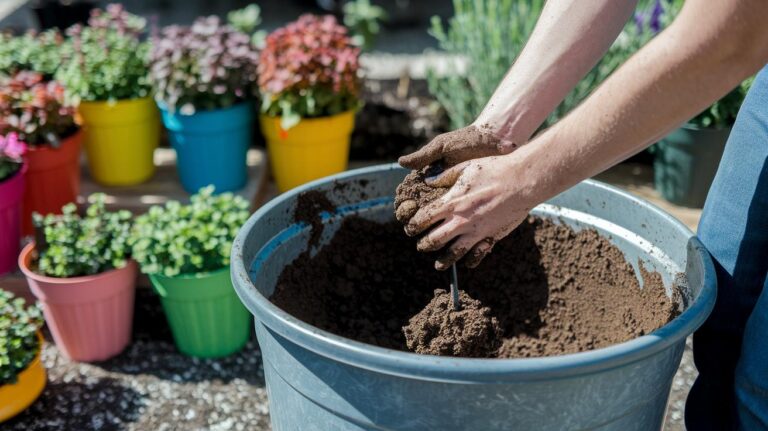
Container plants struggle harder than in-ground plants during heat waves. Pots heat up on all sides instead of just the top, the soil volume is smaller (so it dries faster), and dark-colored pots can hit 130°F+ on the south-facing side in direct sun — hot enough to damage roots touching the inside wall.
Four strategies that help:
- Double-pot. Set a smaller container inside a slightly larger one and fill the gap with moist peat moss, sphagnum, or mulch. The outer pot insulates the inner one, holding moisture and dropping the root-zone temperature noticeably.
- Group containers together. Several pots clustered together shade each other and create their own humid microclimate. A pot in the middle of a group dries far slower than the same pot sitting alone in the sun.
- Move pots into afternoon shade. Even partial shade for the hottest 3–4 hours of the day cuts container water demand by 30–50%. Have a shaded spot identified before the heat wave starts so you can move pots quickly.
- Top-dress with mulch. A half-inch layer of bark, compost, or even smooth pebbles on top of the soil cuts surface evaporation and keeps roots cooler.
For watering frequency, the rule of thumb during a heat wave is: small pots (under 12 inches) may need watering twice a day, large pots (over 18 inches) usually hold up to once a day, and pots in shade can go 2–3 days between drinks. Check the actual moisture every morning before deciding whether to water — daily watering on autopilot can waterlog plants in cooler stretches and stress them in dry ones.
If container watering is a constant struggle, the soil mix may be the underlying issue. Container soil designed for heat retention and water-holding capacity makes a real difference — our guide to the best soil mix for container gardening covers what to look for. For a deeper walk-through of watering specifics, see our container garden watering tips guide.
How to Tell If a Plant Actually Needs Water
Wilting isn’t always thirst. Many plants — especially squash, melons, hydrangeas, and broadleaf perennials — wilt in midday sun as a defense mechanism even when soil moisture is plentiful. They re-perk overnight. Watering plants that are heat-wilting rather than moisture-wilting is how lawns and beds end up waterlogged at the same time as they look stressed.
Three checks that beat eyeballing wilt:
- The finger test. Push a finger 2 inches into the soil. If it comes out dry, water. If the soil is cool and slightly damp at that depth, wait. Free, takes 10 seconds, accurate enough for almost all decisions.
- Soil moisture meter. A $10–$20 analog moisture meter has a probe that you stick into the soil and a dial that reads “dry / moist / wet.” More precise than the finger test, especially in containers where surface moisture can be misleading. Worth owning if you have multiple beds or many containers.
- Recovery test. If a plant is wilted at 6 p.m. but has fully recovered by 6 a.m. the next morning, it’s heat-stress wilt and the soil is probably fine. If it’s still wilted in the morning, that’s moisture-stress and it needs a deep watering immediately.
Soil pH also affects how well plants take up water, especially during stress. If a chronically watered bed still looks struggling, the issue may be soil chemistry rather than soil moisture — our how to test soil pH at home walkthrough takes 10 minutes with a $15 kit and rules that out.
Triage: What to Water First
During an extended heat wave, water restrictions or just limited time may mean you can’t keep up with everything. Order of priority:
- Young trees and shrubs planted in the last 1–2 years. Highest priority by a wide margin. Their root systems haven’t reached deeper soil moisture yet, replacement cost is the highest of anything in the yard, and a few missed deep waterings can kill them outright.
- Container plants. Smaller soil volume, faster drying. Daily check minimum during a heat wave, twice-daily for small pots in sun.
- Vegetable crops nearing harvest. Tomatoes setting fruit, peppers ripening, melons swelling — all need consistent moisture or you lose the crop you’ve been working on all season.
- Cool-season annuals and shallow-rooted edibles. Lettuce, spinach, cucumbers, beans. Easier to lose to heat stress than to recover.
- Established perennials and ornamentals. Most have deeper root systems and weather short droughts. Water if you have capacity, deprioritize if you don’t.
- Mature shade trees and drought-adapted natives. Lowest priority. Their root systems reach moisture well below the surface and they’re built to tolerate stretches of drought.
If you’re rebuilding a bed and want plants that handle heat without much fuss, our list of 13 easy perennials that thrive in scorching heat is a good shortlist for hot-summer climates.
Two things to skip during a heat wave: fertilizing (high temperatures slow nutrient uptake and synthetic fertilizer can burn stressed plants), and major pruning (cuts heal slowly in heat and open the plant to more transpiration loss). Save both for after the heat breaks.
Building a Heat-Wave Watering Plan
Before the next heat wave: lay down 2–3 inches of mulch in beds that don’t have it. Identify a shaded spot for moveable pots. Pick up a basic soil moisture meter ($10–$20) and shade cloth ($15–$30 for a 6×8 panel). Set out a soaker hose if you have one and check that your drip emitters aren’t clogged.
During the heat wave: water deeply (1+ inch) every 2–3 days for vegetables and ornamentals, every 5–7 days for established trees and shrubs. Water at dawn whenever possible. Check containers every morning. Use the finger test before watering anything. Move stressed pots into afternoon shade. Skip fertilizing. Prioritize young trees first, ornamentals last.
After the heat wave: resume normal watering, fertilize stressed plants lightly with a half-strength balanced fertilizer to help them recover, and walk the garden to spot any plants that didn’t survive or that need replacing in fall. The plants that struggled most are usually the ones in spots that need a different approach next year — more shade, deeper mulch, or a more heat-tolerant species.
Common Questions About Watering in Heat Waves
How often should I water during a heat wave?
Water deeply every 2–3 days for vegetables and ornamental beds, every 5–7 days for established trees and shrubs. Young trees and shrubs planted in the last 1–2 years need 10–15 gallons each every 5–7 days. Container plants need daily checking and often daily watering during heat waves.
What time of day should I water in extreme heat?
Early morning between 5 and 8 a.m. is ideal — the soil is cool and water soaks in before the day heats up. Late evening after sunset is the second-best option but increases mildew risk if foliage gets wet. Avoid midday watering except for emergencies; most of it evaporates before plants can use it.
Should I water plants more often during a heat wave?
Water deeper rather than more often. Light frequent watering keeps moisture in the top inch of soil where temperatures can exceed 100°F, training roots to grow toward the heat. Deep watering pushes moisture 6–8 inches down and encourages roots to follow into cooler, more stable soil.
How can I tell if a wilting plant actually needs water?
Stick a finger 2 inches into the soil. If it comes out dry, water. If the soil is cool and damp at that depth, the plant is likely heat-stress wilting (a defense mechanism that resolves overnight) rather than moisture-stress wilting. Plants still wilted the next morning need water immediately.
Does mulch really help during a heat wave?
Yes. A 2–3 inch layer of organic mulch cuts soil temperatures by about 10°F and reduces evaporative water loss by 30–50 percent. Shredded bark, straw, grass clippings, and compost all work. Mulch should go down before the heat hits, ideally in late spring.
Should I fertilize during a heat wave?
No. High temperatures slow nutrient uptake and synthetic fertilizer can burn stressed plants. Skip fertilizing until temperatures drop, then resume with a half-strength application to help plants recover. Heavy summer fertilizing during heat stress is one of the most common ways gardeners damage already-struggling plants.
What plants should I prioritize when I can’t water everything?
Highest priority is young trees and shrubs planted in the last 1–2 years — they have shallow root systems and a few missed waterings can kill them. Container plants are second. Vegetable crops nearing harvest are third. Established perennials and mature trees can usually weather short droughts and come last in the triage order.