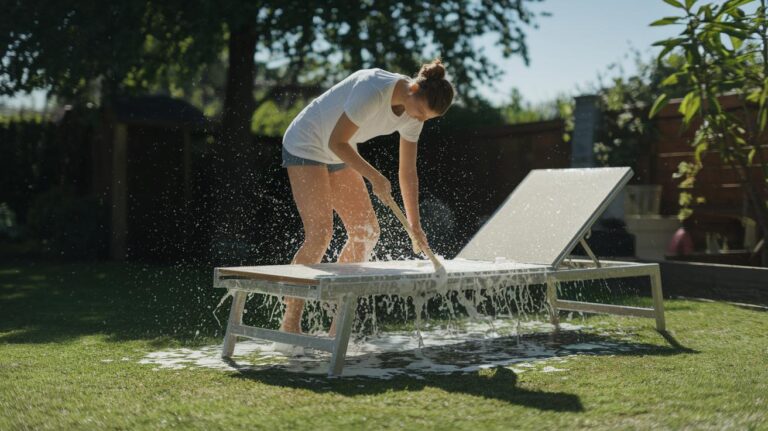
How To Maintain Wicker Patio Lounge Chairs Effortlessly
Ever think a few raindrops will wreck your weekend lounge on the porch? You know, I used to worry the same way. But hold onto that cushion for a bit. With a little care, your wicker can feel as good as new.
Start by brushing off loose dirt and old bits. A soft brush or cloth will do. Then give it a wipe down with vinegar (the tart kitchen staple) mixed in water. It smells strong at first, but you’ll love how it brightens faded fibers.
Next seal it with a coat of linseed oil (a plant oil that locks out water). You can almost feel the smooth, sturdy strands under your palm. Oops I spilled a bit on the wood floor just now. Just wipe it up.
Patch any loose bits with waterproof glue (the kind that keeps rain out). Let it dry in the warm breeze. By the way, my cat tried to test the fix and ended up napping there all afternoon.
Then stash your chair in a dry corner when winter hits. A simple cover and a bin for cushions keeps out snow and drafts. You’ll avoid mold and creaks all winter.
Quick-Start Maintenance Overview
Keeping your wicker lounge chairs happy is easier than you think. Just follow these simple chores, cleaning, protecting, fixing, and tucking them away, to stay comfy and mold-free all year long.
-
Routine Dusting & Washing
Grab a soft brush and whisk away loose dirt. Then mix a bit of mild soap with warm water and wipe each strand. You’ll feel the grime lift right off. -
Annual Sealant & UV Protection
Once a year, spread a thin coat of varnish (clear protective finish) or natural oil over the fibers. This locks out moisture and sun damage so your wicker stays strong. -
Basic DIY Repairs & Mildew Treatment
Got loose strands? A dab of wood glue holds them down. For mildew (that fuzzy fungus), spray equal parts white vinegar and water, let it sit, then wipe clean. -
Seasonal Storage & Checkup
Before cold or rainy months, cover your chairs or move them inside. Peek at every joint for cracks or wear so you can catch problems early.
Step-by-Step Cleaning for Outdoor Wicker Lounge Chairs
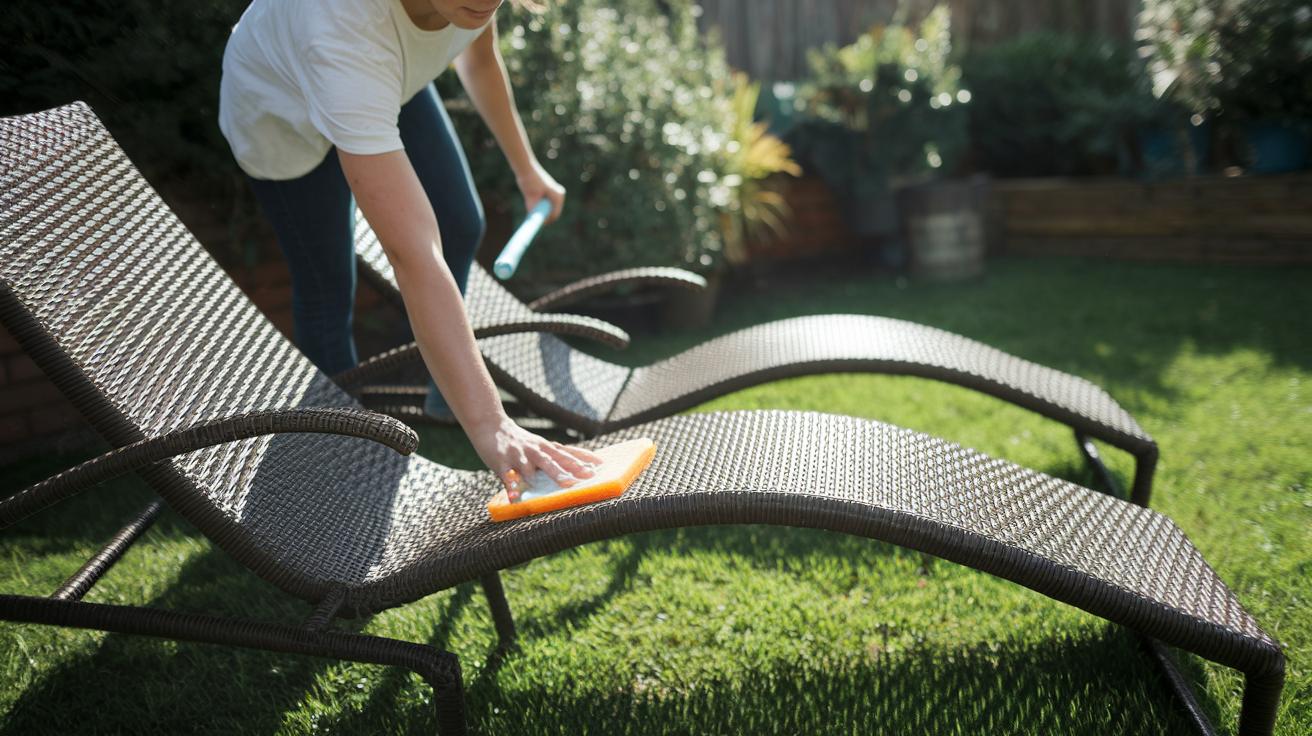
Ever spot tiny bits of dirt hiding in those wicker cracks? First, vacuum the crevices with a soft-bristle brush or a vacuum attachment (that’s the tool that clips onto your vacuum). Natural wicker traps grit in little gaps, so take your time. And if you’ve got resin wicker (weatherproof synthetic wicker), you can scrub a bit more, just skip anything too rough that might scratch the finish. A quick mist from a spray bottle before you dive in helps lift stubborn dust so you don’t turn dry grit into muddy streaks.
- Mix a mild soap solution: a few drops of gentle dish soap in warm water.
- Dip a soft sponge or microfiber cloth (lint-free towel) into the suds. Gently scrub each strand of wicker.
- Rinse with a damp cloth or a low-pressure garden hose, don’t grab a power washer.
- Pat every weave dry with clean towels to soak up extra water. Oops, I once let a puddle sit too long, good thing towels save the day.
- Move your chairs into the shade. Let them air-dry completely before you add cushions or covers.
Tools like a spray bottle let you spot-treat grimy bits, while lint-free cloths stop stray fibers from sticking to damp wicker.
By the way, if you want tips on caring for other woven items, check out how to clean and maintain a backyard hammock. This simple routine keeps fibers strong without wearing away the weave.
Applying Protective Finishes to Shield Wicker Patio Lounge Chairs
Make sure your wicker chairs are clean and bone-dry. Wipe them down with a damp cloth or a little gentle soap, then let them air-dry in the shade. By the way, I once tried sealing damp wicker and it was a total flop.
Grab fine sandpaper and smooth out any rough bits. You’ll feel the fuzzy spots melt away under your fingers. Smooth surface = easy sealant glide.
Now pick an outdoor varnish (a clear coat that blocks water) or a clear sealant made for wicker. These weatherproof goodies keep rain and sun from sneaking in.
Take a small paintbrush and spread a thin layer over every strand. And get into those tight weaves and ends. Yes! Every nook counts.
Let your finish set for 24 to 48 hours in a dust-free shady spot. Patience is key. Oops, I once rushed this and saw little flakes peel off.
For a natural option, rub in boiled linseed oil or tung oil (plant-based oils that nourish fibers) once a year. They feed the wicker and boost sun protection.
Do you live where it pours? After your sealant cures, give your chairs a light mist with water-repellent spray. It’s like giving them an extra raincoat.
Spring and fall are perfect for touch-ups. A quick coat or two keeps your wicker smooth and ready for sun or storms.
Quick DIY Repairs for Wicker Patio Lounge Chairs
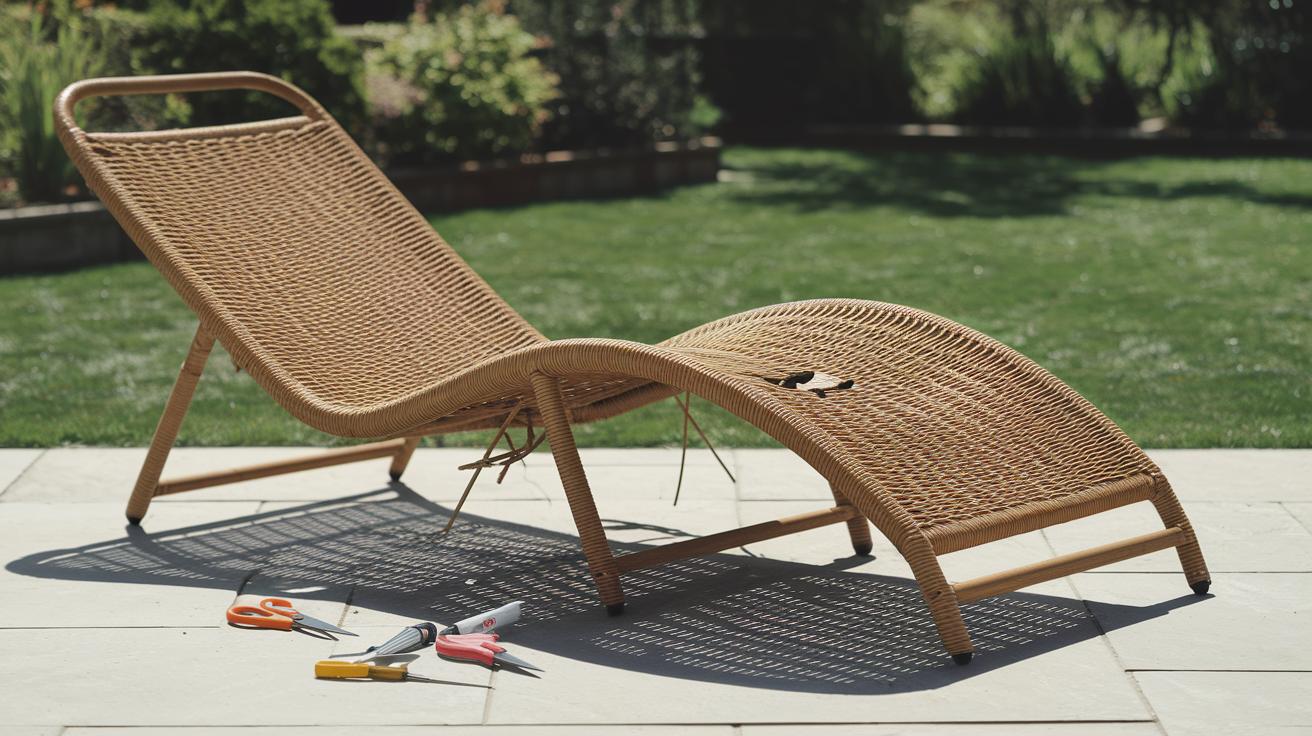
Got a broken wicker strand on your patio lounge? No worries, you can fix it with just a few tools. First, tuck a fresh wicker strand (woven plant fibers) into the old pattern. Feel it slide into place. Then add a drop of wood glue (strong bonding agent) or epoxy resin (tough plastic glue) where the fibers overlap. Press the end under a nearby tine and hold it there for about a minute until it grabs. Oops, I once spilled a bit of glue on the deck.
And if your wicker feels loose, here’s an easy trick. Gently pull the slack strands back in line, you know? Then run a thin bead of glue under the next row. Once it’s set, snip off any extra. Looks good as new.
Stains and mildew love to sneak into those little crevices. Mix baking soda and water into a paste and use a soft brush to scrub the spots. Rinse well with a spray of water. Ever smelled that vinegar fizz? For fuzzy mildew, spritz a 1:1 mix of white vinegar and water, let it bubble for a few minutes, then wipe clean and let the chair air-dry in the sun.
Quick tip – always test your glue or cleaner on a hidden spot first so you know it won’t change the color or feel. Back to sipping iced tea on my freshly repaired chair… ah!
Seasonal Maintenance Checklist for Wicker Patio Lounge Chairs
Here’s a cozy guide to help you keep your wicker chairs in tip-top shape all year – short and sweet.
| Season | Friendly To-Dos | Where to Learn More |
|---|---|---|
| Spring | Give them a good scrub (deep-clean) and check for broken weaves or loose strands | Step-by-Step Cleaning; Repairs |
| Summer | Dust off weekly and reapply UV protectant (a clear coat that shields from sun damage) | Protective Finishes |
| Fall | Brush on water-repellent (a finish that keeps rain from soaking in) and stash cushions inside | Seasonal Storage & Checkup |
| Winter | Make sure they’re fully dry and move indoors or cover with a breathable tarp | Seasonal Storage & Checkup |
Don’t skip sealing your chairs twice a year (applying a protective finish) – once in early spring and again in late fall. See the Varnish & Oil Application Guide for all the details.
Smart Storage and Covering Strategies for Wicker Patio Lounge Chairs
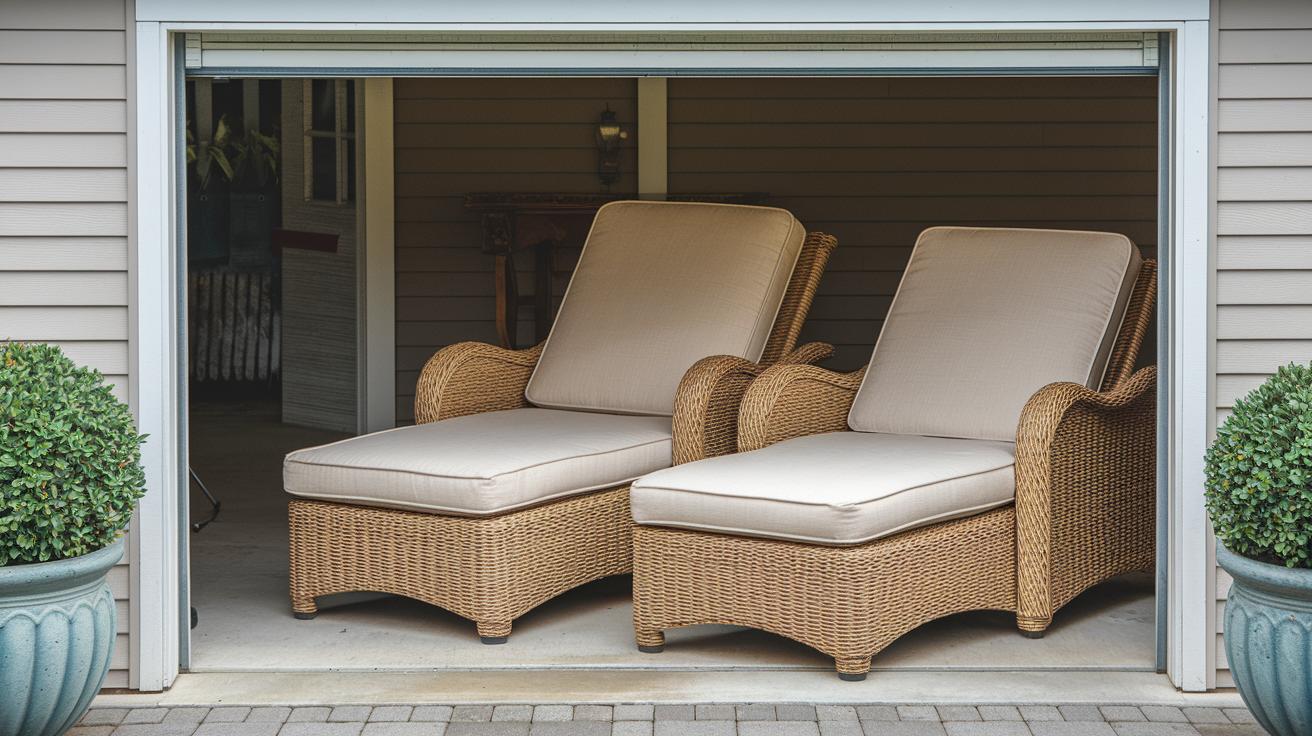
If you know you won’t be lounging on your wicker chairs for a few weeks, slide them into a dry garage or spare room. Storing wicker furniture indoors keeps damp air and critters away. By the way, I once left a chair in a damp shed and woke up to tiny green spots. Yuck.
No indoor space? No problem. Grab a breathable, fitted cover with tie-down straps. It blocks rain but still lets air flow so mold can’t sneak in. Just slip the straps under the legs and pull snug. No flapping plastic in the wind.
Want to save even more room? Pull off the cushions, lift off any removable legs, and unhook armrests if you can. Stack legs neatly in a corner and tuck the chair frames behind them. Instant space saver!
Keep your chairs off cold, wet ground by setting them on pallets or wooden slats. A little airflow under each leg means no puddles gathering at the base. Moisture hates moving air, your wicker will stay crisp and ready for summer afternoons.
Always clean and dry completely before covering lounge chairs. Covering damp wicker traps moisture and invites mildew and that musty smell. Let them bask in the sun or hang out in the shade until they’re bone dry, then slip on your cover and relax.
Essential Tools and Eco-Friendly Products for Maintaining Wicker Patio Lounge Chairs
Here’s your eco-friendly cleaning kit.
| Item | Eco-Friendly Option |
|---|---|
| Soft-bristle brush | Plant-based bristles |
| Vacuum attachment | Reusable filter bag |
| Microfiber cloth | Oeko-Tex certified |
| Spray bottle | Glass refillable |
| Small paintbrush | Bamboo handle |
| Biodegradable dish soap | Enzyme-based formula |
| White vinegar | Distilled |
| Non-toxic wood glue / clear epoxy | Solvent-free |
| Linseed or tung oil | Cold-pressed, unrefined |
The soft-bristle brush (plant-based fibers) helps you sweep out dust from every nook. You can feel the gentle bristles gliding over the wicker. The vacuum attachment (a tool for tight spots) pulls up crumbs and pollen. And the reusable filter bag means no more single-use trash.
Grab an Oeko-Tex certified microfiber cloth (a soft cleaning cloth that traps dust). Use a glass refillable spray bottle for your homemade soap mix. I like mixing a few drops of enzyme-based dish soap with distilled vinegar. By the way, I once spilled my mix on the deck while cleaning, and it washed right off.
Keep a small paintbrush with a bamboo handle handy to get into those tight weaves. If a seam comes loose, reach for non-toxic wood glue (solvent-free) or clear epoxy to bond the fibers. Then seal it in with cold-pressed linseed or tung oil (unrefined) to bring back that warm glow.
Curious about brush strokes and soap blends? See Step-by-Step Cleaning. Need tips on oiling finishes? Check Protective Finishes. Ready to fix a loose strand or do a quick sealant touch-up? Head to Quick DIY Repairs.
Final Words
In the action, you jumped into four key steps, from dusting and washing to sealants, quick fixes, and seasonal storage. Each section walked you through tools, cleaning mixes, protective finishes, and easy strand repairs.
These straightforward tips help you keep wicker fibers strong, tackle mildew spots, and stash your chairs safely with breathable covers and pallets.
Stick with this plan. You’ll see how simple it is to care for your outdoor lounge seats and learn how to maintain wicker patio lounge chairs for years of cozy backyard hangs.
FAQ
How often should I clean and maintain my wicker patio lounge chairs?
Cleaning and maintaining your wicker patio lounge chairs means dusting weekly, giving them a gentle wash every 1–3 months, applying sealant twice a year, and inspecting for damage each season.
What are the main steps for cleaning outdoor wicker lounge chairs?
Use a soft brush or vacuum to remove loose dirt, scrub with a mild soap solution and sponge, rinse gently with low-pressure water, then towel and air-dry fully in the shade.
How do I apply protective finishes to shield wicker patio lounge chairs?
Brush on an outdoor-grade sealant or clear varnish, let it cure in the shade for 24–48 hours, then rub in natural oils or use a water-repellent spray once a year.
How can I make quick DIY repairs for wicker patio lounge chairs?
Tuck in new wicker strands with glue for broken areas, tighten loose weaving by pulling fibers and gluing the ends, then treat stains or mildew with a baking soda paste or vinegar spray.
What seasonal maintenance should I perform on wicker patio lounge chairs?
Deep clean and reseal in spring; dust weekly and touch up UV finishes in summer; apply water-repellent sprays in fall; clean, dry, and store indoors or cover with breathable covers in winter.
How should I store and cover wicker patio lounge chairs?
Store indoors or in a dry garage, or use fitted breathable covers outdoors. Ensure chairs are cleaned, fully dry, and elevated on pallets or slats to prevent moisture buildup.
What tools and eco-friendly products do I need for wicker lounge chair maintenance?
You’ll need a soft-bristle brush, vacuum attachment, microfiber cloths, spray bottle, small paintbrush, biodegradable soaps or vinegar solution, non-toxic glue or epoxy, and natural oils like linseed or tung oil.