Container Garden Design Ideas for Small Spaces
My first garden wasn’t a garden at all — it was nine pots on a rented balcony that measured six feet by eight. I grew basil that perfumed the whole railing, cherry tomatoes that ripened two at a time, and a trailing rosemary that softened the ugly metal balustrade by July. A small balcony, concrete nook, or narrow patio has more growing potential than most people give it credit for. The trick is treating container garden design for small spaces as a real design decision: where the pots sit, what they’re made of, and how you layer heights decides whether a tight space feels productive or just cluttered.
Below are the layout templates I reach for first, how to match containers to plants (and which ones are worth buying), the plant combinations that earn their spot, vertical solutions for when the floor runs out, and a watering routine that keeps everything alive through August.
As an Amazon Associate, Backyard Superstar earns from qualifying purchases at no extra cost to you.
Five Layout Templates for Compact Outdoor Spaces
Before you buy a single pot, spend one sunny morning watching your space. Note where the light lands at 9 a.m. and where the shade settles by 3. Measure the length and width, and mark anything fixed — the door swing, the railing posts, the spigot. That little map ends up guiding every container and plant decision you make, because in a small space there’s nowhere to hide a mistake.
Five layouts work in almost any small footprint:
- Corner cluster — pots of three different heights gathered into one corner. The layered look reads lush without blocking the walkway.
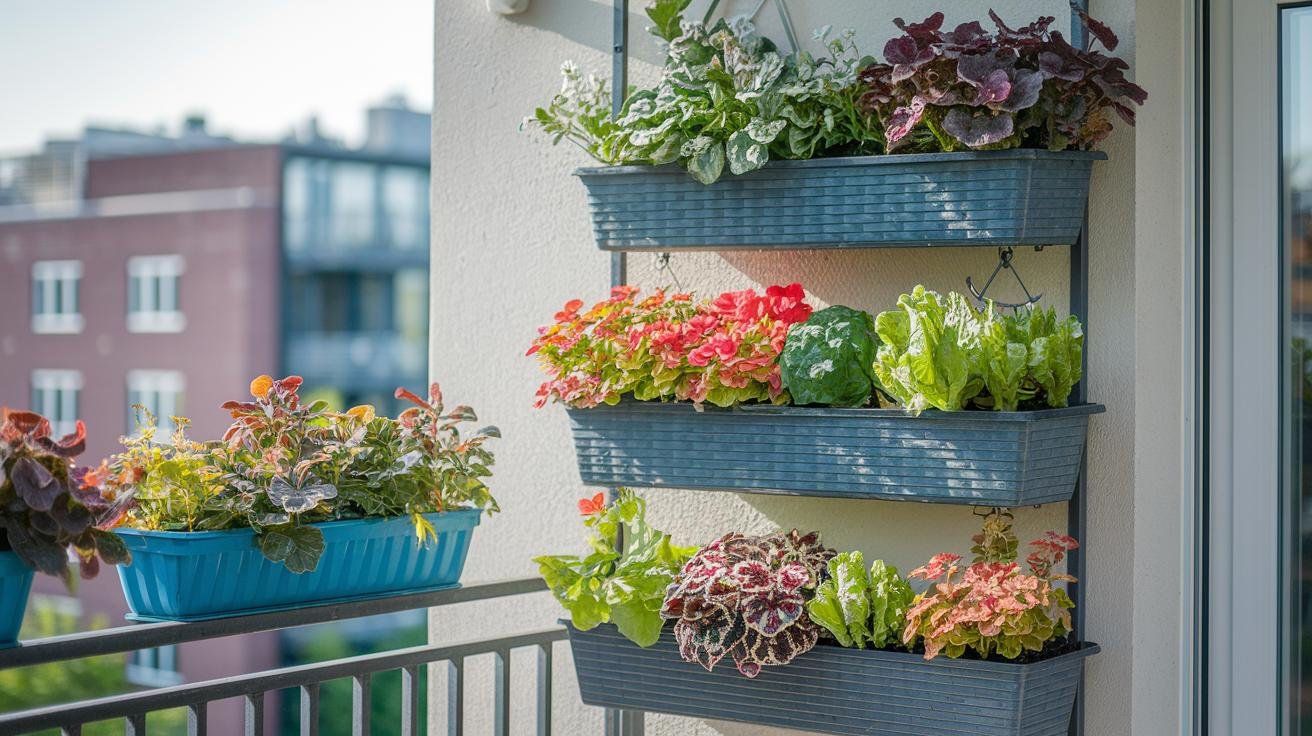
- Rail planters — slim boxes clipped over the balcony railing, perfect for herbs and strawberries you want at arm’s reach.
- Patio grid — containers in tidy rows across the paving. Watering becomes a predictable two-minute loop.
- Windowsill shelf — a narrow shelf under a window for small pots of microgreens or succulents, using zero floor space.
- Layered zone — floor pots plus a tiered stand or wall hooks, adding growing room straight up instead of outward.
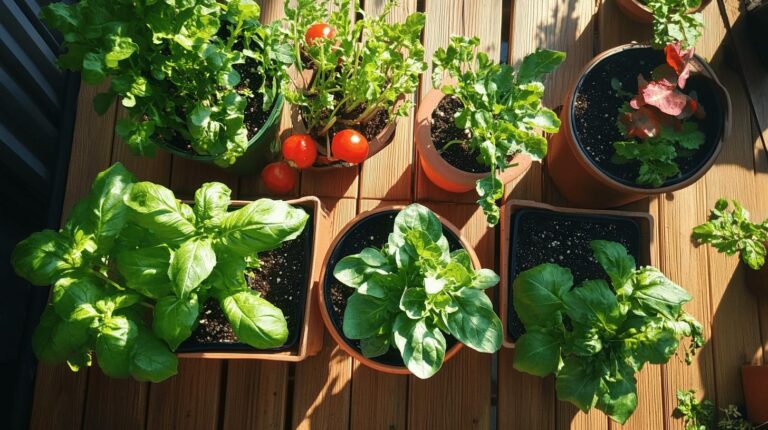
On my own balcony I run a corner cluster by the door and rail planters along the far side, because that’s where the morning sun lingers longest. Sun lovers — cherry tomatoes, basil, peppers — take the bright corner; thyme and lettuce tuck happily into the lower, shadier tiers. Group plants by light and water needs like this and daily care turns into a quick walkthrough instead of a puzzle.
Choosing Containers That Earn Their Space
Container choice affects portability, root health, and how often you’ll be out there with the watering can. For most small-space setups, pots in the 1-to-5-gallon range hit the sweet spot: enough root room for productive plants, light enough to chase the sun when the seasons shift.
| Container Type | Capacity (gal) | Cost Tier | Best For |
|---|---|---|---|
| Rail planter | 1–3 | $ | Herbs, strawberries, lettuce at railing height |
| Self-watering pot | 1–4 | $ | Basil, spinach, thirsty plants on hot exposures |
| Fabric grow bag | 1–5 | $ | Tomatoes, peppers, carrots — air-pruned roots |
| Stackable tower | multi-pocket | $$ | Herbs, greens, strawberries when floor space is gone |
| Wooden crate (DIY) | 3–5 | $ | Microgreens, lettuce, budget builds |
For railings, I’ve had the best luck with the Bloem 24-inch deck rail planter ($) — it straddles a standard rail without brackets, so there’s nothing to drill and nothing to rust. The catch with any rail box is shallow soil that dries fast, which is why herbs and strawberries do better up there than anything deep-rooted.
If you travel, or your balcony bakes in afternoon sun, a self-watering pot buys you real forgiveness. The HBServices 8-inch self-watering planter ($) holds a deep reservoir under the root zone, so basil and spinach sip steadily between refills instead of wilting on day two. And for tomatoes and peppers, skip rigid pots entirely: VIVOSUN 5-gallon fabric grow bags ($, five to a pack) air-prune roots so they branch instead of circling, and the handles make end-of-season cleanup genuinely easy. If tomatoes are your main crop, the same depth-and-support logic from my tomatoes in raised beds guide applies to deep containers, too.
Picking Plants That Suit the Light You Actually Have
Think in three plant forms: trailing, upright, and bushy. Trailing petunias and cascading rosemary spill over pot edges and soften all that hard paving. Upright growers — basil, rosemary kept clipped — stand tall in narrow pots without elbowing the neighbors. Bushy thyme forms low mounds that fill the gaps in between. Mix all three forms and even a half-dozen pots read as a designed garden rather than a collection.
Then be honest about your light. Six or more hours of direct sun means cherry tomatoes, dwarf peppers, and most culinary herbs are on the table. Half-shaded corners suit lettuce, spinach, and begonias — which is not a consolation prize; tender greens actually hold their sweetness longer out of scorching sun. Morning-light-only balconies grow lovely parsley and spinach. For a fuller plant list matched to balcony conditions, my guide to the best container plants for urban balconies breaks choices down by exposure.
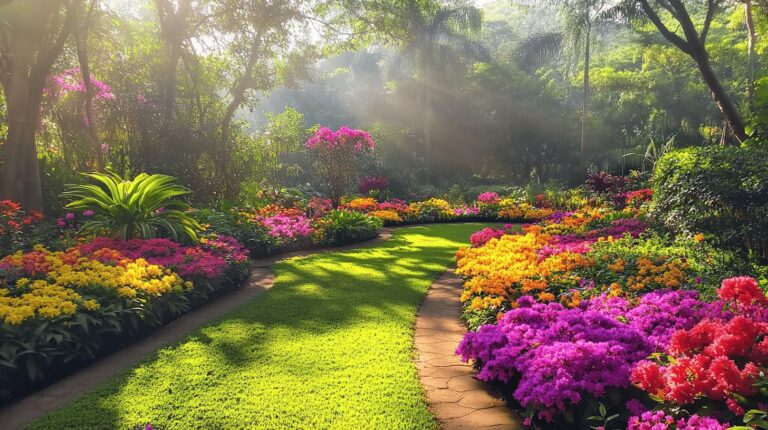
Color and texture do the rest. Deep-green basil against silvery dusty miller, pink petunias tumbling over a charcoal pot, feathery thyme beside glossy lettuce — pairings like these give a small container garden the layered richness of a border ten times its size.
Vertical, Hanging, and Tiered Solutions When the Floor Runs Out
When the floor is full, grow up. Vertical growing also happens to match how light behaves on most balconies — brighter up high, shadier down low — so sun lovers ride the top tiers and shade-tolerant greens settle underneath.
A stacking tower is the fastest way to multiply planting pockets on one square foot of floor. The Amazing Creation 5-tier stackable planter ($$) holds up to fifteen plants in a tower, and water poured into the top tier trickles down through each level, which spares you watering fifteen pots individually. Mine holds strawberries up top and lettuce below, and it has survived two windy springs unbothered.
Wall-mounted planters belong on brackets anchored into studs or masonry — a fully watered pot is heavier than it looks, and a failed fastener takes the plants down with it. Space tiered shelving 12 to 18 inches between levels so upper plants don’t shade out the lower ones, and always park the heaviest pots on the bottom shelf. Rail hooks and coco-liner baskets handle the in-between spots; leave eight inches of clearance beneath each basket so trailing stems can spill without dragging.
Fabric pocket planters slip over a fence or railing and suit fast growers like microgreens and strawberries, though they drain quickly and want a moisture check every hot day. If you find yourself drawn to a full wall of herbs, a purpose-built kit saves a lot of trial and error — I compared my favorites in the vertical herb garden kits guide.
Watering and Feeding a Garden That Lives in Pots
Containers dry out faster than any garden bed — there’s no deep soil reservoir to fall back on, and terra cotta in July is practically a wick. The two-minute daily check is the habit that saves everything: press a finger an inch into the soil, water if it’s dry at the fingertip, wait if it’s damp. Group thirsty plants together so you can water them as a unit without drowning the drought-tolerant ones next door.
What goes in the pot matters as much as the watering. I fill containers with FoxFarm Ocean Forest potting soil ($$) — it’s light and airy so roots breathe, and the earthworm castings and fish meal feed plants for the first stretch of the season without synthetic fertilizer. Whatever mix you choose, never scoop garden dirt into a pot; it compacts into concrete after a few waterings. I’ve covered what actually belongs in the pot in my container soil mix guide.
If daily watering is the thing that kills your gardens — no shame, August is relentless — automate it. The Raindrip R560DP drip watering kit ($$) runs a timer and twenty drippers off an ordinary spigot, waters on schedule while you’re at work or away for a weekend, and installs in about twenty minutes without tools. Drip lines pair especially well with vertical setups, where the top tiers dry first; my vertical garden irrigation comparison goes deeper on those options.
Feed containers every four to six weeks with a balanced liquid fertilizer, because regular watering steadily flushes nutrients out the drainage holes. Snip leggy herb shoots and spent leaves as you go — pruning is a thirty-second habit, not a weekend chore — and check under leaves for aphids while you’re there. A hard spray of water clears small colonies; neem oil handles the stubborn ones. In heat waves, water in the morning and slide pots into afternoon shade if leaves start curling. When autumn nights turn cool, huddle containers against the house wall for a few borrowed degrees.
Budget-Friendly DIY Planters Worth Building
Some of the most charming container gardens I’ve seen were built from things that cost next to nothing. A sturdy wooden crate from the grocery store becomes a planter with a plastic liner cut to fit and a coat of exterior paint — deep enough for lettuce, herbs, or even a dwarf tomato. Eight clean tin cans with drainage holes drilled in the bottoms, nailed to a plank in two neat rows, make a compact herb wall for a fence or exterior wall; plant one herb per can and you’ve got thyme, basil, and mint at eye level for pocket change.
My favorite is the pallet trough: three strong slats pried from a pallet, short side pieces nailed on the ends, landscape fabric stapled inside to hold soil while letting water drain. It sits neatly along a railing or ledge and grows lettuce and strawberries beautifully. None of these builds takes more than an afternoon, and all three cost less than a single ceramic pot from the garden center — just be sure whatever you fill them with is a proper potting mix, not bagged topsoil.
Recommended gear for this project
As an Amazon Associate, Backyard Superstar earns from qualifying purchases at no extra cost to you.
- Top pick — Amazing Creation 5-tier stackable planter ($$). Fifteen planting pockets on one square foot, with top-down trickle watering.
- Budget pick — Bloem 24-inch deck rail planter ($). Straddles a standard railing with no brackets or drilling.
- Set-and-forget watering — Raindrip R560DP drip kit with timer ($$). Waters up to 20 containers on a schedule; 20-minute, no-tools install.
- For thirsty plants — HBServices 8-inch self-watering planter ($). Deep reservoir keeps basil and spinach evenly moist between refills.
- For tomatoes & peppers — VIVOSUN 5-gallon grow bags, 5-pack ($). Fabric sides air-prune roots for healthier, non-circling growth.
- Fill them right — FoxFarm Ocean Forest potting soil ($$). Light, aerated mix with earthworm castings that feeds containers early in the season.
Frequently Asked Questions About Small-Space Container Gardening
What are the best layout ideas for a small-space container garden?
Five layouts cover most small spaces: a corner cluster of pots at varied heights, rail planters clipped to the balcony railing, a patio grid of containers in tidy rows, a windowsill shelf for small pots, and a layered zone that combines floor pots with a tiered stand or wall hooks. Start from a simple sun map of your space and assign sun lovers to the brightest zone.
What size containers work best in small spaces?
Pots holding one to five gallons suit most balcony and patio plants — enough root room to be productive, light enough to move. Match depth to the plant: shallow rail boxes for herbs and strawberries, deeper five-gallon pots or fabric grow bags for tomatoes and peppers.
Which plants work well in containers on balconies?
In six or more hours of sun: cherry tomatoes, dwarf peppers, basil, rosemary, and thyme. In partial shade: lettuce, spinach, parsley, and begonias. Add trailing plants like petunias or cascading rosemary at pot edges, and mix trailing, upright, and bushy forms for a fuller look.
How do self-watering planters help in a small garden?
A self-watering planter holds a water reservoir below the root zone, so soil draws up moisture steadily between refills. That evens out the wet-dry swings that stress thirsty plants like basil and spinach, and it buys forgiveness on hot exposures or during weekends away.
How often should container gardens be watered and fed?
Check moisture daily: press a finger an inch into the soil and water when it feels dry at the fingertip. Most containers need daily water in summer heat. Feed every four to six weeks with a balanced liquid fertilizer, since routine watering gradually flushes nutrients from the pot.
How can I add growing space without using more floor?
Go vertical: a stackable tower multiplies pockets on one square foot, wall planters on stud-anchored brackets hold herbs at eye level, tiered shelving stacks plants 12 to 18 inches apart, and rail hooks or fabric pocket planters use the railing and fence instead of the floor.
What are good budget DIY planter options?
Three afternoon builds: a lined and painted wooden crate for lettuce and herbs, a tin-can herb wall nailed to a plank, and a pallet trough with landscape-fabric lining for a railing or ledge. Fill each with proper potting mix rather than garden soil, and drill drainage holes in anything that lacks them.