5 Grilled Fruit Desserts for Your Charcoal Grill
Fruit on a charcoal grill is one of the few grilling projects where the fire genuinely transforms the ingredient. Heat caramelizes the natural sugars, blistering and concentrating flavor in a way nothing indoors can match, and the smoke off the coals adds a savory edge that lifts dessert from sweet to memorable. The first time I threw peach halves on after pulling chicken off, I mostly did it to use up the coals — and that two-minute experiment has closed out just about every cookout I’ve hosted since. The technique is forgiving, too: fruit grills fast, the timing windows are wide, and small mistakes still produce something you’ll happily eat.
This guide covers five desserts that run off the same fire — honey-cinnamon peaches, brown-sugar Bosc pears, caramelized pineapple rings, rum-mango skewers, and mixed-berry foil packets — plus the charcoal setup, prep technique, and dietary swaps that apply across all of them.
As an Amazon Associate, Backyard Superstar earns from qualifying purchases at no extra cost to you.
Five Grilled Fruit Dessert Recipes
All five recipes use medium-high charcoal heat (400–450°F) and finish in under 10 minutes of cook time. Make one for a casual dessert; make three for a backyard dinner spread that ends on a high note.
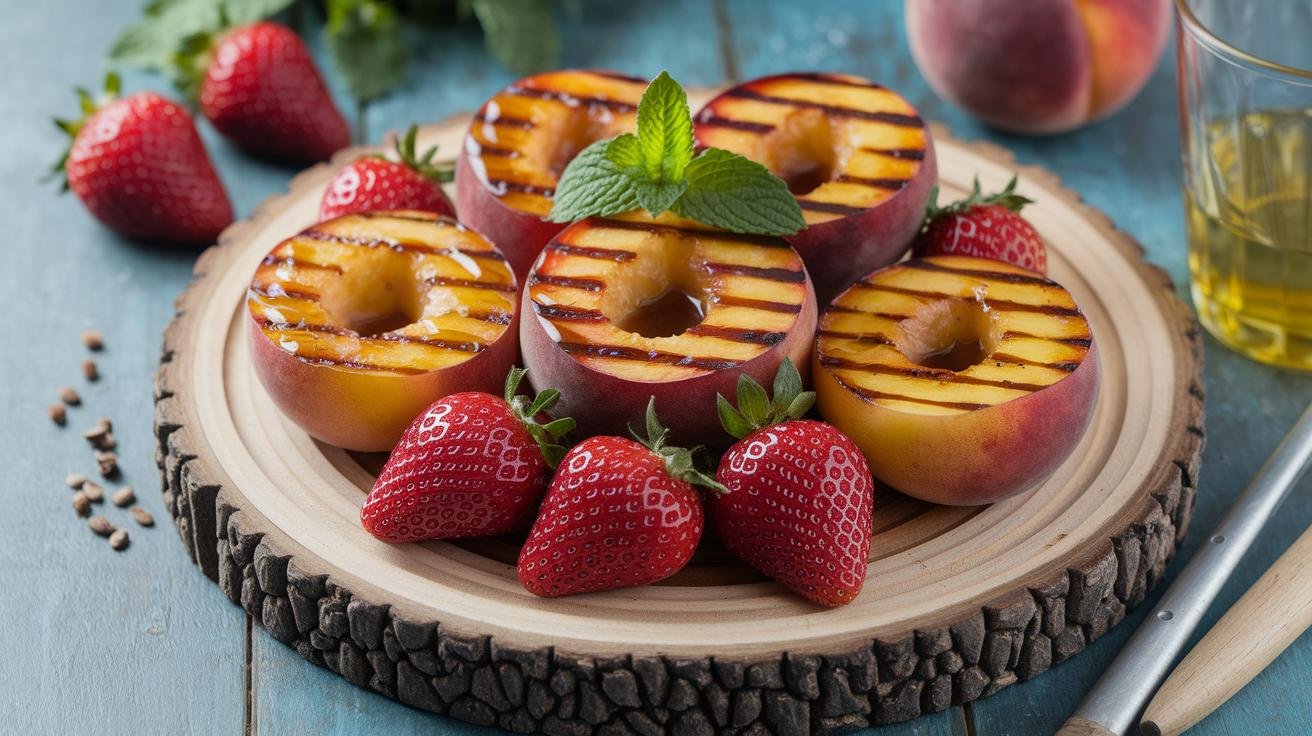
Grilled Peaches with Honey-Cinnamon Glaze
The starter recipe. Ripe peaches caramelize fast and pair with vanilla ice cream like the combination was engineered for it.
Ingredients:
- 2 ripe but firm peaches, halved and pitted
- 2 tablespoons honey
- 1 teaspoon ground cinnamon
- Pinch of kosher salt
- Fresh mint sprigs
- Vanilla ice cream, for serving
Steps:
- Preheat your charcoal grill to 400–450°F.
- Whisk honey, cinnamon, and salt in a small bowl.
- Brush half the glaze onto the cut sides of the peach halves.
- Grill cut-side down for 3 to 5 minutes until char marks appear.
- Flip, brush with remaining glaze, and grill 2 more minutes.
- Serve warm with vanilla ice cream and a mint sprig.
For more on the peach-specific technique — picking ripeness, avoiding the mush trap — see my standalone guide on how to grill peaches on a charcoal grill.
Grilled Bosc Pears with Brown Sugar
Pears caramelize even better than peaches because their lower water content concentrates the sugars faster. Bosc is the variety — it holds shape under heat where Bartletts go to mush. I learned that one the messy way.
Ingredients:
- 2 Bosc pears, halved and cored
- 3 tablespoons brown sugar
- 1/2 teaspoon vanilla extract
- 1 tablespoon melted butter
- Pinch of cinnamon
- Whipped cream, for serving
Steps:
- Preheat grill to 400–450°F.
- Stir brown sugar, vanilla, butter, and cinnamon together.
- Brush the cut side of each pear half with the mixture.
- Grill cut-side down for 4 minutes until golden brown.
- Flip, brush again, and grill 3 more minutes.
- Serve warm with whipped cream.
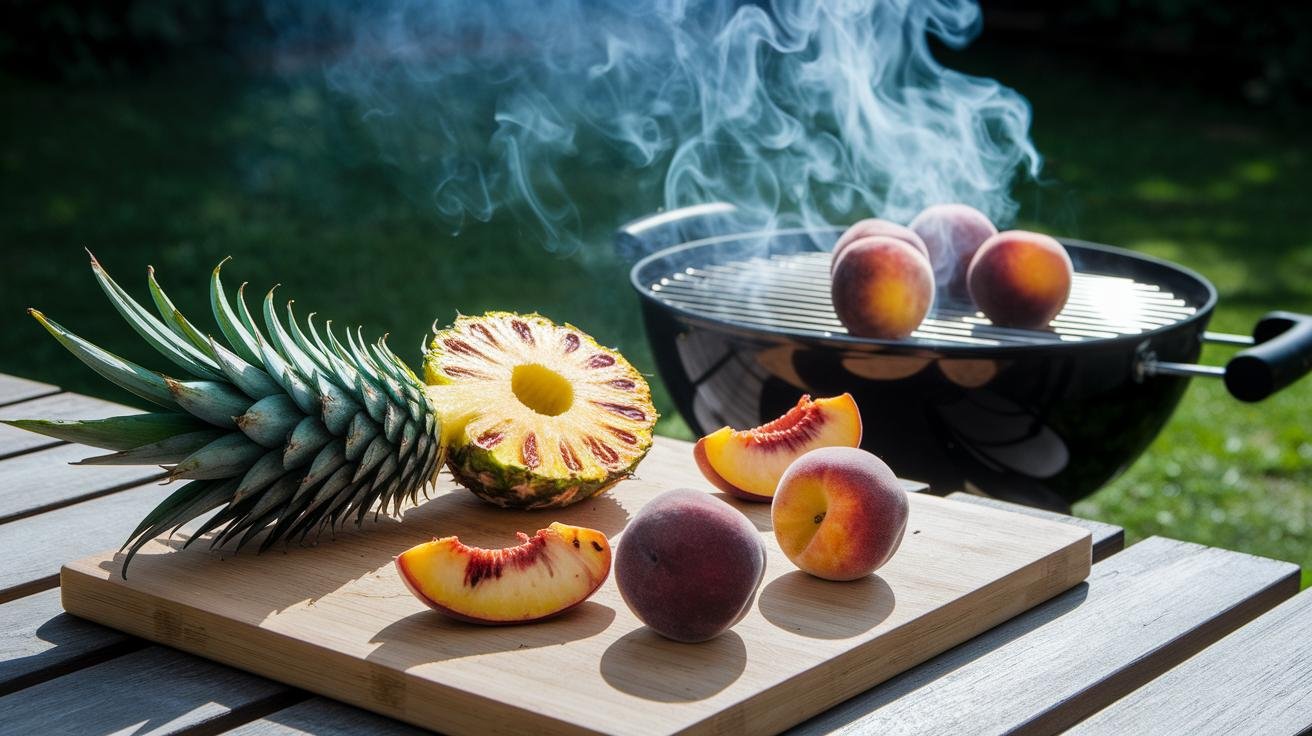
Caramelized Pineapple Rings with Lime
The flashiest of the five. Brown sugar melts onto the pineapple’s surface and creates a thin glassy crust. Lime zest cuts the sweetness so it doesn’t tip into cloying.
Ingredients:
- 1 fresh pineapple, peeled and sliced into 1/2-inch rings
- 3 tablespoons brown sugar
- 1 teaspoon lime zest
- Pinch of salt
- Toasted coconut flakes, for serving (optional)
Steps:
- Heat grill to medium-high (400–450°F).
- Stir brown sugar, lime zest, and salt in a small bowl.
- Press the sugar mixture firmly onto both sides of each pineapple ring.
- Grill 3 minutes per side until the sugar melts and the rings have visible char marks.
- Top with coconut flakes if using.
Mango Rum Skewers
The adults-only option. Rum and lime soak into mango cubes; the alcohol mostly burns off on the grill, leaving behind concentrated flavor. Soaked bamboo skewers work fine, but after burning through a few batches I switched to flat stainless skewers like the FLAFSTER Kitchen 16-inch kabob skewers ($$) — the flat blade stops mango cubes from spinning when you flip, and you never have to remember the 30-minute soak again.
Ingredients:
- 2 mangoes, peeled and cubed (about 1-inch pieces)
- 2 tablespoons dark rum
- 1 tablespoon fresh lime juice
- 1 tablespoon honey
- 6 wooden skewers soaked 30 minutes, or reusable metal skewers
Steps:
- Whisk rum, lime juice, and honey in a bowl.
- Toss mango cubes in the marinade and let sit 15 minutes.
- Thread mango onto the skewers.
- Grill 3 to 4 minutes per side over medium-high heat.
- Drizzle any leftover marinade over the cooked skewers.
Mixed-Berry Foil Packets
The easiest recipe. Foil packets steam the berries into something between a fresh fruit dish and a warm jam — ideal over yogurt or pound cake.
Ingredients:
- 1 cup strawberries, quartered
- 1 cup blueberries
- 1 cup raspberries
- 1 tablespoon granulated sugar
- 1 teaspoon lemon zest
- Fresh basil leaves (optional)
Steps:
- Preheat grill to 400–450°F.
- Toss all berries with sugar and lemon zest in a bowl.
- Divide between two large foil sheets and fold each into a tightly sealed packet.
- Place packets over indirect heat (cooler side of the grill) and cook 5 to 7 minutes.
- Open carefully (steam!) and spoon the juices back over the berries.
- Serve in bowls with torn basil leaves if you have them.
Preparing the Charcoal Grill for Fruit

Fruit grills faster and hotter than most other projects — but it also burns to charcoal much more quickly if you push the heat too far. The setup needs to support both, and here’s why the details matter more than they do for a rack of burgers: sugar starts scorching around the same temperature good caramelization happens, so your margin for error is thin.
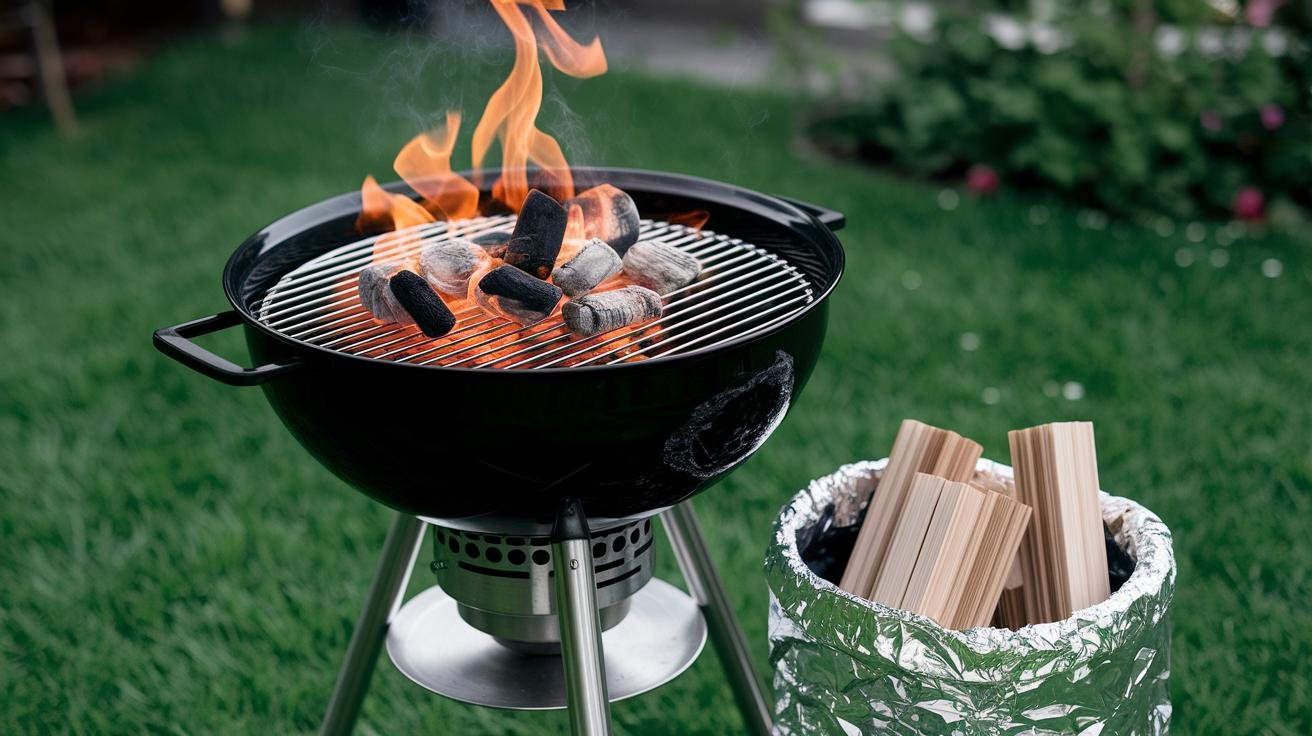
Two-zone fire setup. Pile glowing coals on one side of the grill for direct high heat, and leave the other side empty for indirect heat — that’s where you finish cooking or rescue items from flare-ups. I light mine in a Weber Rapidfire chimney starter ($$) because it gets a full load of briquettes ash-covered in about 15 minutes with no lighter fluid, which matters for dessert — fluid taste that hides under barbecue sauce sits right on top of a honey-glazed peach. This is the same setup that works for corn, shrimp, or vegetable skewers, meaning you can run a full backyard menu off a single fire.
Preheat 10 to 15 minutes. The coals are ready when they glow red-orange under a coat of light gray ash; if they’re still mostly black, they’re not hot enough. The grate should hit 400–450°F. Without a grill thermometer, hold your palm 5 inches above the grate — 3 to 4 seconds of comfortable heat is the right zone. For finished fruit I go by feel, but an instant-read like the TempPro TP19H ($, sold as ThermoPro until the rebrand) earns its spot in my apron for the mains sharing the same fire.
Optional smoke layer. Soak a handful of apple or cherry wood chips — I keep a bag of Weber apple wood chips ($) on the shelf for exactly this — in water for 30 minutes, wrap them in a foil pouch with a few small holes, and tuck the pouch into the coals. The sweet smoke pairs especially well with peaches and pineapple. Mesquite is too aggressive for fruit; stick to fruit-wood smoke.
Clean grates matter more than usual. Bits of meat or barbecue sauce stuck to the grate transfer onto fruit immediately and ruin the flavor. Scrub with a wire brush after heat-up, then oil the grates with a folded paper towel dipped in vegetable oil.
Cutting and Marinating Technique
Two prep details make the difference between great grilled fruit and disappointing grilled fruit.
Slice thickness. Cut fruit into roughly half-inch pieces. Thinner than that and the centers cook before the outside chars; thicker and you end up with a beautiful exterior over a cold raw interior. Peaches and pears halve cleanly, pineapple cuts into half-inch rings, and mango goes into 1-inch chunks because it cooks faster than the firmer fruits.
Match cuts within a batch. If you’re grilling several types together, keep them roughly the same size so they finish in the same window. A pineapple ring next to mango cubes works because both are about the same thickness; a pineapple ring next to a paper-thin apple slice doesn’t.
Marinade timing for fruit. Unlike meat, fruit needs short marinades — 15 to 20 minutes is the sweet spot. Past that, salt and sugar pull water out of the fruit through osmosis, and you get watery, mushy results. Two marinade structures work reliably:
- Acid-and-sweetener: agave or honey plus lime or lemon juice, with a pinch of salt. Tenderizes lightly and amplifies natural fruit flavor.
- Spirit-and-sugar: bourbon, rum, or brandy with brown sugar and vanilla. Brings warmth and slight caramelization; alcohol burns off on the grill.
Drain marinated fruit on a paper towel before grilling. Excess liquid causes the surface to steam instead of caramelize — you want the sugars to dry-cook, not poach.
Glazes, Toppings, and Serving Ideas
The glaze layer is where grilled fruit goes from good to dinner-party worthy. Three reliable glazes:
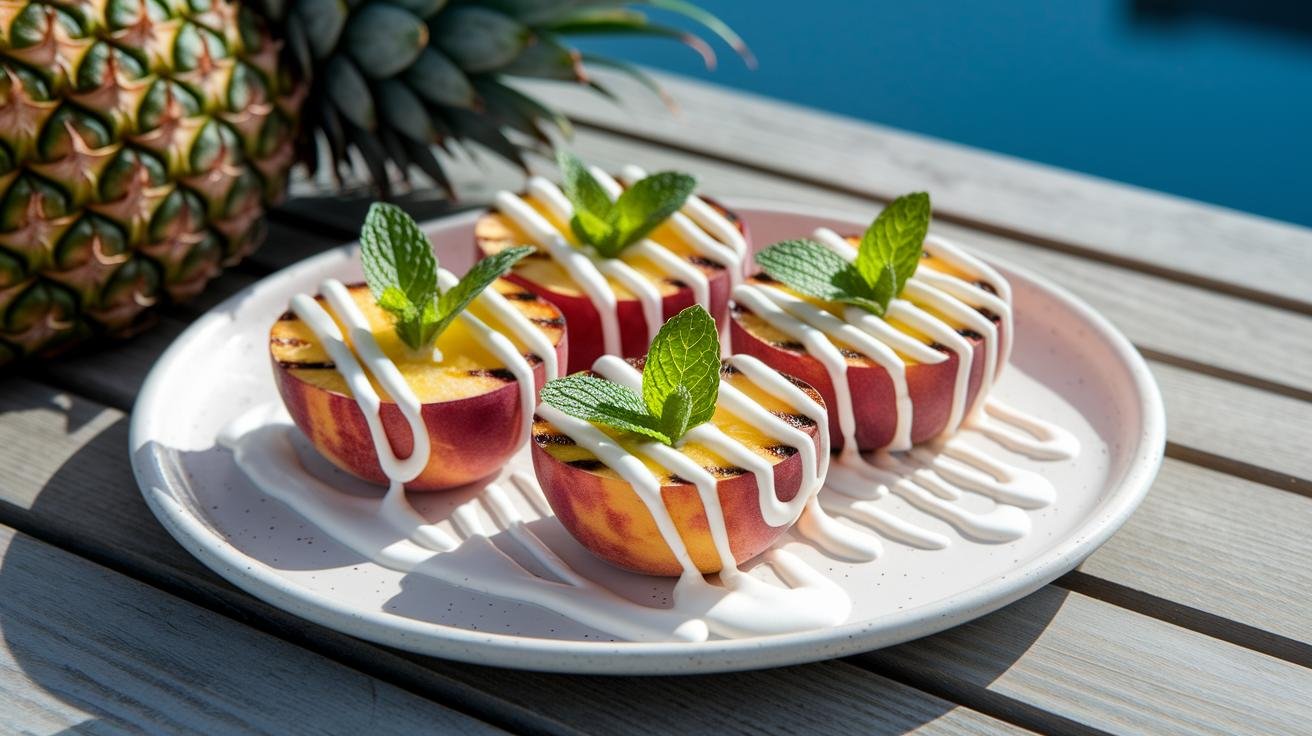
Honey-cinnamon (sweet and warming). 2 tablespoons honey + 1 teaspoon ground cinnamon, whisked smooth. Brush on the last minute of grilling or drizzle after.
Balsamic reduction (tangy and complex). Simmer 1/4 cup balsamic vinegar in a small saucepan over low heat for 5 to 8 minutes until it thickens into a syrup that coats a spoon. The acidity cuts through fruit sweetness and adds depth. Especially good on peaches, strawberries, and pineapple.
Maple-coconut (rich and toasty). 1 tablespoon maple syrup + 2 tablespoons coconut sugar, stirred together. The coconut sugar melts into the warm fruit and adds a subtle nutty caramel layer.
Topping ideas worth keeping on hand:
- Vanilla ice cream — the temperature contrast against warm fruit is the whole point.
- Whipped cream lightly sweetened with vanilla.
- Toasted almond crumble or candied pecans for crunch.
- Fresh mint or basil leaves, torn at the last moment.
- A pinch of flaky sea salt to amplify sweetness.
- Crumbled goat cheese on grilled peaches — savory-sweet pairing that surprises people.
Serve on a single large platter so guests can graze rather than plating individually. Set a small bowl of extra glaze in the center for second helpings.
Caramelization Tips for Smoky-Sweet Results
The goal is a deep golden char on the surface and tender, hot fruit underneath. Five rules get you there:
- Start with firm, ripe fruit. Overripe fruit collapses on the grill before it caramelizes. Underripe fruit takes too long and tastes flat. Squeeze peaches and pears gently — they should yield slightly to pressure but not feel soft.
- Brush with a thin oil layer. A small amount of neutral oil (vegetable or grapeseed) or melted butter on the cut surface helps the sugars caramelize evenly and prevents sticking.
- Don’t move the fruit for the first 2 to 3 minutes. The dark grill lines are flavor. Lift a corner gently at the 2-minute mark to check progress; if it’s still pale, leave it.
- Flip once. Multiple flips break down the fruit’s structure and create mushy spots. Grill marks on both sides come from a single flip at the midpoint.
- Rest 1 to 2 minutes off heat. Sugars stabilize into a soft, jammy bite during the rest. Fruit served straight off the grill is hotter and runnier than it needs to be.
One bonus: a quick sprinkle of cinnamon, sugar, or salt the moment the fruit hits the grate adds another layer of caramelization as those particles bond to the surface under heat.
Dietary Swaps for Allergen-Free Versions

Most of these recipes adapt cleanly to common dietary needs.
Vegan. Swap butter for coconut oil. Replace whipped cream with coconut cream (the thick layer from a chilled can of full-fat coconut milk). Maple syrup substitutes for honey one-to-one. Vanilla ice cream becomes coconut-, oat-, or almond-milk ice cream.
Paleo / refined-sugar-free. Swap brown sugar for coconut sugar (close to one-to-one, slightly less sweet). Substitute date paste (puréed dates with a splash of water) for honey or syrup glazes. Skip pre-made whipped cream and serve with sliced almonds and fresh mint.
Gluten-free. All five recipes are already gluten-free as written. For crumble toppings, use almond flour or oat flour (certified GF) instead of wheat.
Nut-free. Skip almond crumble; use toasted sunflower or pumpkin seeds for crunch. Coconut flakes also work if you tolerate coconut.
Low-sugar. Use stevia or monk fruit sweetener in glazes (start at half the volume since they’re concentrated). Date paste adds sweetness with fiber that buffers blood sugar. For readers watching sugar, pairing grilled fruit with full-fat yogurt or a small handful of nuts slows absorption.
For pairing grilled fruit with the rest of your charcoal-grilled spread, see my walkthroughs on charcoal-grilled corn, charcoal-grilled shrimp, and grilled vegetable skewers. All four share the same two-zone setup, so a full dinner menu runs off a single fire.
Tools and Cleanup
You don’t need much beyond your standard grill kit, but a few tools earn their keep specifically for fruit. A Lodge 10.25-inch cast iron skillet ($$) preheated right on the coals gives you a sear surface for cobblers and chunks too small for the grate, and a GRILLART stainless grill basket ($$) keeps loose berries and small pieces from slipping through the bars.
| Tool | Use | Tip |
|---|---|---|
| Cast iron skillet | Cobblers, caramelizing chunks too small for the grate | Preheat directly on the coals for an extra-hot sear surface |
| Heavy-duty foil | Berry packets and protecting delicate fruit | Double-fold the seams to keep juices in |
| Grill basket or topper | Small fruits and chopped berries | Toss every 90 seconds for even color |
| Flat metal skewers | Mango, pineapple, melon chunks | Flat blades stop cubes from spinning on the flip; no soaking needed |
| Wire brush + folded paper towel | Cleaning and oiling the grate before cooking | Brush hot grates; oil after to prevent rust |
Cleanup matters more for fruit than for most grilling projects. Caramelized sugar burns onto the grate and turns into stubborn carbon if left. I learned this after one pineapple night left my grate looking tarred. Within 15 minutes of pulling the fruit off, brush the still-warm grate vigorously with a wire brush — stuck-on sugar comes off easily while warm; let it cool and you’ll need a scraper and serious elbow grease.
Close the vents fully when you’re done so the remaining coals smother. Tomorrow, scoop the cooled coals into a metal ash bucket and dispose of them — never into yard waste or directly onto soil, since they can smolder for surprising lengths of time.
Recommended Gear for Grilled Fruit Desserts
Recommended gear for this project
As an Amazon Associate, Backyard Superstar earns from qualifying purchases at no extra cost to you.
- Top pick — Weber Rapidfire Chimney Starter ($$). Lights a full load without fluid — no off-flavors on delicate glazed fruit.
- Budget pick — TempPro TP19H Instant-Read Thermometer ($). Dial in the 400–450°F window for the mains sharing the fruit fire.
- Premium pick — Lodge 10.25″ Cast Iron Skillet ($$). Coal-side cobblers and sears for fruit too small for the grate; lasts generations.
- Skewers — FLAFSTER Kitchen 16″ Flat Skewers ($$). Flat stainless blades keep mango cubes from spinning; reusable, no soaking.
- Basket — GRILLART Stainless Grill Basket ($$). Holds berries and small chunks that would fall through the bars.
- Smoke — Weber Apple Wood Chips ($). Sweet fruit-wood smoke that flatters peaches and pineapple; skip mesquite.
Grilled fruit desserts hit a particular sweet spot at the end of a backyard meal: light enough that no one feels overstuffed, surprising enough that even the dessert skeptics try a bite, and easy enough that you can pull them off after the main course is plated. Pick one recipe to start, run through it twice to build the muscle memory, then add the others to the rotation as the summer progresses.
Grilled Fruit Desserts FAQ
What temperature should I set my charcoal grill to for fruit desserts?
400 to 450°F is the right range for grilled fruit. Set up a two-zone fire (coals piled on one side, empty on the other) so you can move fruit to indirect heat if flare-ups happen. Without a thermometer, hold your palm 5 inches above the grate — 3 to 4 seconds of comfortable heat is medium-high.
How thick should fruit be sliced for grilling?
About half an inch for most fruit. Thinner pieces cook through before the surface chars; thicker pieces leave you with a beautiful exterior over a cold raw center. Peaches and pears halve cleanly. Pineapple cuts into half-inch rings. Mango goes into 1-inch cubes since it grills faster than firmer fruits.
How long should fruit marinate before grilling?
15 to 20 minutes is the sweet spot for fruit. Past that, salt and sugar in the marinade pull water out of the fruit and the texture turns mushy. Acid-and-sweetener marinades (honey plus lime) and spirit-and-sugar marinades (rum or bourbon with brown sugar) both work — drain on a paper towel before grilling.
What’s the best glaze for grilled fruit?
Three glazes cover most fruit: honey-cinnamon (2 tablespoons honey plus 1 teaspoon cinnamon, brushed on the last minute), balsamic reduction (1/4 cup balsamic simmered 5–8 minutes until syrupy), or maple-coconut (1 tablespoon maple syrup with 2 tablespoons coconut sugar). Brush on at the end of grilling, not at the start, since sugar burns easily.
How do I get good char marks without burning the fruit?
Don’t move the fruit for the first 2 to 3 minutes after placing it on the grate. The dark grill lines are flavor — interrupting them too early breaks the caramelization. Flip once at the midpoint. Brush sugar glazes on the last minute, since sugar burns at lower temperatures than the underlying fruit.
Can I make grilled fruit desserts vegan or allergen-free?
Yes. Swap butter for coconut oil, whipped cream for coconut cream from chilled full-fat coconut milk, and honey for maple syrup. Coconut sugar substitutes for brown sugar at near one-to-one ratios. For nut-free, use toasted sunflower or pumpkin seeds instead of almond crumble. All five recipes in this guide are naturally gluten-free.