Lawn Croquet Set Maintenance and Care Tips
A good croquet set lasts a generation if you take care of it. The wood mallets shrug off years of summer use as long as they’re sealed annually; the metal hoops don’t rust if they’re cleaned and re-coated; the balls keep their finish if they’re not stored in a damp shed. Skip the maintenance for two or three seasons and you’ll be replacing parts. Stay on the routine and the set you bought in your thirties is still working in your sixties.
This guide covers the full maintenance cycle: cleaning after games, monthly inspections, wood oiling and metal rust-proofing, off-season storage, lawn surface prep, and a year-round schedule that ties it all together. For more on the game itself and other backyard games that pair with croquet, see our guide to backyard games for kids and family groups.
Cleaning the Set After Play
The five-minute post-game cleaning is the single highest-value maintenance habit. Dirt and grass stains caught right after play wipe off easily; the same stains left to bake into wood grain or dry on metal need a real scrub the next time.
Tools to keep with the set:
- Soft cloth (cotton dish towel works well)
- Mild dish soap (Castile or unscented Dawn)
- Soft-bristled brush for tight spots and grain
- Microfiber cloth for streak-free drying
- Bucket for the soap solution
- Garden gloves
Six-step cleaning routine:
- Spray each piece with the garden hose to soften caked mud.
- Dip the soft cloth or brush in the soapy water and apply to each surface.
- Scrub grass stains gently — across the grain on wood, around the hoop curve on metal.
- Rinse with clean water until no bubbles remain.
- Wipe with the microfiber cloth to catch drips and prevent water spots.
- Air-dry in shade until every surface feels bone-dry to the touch.
Don’t shortcut the drying. Wood mallets put away damp warp within a month; metal hoops rust within weeks. If you’re cleaning at the end of the day, leave the set on a porch overnight before stowing it the next morning. Also avoid drying in direct sun — wood mallets can crack from rapid temperature changes.
Monthly Inspection and Repairs
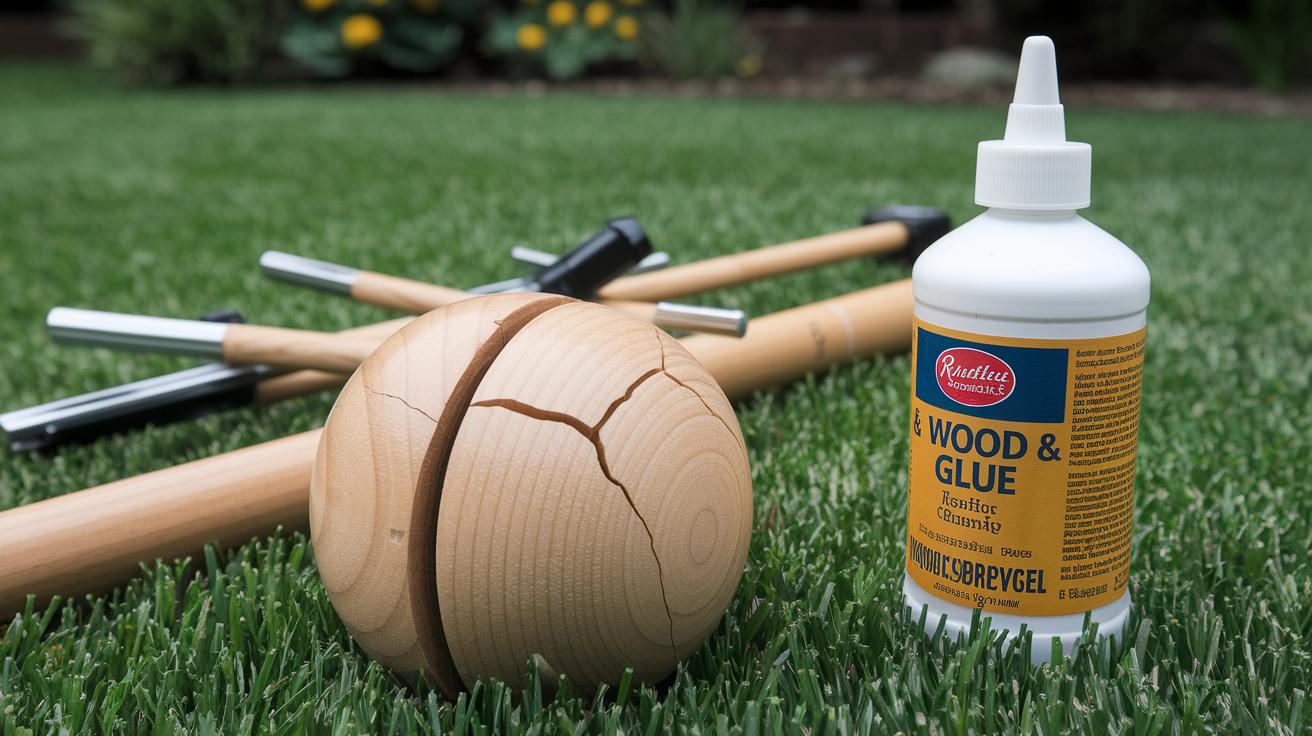
Once a month during the playing season, do a 10-minute inspection on every piece. Catching damage at the early stage makes the fix easy; ignoring it makes the part unsalvageable.
What to look for
- Mallet heads: hairline splits along the grain, rough patches where the finish has worn through, looseness where the handle joins the head.
- Mallet handles: splinters, cracks at the grip area, swelling at the lower end from moisture.
- Balls: dents, chips, or worn-through paint. Roll each ball across a smooth surface — a true ball rolls straight; a chipped one wobbles.
- Hoops: rust spots, bent uprights, loose welds at the base. Wiggle each hoop to confirm it still sits firm in the ground.
- Stakes: bent shafts, peeling paint, loose finials.
Common fixes
| Issue | Fix | Time needed |
|---|---|---|
| Hairline wood cracks | Wood glue in the crack, clamp 24 hours, sand smooth, re-seal | 10 min active |
| Dented or chipped balls | Wood filler for shallow chips, sand smooth, repaint to match | 15 min plus dry time |
| Bent metal hoops | Pliers to gently reshape; brace the curve with a board if needed | 5 min |
| Rust spots on metal | Sand with 220-grit, wipe clean, brush on rust-resistant paint | 20 min plus dry time |
| Loose joints | Tighten with the appropriate wrench or screwdriver | 2 min |
When to replace rather than repair: if a mallet head crack is wider than a dime, or a ball chip won’t smooth out to a true roll, or a hoop is bent past where it can be straightened, replace the part. Most reputable croquet sets sell replacement components individually.
Wood Oiling and Metal Rust-Proofing
The protective coating cycle is what extends the set’s life from a few seasons to a few decades.
Wood components (mallets and any wooden ball storage):
- Every two to three months during the playing season, wipe each wooden piece with a soft cloth to clear dirt and grit.
- Sand any rough patches lightly with 220-grit sandpaper until the surface feels smooth.
- Use a natural-bristle brush to apply a thin coat of wood oil (tung oil, linseed oil, or dedicated mallet oil) or marine spar varnish for harder protection. Always brush with the grain.
- After 10 minutes, wipe off any excess oil with a clean cloth so the surface doesn’t stay tacky.
- Let cure 24 hours minimum (longer in cool or humid weather) before next use.
Metal components (hoops and stakes):
- Wipe down with a damp rag to remove dust and any flaking paint.
- Sand any rust spots back to bare metal with 220-grit sandpaper. Wipe clean afterward.
- Once a year (ideally early spring before the season), apply a rust-resistant spray. Hold the can about 8 inches from the surface and move in steady strokes for an even coat.
- Let cure 24 hours before reinstalling outdoors.
Optional UV-resistant finish: a thin layer of paste wax or UV-protective spray over wood mallets blocks sun fading and surface warping during peak summer use. Buff in circular motions until the surface gleams.
Off-Season Storage
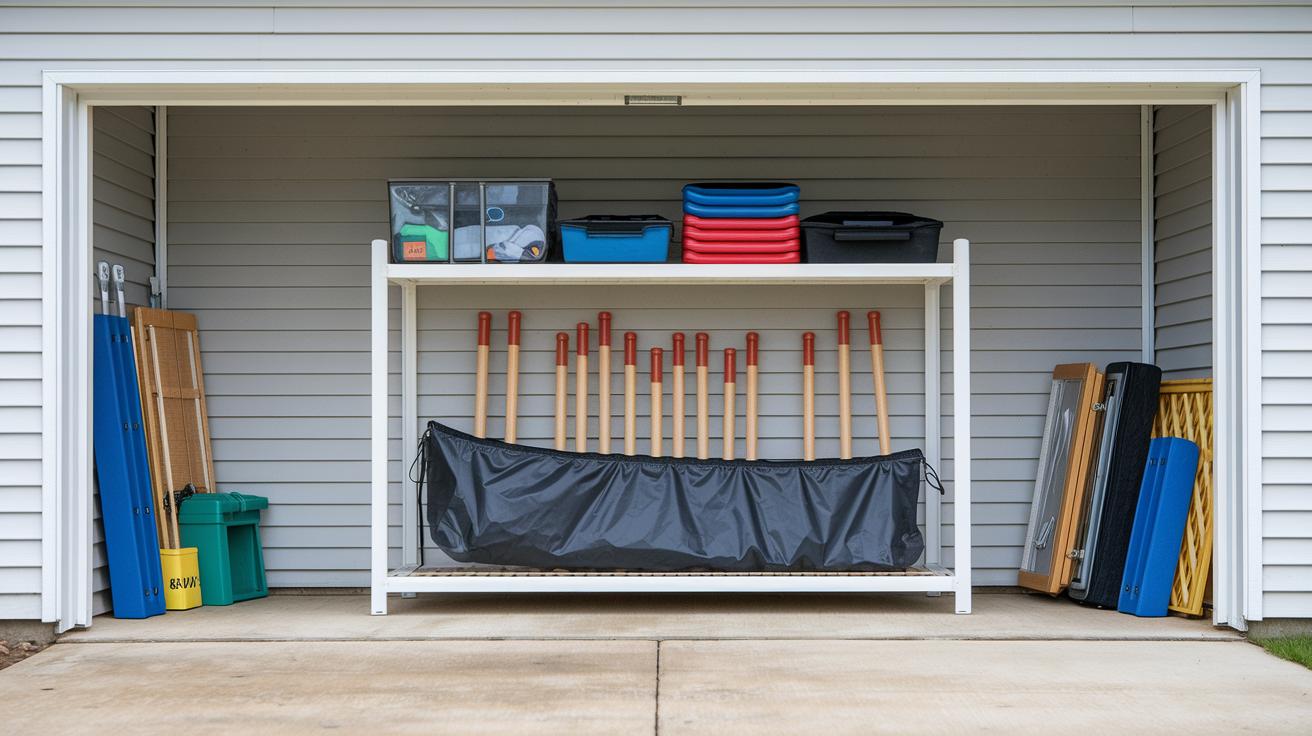
When the playing season ends, the storage routine determines whether you’ll have a working set in spring or a project requiring repairs.
Storage prep steps:
- Do a final full cleaning per the post-game routine. Don’t store anything dirty.
- Confirm everything is bone-dry. Damp wood molds; damp metal rusts.
- Apply a final coat of wood oil to mallets and rust-proof spray to metal. Let cure fully (24+ hours).
- Pack components into sealed plastic bins or heavy-duty waterproof bags. Original carrying cases work fine if they’re in good condition.
- Drop 2-3 silica gel packets into each container to absorb residual moisture.
- Label each bin clearly so you don’t dig through three boxes next spring looking for the hoops.
Storage location:
- Best: a heated garage, basement, or interior closet. Temperature swings stay minimal; humidity stays low.
- Good: an unheated garage or shed in a dry climate. Wood handles the cold fine if it’s dry.
- Worst: any space where temperatures swing wildly or humidity climbs. Detached uninsulated sheds in humid climates accelerate damage.
Avoid storing on the floor. Any concrete floor wicks moisture upward into anything resting on it. Keep components elevated on a shelf, table, or wall mount.
Cover the storage bins with an old sheet to keep dust off if they’re stored in a workshop or garage where sawdust circulates.
Preparing the Lawn for Play
The croquet set itself only does half the work. The other half is the playing surface.
Mowing height: keep the grass at 1.5 to 2 inches during the playing season. Taller grass slows ball rolls unpredictably and traps balls behind blades; shorter grass is hard on the lawn during summer heat. Mow once a week in spring and early summer growth periods, then every 10 days as growth slows.
Leveling low spots: after rain, walk the playing area and mark any depressions with small flags. Fill the lows with a mix of 70% topsoil and 30% sand. Drag a leaf rake across the patches to blend the new material into the existing turf. Over 2 to 3 seasons of patching, persistent low spots level out.
Drainage check: if water pools in the same spots after every rain, you have a real drainage problem the spot-fix above won’t solve. Either core-aerate the lawn (see our lawn aeration guide for the full process), add a French drain along the low edge, or accept the spot as off-limits for hoop placement. A well-fed and aerated lawn also rolls balls more consistently — see our walkthrough on natural lawn fertilizer for the organic feeding routine that keeps grass dense and even.
Hoop placement: a standard backyard croquet course uses 9 hoops in a double-diamond pattern across the playing area. The official spacing is wider than most backyards allow — scale it to fit your space, keeping the relative positions and the symmetry. Use a tape measure and string to mark hoop positions consistently from game to game. Drive each hoop into firm, level ground; if a hoop wobbles in soft soil, reset it deeper or move it 12 inches to firmer ground.
Year-Round Maintenance Schedule
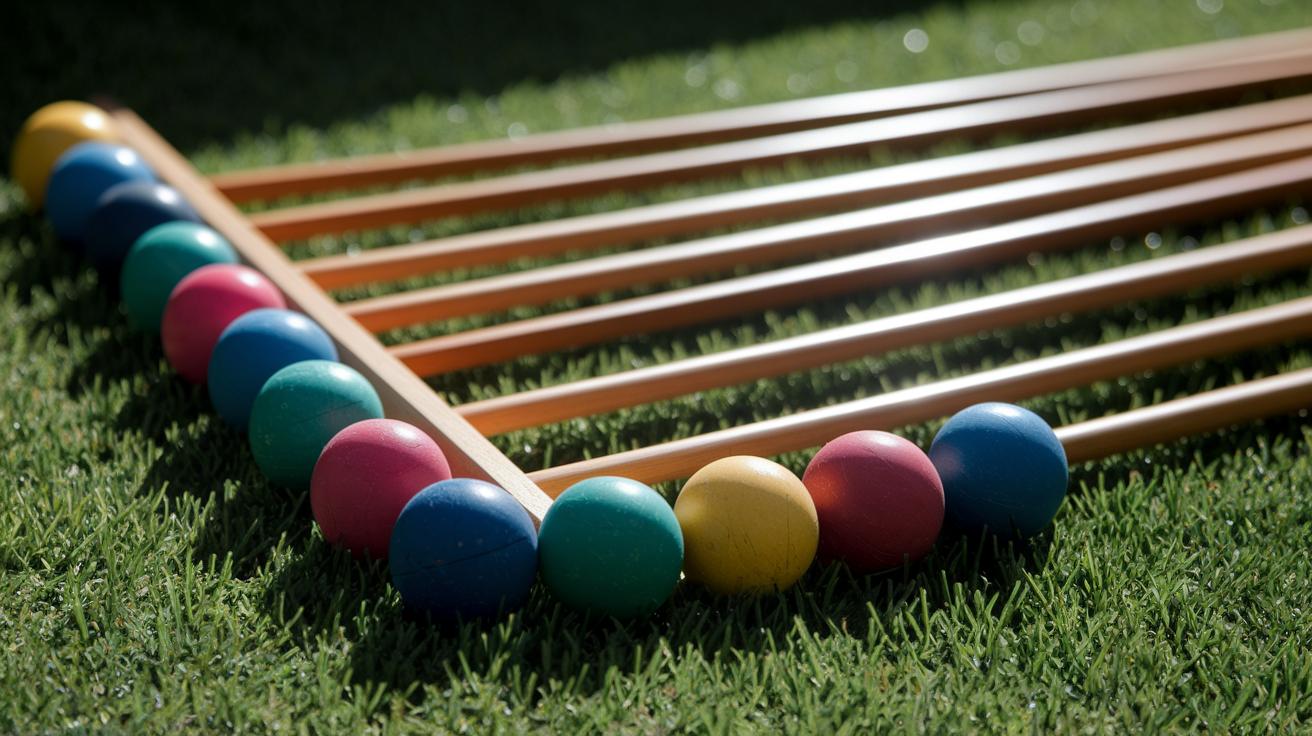
Tying the routine together: the simple cadence that keeps a croquet set in playing condition decade after decade.
| Cadence | Task |
|---|---|
| After every match | Wipe down with a cloth, dry thoroughly |
| Weekly during peak use | Full soap-and-rinse cleaning |
| Monthly | Inspect every mallet, ball, hoop, and stake for damage |
| Every 2-3 months | Light coat of wood oil on mallets, touch up any chipped paint |
| Annually (early spring) | Full rust-proof spray on metal hoops and stakes; full inspection and repair pass |
| End of season (fall) | Deep clean, final protective coatings, full off-season storage prep |
Practical tip: set a recurring calendar reminder for the monthly inspection and the every-2-months oiling. Most people skip maintenance not because it’s hard but because they forget. A reminder on the first Saturday of each month catches both within a single short session.
The full annual maintenance investment runs about 4 to 6 hours of active work. Spread across the year, that’s an hour a quarter for a set that pays back across multiple decades of backyard games. Cheap compared to replacing a $200 to $500 croquet set every few seasons.
Croquet Set Maintenance FAQ
What tools do I need to clean a croquet set?
A soft cloth, mild dish soap (Castile or unscented Dawn), soft-bristled brush, microfiber drying cloth, water bucket, and garden gloves. That’s the complete kit. Keep these stored with the croquet set so cleanup is friction-free after every match.
How do I remove grass stains from croquet mallets and balls?
Rinse the piece with a garden hose to soften the stain, scrub gently with mild soap and a soft-bristled brush (across the grain on wood, around the curve on metal), rinse until water runs clear, then dry with a microfiber cloth and air-dry in shade until bone-dry. Don’t dry in direct sun — rapid temperature changes can crack wood.
How often should I inspect a croquet set for damage?
Run a 10-minute inspection once a month during the playing season. Check mallet heads for splits, mallet handles for cracks or swelling, balls for chips or dents, hoops for rust or bends, and stakes for shaft straightness. Catching damage early makes the fix simple; ignoring it makes the part unsalvageable.
What DIY fixes work for common croquet damage?
Wood glue and a clamp fix hairline cracks in mallets (clamp 24 hours, sand, re-seal). Wood filler handles shallow ball dents (sand and repaint to match). Pliers reshape bent metal hoops. Sand and rust-resistant paint cover rust spots. Tighten loose joints with the matching wrench or screwdriver. Most fixes take under 20 minutes of active work.
How do I protect wooden mallets from weathering?
Apply a thin coat of wood oil (tung, linseed, or marine spar varnish) every 2 to 3 months during the playing season. Clean the surface first, sand any rough patches with 220-grit, brush on a thin coat with the grain, wipe off excess after 10 minutes, and let cure 24 hours before next use. A paste wax or UV-resistant topcoat adds another layer of sun protection.
How should I store a croquet set off-season?
Clean and fully dry every piece, apply a final coat of wood oil to mallets and rust-proof spray to metal, pack components into sealed bins with silica gel packets for moisture absorption, and store on a shelf (not the floor) in a cool, dry interior space — garage, basement, or closet. Avoid uninsulated sheds in humid climates.
How do I prepare my lawn for croquet play?
Mow grass to 1.5 to 2 inches with weekly cuts in spring growth and 10-day cuts as growth slows. Fill low spots with a 70/30 topsoil-and-sand mix and rake to blend. Address persistent drainage problems with core aeration or French drains. Place hoops on firm level ground; if a hoop wobbles, reset deeper or relocate.
What’s the right maintenance schedule for a croquet set?
After every match: wipe and dry. Weekly during peak use: full clean. Monthly: damage inspection. Every 2-3 months: light wood oil on mallets and touch up chipped paint. Annually in early spring: full rust-proof spray on metal and full inspection. End of season: deep clean, protective coatings, and off-season storage prep. Total annual maintenance: about 4 to 6 hours.