
Outdoor Living Area Ideas That Zone Your Yard
An outdoor living area earns its name when each part of it has a job. Lounge, cook, dine, gather around a fire, hide from the sun, light it for evening use, and tuck in plants and privacy where you can. This guide walks through every zone in order, what materials and dimensions actually work, and how to scale the whole plan to whatever footprint you have to work with.
Start With Zones, Not Furniture
Most outdoor-area projects stall because people buy furniture before they plan space. The fix is simple: sketch the yard on graph paper, mark north, and assign zones before anything else.
Three questions decide the layout:
- Where does the sun fall? Mark hot afternoon spots (these want shade or vegetation), morning sun spots (best for breakfast seating), and shaded corners (good for fire features and evening lounges).
- How will people move between zones? Cooking should be near the house door so you’re not crossing the lawn with hot food. Seating should face the view, not the grill. Pathways need at least 36 inches of clear width.
- What’s the privacy situation? Note where neighbors’ windows look in, where the street is visible, and which property lines need screening.
Once those are mapped, block out three primary zones — lounge, cook/dine, and fire — and any secondary ones (small garden, kids’ play area, dog yard). Furniture and finishes come after. The paver patio layout guide covers ground-surface decisions in more detail if you’re building a hard surface from scratch.
The Lounge and Seating Zone
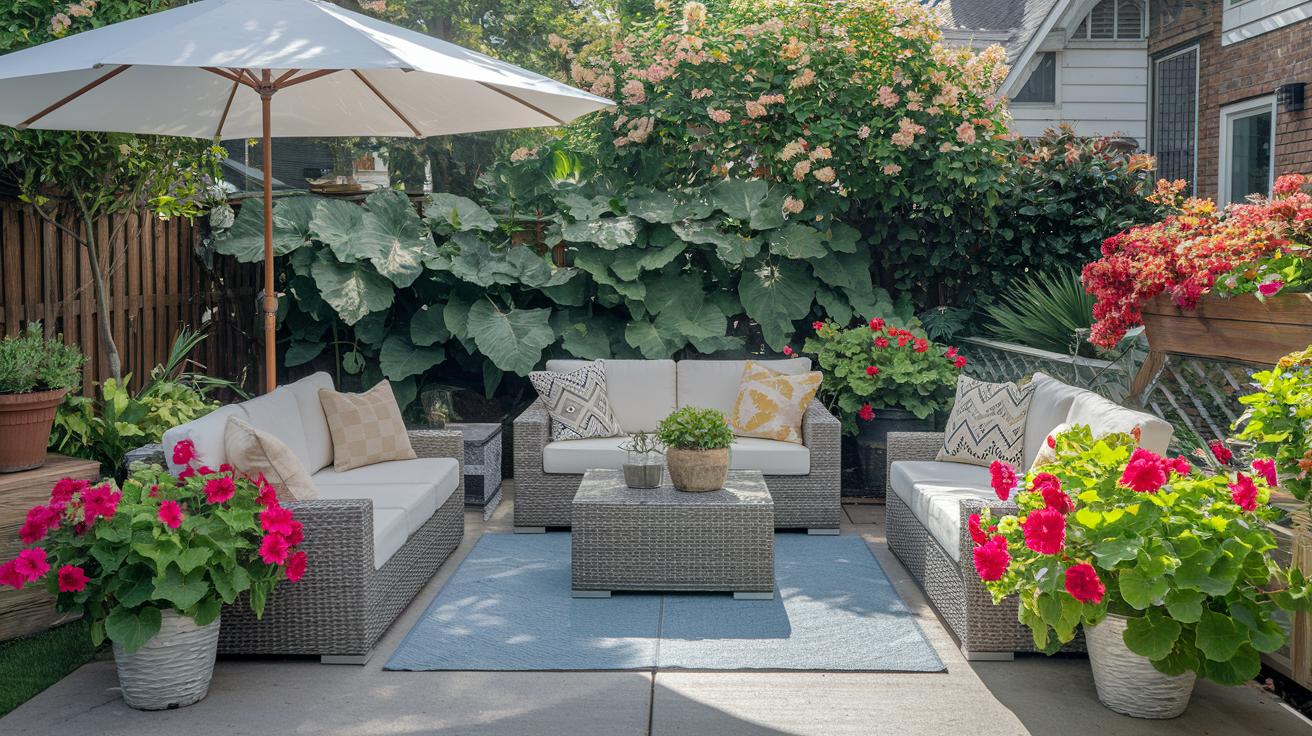
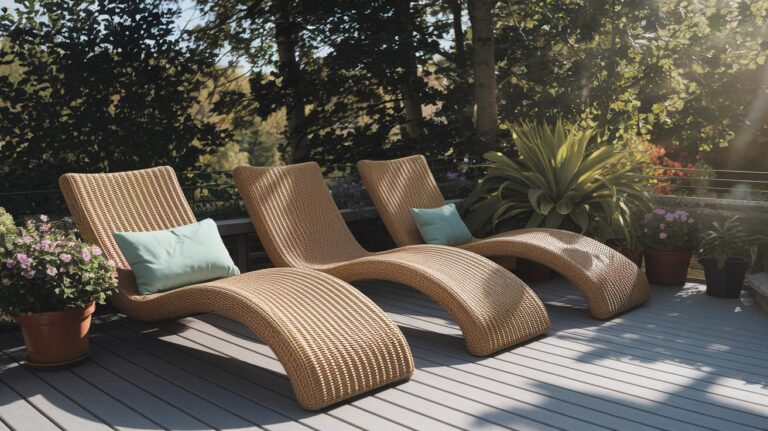
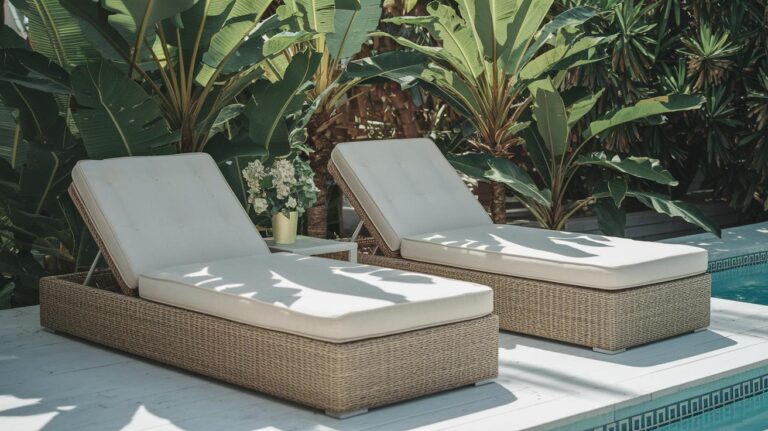
The lounge zone gets used most, so spend the most attention here. Three material classes hold up outdoors: teak (and similar tropical hardwoods like ipe), powder-coated aluminum, and resin wicker over an aluminum frame. Cedar and pressure-treated pine work too but need annual sealing.
Sizing the zone. A four-person lounge needs at least 8 by 10 feet of clear floor for a sofa, two chairs, and a coffee table. Add another 30 inches between furniture and any walking path. Skip the coffee-table-as-walkway move — every chair shuffle becomes a knee-bumper.
Cushion fabric. Solution-dyed acrylic (the original Sunbrella formula and equivalents) holds color and resists mildew. Polyester cushions cost less but fade in a season or two and grow mildew under heavy use. Foam fill should be quick-dry — slabs designed to shed water through open-cell foam.
Layout choices that work. Cluster seating around a center coffee table or fire feature so conversation flows naturally. Anchor the zone with a rug — outdoor polypropylene rugs handle weather and define the area. Modular sectionals let you reshape the layout for movie nights, dinner parties, or larger gatherings without buying new furniture.
For tight patios where a full sofa doesn’t fit, the small-space lounge chair guide covers picks that work in 60 square feet or less. For a deep-dive on which lounge-chair material fits which climate, the lounge chair materials comparison breaks down the tradeoffs.
Outdoor Kitchen and Dining Layout
An outdoor kitchen doesn’t have to be a built-in masonry installation. A weatherproof rolling cart with a grill, prep surface, and storage covers the same function for under $1,000 and moves when the layout changes.
The cooking triangle. The same logic that organizes indoor kitchens — keep grill, prep surface, and storage at three points of a triangle — works outside too. Each leg under 6 feet keeps the cook from running across the patio.
Clearances. Grills need at least 36 inches of clearance from anything combustible (siding, fencing, wood pergola posts). Above the grill, 5 feet of vertical clearance prevents heat damage to overhead structures. For a covered outdoor kitchen, install a proper ventilation hood — same logic as indoors.
Dining sizing. A standard 6-foot rectangular table seats six and needs an 8-by-10-foot clear footprint with chair pull-back room. Round tables seat the same crowd in less space if you have a tighter zone. Bench seating along one or two sides squeezes more people into less area.
Surface and shelter. Position dining under a pergola, large umbrella, or covered patio when possible — meals shouldn’t end because of a passing rain shower. A spill-friendly tabletop (sealed wood, powder-coated metal, or polywood) matters more than looks here. The outdoor curtains guide covers privacy and wind-blocking options that work over dining areas.
Fire Pits, Fireplaces, and Heat
A fire feature extends the season by a couple of months on each end — useful for any climate that gets cool evenings.
Four formats cover most yards:
- Wood-burning steel pit. The cheapest format ($150–$400) and the most flexible. Movable, easy to install, real flame. Smoke and ash are the tradeoffs.
- Gas fire pit. Cleaner-burning, instant on/off, no smoke. Needs a gas line or a swap-out propane tank. Glass-bead pits sparkle nicely without producing real flame heat.
- Stone or brick fireplace. Permanent, anchors the patio visually, contains heat and embers. Significantly more expensive ($3,000+ for a built-in masonry install) and not movable.
- Patio heater. Skip the open flame entirely. Propane mushroom heaters and electric infrared heaters extend cool evenings without ash to deal with.
The backyard fire pit ideas roundup covers DIY builds at different budget tiers if you’d rather build than buy.
Safety basics. Three feet of non-combustible surface around any open flame (gravel, paver, or concrete). Five feet from anything overhead — pergola, awning, low tree branches. A spark screen on wood-burning pits. A working fire extinguisher within reach.
Seating around fire. Set chairs 36 to 48 inches back from the pit edge — close enough for warmth, far enough to avoid sparks. A circle of equal-height seats works better than mismatched heights for conversation around fire.
Shade and Weather Protection
Most outdoor zones need at least partial shade by mid-afternoon. Five options cover most yards:
- Pergola. A permanent frame that filters light and gives a structure to train vines or hang string lights on. Cedar, ipe, or aluminum frames work. Roughly $2,000–$5,000 installed.
- Retractable awning. Motorized or hand-cranked, extends from the house wall when needed. Works for patios attached to the home. Retractable awning options walks through pricing and install.
- Cantilever umbrella. The pole sits to the side rather than centered through the table. 10-foot models cover a 6-person dining set. Best for areas where you don’t want a permanent install.
- Shade sail. Sail-shaped fabric stretched between fixed anchor points. Modern look, blocks UV without trapping heat, $100–$400 for residential sizes.
- Trees. Slowest option but the best long-term — a mature shade tree filters sun, drops temperature 10 degrees underneath, and pays back for decades.
Weather protection beyond shade. Wind makes a patio unusable as fast as harsh sun. Lattice screens, mature hedges, or solid privacy panels block prevailing wind on exposed sites. Look up your local wind-rose data before committing to a wall direction.
Lighting for Evening Use
Outdoor lighting has three jobs: safety on paths, task lighting for cooking and reading, and ambient lighting that makes the space feel inviting after dark.
Layer the light. No single fixture does all three jobs. A mix of overhead, mid-level, and ground-level lighting reads better and uses each fixture for what it does best.
- Overhead. Outdoor-rated string lights between pergola posts or anchored to the house. Warm white (2700K) bulbs read more like indoor light; cool white reads commercial. LED string lights run cheap and don’t burn out as fast as filament.
- Task. Under-counter LED strips on outdoor kitchen prep areas. A clip-on or pendant light over the dining table. A small lamp or wall sconce near reading spots.
- Path and safety. Low-voltage path lights along walking routes. Stair risers should have integrated LEDs or wall-mounted downcast fixtures. Brightness at ground level, not glare at eye level.
- Ambient. Solar stake lights along garden beds, candle lanterns on tables, uplighting at the base of trees. These do the most for atmosphere and the least for visibility.
For yards without convenient power, solar-powered string lights and stake lights handle most of the load. Quality varies — look for fixtures with replaceable batteries and a 6+ hour runtime per charge.
Plants, Privacy, and Small-Space Tactics
Plants make an outdoor area feel like a place rather than a furnished pad. Privacy makes it feel like a room. Small-space tactics squeeze both into tighter footprints.
Plant picks that survive patio life. Container plants tolerate more neglect than ground beds, but the container has to be the right size. Big pots dry out slower than small ones; matching the pot size to the plant’s mature root mass saves repotting later. Drought-tolerant picks for sunny patios: lavender, ornamental grasses, sedum, agave (zone permitting), and dwarf citrus in warm zones. For shade: ferns, hostas, heuchera, and Japanese forest grass.
Vertical planting for tight footprints. A planter wall along a fence, an herb panel on a kitchen-zone wall, or a row of tall pots on a railing all add greenery without eating floor space. Train vines on pergola posts so the structure doubles as a trellis.
Privacy without building walls. Bamboo screens, lattice panels with climbing vines, and tall potted plants (clumping bamboo, columnar evergreens) handle screening on most lot sizes. Outdoor curtains hung from a pergola read softer than solid screens and pull open when you want the view back.
Small-space layout moves that work. Pick double-duty furniture — storage benches with hinged lids, ottomans that work as side tables, folding bistro tables that stow against a wall when not in use. Use light, reflective surfaces (pale pavers, white walls) to make the area read larger. Skip oversized statement furniture; small spaces look more cramped with one big piece than with two medium pieces. The small-space patio lounge guide covers furniture picks specifically scaled for tight patios.
FAQ
What is the most popular outdoor living area feature?
Industry surveys consistently rank outdoor kitchens and fire features as the two most-requested upgrades, with covered seating areas (pergolas and screen porches) close behind. A basic three-zone setup — lounge, dining, and fire — covers the use cases most households actually want.
How much does an outdoor living area cost?
A simple paver patio with movable furniture and a portable fire pit runs $3,000–$8,000 for a 200-square-foot footprint. A full build with built-in outdoor kitchen, masonry fireplace, pergola, and integrated lighting can reach $50,000+ for the same footprint. Budget mostly tracks how much is permanent versus movable.
What materials hold up best outdoors?
Teak, ipe, and other tropical hardwoods last 15–25 years with minimal care. Powder-coated aluminum resists rust and runs lighter than steel. Solution-dyed acrylic fabrics hold color longest. For pavers, concrete and natural stone outlast pressure-treated wood deck boards by decades.
How do I make a small outdoor area feel bigger?
Pick smaller-scale furniture, use light-colored surfaces, build vertically with planter walls and tall pergolas, and skip oversized features. A single small fire pit reads better than a full fireplace in 100 square feet. The small-space patio lounge guide has specific furniture picks.
What size patio do I need for a 6-person dining set?
About 10 by 10 feet — a 6-foot table needs roughly 30 inches of chair pull-back on each long side and 24 inches at each end. Add another 36 inches of clear path on at least one side for circulation. Less than that and chairs back into walking traffic every time someone sits down.
Where should I put a fire pit in my yard?
At least 10 feet from the house, 5 feet from any fence or shed, and away from overhanging branches. Pick a spot with non-combustible surfacing — gravel, pavers, concrete, or stone — for at least 3 feet around the pit. Downwind from the seating zone keeps smoke out of conversations.
Do I need a permit for an outdoor kitchen?
Usually yes for built-in gas lines or electrical work, and sometimes for any roof structure over a certain square footage. Movable propane grills and rolling carts generally don’t require permits. Call the local building department before you start any built-in work — penalties for unpermitted gas lines are steep.
What’s the easiest outdoor area upgrade?
Lighting. A single string of warm-white outdoor-rated LEDs along a pergola or fence transforms how a patio reads at night and costs under $100. The next easiest upgrade is a rug to define the zone and a couple of cushions in solution-dyed fabric.




One Comment
Comments are closed.