How to Use Organic Fertilizer on Your Lawn
A bag of organic lawn fertilizer won’t burn your grass, won’t run off into the storm drain after the first rain, and feeds the soil instead of just the blades — but only if you pick the right one and put it down at the right time. I switched my own lawn off synthetic feed years ago, made just about every rookie mistake along the way, and the difference between a green lawn and a wasted Saturday came down to a few decisions you make before you ever open a bag. This guide covers testing your soil first, reading the numbers on the label, the organic fertilizers I’d actually buy, the homemade route, and how to spread it so it does any good.
As an Amazon Associate, Backyard Superstar earns from qualifying purchases at no extra cost to you.
Test Your Soil Before You Feed Anything
Feeding a lawn without testing the soil first is guessing with money. You might be dumping nitrogen on grass that’s actually starving for potassium, or liming a yard that didn’t need it. Ten minutes up front saves you a season of chasing the wrong problem.
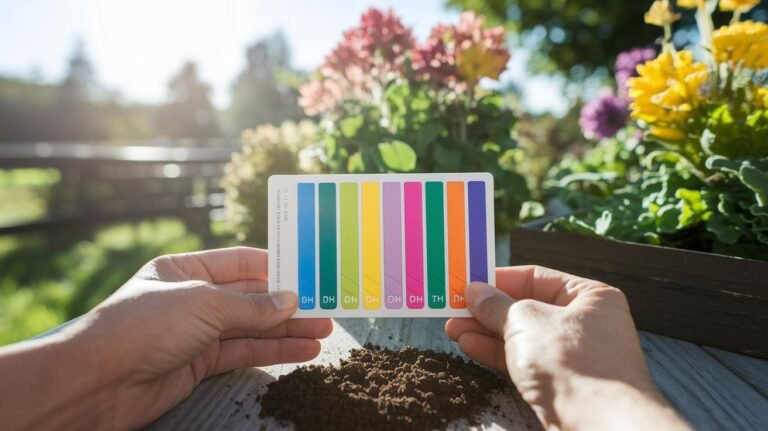
A cheap big-box probe kit will give you a rough pH reading, and that’s fine if pH is all you care about. But if you want to know what your grass is actually short on, a mail-in lab kit is worth the extra few bucks. The Soil Savvy Soil Test Kit is the one I point people to: you collect a small soil sample, drop it in the prepaid envelope, and a lab sends back a report on pH plus 14 nutrients with a fertilizer recommendation. It runs around $30 and the results come back in about a week to ten days. Reviewers who’ve cross-checked it against university extension labs found it lined up closely, which is more than I can say for most color-chart kits.
For the pH side of things specifically, I walk through the cheaper at-home methods in the soil pH testing guide. Aim for a pH between 6.0 and 7.0 so nutrients actually dissolve and reach the roots. If your test comes back below 6.0, that’s when lime comes in — I cover how much and when in the lime fertilizer guide. Above 7.0, a little elemental sulfur brings it back down.
What the Numbers on the Bag Actually Mean
Every bag of fertilizer shows three numbers — say, 6-4-0. That’s the percent by weight of nitrogen (N), phosphorus (P), and potassium (K), in that order. Organic blends run lower than synthetics: you’ll usually see nitrogen at 2–10%, phosphorus at 0–4%, and potassium at 0–3%. Those numbers look small, but the nutrients release slowly over weeks instead of dumping all at once, which is exactly why organic feed doesn’t scorch your lawn.
Here’s what each one does for your grass:
- Nitrogen (N) — drives the deep green color and blade growth. This is the number that matters most for turf.
- Phosphorus (P) — builds roots. Many regions now restrict phosphorus in lawn fertilizer to protect waterways, which is why you’ll see a lot of 0 in that middle slot.
- Potassium (K) — toughens the grass so it handles heat, drought, and foot traffic without wilting.
Most organic mixes pull those nutrients from natural sources. Flip the bag over and read the ingredient list — the guaranteed analysis tells you exactly where the nutrients come from.
| Source | Primary Nutrient | Role |
|---|---|---|
| Compost | NPK (roughly 1-1-1) | Improves soil texture, very slow release |
| Feather meal / blood meal | N (12–14%) | Boosts leaf growth and color |
| Bone meal | P (12–15%) | Promotes root growth |
| Kelp meal | K plus micronutrients | Helps grass handle stress, feeds soil microbes |
Your lawn also wants iron for color and a few trace minerals like sulfur and magnesium, which compost and kelp blends carry along for the ride. The slow, steady release is the whole point: your turf stays fed for weeks without the surge-and-crash you get from quick synthetic nitrogen.
The Organic Lawn Fertilizers I’d Actually Buy
You can make your own feed (more on that below), but a bagged product is measured, predictable, and takes ten minutes to put down. Here are the ones I’d actually spend money on, sorted by what you’re after.
Best overall value: Milorganite 6-4-0 is the one I keep coming back to. It’s a slow-release nitrogen feed with added iron that greens up a lawn without the burn risk, a 32-pound bag covers about 2,500 square feet and usually runs around $20, and it keeps feeding for roughly 8 to 10 weeks. The iron is what gives you that deep color without pushing a growth spurt that has you mowing twice a week. Fair warning: it has a mild earthy smell for the first week or so, then it fades.
Budget and no-smell pick: Purely Organic Products Lawn Food 10-0-2 is plant-based — distillers grains and soybean meal rather than manure or biosolids — so there’s no barnyard smell, and you and the pets can walk on the lawn right after you spread it. A 15-pound bag covers about 3,000 square feet for roughly $29, and the higher nitrogen number gives you a quicker green-up than most organics while still feeding for about eight weeks. This is my pick if the manure-based feeds turn you off.
Premium pick: Espoma Organic Lawn Food comes from one of the most established organic-gardening brands going, and it’s OMRI-listed for certified organic use. Espoma runs seasonal formulas — a spring booster and a summer 8-0-0 revitalizer with iron — and a 30-pound bag covers up to 5,000 square feet. It costs more per square foot than Milorganite, but if you want a brand with a long track record and a season-by-season program, this is it.
For a fast liquid green-up: when I want color in days rather than weeks — say I’m prepping for company — I reach for Alaska Fish Fertilizer 5-1-1. It’s an OMRI-listed fish emulsion you dilute and spray on; a gallon concentrate runs about $30 and goes a long way. It works fast because the nutrients are already in liquid form, but it doesn’t last as long as granules, so I treat it as a booster between granular feedings, not a replacement. Yes, it smells like fish for an hour or two. The smell fades; the green stays.
The tool that makes any of these work: granular fertilizer only does its job if it goes down evenly, and hand-broadcasting leaves stripes you’ll see for weeks. A Scotts Turf Builder EdgeGuard Mini broadcast spreader handles up to 5,000 square feet, comes pre-calibrated, and has an edge guard that keeps fertilizer off the driveway and out of the flower beds (and away from the storm drain). It’s about $60 and it’s the single piece of gear that most improves how an organic feed turns out.
| Product | Type | Approx. coverage | Best for |
|---|---|---|---|
| Milorganite 6-4-0 | Granular | 2,500 sq ft / 32 lb | Best all-around value, deep color from iron |
| Purely Organic 10-0-2 | Granular | 3,000 sq ft / 15 lb | No smell, pet-safe re-entry, budget |
| Espoma Organic Lawn Food | Granular | 5,000 sq ft / 30 lb | Established brand, OMRI-listed, seasonal program |
| Alaska Fish Fertilizer 5-1-1 | Liquid | Dilute and spray | Fast green-up booster |
Prices and bag sizes shift by season and region, so check the current listing before you buy. Garden centers and home-improvement stores also bag bulk compost for roughly $20–$30 a cubic yard if you’d rather cover big areas cheaply.
Make Your Own: Compost, Teas, and Fish Emulsion
If you’ve got the time and the scraps, you can feed a lawn for almost nothing. Homemade feed is gentler and great for the soil — the catch is the nutrient mix swings around depending on what went into it, so you’re checking and adjusting more often than you would with a bag.
- Compost. Layer green material (vegetable peels, grass clippings) with brown material (dead leaves, straw), keep it damp like a wrung-out sponge, and turn it weekly. Finished compost spread as a thin top-dressing feeds the soil for months.
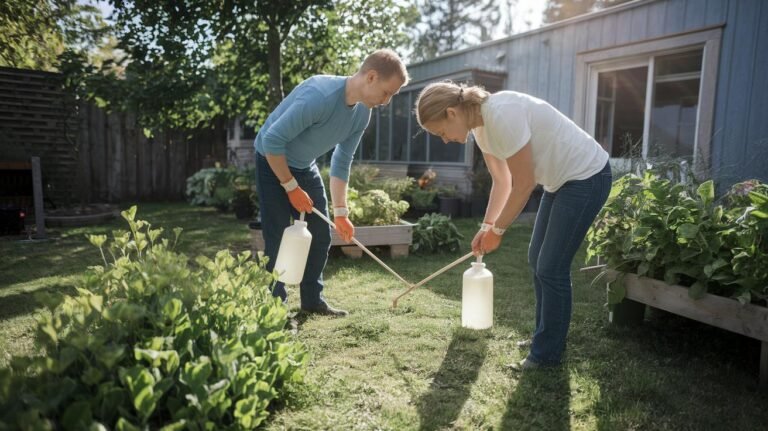
- Compost tea. Stir one part finished compost into five parts water, let it sit 24 to 48 hours, then spray it on. A quick microbial boost between feedings.
- Manure tea. Soak well-aged cow or horse manure in water for a week or two, strain it, and drench the root zone. Use aged manure only — fresh can burn.
- Fish emulsion. If you don’t want to brew your own, the bottled Alaska emulsion above is the same idea in a measured form: dilute, spray, done.
- Seaweed or kelp feed. Steep dried kelp meal in water for a few days, or use a bottled liquid kelp — it’s light on nitrogen but rich in trace minerals and growth hormones that toughen up grass against heat and drought. A great complement to a nitrogen source rather than a standalone feed.
- Dry homemade blend. For a granular alternative to bagged fertilizer, mix roughly two parts alfalfa meal (nitrogen) with one part bone meal (phosphorus) and one part wood ash or kelp (potassium), then broadcast it with a spreader and water it in. It releases slowly, just like a store-bought organic granular.
Whichever route you take, the rule with homemade feed is to go light and watch how the grass responds — it’s far easier to add a little more next time than to undo an over-application.
Both routes get you to a green lawn. Pick the one that fits your pace and your patience — bagged if you want to measure and move on, homemade if you enjoy the process and want to spend less.
When and How to Spread It
Timing matters as much as the product. Feed your lawn organic fertilizer twice a year: once in spring once the soil warms to about 55°F (roughly late March into April), and again in early fall (September into October). Test your soil a few weeks ahead of each feeding so you know what you’re correcting.
About two weeks before you feed, do the prep that lets the nutrients actually reach the roots:
- Aerate. Pulling small plugs of soil relieves compaction so feed and water sink in instead of sitting on top. I skipped this once and watched the fertilizer just sit on a packed-down lawn doing nothing — the right gear is laid out in the lawn aeration tools guide.
- Dethatch if the dead-grass layer is more than about half an inch — it smothers roots and blocks feed from getting down.
To apply granules, load your spreader, set the rate on the bag, and walk it in even, slightly overlapping passes — the EdgeGuard spreader above keeps the product off your hardscape and beds. Water lightly right after so the nutrients soak into the root zone. For liquids, dilute per the label and spray on a cool, calm part of the day.
Feeding is also the perfect time to thicken a thin lawn. If you’re overseeding, scatter the seed first, then feed right after so the new grass gets a first meal — I walk through the timing in the overseeding after aeration guide.
Is Organic Safe for Kids, Pets, and Waterways?
This is where organic feed earns its keep. Because the nutrients release slowly and bind in the soil instead of dissolving all at once, you get far less runoff into storm drains and streams after a rain, and far less nutrient leaching down past the roots. The feed breaks down right where you put it.
For families, the plant-based and pet-safe formulas let kids and pets back on the grass right after application — check the specific bag, since manure-based products may suggest waiting and watering in first. And over the long run, building up the soil’s organic matter and microbe life means a lawn that holds water better and leans on you less each year.
One honest tradeoff: organic feed costs a bit more per pound and works slower than synthetics, and you may feed a touch more often. What you’re buying is healthier soil over time and a lawn that doesn’t depend on a chemical hit to stay green. If weeds are your bigger headache, the organic lawn weed control guide pairs well with a regular feeding routine — a thick, well-fed lawn crowds out most weeds on its own.
Recommended gear for feeding your lawn
As an Amazon Associate, Backyard Superstar earns from qualifying purchases at no extra cost to you.
- Top pick — Milorganite 6-4-0 ($$). Slow-release nitrogen plus iron for deep color with no burn risk.
- Budget / no-smell pick — Purely Organic Lawn Food 10-0-2 ($). Plant-based, no barnyard smell, pet-safe re-entry.
- Premium pick — Espoma Organic Lawn Food ($$$). OMRI-listed, established brand with a seasonal feeding program.
- Fast liquid booster — Alaska Fish Fertilizer 5-1-1 ($$). OMRI-listed fish emulsion for quick green-up between granular feeds.
- Application tool — Scotts Turf Builder EdgeGuard Mini Spreader ($$). Even coverage with an edge guard that keeps feed off hardscape and beds.
- Test first — Soil Savvy Soil Test Kit ($$). Mail-in lab report on pH plus 14 nutrients with a fertilizer recommendation.
FAQ
How do I naturally fertilize my lawn?
Spread finished compost, a bagged organic feed like Milorganite, or a sprayed compost or fish emulsion in spring once the soil hits about 55°F, then again in early fall. Test your soil first so you’re feeding what the grass actually needs, and water lightly after applying.
When should I apply organic fertilizer to my lawn?
Twice a year: spring (late March to April) once soil temperature stays above 55°F, and early fall (September to October). Those windows support root growth and let the turf recover before summer heat or winter cold.
What are the disadvantages of organic fertilizer?
It releases nutrients more slowly, costs a bit more per pound, manure-based versions can smell for a few days, and you may need to apply slightly more often than with synthetic feeds. The upside is healthier soil and no burn risk.
Is organic lawn fertilizer worth it?
For most homeowners, yes. It feeds slowly without burning, improves soil structure, supports beneficial soil microbes, and cuts down on runoff — building a healthier lawn over time. It costs more and acts slower than synthetics, so it’s a long-game choice.
What are some good organic lawn fertilizer options?
Milorganite 6-4-0 is a strong all-around value with added iron for color. Purely Organic Lawn Food 10-0-2 is plant-based with no smell and pet-safe re-entry. Espoma Organic Lawn Food is an OMRI-listed premium option, and Alaska Fish Fertilizer 5-1-1 is a fast-acting liquid booster.
Do I need a spreader for organic fertilizer?
For granular feed, yes — hand-spreading leaves uneven stripes that show up as dark and light patches for weeks. A broadcast spreader like the Scotts EdgeGuard Mini lays it down evenly and keeps fertilizer off driveways and out of beds. Liquid feeds just need a hose-end or pump sprayer.