How to Grill Peaches on a Charcoal Grill
A ripe peach is already close to perfect, so the first time someone told me to put one on the grill I figured they were overthinking dessert. Then I tried it, and I got it immediately. Charcoal heat does two things to a peach that nothing else can: it caramelizes the natural sugar at the cut face into a golden, almost candied crust, and it lays a faint wood smoke over the fruit that plays against the sweetness. Learning how to grill peaches on a charcoal grill takes about ten minutes of actual cooking, but there are a handful of small choices — which peach, how ripe, how hot the coals — that separate a jammy, caramelized half from a scorched, mushy one. I’ve cooked enough of them over the years to know where those choices are, so here’s exactly how I do it.
As an Amazon Associate, Backyard Superstar earns from qualifying purchases at no extra cost to you.
Why Peaches Belong on a Charcoal Grill
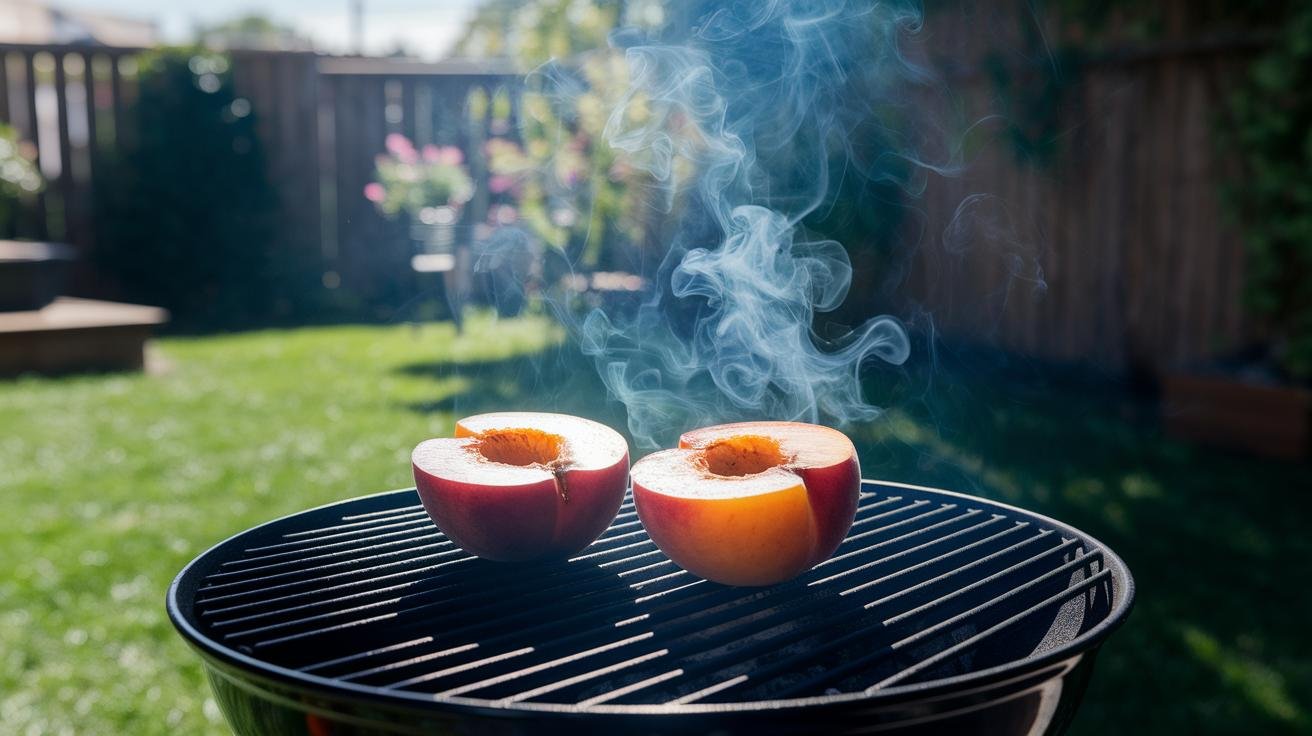
Grilling works on fruit for the same reason it works on a steak: high, dry heat drives off surface moisture and lets the sugars brown. On a peach, that browning is the whole point. The cut side hits the grate, the juice at the surface reduces, and in a couple of minutes you get a lacquered, caramelized face with real grill marks. It’s the same chemistry that makes a crème brûlée top worth cracking, just done over live fire.
Charcoal earns its place here over gas because of the smoke. A gas grill will caramelize a peach just fine, but charcoal — especially real lump — adds a thin layer of hardwood aroma that turns a sweet piece of fruit into something you can’t quite place at first bite. It’s subtle, not barbecue-heavy, and it’s exactly why I reach for the kettle instead of the burner when peaches are in season. If you’re still deciding what to cook on, our rundown of the pros and cons of each grill type is worth a read, but for this job charcoal wins.
Picking and Prepping the Right Peaches
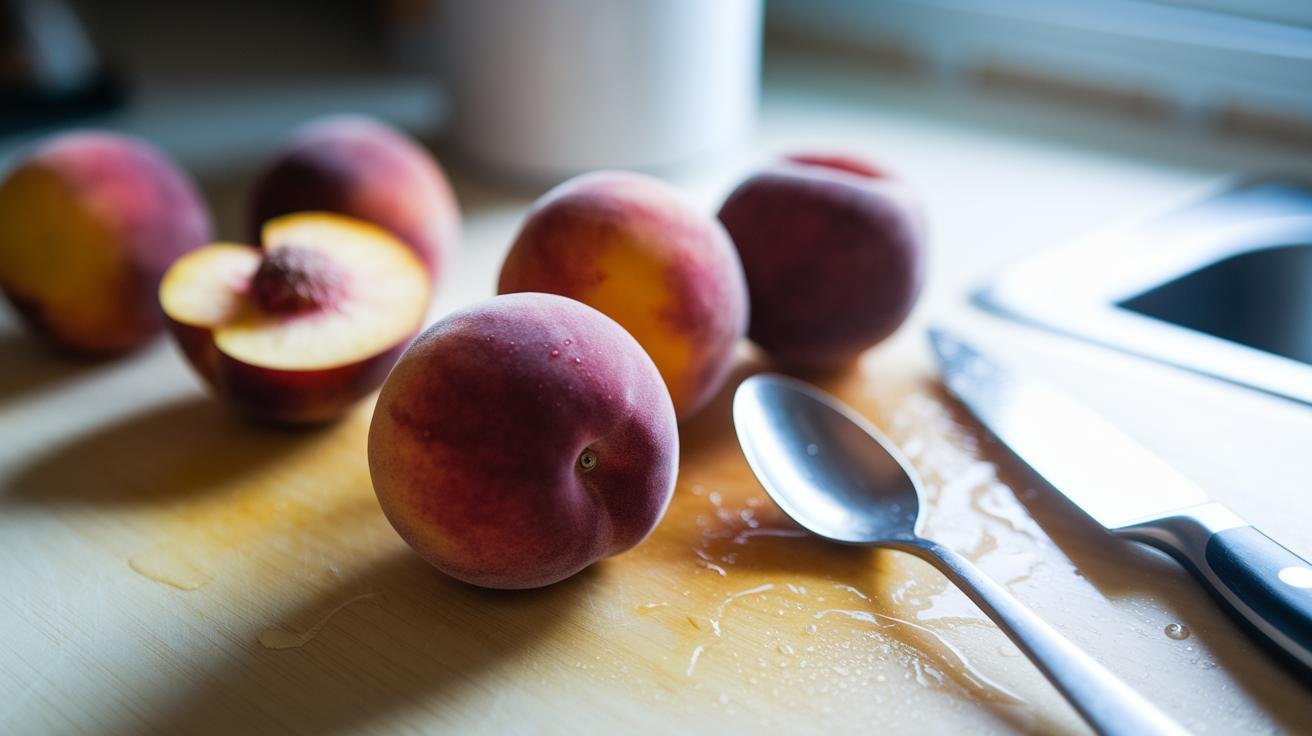
Everything good about a grilled peach starts at the store or the farm stand. You want fruit that’s ripe but still firm — the kind that gives slightly when you press near the stem but isn’t soft all over. A rock-hard peach won’t have developed its sugar yet and will taste flat no matter how well you grill it; a dead-ripe one will turn to jam the second it warms up and slump through the grates. Aim for the day-before-you’d-eat-it-raw stage.
The other thing that matters is the pit. Look for freestone peaches, where the flesh pulls cleanly away from the stone — most mid-to-late-summer varieties are freestone. Clingstone peaches, common early in the season, hang onto the pit and force you to hack the halves apart, which mangles the clean cut face you want against the grate. To prep, run a knife around the peach through to the pit, twist the halves apart, and lift the stone out. I leave the skin on: it holds the half together on the grill and peels off easily at the table if anyone wants it gone. A light brush of neutral oil on the cut face keeps it from sticking, and that’s the entire prep.
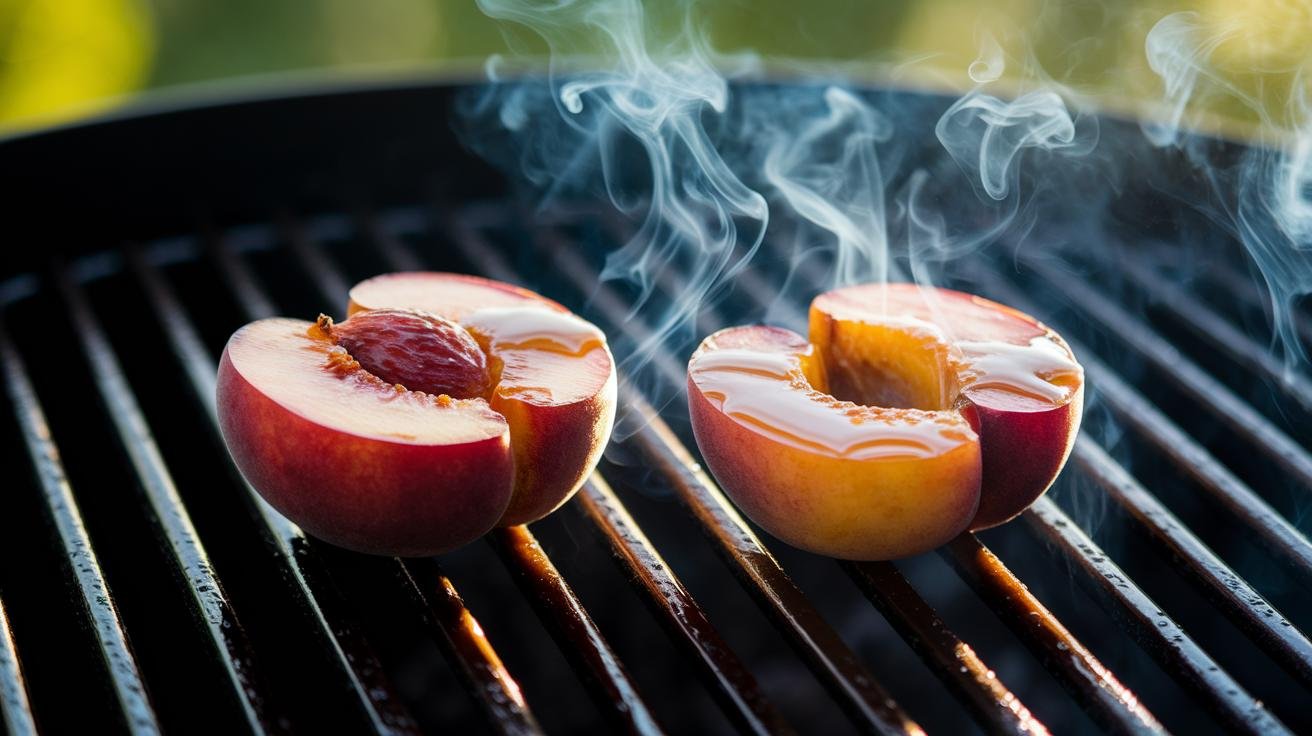
Building the Right Fire
Peaches want medium heat, not a roaring bed of coals. Too hot and the sugars burn black before the fruit warms through; too cool and the peach steams and goes limp instead of searing. The fastest way to a clean, even bed of coals is a chimney starter — I fill a Weber Rapidfire Chimney Starter about two-thirds full, light it with a couple of sheets of newspaper, and in fifteen minutes I’ve got coals glowing without a drop of lighter fluid or its chemical taste.
What you burn matters too. I use natural hardwood lump like Jealous Devil All Natural Lump Charcoal because it lights fast, burns clean, and throws that light hardwood smoke without the fillers you get in some briquettes — and with fruit, where the flavor is delicate, a clean-burning fuel actually shows. Once the coals are ashed over, bank them to one side to build a two-zone fire: a medium-hot direct zone over the coals for searing, and a cooler indirect zone with no coals underneath for anything that needs to finish gently. Hold your hand five inches over the direct side; you should be able to leave it there for about four or five seconds. That’s the window. Setting up a proper two-zone fire is the single most useful habit in charcoal cooking, and it pays off on everything from fruit to a charcoal-grilled chicken.
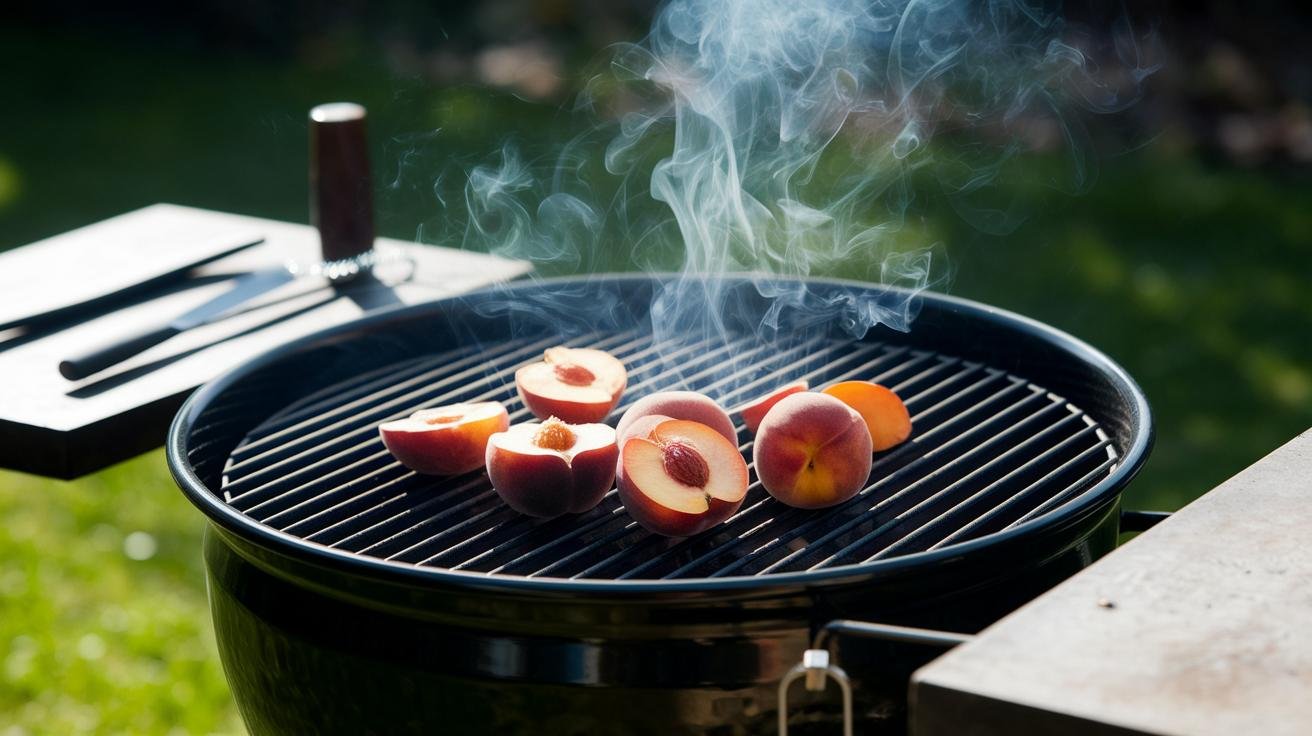
How to Grill Peaches, Step by Step
Once the fire’s set, the cooking goes quick, so have everything at the grill before you start. Because peach halves are round and want to roll, a flat Weber Deluxe Grilling Basket makes life easier — it keeps the fruit from tipping and lets you move every half on and off the heat at once, which matters when the difference between perfect and overdone is thirty seconds. A pair of long OXO Good Grips 16-Inch Locking Tongs keeps your hands back from the coals for the flip.
- Oil the cut face, not the grate — a light coat on the peach itself gives you clean release and better marks.
- Lay the halves cut-side down over the direct medium zone and leave them alone. Resist the urge to move them; they need contact time to caramelize.
- Grill 3 to 5 minutes until you see deep grill marks and the cut face looks glossy and caramelized. Lift one to check before you flip.
- Flip to skin-side down and move to the cooler indirect zone for another 2 to 4 minutes, just to warm the fruit through without collapsing it.
- Pull them while they still hold their shape. A grilled peach should be tender and juicy, not falling apart.
That’s it. Firmer, slightly-underripe peaches can take the longer end of those times; softer fruit needs less. When in doubt, pull early — carryover heat keeps working for a minute after they come off.
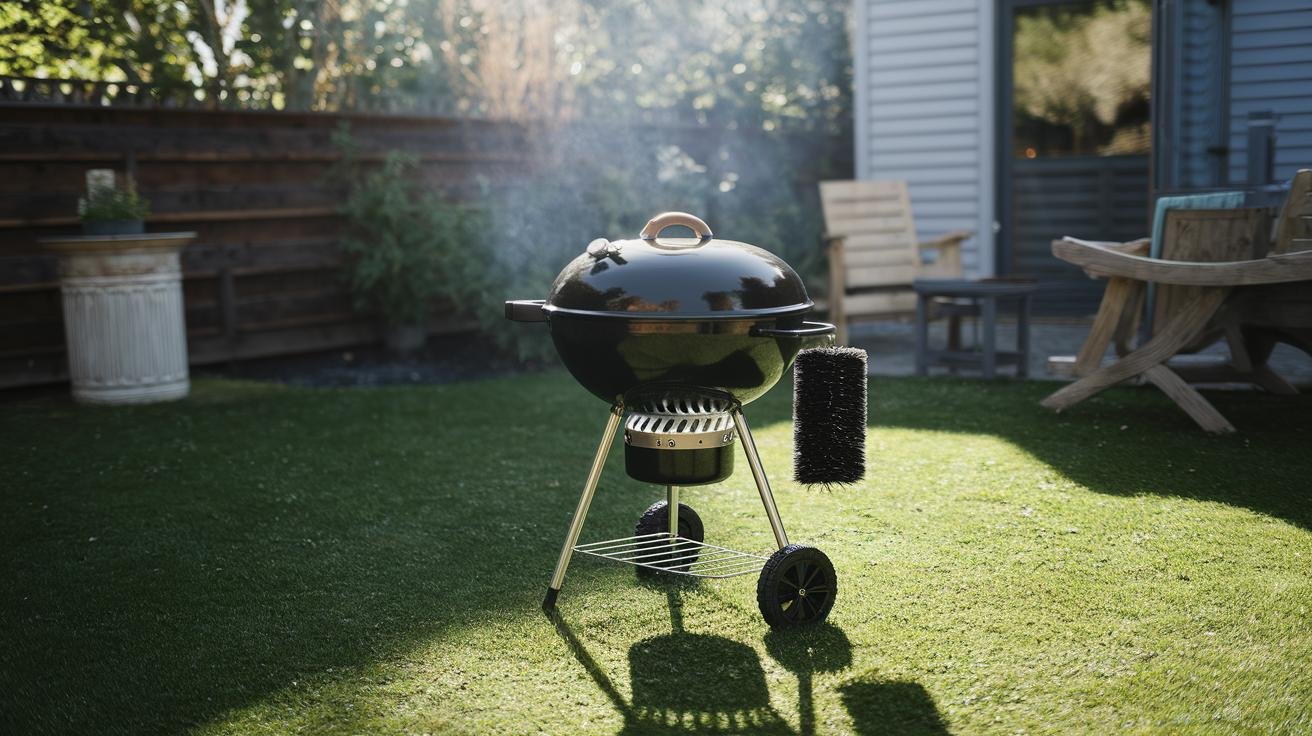
The Honey-Butter Glaze and Other Finishes
Grilled peaches are good naked, but a glaze takes them somewhere else. My default is a simple honey-butter: melt a couple of tablespoons of butter with an equal splash of honey and a pinch of cinnamon, and brush it onto the cut face right when you flip them, using a OXO Good Grips Silicone Basting Brush so the glaze goes on even and the bristles wipe clean afterward. The honey catches the last of the direct heat and turns glossy and slightly sticky, and the butter carries it into the fruit.
From there it’s easy to riff. A brush of bourbon-and-brown-sugar glaze leans full dessert; a little balsamic reduction with black pepper pushes the peaches savory and makes them a partner for pork or a cheese board. For a smoky-sweet version, whisk a spoonful of chipotle into the honey butter. Keep the glaze off the fruit until the flip, though — sugary glazes burn fast over direct heat, so they belong on the back half of the cook, not the front. If grilled fruit turns into a habit, and it will, there are more ideas in our grilled-fruit dessert recipes for the charcoal grill.
Ways to Serve Grilled Peaches
The classic finish is dessert: a warm grilled half with a scoop of vanilla ice cream melting into the caramelized center, maybe a drizzle of the leftover glaze and a few toasted pecans. It’s the kind of thing that looks like you fussed when you didn’t. Pound cake or shortcake under the peach, with whipped cream, turns it into a proper plated dessert with almost no extra work.
Don’t stop at sweet, though. Grilled peaches are terrific on the savory side of the table. Sliced over a summer salad with arugula, burrata, and a splash of balsamic, they’re a restaurant-plate appetizer. They cut the richness of grilled pork chops or chicken, and they belong on a burger with a little blue cheese if you’re feeling adventurous. Because they cook so fast, I’ll often throw a few halves on at the end of a bigger cook — right after the shrimp come off the charcoal — while the coals are still holding medium heat and the grill’s already lit.
Common Mistakes That Ruin Grilled Peaches
Most grilled-peach letdowns come from a short list of avoidable slips. The first is fruit that’s too ripe: a soft peach warms into mush and falls through the grates, so err toward firm. The second is too much heat — screaming-hot coals scorch the sugar before the fruit warms, giving you a bitter black crust instead of caramel. The third is moving the peaches too soon; they need a few undisturbed minutes to build those marks, and flipping early tears the cut face.
The fourth is glazing too early, which turns any honey or sugar in the mix into burnt residue over direct heat — save it for the flip. And the fifth is skipping the oil, so the caramelized face welds itself to the grate and rips when you lift it. Avoid those five, keep the fire at a hand-check medium, and grilled peaches are close to foolproof. Set up your fire well, treat the fruit gently, and you’ll wonder why you spent all those summers eating peaches raw. If you want your whole cook space dialed in for nights like this, it’s worth looking at the features of a good backyard grilling station.
Recommended gear for grilling peaches
As an Amazon Associate, Backyard Superstar earns from qualifying purchases at no extra cost to you.
- Fire starter — Weber Rapidfire Chimney Starter ($). Even, ashed-over coals in about 15 minutes with no lighter fluid.
- Clean-burning fuel — Jealous Devil All Natural Lump Charcoal ($$). Lights fast and adds light hardwood smoke without fillers — it shows on delicate fruit.
- Most useful tool — Weber Deluxe Grilling Basket ($$). Keeps round peach halves from tipping and lets you move them all at once.
- Safe flipping — OXO Good Grips 16-Inch Locking Tongs ($). Long enough to keep your hands off the coals.
- For the glaze — OXO Good Grips Silicone Basting Brush ($). Spreads honey-butter evenly and wipes clean.
Frequently Asked Questions
Should you grill peaches with the skin on or off?
Leave the skin on. It holds each half together over the heat and keeps the fruit from falling apart, and it slips off easily at the table if anyone prefers it gone. Peeling before grilling makes the soft flesh far more likely to stick and tear.
How long does it take to grill peaches on a charcoal grill?
About 5 to 9 minutes total over medium heat. Give them 3 to 5 minutes cut-side down to caramelize, then 2 to 4 minutes skin-side down on a cooler zone to warm through. Firmer peaches take the longer end; soft ones need less.
What kind of peaches are best for grilling?
Freestone peaches that are ripe but still firm. Freestone flesh pulls cleanly off the pit for a smooth cut face, and firm fruit holds its shape on the grate. Avoid clingstone or overly soft peaches, which mangle when pitted or turn to mush over heat.
Do you oil the peaches or the grill grate?
Oil the cut face of the peach with a light coat of neutral oil. Oiling the fruit rather than the grate gives cleaner release and better grill marks, and it keeps the caramelized surface from welding to the grate when you lift it.
Can you grill peaches that aren’t fully ripe?
Slightly underripe, firm peaches actually grill well and simply need a minute or two longer to soften and sweeten. Truly hard, unripe peaches, though, never developed their sugar, so they’ll taste flat no matter how well you cook them. Ripe-but-firm is the target.