Overseeding Techniques After Lawn Aeration For Thicker Turf
Ever stared at your patchy lawn and wished it would fill in fast? Core aeration (pulling little plugs of soil to let air and water slip in) pokes tiny holes in the warm earth.
Those holes are like open doorways for grass seed. When you nestle seeds into the soil, they touch it right away and start sprouting sooner.
Right after aeration, grab your spreader and tuck seeds into those fresh channels. I’ll walk you through simple steps to overseed right after aeration, so you’ll have a thicker, greener lawn by midseason.
Immediate Overseeding After Aeration for Thicker Turf
Have you ever felt warm earth crumbling between your fingers as you pull small plugs of soil? That’s core aeration (pulling little bits of soil to let air and water reach roots). It helps your lawn breathe and soak up rain.
Right after aeration, those open holes are like little seed traps. Seed-to-soil contact (when seeds touch the soil) improves germination. And you’ll see sprouts pop up faster.
Grab your pre-calibrated spreader and set it to drop 5 to 10 pounds of seed per 1,000 square feet. Five pounds is great for a gentle top-up and 10 pounds for really thin patches.
- Seed immediately after aeration to use those fresh channels and active soil life.
- Calibrate your spreader so you apply 5 to 10 pounds per 1,000 sq ft.
- Lightly rake to tuck seeds into the holes and help them touch soil.
- Topdress with a ¼-inch layer of compost (decayed organic matter that enriches soil) or screened topsoil (fine garden soil) to keep seeds cozy and moist. Oops, I sometimes spill a bit, no biggie.
- Water 2 to 3 times a day for 10 to 15 minutes each time for the first two weeks, just enough to keep soil damp without puddles.
- Keep off the grass until tiny roots hold on tight, walking on it too soon can squash seedlings.
- When new shoots hit about 2 inches tall, switch to watering once a day or every other day and let it soak longer to grow strong roots.
Seeding right after aeration locks in all those benefits and builds thicker turf faster. Planting now sets you up for a lush summer lawn. Your yard will reward you with greener, fuller grass, and maybe a sunbathing cat or two.
Choosing Grass Seed and Proper Seed Rate for Aerated Lawns

After you aerate your lawn (poke small holes in the soil so air and water can reach the roots), the right grass seed really matters. You want a seed that matches your lawn’s look and the weather where you live.
If you’re in cooler areas where spring and fall feel mild, cool-season grass is your friend. Think Kentucky bluegrass for a soft, dense carpet or perennial ryegrass for quick green in just a few days. Their roots love soil temps between 50°F and 65°F.
But if you’re where summers get hot and the sun blazes, warm-season grass like Bermuda or Zoysia is your go-to. Bermuda sends out runners (long stems that creep along the ground) to fill in bare spots fast. Zoysia takes its time but stands up to heat and drought like a champ.
Now, about seed rates. Right after aeration, spread 5 to 10 pounds of seed for each 1,000 square feet. That helps shoots sprout in each hole and fill in thin spots. I know math can feel tricky, but just remember the 5–10 rule and you’ll be okay.
Cool-Season Varieties
Cool-season grasses shine when soil temps hover between 50°F and 65°F. Kentucky bluegrass has a fine feel under bare feet and spreads slowly through rhizomes (underground stems). Over time it builds a thick, soft carpet. Perennial ryegrass pops up super fast, green blades appear in days. Both bounce back from light frost and stay green into fall, making them perfect for northern lawns.
Warm-Season Varieties
Warm-season grasses zoom to life once soil warms past 65°F. Bermuda grass shoots out stolons (runners) that quickly patch up bare spots and tough out heavy foot traffic. Zoysia is slower to sprout but stands tall against heat and dry spells. In summer they look green and lush, then go dormant when it cools, only to bounce back strong next spring.
| Grass Type | Seed Rate (lbs per 1,000 sq ft) | Best Climate |
|---|---|---|
| Kentucky bluegrass Perennial ryegrass |
5–10 | Cool-season (50°F–65°F soil) |
| Bermuda Zoysia |
5–10 | Warm-season (above 65°F soil) |
Spreader Calibration and Equipment Guide for Overseeding After Aeration
Have you ever wondered how pros get that perfect green carpet after aeration? It all starts with the right gear and a quick calibration.
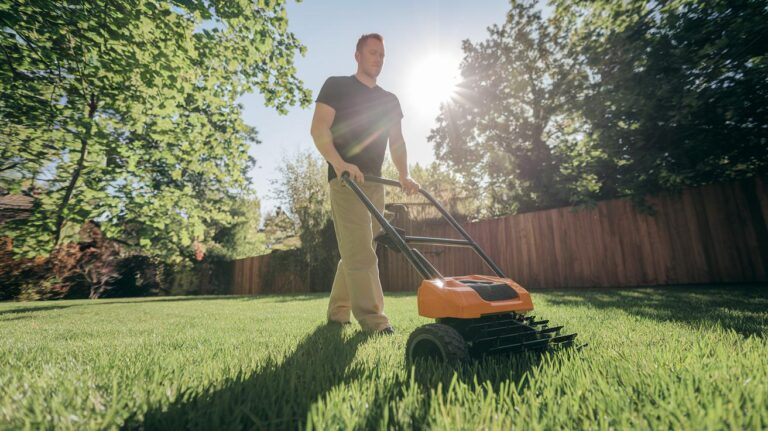
First, pick a broadcast spreader (sprinkles seeds widely) or a drop spreader (drops seeds straight down) that fits your lawn size and seed type. Next, mark off a 10-foot by 10-foot area (100 square feet) and run a test.
Catch the seeds in a bucket, weigh them, and aim for about 5 to 10 pounds of seed per 1,000 square feet. Oops, spilled a few? No big deal. Just scoop them back in.
And once your seeds are down, roll gently with a lawn roller set under 50 pounds of pressure. It helps press seeds into those fresh holes from aeration (tiny soil openings that let air and water reach roots).
Broadcast Spreader Setup
A broadcast spreader throws seeds in a fan-like pattern. Walk straight lines that barely touch at the edges so you don’t miss a spot. Check your owner’s manual for the recommended setting for your grass seed. Then run that 100 square foot test again: catch seeds in a bucket, weigh them, adjust the dial, and walk the strip until you hit the right rate. That simple routine makes sure coverage stays even.
Drop Spreader Setup
With a drop spreader, seeds fall right under each hole. Take close, parallel passes so there are no gaps. Start on a low setting and test a small patch to see how much seed lands on 100 square feet. Tweak the setting until you reach your target. This narrow-path method feels easy and cuts down on wasted seed.
Soil Preparation and Topdressing After Aeration to Boost Overseeding Success

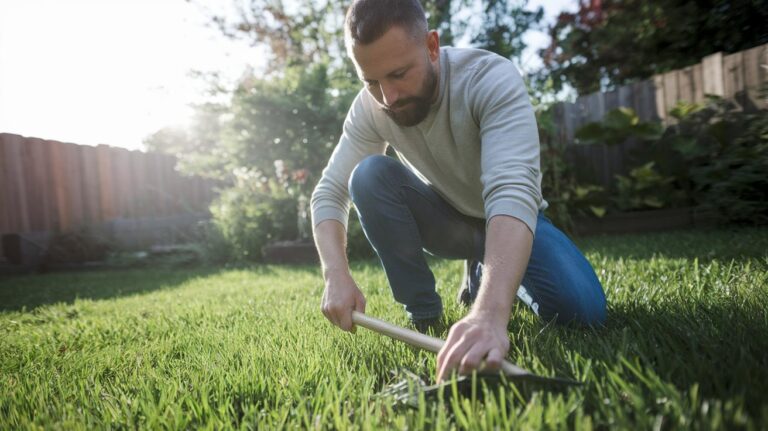
After aerating (making little holes in your soil so air and water can slip in), grab a rake and gently comb over the lawn. Think of it like brushing your hair, just enough to nestle each seed into those holes. That snug seed-to-soil contact speeds up germination (when a seed sprouts) and helps new grass pop up faster.
Next, topdress (spread a thin layer on top) with about a ¼-inch of compost (decayed organic matter that feeds plants) or screened topsoil (fine, sifted soil). You’ll feel a soft blanket of earth under your fingers. This cozy cover keeps moisture from escaping, hides seeds from curious birds, smooths out mini bumps, eases compaction (when soil’s packed too tight), and feeds those fresh seedlings.
By the way, my pup couldn’t resist sniffing the new compost, oops, a little landed on his paws. But once your grass greens up, you’ll forget all about the mess.
-
Water 2 or 3 times a day for 10 to 15 minutes. Then press a finger about one-eighth-inch into the soil (the top layer where plants grow). It should feel like a sponge you just squeezed out, like wringing a wet towel. If you notice beads of water or it runs off, ease up a bit. But if the surface cracks or feels powdery, give it an extra minute or two.
-
Once shoots reach about 2 inches tall, switch to a soak once a day or every other day so roots stretch deeper. If water still pools on top, shorten the soak. If the soil dries out too fast, add another minute or two. Deeper roots now mean sturdier plants later.
Timing Overseeding with Aeration for Optimal Germination

Ever wondered why it’s best to drop grass seed right after aeration (punching small holes in your lawn)? When you run a core aerator (machine that pulls tiny soil plugs) and then scatter seed, those tiny holes give each seed a cozy spot. That close seed-to-soil hug sparks faster sprouting.
And here’s the scoop on timing: aim for early fall or early spring. That’s when steady rain meets mild temps. The earth stays soft and damp, like a sponge, so seedlings can sip up moisture without wilting.
To nail it, stick a soil probe or garden thermometer into the top two inches of earth. For cool-season grasses (types that grow best in cooler weather) like Kentucky bluegrass or perennial ryegrass, look for soil temps around 50°F–65°F. That range tells seeds to wake up and start rooting before summer heat or frost shows up.
Warm-season grasses (types that thrive in summer heat) such as Bermuda or Zoysia prefer 65°F–75°F in the soil. That warmth says, “Hey, it’s go time,” so seeds shoot up strong blades. Get your timing right, and you’ll see quicker germination and deeper roots every season.
Post-Overseeding Maintenance: Mowing Height and Fertilizer Application
Mowing Practices
Have you watched your new seedlings (young grass shoots) peek up from the soil? Wait until they stand about 3 inches tall before you mow. Then raise your mower deck so the blades cut no lower than 2 inches. This way you avoid cutting more than a third of each blade, which can stress tiny roots and slow growth.
Oops, I almost forgot to check my blade for sharpness. A dull blade tears grass and leaves brown tips. Slide the mower slowly and overlap each pass by about ten percent so you don’t miss a strip. A clean, sharp cut helps each stem heal fast.
Patience now pays off later.
Fertilizer Application
When your turf (grass surface) feels firm underfoot and blades spring back, it’s time to feed. I love that springy bounce when I walk across it. Choose a starter formula (nutrients for young grass) or a slow-release nitrogen mix with a gentle ratio like 10-10-10. Slow-release granules break down over weeks, giving roots a steady supply without overwhelming them.
Set your spreader to the package rate and walk at a steady pace. Then water lightly right after spreading, think a quick shower, not a downpour. Wait at least seven days after your first mow before your first feeding. By the way, for a natural boost I guess try my favorite homemade lawn fertilizer with compost, bone meal, and kelp meal.
Healthy feeding means happy grass.
Troubleshooting Uneven Germination After Aeration and Overseeding

Have you ever raked seeds into the warm earth only to see patchy green? Uneven sprouting usually comes down to a few simple slip-ups. Let’s dig in!
First, think about seed-to-soil contact. If seeds just sit on top of crusted soil, they can’t reach moisture. If a hard crust (a thin, baked top) appears after rain or watering, gently loosen it with a light rake so the tiny shoots can push up. Feel how the soft soil gives under the tines.
Next, soil pH (a measure of how acid or alkaline your soil is). Aim for a 6.0 to 7.0 range. Test it with a home kit. If pH dips below 6.0, sprinkle garden lime to raise it. If it’s above 7.0, add elemental sulfur to bring it down. Kind of like adding milk to coffee, one tweak can balance the taste.
Old seeds? They might be too tired to pop. I once used last year’s seed and almost pulled my hair out. Buy fresh grass seed with a high germination rate. Store it in a dry spot until you’re ready to sow.
And watch for compacted soil under those aeration holes. If the cores aren’t deep enough, roots get choked. Think of your lawn like a sponge: poke deeper holes or run a spike aerator over it so air, water, and baby roots move freely.
Here’s a quick check-up list with easy fixes:
- Dry spots: revisit your watering steps in Post-Overseeding Maintenance.
- Thin coverage: aim for 5 pounds of seed per 1,000 sq ft and use a light raking motion.
- Runoff washout: water in short bursts so the soil soaks up moisture without washing away.
- Weed competition: learn how to identify common lawn weeds so your grass gets first dibs on water and sunlight.
Planting now sets you up for a thick, lush lawn this summer. Back to prepping your soil…
But hey, gardening isn’t perfect. Um, sometimes that crust comes right back. You know? Just keep tweaking and you’ll see those green blades pop up where you want them.
Final Words
You passed your aerator, sprinkled seed at 5–10 lbs per 1,000 sq ft, gave it a light rake and a thin compost topdressing, then kept things damp with 2–3 brief waterings each day. You learned spreader settings, soil prep, timing for cool- and warm-season varieties, plus when to mow and feed. Bare spots? A quick reseed and extra watering gets you back on track.
Keep using these overseeding techniques after lawn aeration for thicker turf, and soon you’ll enjoy a lush, green carpet underfoot.
FAQ
Why overseed immediately after aeration?
Overseeding right after aeration gives seeds direct access to fresh soil holes, improving germination and root establishment by settling them into spots where moisture and nutrients gather.
How much grass seed should I apply per 1,000 sq ft after aeration?
The recommended seed rate per 1,000 sq ft after aeration is 5–10 lbs, adjusting for lawn thinness and grass type to achieve uniform coverage and denser turf growth.
How do I improve seed-to-soil contact after overseeding?
Improving seed-to-soil contact involves gently raking seeds into aeration holes, then topping with a quarter-inch of compost or quality topsoil to hold seeds in place and lock in moisture.
What watering schedule is best after overseeding?
The best watering schedule after overseeding is 2–3 light sessions daily for 10–15 minutes each during the first two weeks, keeping soil damp without forming puddles.
When is the best time to aerate and overseed my lawn?
The best time to aerate and overseed is when soil temperatures reach 50°–65°F for cool-season grass or 65°–75°F for warm-season varieties, typically in fall or early spring.
How do I choose the right seed variety and rate for overseeding?
Choosing the right seed means matching your region and lawn type—like Kentucky bluegrass for cooler areas or Bermuda for warm climates—applied at 5–10 lbs per 1,000 sq ft.
How do I calibrate my spreader for even seed distribution?
Calibrating your spreader means running it over a measured test strip, weighing the seed applied per 1,000 sq ft, and adjusting settings on a broadcast or drop model to match your target rate.
What topdressing should I use after overseeding?
Using a quarter-inch layer of screened compost or quality topsoil as a topdressing protects seeds, retains moisture, and adds nutrients that support healthy seedling growth.
How soon can I mow after overseeding?
You can mow once new grass reaches 3 inches tall, cutting no lower than 2 inches to avoid stress and scalping, and waiting until blades can be cut evenly.
How do I fix bare spots and uneven germination?
Fixing bare spots involves reseeding patches at 5 lbs per 1,000 sq ft, lightly raking in new seed, adjusting watering, and keeping foot traffic off until grass reaches about 2 inches tall.