Best Materials for Durable Patio Lounge Chairs
The material a patio lounge chair is built from determines whether it lasts three seasons or thirty years. The cheap stamped-steel chair sold at a big-box store for $40 looks fine in spring and rusts through its weld joints by the end of summer. The teak chair that runs $700 stays standing for decades and develops a silver patina people pay extra for. The cost difference is real, and so is the longevity difference.
This guide compares the four materials that consistently hold up to outdoor weather: teak, powder-coated aluminum, HDPE wicker, and marine polymer. Each gets its own deep look at strengths, costs, care requirements, and lifespan, plus a comparison table and buying checklist to help you decide. For the small-space angle specifically (slim profiles, foldable designs, balcony-friendly sizing), see our companion guide on patio lounge chairs that fit small spaces.
The Four Materials at a Glance
| Material | Price per chair | Lifespan | Maintenance | Weight | Best for |
|---|---|---|---|---|---|
| Teak hardwood | $500–$1,500 | 30–50 years | Annual oil (optional) or let weather to silver-grey | Heavy (45–80 lbs) | Long-term backyard fixture; classic look |
| Powder-coated aluminum | $200–$700 | 15–25 years | Hose rinse; almost zero upkeep | Light (15–25 lbs) | Movable seating; rust-prone climates |
| HDPE wicker (over aluminum frame) | $300–$900 | 10–15 years | Soap-and-water wash 2–3 times per season | Medium (25–40 lbs) | Classic wicker look without rot or mold |
| Marine polymer | $400–$1,000 | 20–30 years | Hose rinse; no oiling or sealing ever | Medium-heavy (30–50 lbs) | Coastal climates; salt air exposure |
All four resist rust, rot, and UV damage in ways that lesser materials (untreated steel, raw pine, low-grade plastic) don’t. Cushion materials are separate — see the cushion-pairing notes inside each section below. With the right cushion and a winter storage habit, any of these four chairs lasts decades of summer use.
Teak Hardwood
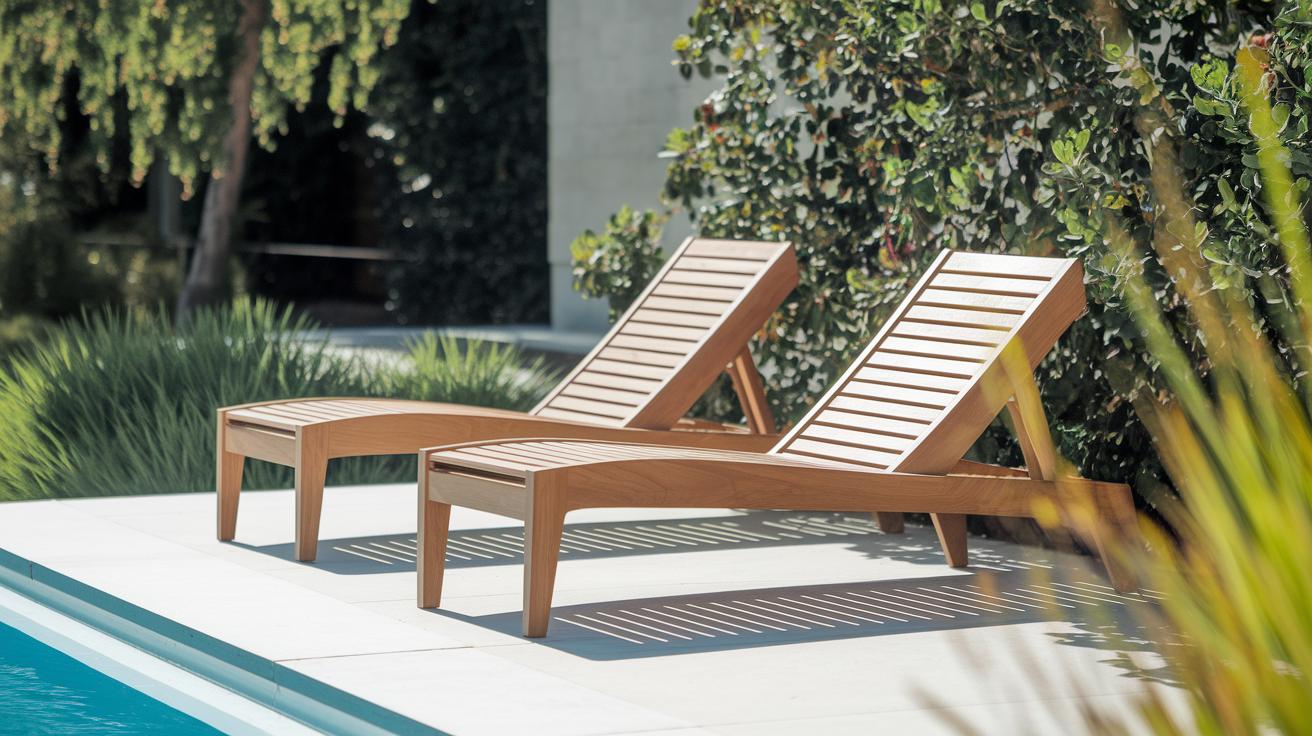
Teak is the long-term play. The dense, oily tropical hardwood (most teak comes from Indonesia, Burma, or sustainable plantations in Central America) resists rot, termites, and weather without any treatment at all. A teak chair left outside through 30 New England winters comes through in playing condition, just weathered to a soft silver-grey instead of golden brown.
Why it lasts: teak contains natural oils and silica that repel water and discourage insect damage. The dense grain doesn’t absorb moisture the way pine or cedar do, so it doesn’t expand, contract, and crack across seasons.
Care options:
- Let it weather: the simplest approach. Without any treatment, teak slowly transitions from golden brown to a silver-grey patina over 1 to 2 years. The structural strength is unchanged.
- Annual teak oil: if you prefer the warm golden color, brush on a coat of teak oil once a year. The oil maintains the original color but doesn’t extend the chair’s structural life.
- Seasonal scrub: a soft brush, mild soap, and water every few months removes dirt and any algae growth in damp climates.
Cushion pairing: teak pairs well with mid-weight cushions in neutral tones (sand, cream, pale grey) that complement either the gold or silver-grey teak finish. Sunbrella-fabric cushions in fade-resistant colors are the durable cushion choice.
Downsides: the price is real — $500 to $1,500 per chair puts teak at the premium tier. The chairs are also heavy (a single teak lounge chair runs 45 to 80 pounds), making seasonal rearrangement a real workout. And ethical sourcing matters; look for FSC-certified teak (Forest Stewardship Council) to avoid contributing to tropical deforestation.
Lifespan: 30 to 50 years with minimal care. Often outlasts the patio it sits on.
Powder-Coated Aluminum
Aluminum is the practical workhorse. Light enough to move with one hand, rust-proof by chemistry, and inexpensive enough that replacement isn’t a tragedy if a chair eventually fails. Powder-coated aluminum (the dry paint baked onto the metal in a high-temperature oven) adds color durability and a slightly more refined finish than bare aluminum.
Why it lasts: aluminum forms a thin oxide layer on contact with air that prevents further corrosion. Powder coating adds a UV-resistant outer layer that doesn’t peel or chip the way liquid paint does. Together, the combination resists rust, salt spray, and sun fading for 15 to 25 years.
Frame quality cues to look for:
- Tube wall thickness: 1.5mm or thicker for the main frame members. Below that, the chair flexes under load and develops stress cracks over time.
- Welded joints, not bolted: welded aluminum frames hold up to twisting forces better than bolted ones, where bolts loosen over years.
- Powder-coat color depth: look at a chair in direct sunlight. Quality powder coat has consistent color across all surfaces; cheap coating shows light and dark patches.
- Foot caps: rubber or plastic foot caps protect both the chair feet and your patio surface. Bare aluminum scratches composite decking and chips ceramic tile.
Cushion pairing: aluminum’s clean modern look suits brighter cushion colors and bold patterns. Quick-dry foam cushions wrapped in marine vinyl or Sunbrella fabric handle rain without absorbing water. Avoid traditional cotton or polyester cushions, which mildew within a season outdoors.
Care: hose rinse every few weeks during the season. A wipe with mild soap and water for stuck-on grime. That’s the full maintenance program.
Lifespan: 15 to 25 years. The frame outlasts the cushions; budget for cushion replacement every 5 to 7 years.
HDPE Wicker Over Aluminum
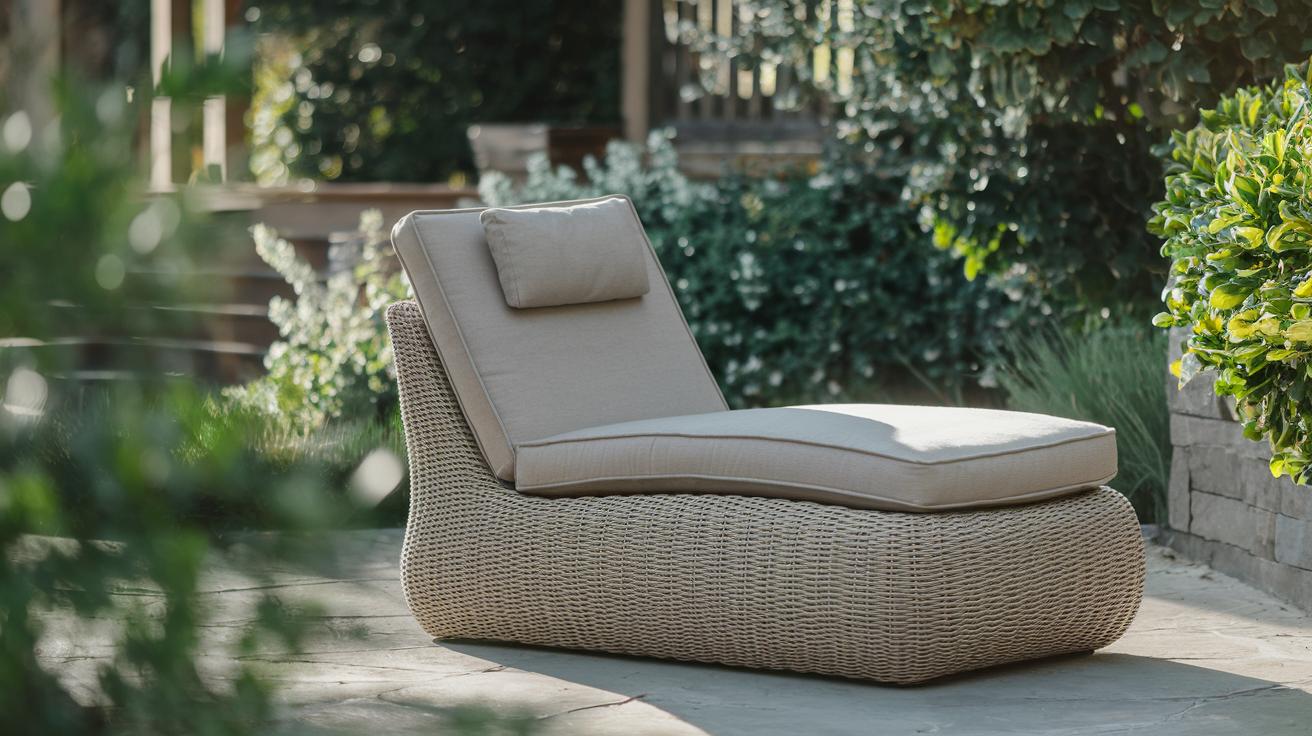
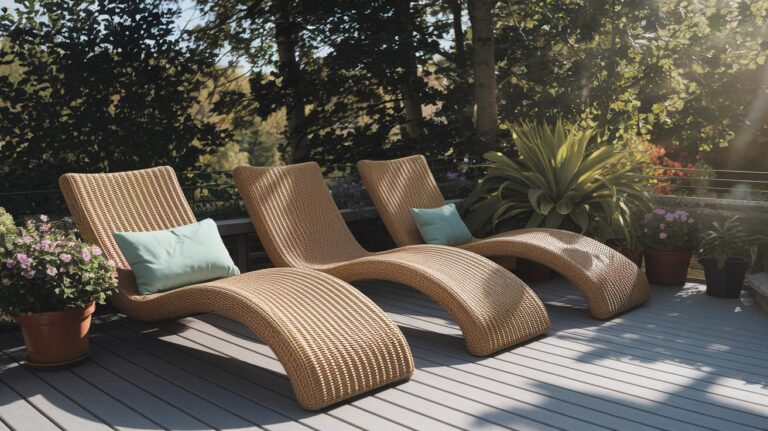
HDPE wicker (high-density polyethylene woven over an aluminum frame) delivers the classic woven-look chair without the rot, mold, and brittleness that plague natural rattan or wicker outdoors. The plastic strands are extruded and dyed, then woven by hand or machine over a powder-coated aluminum frame.
Why it lasts: HDPE is UV-stabilized so it doesn’t crack or fade like cheap plastic. Unlike natural rattan (which absorbs moisture and rots within 2 to 3 seasons outdoors), HDPE shrugs off rain, snow, and humidity. The aluminum frame underneath provides the structural backbone and inherits aluminum’s rust-resistance.
Quality cues:
- UV-stabilized strands: the label or product description should specifically call out UV stabilization. Without it, the wicker fades and becomes brittle within 3 to 5 years.
- Solid hand-woven construction: better-quality HDPE wicker is hand-woven so the strands don’t pull apart at stress points. Machine-loomed wicker can show gaps after a season of use.
- Hidden frame: the aluminum frame should be fully wrapped by the wicker. Exposed aluminum tube ends suggest cheaper construction.
- Color depth through the strand: good HDPE has color baked through the entire strand. Cheap versions are only colored on the outside and reveal white plastic when scuffed.
Cushion pairing: traditional outdoor cushions in solid earth tones or coastal blues pair classically with the wicker look. For modern interpretations, bold geometric patterns work against the neutral wicker base.
Care: a soft brush, mild soap, and water 2 to 3 times per season clears dust and pollen from the weave. A garden hose rinse handles the rest. Spider webs and dead leaves accumulate in the weave more than they would on flat surfaces — periodic brushing keeps the chair looking tidy.
Lifespan: 10 to 15 years for the HDPE wicker itself; the aluminum frame lasts longer. Re-weaving worn HDPE strands isn’t generally practical, so chair replacement happens when the wicker shows real wear.
For more guidance on the visual styling of wicker furniture and how to integrate it into a backyard design, see our walkthrough on best wicker patio lounge chairs.
Marine Polymer
Marine polymer (high-density polyethylene plank, often made from recycled milk jugs) is the newest of the four materials and the most weather-resistant of the bunch. Originally developed for dock decking, the same plank material now shows up as the slat-style construction of modern outdoor lounge chairs.
Why it lasts: marine polymer is UV-stabilized, salt-resistant, mold-resistant, and immune to rot. It doesn’t absorb water, doesn’t crack in freeze-thaw cycles, and doesn’t need sanding, sealing, oiling, or painting — ever. The “wood-look” surface mimics teak or cedar grain but never weathers.
Quality cues:
- Recycled content: better brands publish the recycled content percentage (often 50-95%). Beyond environmental value, recycled HDPE often has slightly better UV stability than virgin polymer.
- Plank thickness: at least 3/4 inch for the seat and back slats. Thinner planks can flex uncomfortably under load.
- Stainless steel hardware: the fasteners holding the planks together should be stainless steel. Carbon steel rusts and stains the polymer around it.
- Joint construction: look for tongue-and-groove or interlocking joints rather than just butted edges. The chair holds shape better over time.
Cushion pairing: marine polymer chairs often look good unadorned — the slat construction is intentionally minimalist. For added comfort, thin cushions (1 to 2 inch) in marine vinyl handle wet conditions without absorbing water. Skip thick foam cushions, which clash with the chair’s modern lines.
Care: hose rinse and a wipe-down with mild soap when needed. That’s it. No sanding, no sealing, no annual oil. Bird droppings or stuck-on dirt come off with a soft brush and soap.
Downsides: the chairs are heavier than aluminum (30 to 50 pounds for a lounge chair). The minimalist slat look isn’t everyone’s aesthetic — it reads more contemporary or coastal than classic. And the price point ($400 to $1,000) is between aluminum and teak, so it’s not the budget choice.
Lifespan: 20 to 30 years. Marine polymer is the closest of the four materials to a “lifetime chair” without the price tag of teak.
Choosing by Budget and Climate
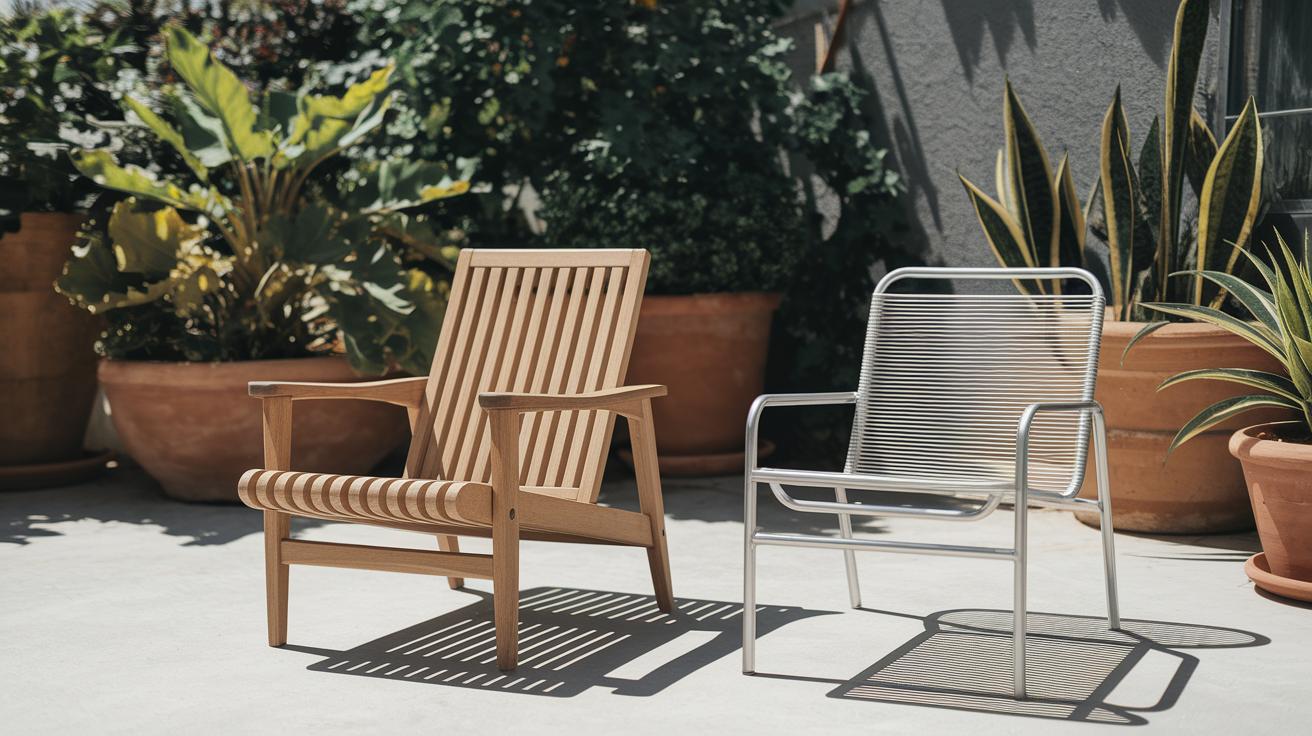
The material that’s right for you depends on three things: how much you want to spend, what your local climate throws at the chairs, and how often you’ll move them around.
By budget:
- Under $300 per chair: powder-coated aluminum is the only realistic option. Budget HDPE wicker exists but tends to be the cheaper machine-loomed version that fades within 3 years.
- $300–$600 per chair: mid-range aluminum, quality HDPE wicker, or entry-level marine polymer.
- $600–$1,000 per chair: premium aluminum, top-tier HDPE wicker with hand-woven construction, mid-range marine polymer, or entry-level teak.
- $1,000+ per chair: quality FSC-certified teak.
By climate:
- Coastal / salt air: marine polymer is purpose-built for this; teak does well too. Avoid aluminum if it isn’t powder-coated, since salt accelerates uncoated aluminum corrosion.
- Hot dry climates (Southwest): teak weathers gracefully; powder-coated aluminum and marine polymer both handle UV well. HDPE wicker can become brittle in extreme heat after many years.
- Cold winter climates: all four materials survive freeze-thaw with the right storage. Bring cushions inside; chair frames can stay outdoors if you accept faster weathering, or store in a garage or shed for longer life.
- Humid temperate: aluminum and marine polymer resist the moisture best; teak is fine but may need more frequent scrubbing for algae; HDPE wicker can develop mildew in deep crevices if not periodically cleaned.
By portability needs:
- Frequent moving (you rearrange the patio often): aluminum is uniquely light and easy to handle.
- Set-and-forget seating: teak, HDPE wicker, or marine polymer all work — their weight is a feature, since chairs don’t blow over in storms.
For the broader question of how lounge chair choice integrates with the rest of your outdoor space — seating arrangement, shade, lighting — see our guide on creating a tranquil space in your yard.
The right material is the one that matches your budget today and won’t need replacing in 5 years. All four of these last long enough that the upfront price spread out across the lifespan often makes the more expensive material the cheaper choice in the long run.
Patio Chair Material FAQ
What are the most durable materials for outdoor patio lounge chairs?
The four materials that consistently last outdoors are teak hardwood (30-50 years), marine polymer (20-30 years), powder-coated aluminum (15-25 years), and HDPE wicker over an aluminum frame (10-15 years). Each resists rust, rot, and UV damage in ways that lower-grade materials (untreated steel, raw pine, low-grade plastic) don’t.
Why is teak considered the best wood for outdoor lounge chairs?
Teak contains natural oils and silica that repel water and discourage insects without any treatment. The dense grain doesn’t absorb moisture, so it doesn’t expand, contract, or crack across seasons. A teak chair left outside through decades of winters weathers gracefully to a silver-grey patina without losing structural strength.
Is aluminum a good choice for patio lounge chairs?
Powder-coated aluminum is excellent for outdoor lounge chairs. It’s light (15-25 pounds for easy moving), rust-resistant by chemistry (forms a protective oxide layer), and the powder coating adds UV protection that doesn’t peel or chip like liquid paint. Best for rust-prone climates and anyone who rearranges patio seating often.
What makes HDPE wicker weather resistant?
HDPE wicker uses UV-stabilized high-density polyethylene strands woven over a powder-coated aluminum frame. The plastic doesn’t crack or fade like cheap plastic, doesn’t rot like natural rattan, and the aluminum frame underneath inherits aluminum’s rust-resistance. Quality HDPE has color baked through the entire strand so it doesn’t reveal white plastic when scuffed.
How long do marine polymer lounge chairs last?
Marine polymer chairs last 20 to 30 years with essentially no maintenance. The high-density polyethylene plank material (often made from recycled milk jugs) is UV-stabilized, salt-resistant, rot-proof, and immune to freeze-thaw damage. No sanding, sealing, oiling, or painting needed at any point in its lifespan.
How do I choose the best patio chair material for my budget?
Under $300: powder-coated aluminum. $300-$600: mid-range aluminum, quality HDPE wicker, or entry-level marine polymer. $600-$1,000: premium versions of the above plus entry-level teak. Over $1,000: quality FSC-certified teak. Match the material to your climate (marine polymer or teak for coastal; aluminum for dry; HDPE wicker for moderate) and how often you’ll move the chairs.
Do outdoor lounge chair frames need replacement cushions?
Frames outlast cushions in almost every material. Quality outdoor cushions in Sunbrella fabric or marine vinyl last 5 to 7 years before fading or fabric breakdown. Budget cushion replacement separately from the chair itself. Bringing cushions inside for the off-season doubles their lifespan compared to year-round outdoor storage.