

How to Build an Herb Wall Garden at Home
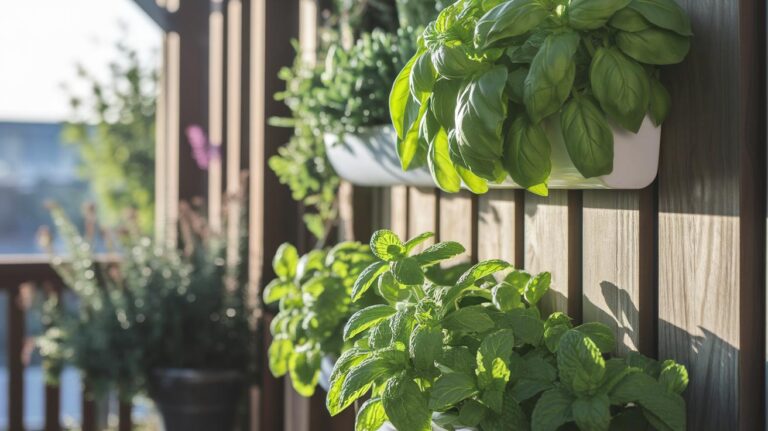
An herb wall garden brings fresh basil, thyme, mint, and other culinary herbs within arm’s reach of the kitchen — without taking up counter or floor space. The setup works equally well indoors (against a kitchen wall) or outdoors (on a patio fence or shed wall). The key decisions are where to put it, what kind of planter system to use, how to mount it securely, and how to water and light it. Done well, the result is a living spice rack that pays for itself in fresh-herb savings within a season. Here’s the full DIY walkthrough.
Where to Put Your Herb Wall Garden
Location drives nearly every other decision in an herb wall garden. The criteria, in priority order:
Light. Herbs need 4–6 hours of direct light daily. Indoors, that means a south- or east-facing window wall. A north-facing wall doesn’t get enough natural light for most culinary herbs; you’ll need supplemental grow lights. Outdoors, look for a wall with morning sun but afternoon shade in hot climates, or full sun in cooler climates.
Wall material. Different walls accept mounting hardware differently. Wood-frame interior walls work easily with studs and drywall anchors. Brick or concrete exterior walls need masonry anchors. Tile or stone backsplashes are tricky and usually not worth mounting onto. If you’re renting, look for walls where removable hardware is okay — toggle anchors that leave small holes are usually acceptable; nails that leave splinters or paint damage are usually not.
Plumbing access. Indoor herb walls benefit from being near a sink for watering. Outdoor walls benefit from being near a hose bib or downspout. If you’re going to install drip irrigation (covered below), being within 25 feet of a water source matters.
Visual prominence. An herb wall garden is also decor. Picking a spot that’s visible from where you spend time (cooking area, dining nook, patio seating) makes the whole project more enjoyable. Don’t tuck it into a closet just because the light is good — get the light right and put the wall somewhere you’ll see it daily.
If you don’t have a good wall but still want vertical herb growing, the principles work on a freestanding frame too. For winter-specific indoor setups, see our guide to how to grow fresh herbs indoors all winter.
Choosing the Right Planter System

Six common planter approaches, each with practical trade-offs:
| Planter type | Pros | Cons | Cost range |
|---|---|---|---|
| Wooden wall planter (board with cut-out pockets) | Sturdy, warm look, indoor and outdoor use | Needs sealing for outdoor use; can warp | $80–$200 DIY or pre-built |
| Metal frame kit (steel or aluminum) | Slim profile, strong hold on masonry, won’t rot | Visible hardware; can rust if untreated | $100–$300 |
| Felt pocket planter | Slim fit in narrow spots, easy to install, no hardware to install | Needs frequent watering; pockets stay wet | $25–$80 |
| PVC pipe planter (cut-section PVC) | Extremely affordable, customizable lengths | Limited soil space; needs DIY assembly | $15–$40 |
| Mason jar wall (jars on shelves or hooks) | Charming look, low cost, see roots | Heavy when full; breakable; small soil volume | $30–$80 |
| Recycled pallet wall | Cheapest option, rustic look, eco-friendly | Requires sealing and lining; uneven boards | $10–$30 |
If you want a ready-made smart system rather than DIY, there are several established commercial kits worth knowing: Click & Grow Smart Garden (self-watering with built-in LEDs, $100–$300 depending on size), WallyGrow Eco Wall Planter (felt-based modular pockets, $30–$60 per pocket), and the IKEA ODLING rail system paired with their VÄXER plant pots ($20–$40 total). The Click & Grow systems run on water reservoirs and LED grow lights, making them the most plug-and-play option for someone who doesn’t want to manage watering manually.
For a budget DIY build: mason jars, hooks, and a shallow shelf comes in around $30. For a mid-range pre-built kit with drip irrigation: about $200. For a smart self-watering kit with grow lights: $250–$400.
Choosing and Arranging Herbs
Container size in a wall planter is typically smaller than what’s ideal for individual herb pots. Each pocket or container holds 1–2 cups of soil — enough for one small herb plant. Pick herbs that stay small or that tolerate frequent harvesting:
Sun-loving herbs (4–6+ hours direct light):
- Sweet basil (Genovese, Thai, lemon varieties) — needs warmth and bright light; pinch flower buds to keep producing.
- Thyme (English, French, lemon) — compact, drought-tolerant once established.
- Rosemary — wants the most light of the common culinary herbs; struggles in low-light indoor situations.
- Oregano — easy and forgiving; trim regularly to keep compact.
- Sage — slow-growing but reliable; one plant produces enough for occasional use.
Shade-tolerant herbs (3–4 hours of light works):
- Mint (peppermint, spearmint, chocolate mint) — grow in its own dedicated pocket; mint’s runners will choke out neighbors in shared containers.
- Chives — easiest of all; tolerates low light, recovers fast from cutting.
- Parsley (flat-leaf or curly) — moderate light tolerance; produces all season from a single plant.
- Cilantro — prefers cooler temperatures; bolts (goes to seed) quickly in heat.
Two arrangement rules that matter:
- Group by water needs. Don’t put rosemary (drought-tolerant) next to basil (moisture-loving) — you’ll either overwater the rosemary or underwater the basil. Cluster drought-tolerant herbs together and moisture-lovers together.
- Group by light needs. Put sun-lovers on the top row (closest to a light source) and shade-tolerant herbs on lower rows. Vertical light gradients are very real on a wall garden.
For winter-specific herb selection — when light is limited and you may be relying on grow lights — chives, parsley, and thyme are the most forgiving starter herbs. Save basil and rosemary for the brightest spots or until you have a grow-light setup in place.
Mounting Securely on Different Wall Types

Mounting hardware varies based on wall type. The wrong choice can lead to a planter pulling out of the wall when it’s full of wet soil — significantly heavier than empty.
Standard wood-frame interior wall (drywall over studs):
- Use a stud finder to locate framing studs (usually every 16 inches).
- For light planters (under 25 lbs full), screw directly into a stud with 2.5-inch wood screws.
- For heavier planters (25+ lbs full), use toggle bolts or molly bolts to spread the load across the drywall behind the stud.
- Always check level before committing to the mounting points.
Brick or concrete wall (outdoor or basement):
- Use a hammer drill with a masonry bit sized to match your sleeve anchors.
- Drill into mortar joints rather than the brick face when possible — easier to patch later.
- Insert sleeve anchors and screw the bracket into them.
- Wear a dust mask — masonry dust is harsher than wood dust on lungs.
Tile backsplash or stone wall:
- Use a tile-specific drill bit (carbide-tipped) and drill at low speed to avoid cracking.
- Place painter’s tape over the drill point to prevent skidding.
- Insert plastic wall anchors before screwing the bracket in.
Renter-friendly options:
- 3M Command strips (rated for 5+ lbs) work for very light planters like felt pockets.
- Tension rods between two walls support light planter setups in tight spaces.
- Toggle anchors with small holes leave repairs that are easy to spackle when you move out.
- Freestanding plant stands (no wall mounting at all) work in apartments with strict policies.
A safety check after installation: hang the bracket, fill one pot to test weight, and lean on it firmly to test stability. If it shifts or feels loose, address the mounting before adding more pots. A wall garden that pulls out of the wall and falls is a real injury risk in a kitchen.
Soil, Watering, and Lighting Setup
Soil mix: Use a quality potting mix designed for containers — never garden soil, which compacts in small containers and drowns roots. A good mix for wall planters: 2 parts standard potting mix, 1 part coco coir or compost, and a handful of perlite per gallon of mix. The coco coir holds moisture (important in small containers that dry out fast); the perlite improves drainage. Top-dress with an organic slow-release fertilizer at planting and refresh every 6–8 weeks. For more on specific brand recommendations, see the best soil mix for container gardening guide.
Watering approaches — three main options:
- Drip irrigation uses 1/4-inch tubing with individual emitters at each pocket. Run from a hose bib (outdoor) or a small electric pump tank (indoor). Set on a timer for hands-off watering. Best for larger wall gardens (6+ pockets) where manual watering takes real time. Setup cost: $50–$100.
- Self-watering wicks connect a water reservoir to each pocket via a cotton or nylon wick. Plants draw water as they need it. Works well for small to medium walls (4–8 pockets). Doesn’t need power. See our walkthrough of a self-watering vertical herb garden setup for details.
- Hand watering with a long-spout can or pitcher works fine for small walls (1–4 pockets) or when you want hands-on garden time. Felt pockets need watering every 2–3 days; deeper pots can go 5–7 days between waterings.
Whichever approach you pick, check soil moisture by feel before watering — stick a finger into the top inch of soil and water only if it feels dry. Overwatering is the most common killer of indoor herbs.
Lighting: If your wall gets less than 4 hours of direct daylight, supplement with LED grow lights. Look for full-spectrum (5000–6500K) LED bars or panels — 20–40 watts handles a 6-pocket wall. Mount the light 6–12 inches above the herbs and run on a timer for 12–14 hours daily. Skip the pink/purple “blurple” lights that scream “grow operation” — modern white full-spectrum LEDs work just as well and look much better.
Climate: Most culinary herbs prefer 60–75°F and 40–60% humidity. Forced-air heating drops indoor humidity to 20–30% in winter — too dry for basil especially. A small pebble tray under the wall (a shallow dish with water and pebbles) raises local humidity. A small fan helps too, both for humidity and for the gentle air movement that keeps mildew away.
Maintenance, Harvesting, and Seasonal Care

An established herb wall garden needs roughly 15 minutes of maintenance per week — less than most people spend on a single indoor potted plant. The routine:
Weekly:
- Check soil moisture in each pocket. Water as needed (not on a fixed schedule).
- Inspect for pests — aphids, spider mites, fungus gnats. Treat early with a water spray, neem oil, or insecticidal soap.
- Pinch off any flower buds on basil, mint, and oregano. Flowering signals the plant to stop producing leaves.
- Snip a few sprigs for cooking — harvesting is a form of maintenance for herbs.
Every 4–6 weeks:
- Light feeding with diluted liquid organic fertilizer (fish emulsion, kelp meal, or compost tea).
- Prune back leggy growth on mint, basil, and parsley — up to one-third of the plant at a time.
- Rotate planters a quarter-turn so all sides get even light.
For seasonal feeding routines that work across vertical herb gardens specifically, our fertilization schedule for vertical herb gardens has more detail on rates and timing.
Seasonal transitions:
- Spring: Refresh tired soil if it compacted over winter. Add new plants in any empty pockets. Increase watering as days lengthen.
- Summer: Peak growing season — check water daily on hot weeks. Harvest frequently to encourage continued production.
- Fall: Reduce watering as growth slows. Bring outdoor herb walls inside before first frost (basil dies at 35°F+).
- Winter: Indoor herbs may slow significantly under low light. Supplement with grow lights, reduce watering, skip fertilizing.
A well-maintained herb wall garden lasts 2–3 years on its original plants before benefiting from a full refresh — repotting with new soil, replacing any plants that have declined, and a deep cleaning of the structure. Most herbs (basil, cilantro especially) are annuals that need replacing yearly; perennial herbs (thyme, rosemary, oregano, sage) can run multi-year if happy.
Putting Your Herb Wall to Work
Building the wall is the project; using the herbs is the reward. The first few weeks after install, the plants establish themselves and won’t have much to harvest. By month two, most herbs are vigorous enough to handle weekly snipping. By month three, you’ll be harvesting more than you can use and the wall pays for itself in grocery savings (fresh basil at supermarket prices: $3 for a small clamshell; one wall plant produces 10x that in a month).
The simplest path to success: start with 4–6 herbs you actually cook with frequently. A wall garden full of herbs you don’t use is a wall garden that gets neglected. For most home cooks, that means basil, parsley, chives, and thyme as the core four, with maybe oregano and mint added if you make Italian food and cocktails respectively.
By year two, you’ll have a clearer sense of which herbs you reach for and which sit untouched. Expand or simplify accordingly. The wall garden becomes more useful — not less — as you optimize it for your actual cooking patterns.
Common Questions About Herb Wall Gardens
Can you grow herbs on a wall?
Yes. Mount planters or pocket systems on a wall that gets at least 4–6 hours of direct light daily (south or east-facing indoors; full sun outdoors). Use a sturdy mounting approach matched to the wall material — studs and toggle bolts for drywall, sleeve anchors for masonry. Water regularly and pick herbs sized for small containers.
How do you build a DIY herb wall garden?
Pick a well-lit wall (4–6 hours direct light), choose a planter system (mason jars, felt pockets, wooden boards, or a modular panel kit), locate studs or use proper anchors for the wall type, mount the planters securely, fill with high-quality potting mix, and plant herbs. A basic DIY build runs about $30; a kit with drip irrigation runs about $200.
What herbs are best for wall planters?
The most forgiving wall-planter herbs are basil, thyme, chives, parsley, oregano, and rosemary in full-sun spots; mint, cilantro, and chives also work in shadier spots. Mint should always have its own dedicated pocket — its runners will crowd out neighbors. Match herbs to the light each pocket actually gets.
Which herbs should not be planted together?
Avoid mixing herbs with different water needs: rosemary and thyme (drought-tolerant) shouldn’t share containers with basil or cilantro (moisture-loving). Mint should always be isolated — its aggressive root system crowds out neighbors. Heavy feeders like basil compete with light feeders like cilantro for nutrients, so keep them in separate pockets.
How much light does an herb wall garden need?
4–6 hours of direct light daily for most culinary herbs. Sun-lovers (basil, rosemary, oregano) need the brightest spots. Shade-tolerant herbs (chives, parsley, mint) tolerate less. If natural light is short, a 20–40 watt full-spectrum LED grow light running 12–14 hours daily on a timer fully replaces sunlight.
How often should I water an herb wall garden?
Check soil moisture by feel before watering — stick a finger 1 inch into the soil and water only if dry. Felt pockets typically need watering every 2–3 days because they dry quickly. Deeper pots can go 5–7 days between waterings. Drip irrigation on a timer or self-watering wicks reduce daily maintenance significantly.
Can I install an herb wall garden in a rental apartment?
Yes — use removable hardware like 3M Command strips (rated for 5+ lbs) for very light felt pockets, toggle anchors that leave small spackle-friendly holes, tension rods between walls for narrow spaces, or freestanding plant stands that don’t require any wall mounting. Always check your lease before drilling into walls.
What are popular indoor wall-mounted herb garden kits?
Click & Grow Smart Garden (self-watering with built-in LEDs, $100–$300 depending on size) is the most plug-and-play smart kit. WallyGrow Eco Wall Planter uses felt-based modular pockets ($30–$60 per pocket). The IKEA ODLING rail system paired with VÄXER plant pots is the cheapest pre-built option ($20–$40 total).
How do I maintain an herb wall garden?
Weekly: check soil moisture, inspect for pests, pinch off flower buds, harvest sprigs for cooking. Every 4–6 weeks: light feeding with liquid organic fertilizer, prune back leggy growth, rotate planters a quarter-turn for even light exposure. Refresh tired soil seasonally and replace declining plants annually.



One Comment
Comments are closed.