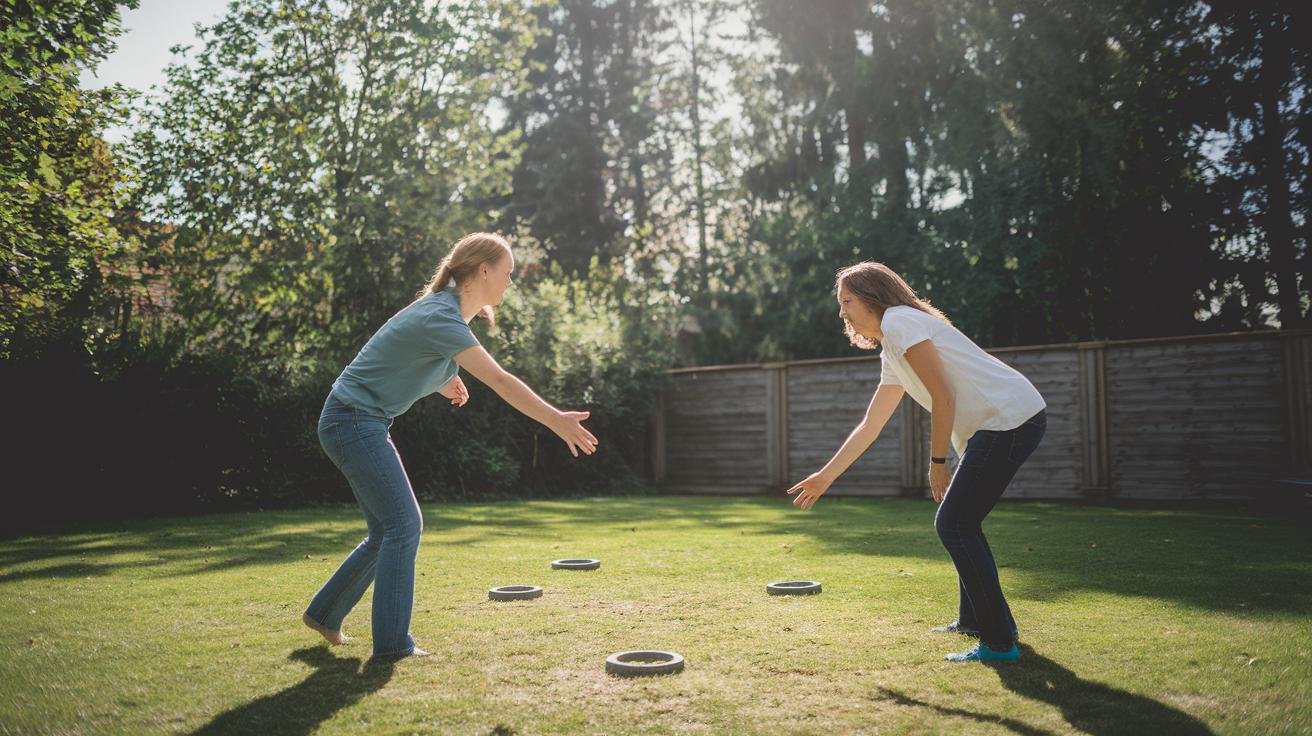
How to Play Horseshoes from Setup to Scoring
Horseshoes is one of those backyard games that looks simple and reveals surprising depth the more you play it. You need four horseshoes, two metal stakes, and a patch of level ground about forty feet long. The basic goal is to toss your horseshoes as close to the opposite stake as possible — ideally encircling it completely. First player to 21 points wins.
This guide covers everything: court setup, equipment, official rules, pitching technique, strategies, practice drills, and how to keep your gear in good shape. If you want more ideas for outdoor games while you’re at it, see our roundup of classic lawn games.
Setting Up Your Horseshoes Court
A regulation horseshoes court is 50 feet long by 10 feet wide, with two stakes set 40 feet apart. Each stake is driven about 15 inches into the ground so that roughly 14–15 inches protrudes above the surface. Stakes lean forward (toward the opposing stake) at a slight angle — about 3 inches off vertical — so horseshoes that loop over the top tend to grip rather than bounce off.
Around each stake, mark a pitching box that’s 6 feet wide and 10–15 feet long. The foul line sits 37 feet from the opposite stake for adults (27 feet for junior players). Any throw released from in front of the foul line scores zero, regardless of where the horseshoe lands.
For the pit surface around each stake, clay is the traditional choice — it grips horseshoes without bouncing them. Rake the clay into a smooth, level surface and mist it lightly before play so it holds a shoe without turning muddy. Sand works as an alternative and is easier to maintain; it won’t grip quite as firmly, but it’s forgiving for casual backyard play.
For portable play on a patio or driveway, you can buy adjustable frame kits with rubber-based stakes that sit on the surface rather than being driven into the ground. These won’t replicate a regulation clay pit, but they’re a reasonable option when you can’t put stakes in the ground.
Equipment You Need to Play Horseshoes
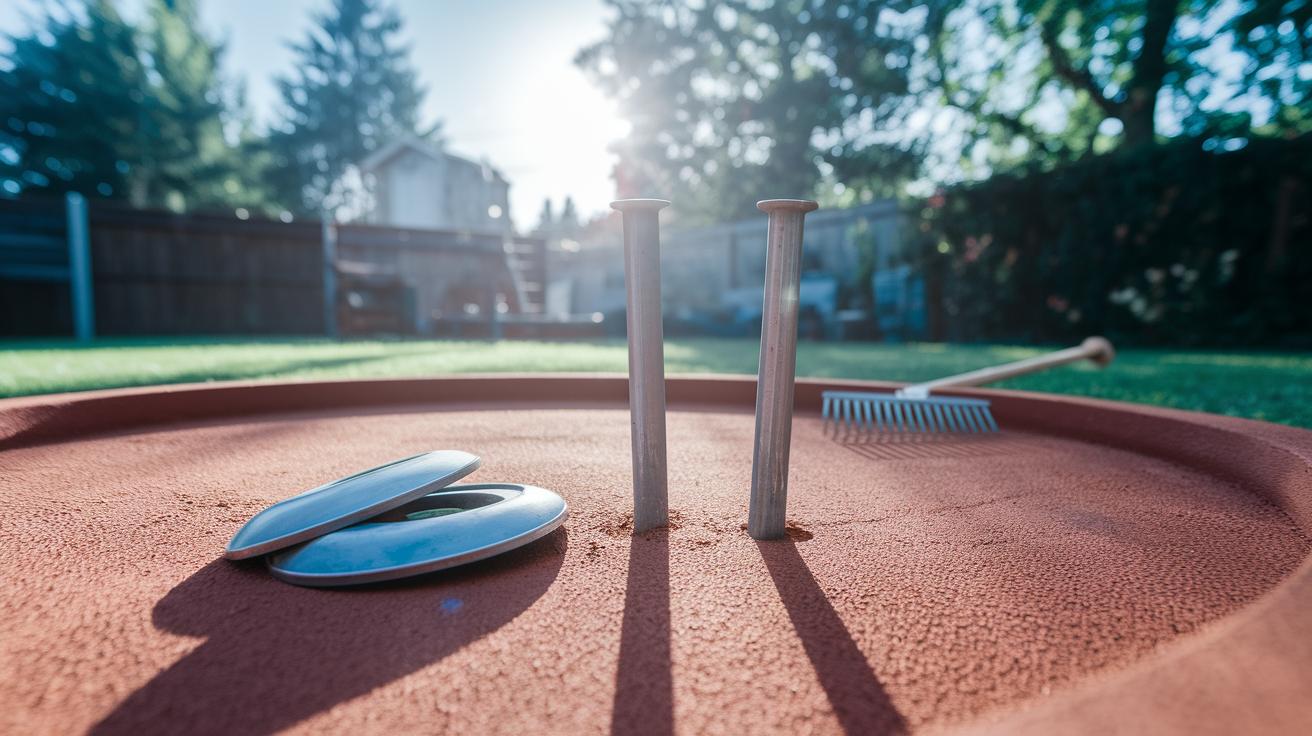
The basics: four horseshoes (two per player), two metal stakes, and a rake for pit maintenance. Each horseshoe weighs about 2.5 pounds and measures roughly 7.25 inches wide and 7.5 inches tall. Here’s what to look for when buying:
- Steel vs. cast iron. Steel horseshoes hold their shape longer and are the standard for competitive play. Cast iron feels heavier in hand and is fine for casual backyard use. Either works.
- Beveled edges. Look for horseshoes with beveled (angled) edges on the inside — they dig into the pit surface rather than bouncing off flat clay, which means more shoes stay where they land.
- Matte finish. A matte or dull finish reduces glare in afternoon sun. Not essential, but easier on the eyes.
- Nylon covers. Slip-on nylon sleeves quiet the clanging on hard surfaces and protect grass or concrete if you’re playing on a non-standard surface.
You’ll also want a steel tape measure for close calls (when neither player can agree on which shoe is closer), chalk or spray paint for marking foul lines, and a bucket or bag for storing horseshoes between sessions.
Rules and Scoring in Horseshoes
The basic rules are straightforward. Each inning, both players throw two horseshoes at the opposite stake. Points are tallied, then players walk to the other end and throw back. First to 21 wins.
Here’s how scoring works:
| Shot Type | Points | Condition |
|---|---|---|
| Ringer | 3 | Horseshoe fully encircles the stake (confirmed with a straight-edge) |
| Leaner | 1 | Horseshoe touches stake and leans against it |
| Closest shoe | 1 | Nearest shoe within six inches of the stake (only one player scores per inning) |
| No score | 0 | Shoe farther than six inches, or released past the foul line |
Cancellation scoring (used in most regulation play): if both players throw ringers in the same inning, they cancel out and neither scores. Same for closest shoes — only the player with the nearer shoe scores. This means a single great throw can erase your opponent’s great throw.
Matches end when one player reaches 21. If you want shorter games, set the target at 11 or 15 — popular for casual backyard play with younger kids involved. For tournament formats, single-elimination brackets work well for larger groups; round-robin pools give everyone more throws and are better for smaller gatherings.
Pitching Technique and Proper Stance
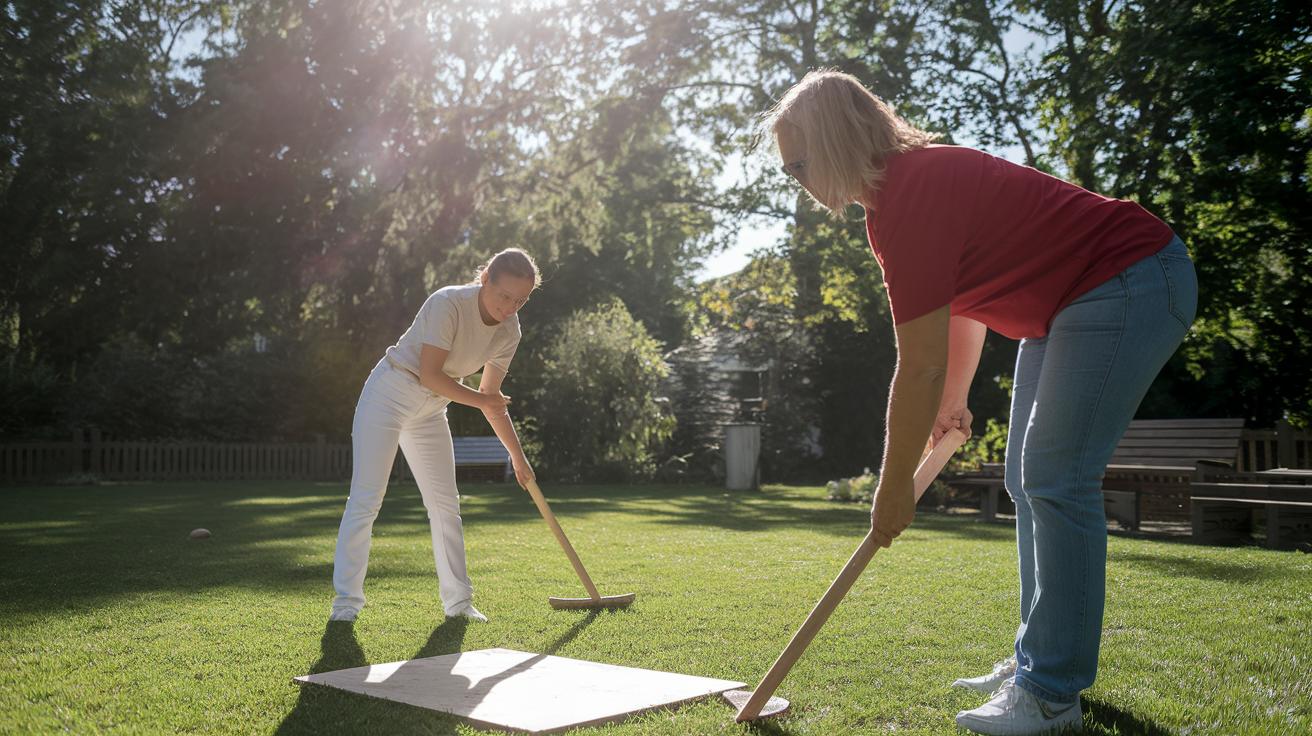
Stand behind the foul line with your feet shoulder-width apart and your toes pointing toward the stake. Bend your knees slightly — a stiff-legged stance makes it hard to control your arm swing. Pivot on your back foot for additional power or to fine-tune your aim direction.
Hold the horseshoe at its open end (the two prongs pointing away from your palm). Most players use one of two grips:
- Two-finger grip: Wrap fingers around both shanks of the open end. Good for beginners; gives solid control during the swing.
- One-finger grip: Rest the horseshoe across the palm with the index finger inside the open end. More common among experienced players; gives a cleaner release.
The swing motion is a pendulum: arm straight back, then straight forward in a smooth arc. Keep the motion fluid — jerky swings produce inconsistent releases. Release the shoe just as your arm passes your hip, with your palm facing the target.
Spin control: A single rotation during flight is the goal. More than one rotation causes the shoe to arrive at an unpredictable angle; no rotation makes the flight path unstable. Add a subtle wrist flick at the point of release to get that single clean turn. With practice, this becomes automatic.
Follow-through: After releasing, let your arm continue pointing toward the stake. Stopping your arm abruptly at release pulls the shoe off-line. A full follow-through reinforces consistent aim and builds muscle memory faster than any drill.
Strategies, Variations, and Advanced Tactics
Once you can reliably land shoes near the stake, strategy starts to matter. The main tactical tools:
- Blocking. Land your shoe just short of the stake to create an obstacle your opponent’s shoe has to clear or go around. Even if it doesn’t score a point, it can knock a well-placed shoe away from the stake or prevent a ringer.
- The leaner. A shoe that rests against the stake scores one point and often disrupts an opponent’s next throw by creating an awkward obstacle near the stake.
- Cancellation play. If you know you can throw a ringer, wait for your opponent to throw first. If they throw a ringer, match it — you’ll cancel each other out rather than letting them score three points. Then your second throw can score unopposed.
For family and backyard variations, a few simple adjustments make the game more inclusive:
- Move stakes to 25–30 feet apart for younger players or beginners.
- Use softer rubber horseshoes for play around small children.
- Set a lower scoring target (11 or 15 points) to keep games moving.
- In team play, pairs alternate throws: Player A1 and B1 toss at one stake, then A2 and B2 at the other. Partners’ scores combine each inning.
If you enjoy games like this, bocce ball and backyard games for kids are worth exploring for more lawn-game options that work for mixed-age groups.
Practice Drills and Common Mistakes
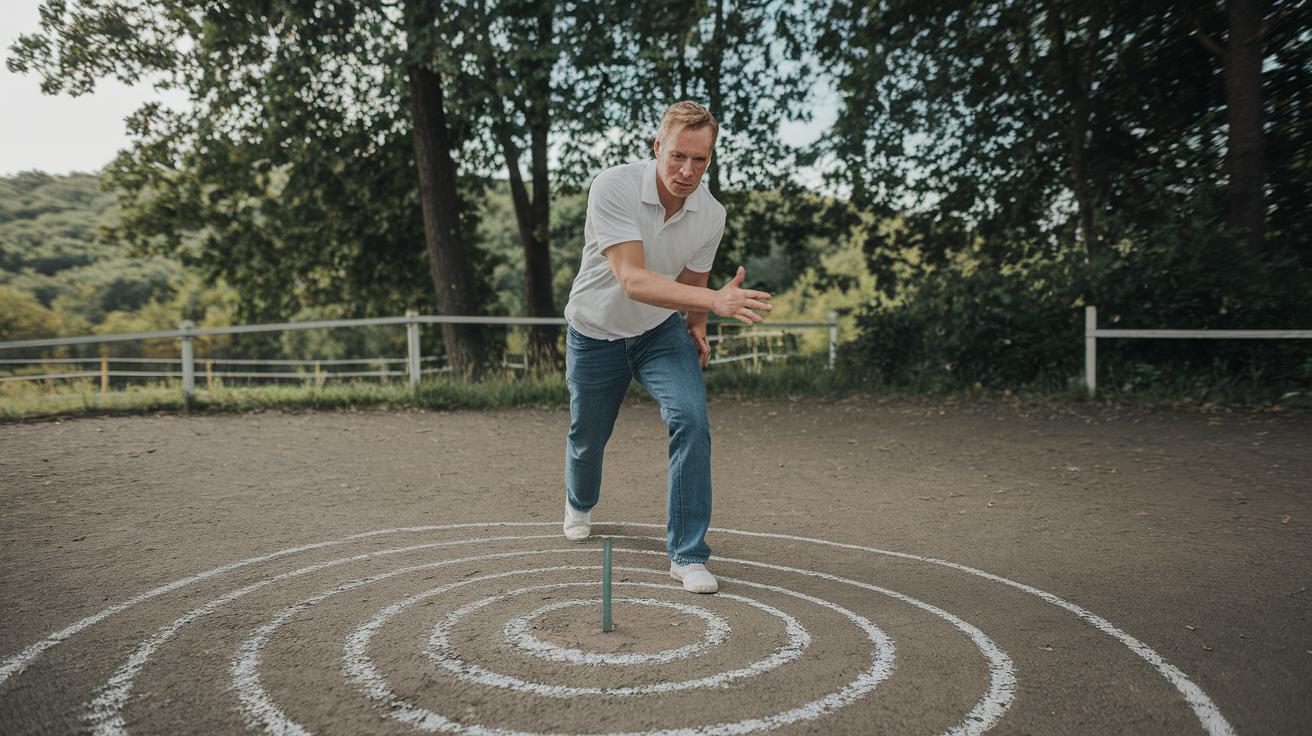
Consistent throwing is a physical skill — it takes repetition to lock in. Three drills accelerate the process:
-
Distance calibration. Set markers at 20, 30, and 40 feet from the stake. Throw ten shoes from each distance, noting where each lands. The goal isn’t accuracy yet — it’s learning how much force each distance requires. Adjust your backswing length (not your throwing speed) until you can land shoes reliably at each marker.
-
Target circles. Draw rings in the pit at 6, 12, and 18 inches from the stake. Work from the 18-inch circle inward: throw until you land two consecutive shoes inside each ring before moving to the smaller one. This builds precision without the pressure of a full game.
-
Spin consistency. Alternate five throws with a full wrist-flick spin and five with a flat, spin-free release. Compare where each type lands. Most players find one style more consistent — use that as your default and refine it.
The most common beginner mistakes:
- Overthrowing. Too much force sends shoes wide. A shorter backswing with controlled acceleration beats a hard throw every time.
- Dropping the follow-through. Stopping your arm at release pulls the shoe left or right. Keep pointing at the stake until the shoe hits.
- Stepping past the foul line. It’s a zero regardless of how good the throw was. Train yourself to finish your throw with weight on your back foot.
- Ignoring spin. A shoe that tumbles or wobbles in flight is unpredictable. Consistent rotation — one full turn for most distances — keeps the shoe on-plane.
Safety and Equipment Care
Horseshoes are heavy steel objects moving at speed — a few simple safety habits prevent accidents.
- Never throw when anyone is standing downrange. Players and spectators wait behind the throwing line until both shoes have landed.
- Use underhand throws only. Overhand throws are dangerous and illegal in regulation play.
- Before play, check each stake for stability. A loose stake that wobbles or tilts can cause shoes to bounce unpredictably.
- Rake the pit before playing. A smooth, level surface reduces uneven bounces and gives players a stable footing area.
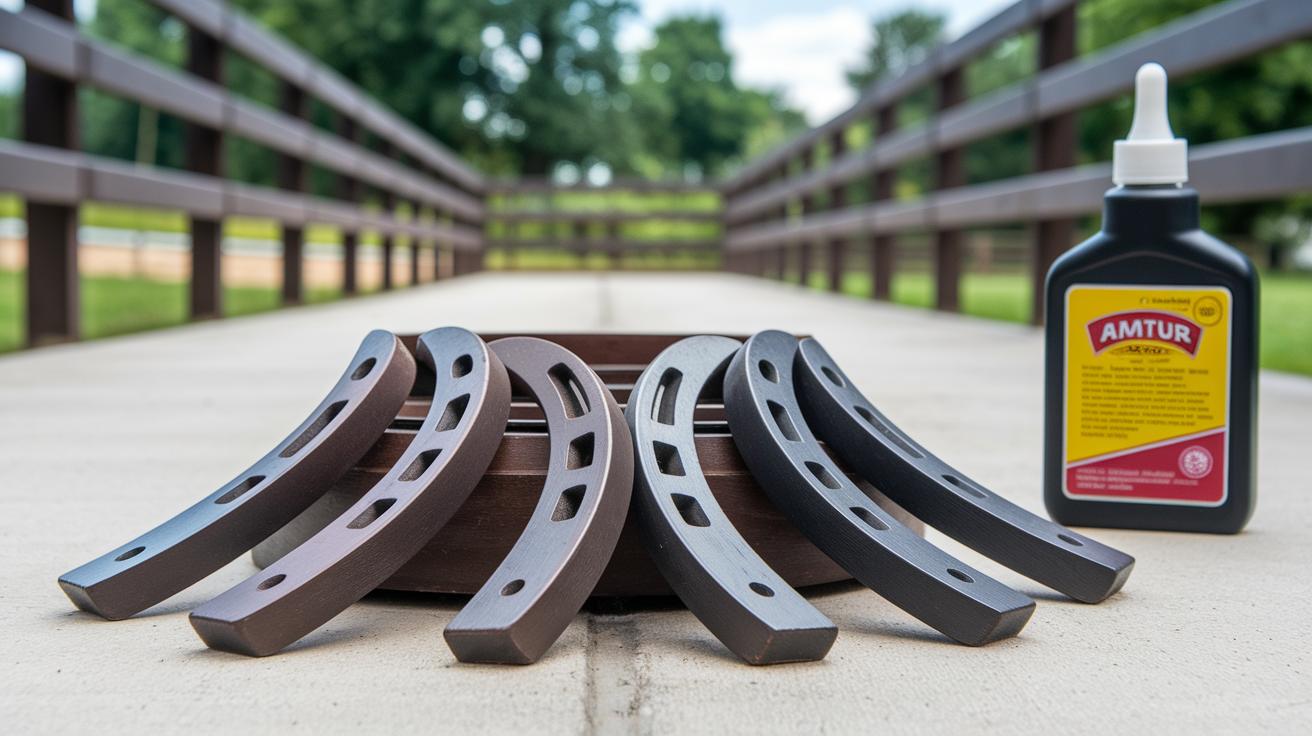
For equipment maintenance: wipe horseshoes dry with a soft cloth after each session and store them in a dry bag or box. Apply a light coat of oil every few months to prevent rust, especially if you play through damp weather. Inspect each shoe and stake for cracks or sharp deformations before play — damaged equipment should be replaced, not repaired. Wearing work gloves when checking or oiling gear is a simple habit that protects hands from any rough edges.
Frequently Asked Questions About Horseshoes
How do you play horseshoes?
Players alternate tossing two horseshoes each inning at a metal stake 40 feet away. Points go to whoever’s shoe is closest to the stake, with three points for a ringer (shoe encircling the stake) and one point for a shoe within six inches. Equal ringers cancel out. First to 21 points wins.
What equipment do I need to play horseshoes?
Four horseshoes (two per player) weighing about 2.5 pounds each, two metal stakes, a rake for pit maintenance, and a tape measure for measuring close calls. Optional but useful: chalk for foul lines and a bucket or bag for storage.
What are the standard court dimensions?
Stakes are set 40 feet apart, driven 15 inches into the ground with 14–15 inches showing above surface. Each pitching box is 6 feet wide and 10–15 feet long. The foul line is 37 feet from the opposite stake (27 feet for juniors).
How do you score points in horseshoes?
A ringer (shoe fully encircling the stake) scores 3 points. A leaner (shoe touching and leaning against the stake) scores 1 point. The closest shoe within six inches also scores 1 point. If both players throw ringers in the same inning, they cancel out and neither scores. The match ends when a player reaches 21 points.
What’s the proper pitching stance and technique?
Stand shoulder-width apart behind the foul line, knees slightly bent. Hold the horseshoe at the open end, swing underhand in a smooth pendulum motion, and release as the shoe passes your hip with your palm facing the target. Follow through by pointing your arm at the stake after release. Aim for one full rotation during flight for consistent accuracy.
What are the most common mistakes beginners make?
Throwing too hard (causes wide misses), dropping the follow-through (pulls the shoe off target), stepping past the foul line (automatic zero), and inconsistent spin (leads to unpredictable landings). Practicing the target-circle drill at short distances before moving to regulation 40-foot throws fixes most of these quickly.
How do I maintain my horseshoes set?
Wipe shoes dry after each session and store them in a dry bag or box. Apply a light coat of oil every few months to prevent rust. Rake the pit before play to keep the surface level. Inspect stakes and shoes for cracks before each game and replace anything damaged.
What tournament formats are used in horseshoes?
Single elimination moves quickly and works for larger groups. Round-robin gives every player more throws and suits smaller gatherings. Ladder formats let players move up or down based on results. For informal backyard tournaments, round-robin is usually most fun since everyone plays more games before being eliminated.