Choosing a Modern Outdoor Bench for Your Backyard
A modern outdoor bench turns an empty backyard corner into a usable seat — a place to drink morning coffee, watch the yard, or hold a quick conversation. The right bench is one that suits the way the rest of the yard already looks, holds up to your local weather, and fits the spot without crowding it. Five decisions cover most of what matters: material, style, size, where you put it, and what you’ll pay. Here’s the practical guide.
Quick Picks: Three Modern Outdoor Bench Styles
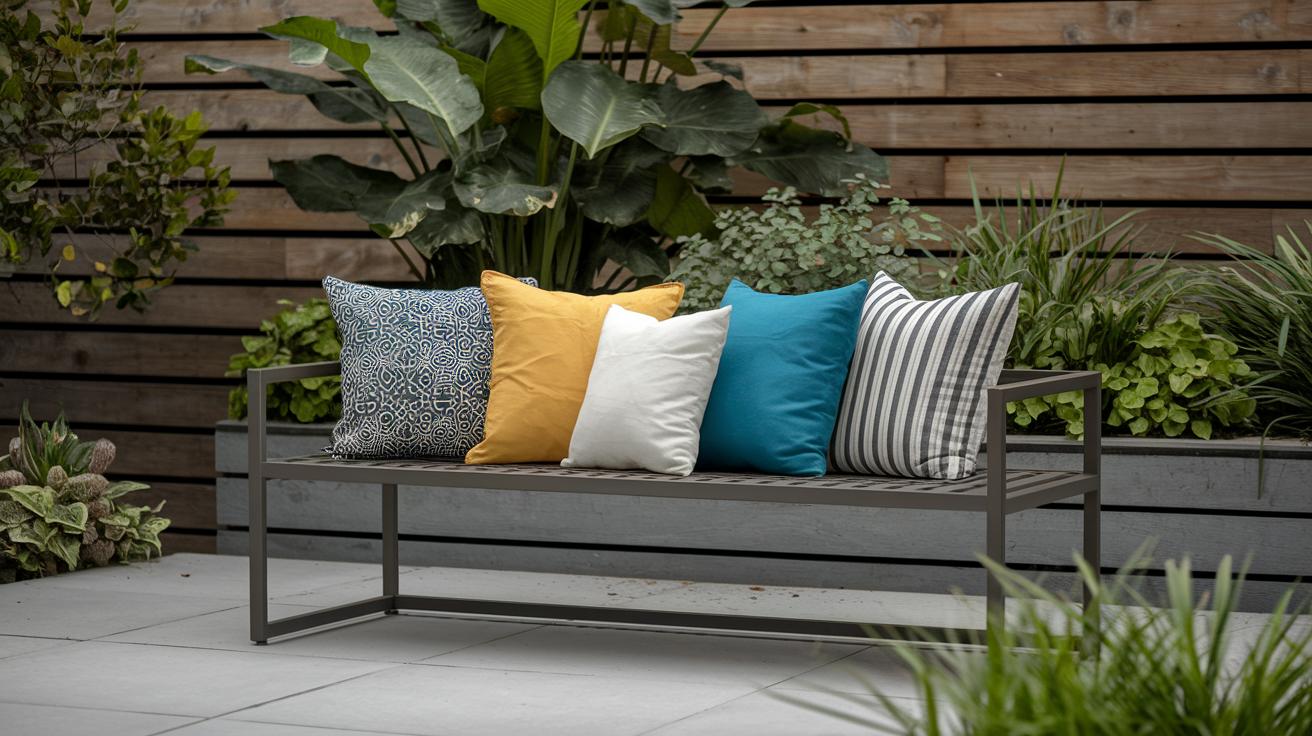
If you’d rather not read every section, three benches cover most modern backyard setups:
- Powder-coated steel minimalist bench. Sleek, slatted, low-profile. Fits modern and contemporary yards. Black or white finish reads sharply against greenery. Roughly $150–$400.
- Teak hardwood bench. Warm honey-gold wood that weathers to silver gray if left unsealed. Works in traditional, Scandinavian, and modern settings alike. Roughly $400–$1,000.
- Mixed-material bench (steel frame, wood seat). Industrial frame, organic seat. Most versatile across yard styles. Roughly $250–$700.
Big-box retailers (Home Depot, Lowe’s, IKEA) stock budget end of all three. Wayfair and Pottery Barn cover mid-range. Specialty outdoor furniture stores carry the premium tier ($800+) with longer warranties and better finishes.
Materials: Wood, Metal, and Composite
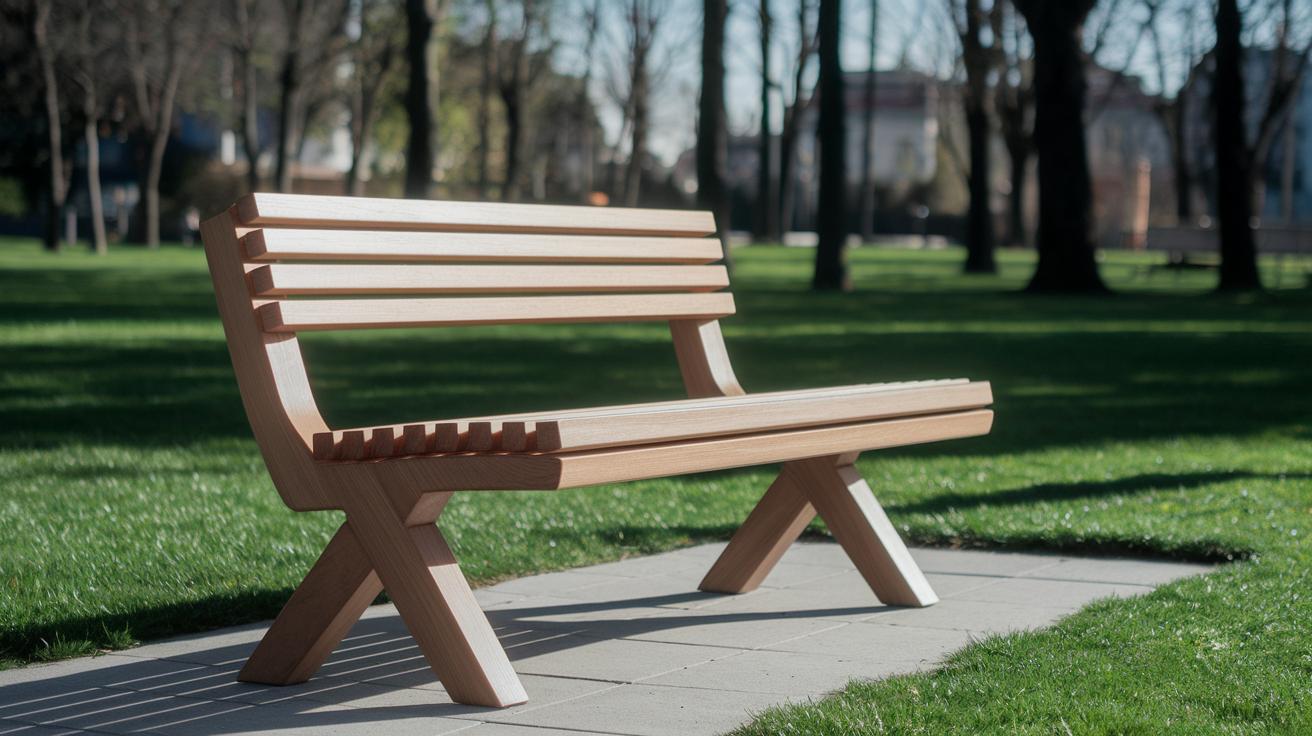
Material choice has the biggest impact on how the bench looks, lasts, and what kind of care it needs. Four broad categories:
- Hardwood (teak, cedar, ipe). Naturally rot-resistant. Teak ages to silver gray if left untreated; reseal once a year to keep the honey color. Cedar is less expensive and has a faint aromatic scent that mildly repels insects. Ipe is the densest and most expensive of the three, basically iron-strong but heavy. Expect 15–25+ years of life with light maintenance.
- Powder-coated steel. Strongest of the metal options. Heavy enough not to blow over. Powder coating (a baked-on finish) prevents rust and holds color for 10–15 years before showing wear. Touch up chips promptly to prevent rust spread. Black, white, and gray are the most common finishes.
- Aluminum. Lighter than steel, doesn’t rust at all, holds up well in coastal or salt-air conditions. Easier to move around the yard. Slightly less stable than steel — strong winds will tip a light aluminum bench more readily.
- Composite wood and recycled plastic. Wood-and-plastic blends (Trex, similar brands) and 100% recycled plastic options. No sealing, no warping, no fading from UV exposure. Slightly less visually warm than real wood up close, but functionally near-maintenance-free.
For a deeper comparison of how each material holds up over years of outdoor exposure, our roundup of the best materials for durable patio lounge chairs covers the same trade-offs applied to lounge chairs — the durability rankings carry over to benches.
If your bench will have cushions, the fabric matters as much as the bench material. UV-resistant outdoor fabrics keep their color for 5+ years; standard indoor fabrics fade within one summer. See UV-resistant patio lounge chair fabrics for what to look for.
Styles: Minimalist, Mid-Century, Industrial, Scandinavian
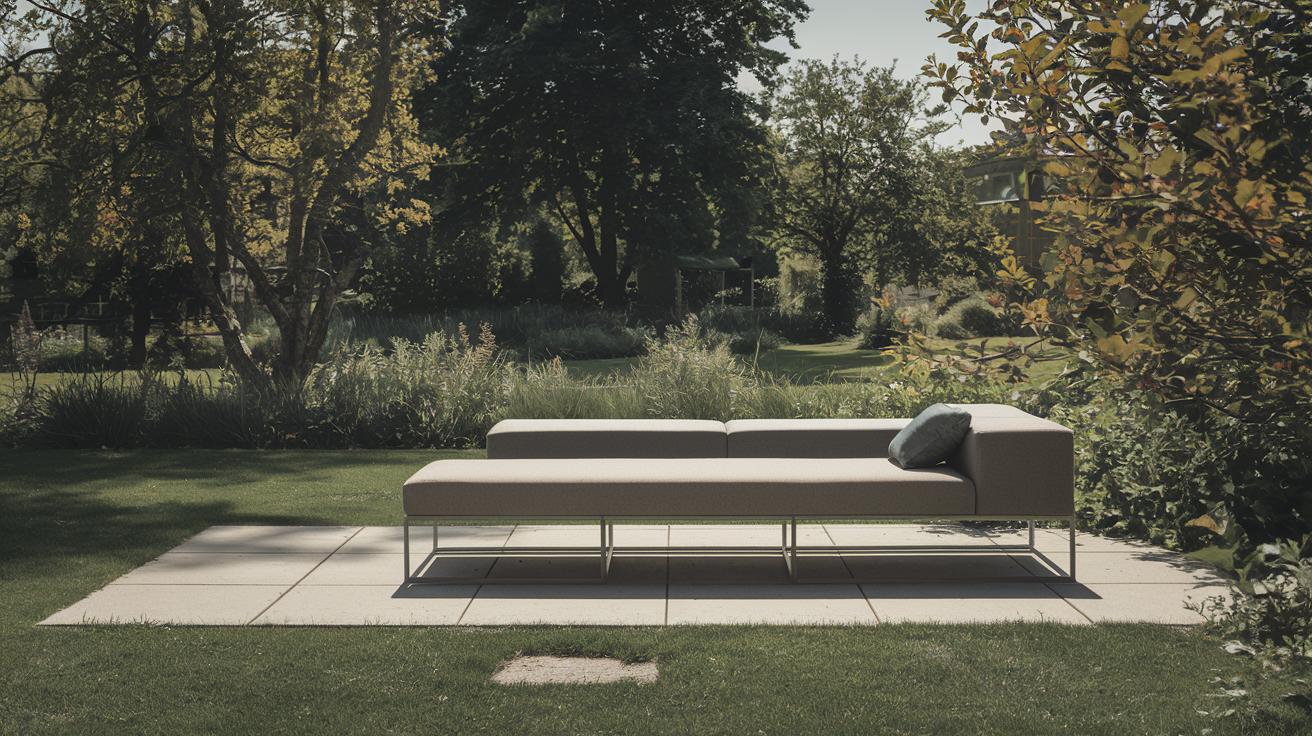
“Modern” covers a wide style range. The four most common variants in outdoor benches:
- Minimalist. Thin metal frames, slatted seats, black or white powder-coated finishes. Almost no ornament. Reads “clean and architectural.” Best in yards with strong straight lines — square patios, rectangular beds, modern fences.
- Mid-century modern. Tapered wood legs (narrower at the bottom), horizontal slats, warm teak or walnut tones. The 1950s-era look that’s never really gone out of fashion. Pairs especially well with curved garden beds or organic shapes.
- Industrial. Concrete bases, raw or distressed metal, exposed bolts and hardware. Reads “former factory, now garden.” Works in urban backyards or as a deliberate contrast against soft plantings.
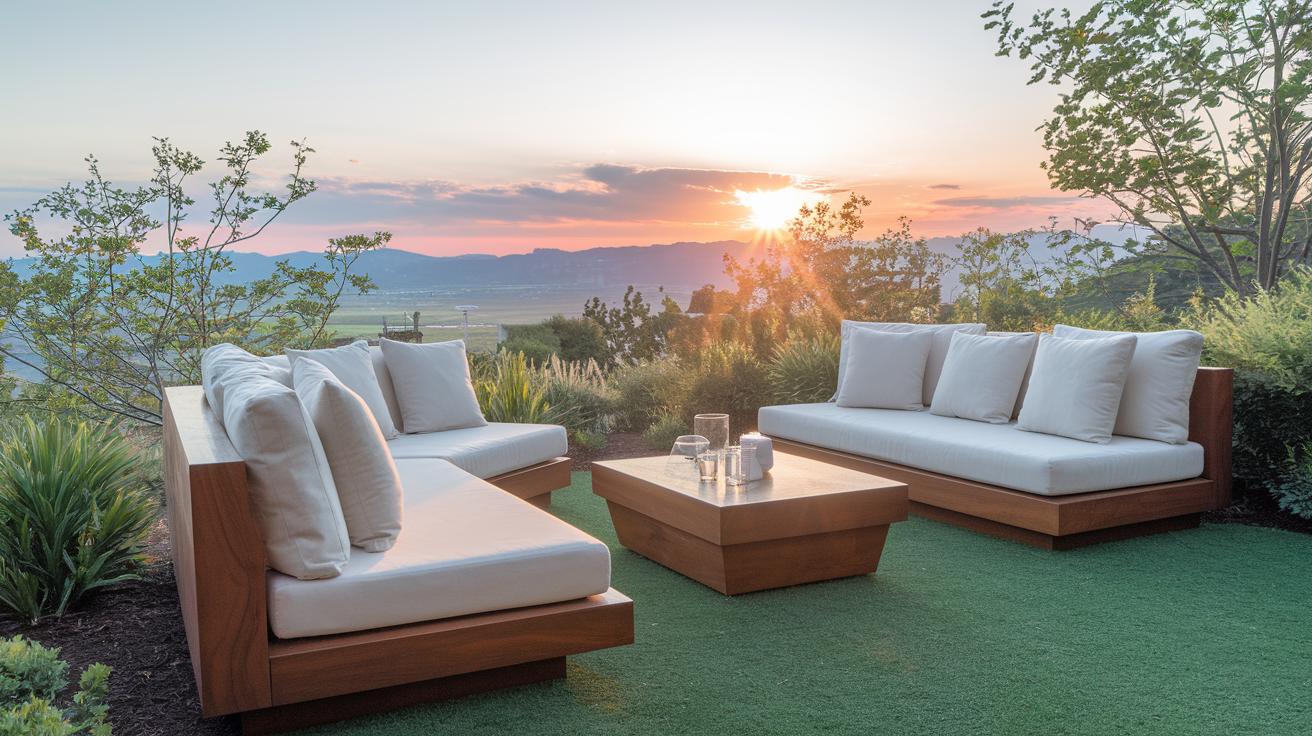
- Scandinavian. Pale woods (ash, birch, pine) with white or natural finishes. Lighter visual weight than mid-century. Pairs with bright cushions in neutrals or pastels.
One quick rule for picking a style: look at what’s already in the yard and pick a bench that either matches or deliberately contrasts. Matching reads “intentional”; contrast reads “designed.” What doesn’t work is a bench in a fifth style different from everything around it.
If you’re combining multiple bench styles (around a fire pit, for instance), stick to a unifying material palette — all dark metal, all warm wood, or one metal-and-wood combo throughout. Mixing two finishes and two woods at the same time produces visual chaos.
Bench Dimensions and Seating Comfort
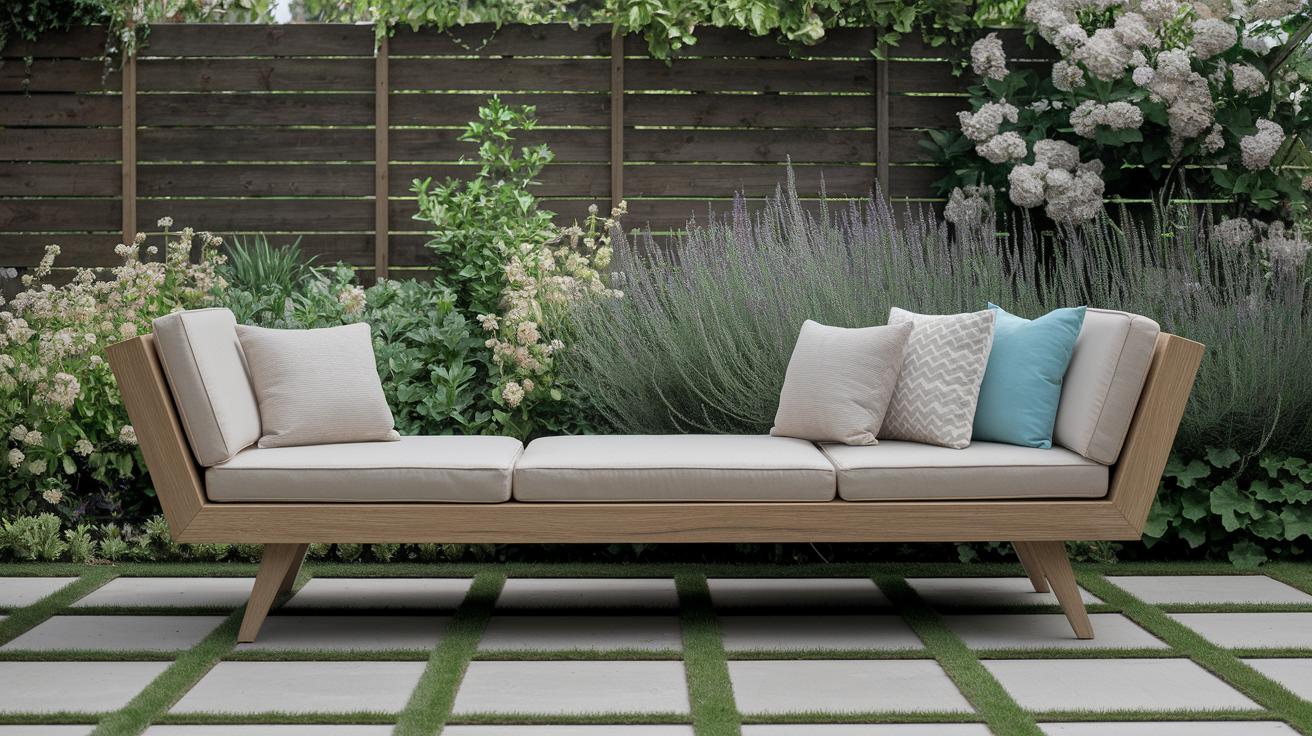
Three dimensions determine whether a bench is comfortable: seat length, seat height, and seat depth. The standard ranges:
| Length | Seats | Best for |
|---|---|---|
| 48 inches (4 ft) | 2 people | Tight balconies, side yards, accent seating |
| 60 inches (5 ft) | 3 people | Standard patios, around a fire pit |
| 72 inches (6 ft) | 4 people | Large patios, dining seating, social gatherings |
Seat height should be 17–19 inches. Below 17 inches feels too low for most adults; above 19 inches makes feet dangle uncomfortably for shorter sitters. The mid-range 17–18 inches works best for general-purpose use.
Seat depth (front to back) should be 16–18 inches. Less than 16 feels perched; more than 18 means thighs lose support before knees bend at the front edge. Depth matters less than height — most ready-made benches fall in the right range.
Beyond the bench itself, plan for at least 24 inches of clearance behind the bench (so people can walk past) and 36+ inches in front (so a coffee table or planter fits). On tight patios, this is where most bench placement mistakes happen — buying a bench that fits the space dimensionally but leaves no room to walk around it. For yards under 100 square feet of usable patio, our walk-through of patio furniture arrangement for small spaces covers layouts that work.
One small tip on comfort: any bench longer than 60 inches benefits from a backrest. Backless benches feel fine for 5-minute use (waiting, perching) but uncomfortable after 15 minutes. If the bench is for actual lounging, get one with a back or plan to add cushions with a back rest.
Installation and Maintenance
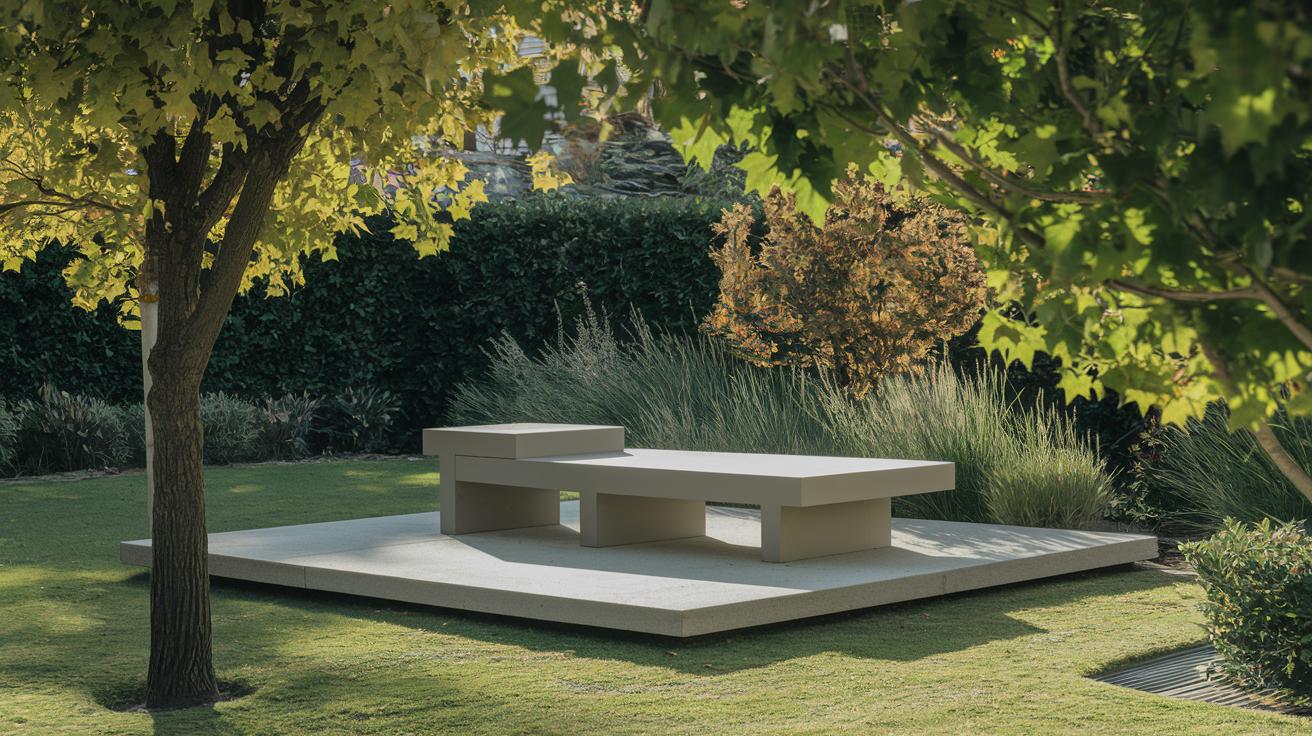
Most modern outdoor benches arrive flat-packed and assemble in 20–40 minutes with basic tools. The bigger decisions are around placement and anchoring:
- Pick a level spot. Use a bubble level (about $10 at any hardware store) to check that the surface is flat side-to-side and front-to-back. A bench that rocks on uneven ground is the easiest fix to do right at install and the hardest to fix months later.
- Anchor if needed. On a hard surface (concrete, brick, pavers), the bench’s own weight usually keeps it stable. On a deck, drill through the legs into the deck planks with weather-resistant screws. On soil or gravel, set the legs on cement pavers to prevent sinking, or install ground anchors for strong-wind areas.
- Test the orientation. Sit on it before you commit. Direction matters — facing morning sun for breakfast spots; facing the yard for evening spots; facing away from prevailing wind. Move the bench a few feet and try again before deciding it’s permanent.
Maintenance varies by material:
- Wood benches: Clean with mild soap and water 1–2 times per year. Reseal or restain every 1–2 years (more often in wet climates). Inspect for cracking at joints. Use a wood-safe cleaner for stuck-on dirt.
- Powder-coated steel: Wipe down monthly during use season. Touch up any chipped paint with a rust-inhibiting outdoor paint within a week of noticing — small chips become large rust spots fast. Annual application of a paste wax extends the powder coat’s life.
- Aluminum: Hose off when visibly dirty. Almost no other maintenance needed. Check for loose hardware annually.
- Composite and recycled plastic: Hose off. Done. The only maintenance task is checking that hardware hasn’t loosened — composite materials don’t expand and contract like wood, so once-tight bolts can work loose over years.
For winter or extended off-season, a fitted waterproof cover ($25–$60) doubles the bench’s effective lifespan. Heavy-duty tarps work in a pinch. Move lighter aluminum or composite benches into a shed or garage for winter if you have space — even covered, outdoor benches age faster than indoor-stored ones.
For wicker benches specifically, the maintenance is different again. Synthetic resin wicker holds up far better outdoors than natural wicker; see our guide to how to maintain wicker patio lounge chairs for the right cleaning approach.
Price Ranges and Where to Shop
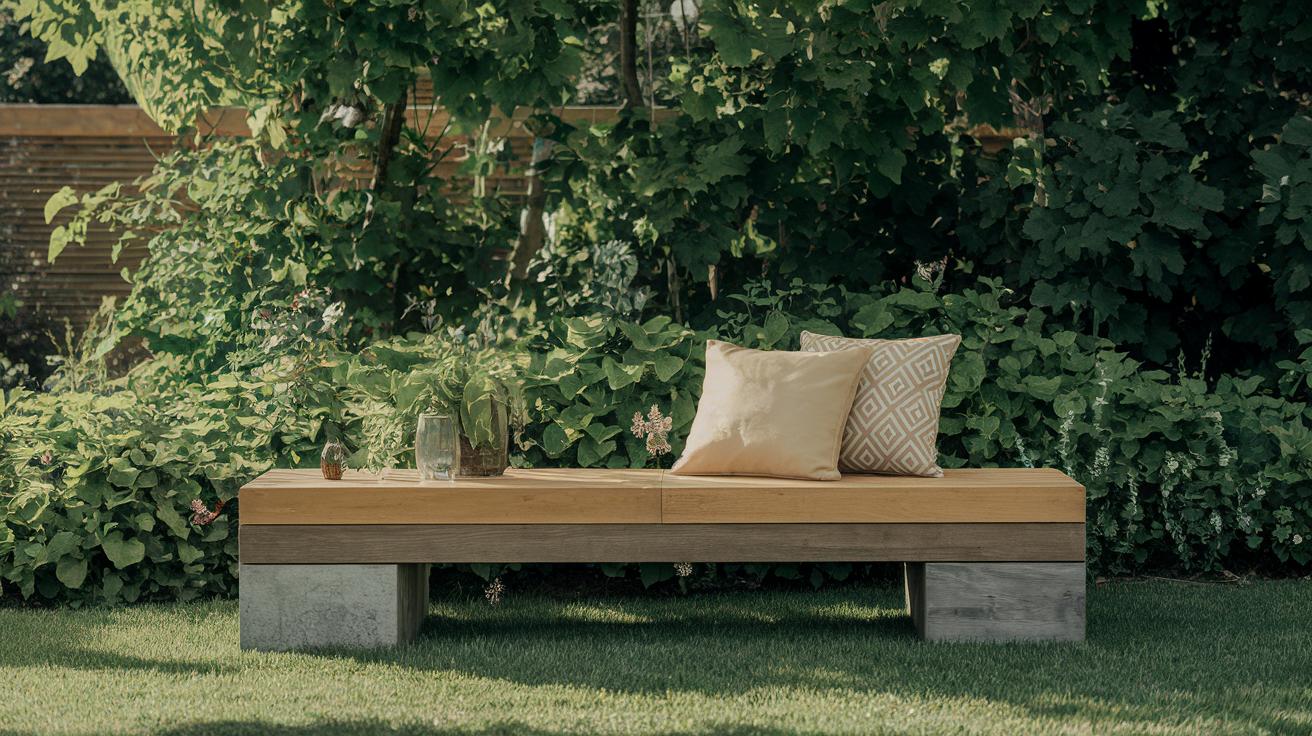
Outdoor bench pricing roughly tiers like this:
| Tier | Price | What you get |
|---|---|---|
| Budget | $100–$250 | Basic powder-coated steel or recycled plastic. Functional, no frills. 2–3 year frame warranty. |
| Mid-range | $250–$600 | Higher-grade steel or mixed-material benches with hardwood seats. 5-year warranties common. |
| Premium | $600–$1,200 | Solid hardwood (teak, ipe) or designer steel with quality finishes. 5–10 year warranties. |
| Custom / artisan | $1,200+ | Made-to-order from independent designers or specialty studios. |
Where to shop:
- Big-box stores (Home Depot, Lowe’s, Tractor Supply, IKEA): Best for budget and entry mid-range. Selection peaks in spring; clearance discounts hit in late summer.
- Online furniture retailers (Wayfair, Overstock, Amazon): Widest mid-range selection. Check user reviews carefully — bench quality varies dramatically at this price point and product photos can mislead.
- Specialty outdoor furniture stores (Frontgate, Country Casual, Brown Jordan): Premium tier. Worth the trip if you want a bench that lasts 20+ years.
- Local independent furniture makers: Premium and custom tier. Often comparable price to Frontgate but supports local craftspeople. Check Etsy for handmade options too.
A practical buying checklist before you commit:
- Size: Length, height, and depth all within the comfortable ranges above.
- Material: Matches your maintenance tolerance and local weather conditions.
- Style: Either matches or deliberately contrasts the rest of the yard.
- Warranty: Minimum 2 years on frame and finish; 5 years preferred.
- Returns: Confirm the return policy on bulky furniture before ordering online — return shipping on a 60-pound bench can run $80+.
- Extras: Cushions (UV-resistant fabric), bench cover, hardware kit for anchoring if your yard needs it.
Putting Your Outdoor Bench Plan Together
The best modern outdoor bench is the one you’ll actually use. Pick the spot first — the corner of the yard you keep meaning to fix up, the empty wall near the back door, the unused space beside the patio. Match the size of the bench to the size of the spot. Match the material to the maintenance you’ll actually do. Match the style to what’s already around it.
A bench is one of the lower-stakes outdoor furniture purchases — you can replace it in five years without much regret if your taste changes. So don’t overthink it. The biggest single mistake to avoid is buying a bench that’s too big for the spot. Length matters more than any other dimension; a too-long bench dominates a small patio for years, while a slightly undersized bench gives the space room to breathe.
Common Questions About Modern Outdoor Benches
What is the best material for a modern outdoor bench?
Teak and powder-coated steel are the top two picks. Teak ages beautifully and lasts 20+ years with minimal care. Powder-coated steel needs even less maintenance and looks sharp in modern yards. Composite wood and recycled plastic are the lowest-maintenance options. Aluminum is best for coastal or salt-air conditions.
What size bench fits a small patio?
A 48-inch (4-foot) two-person bench works on most balconies and tight side yards. Leave at least 24 inches of walking space behind and 36 inches in front for a side table or planter. On patios under 100 square feet, plan the furniture layout before buying — a bench that fits dimensionally may still crowd the space.
How tall should an outdoor bench seat be?
Seat height of 17–19 inches is comfortable for most adults. Below 17 feels too low and above 19 leaves feet dangling. Aim for 17–18 inches for general-purpose seating. Bench depth (front to back) should be 16–18 inches so thighs stay supported without knees tipping up.
Do modern outdoor benches need to be anchored?
On concrete, brick, or paver patios, the bench’s own weight is usually enough. On a wooden deck, drill through the legs into the deck planks with weather-resistant screws. On soil or gravel, set the legs on cement pavers to prevent sinking, or install ground anchors in strong-wind areas. Lightweight aluminum benches need anchoring more than steel.
How much does a modern outdoor bench cost?
Budget benches start at $100–$250 (basic steel or recycled plastic). Mid-range runs $250–$600 (better steel or mixed-material with hardwood seats). Premium benches cost $600–$1,200 (solid teak, ipe, or designer steel). Custom or artisan benches start at $1,200 and go up significantly.
How do I maintain a wooden outdoor bench?
Clean with mild soap and water 1–2 times per year. Reseal or restain every 1–2 years, more often in wet climates. Inspect joints for cracking. Cover with a fitted waterproof cover during off-season or move into a shed if you have space. Teak is unique — many owners leave it untreated and let it weather to silver-gray, which is purely cosmetic.
Where can I buy a modern outdoor bench?
Big-box stores like Home Depot, Lowe’s, and IKEA carry budget and entry mid-range. Wayfair, Overstock, and Amazon have the widest mid-range selection. Specialty outdoor furniture stores like Frontgate, Country Casual, and Brown Jordan carry the premium tier with longer warranties. Local independent furniture makers and Etsy artisans cover the custom tier.
Should I add cushions to an outdoor bench?
Cushions add real comfort for benches used for 15+ minutes at a time. Use UV-resistant outdoor fabric — standard indoor fabrics fade within one summer and grow mildew in damp conditions. Store cushions in a deck box or bring them inside when not in use to extend their life. For backless benches longer than 60 inches, cushions with a backrest dramatically improve comfort.